How Much Does It Cost to Maintain a Waterfront Home in Florida?
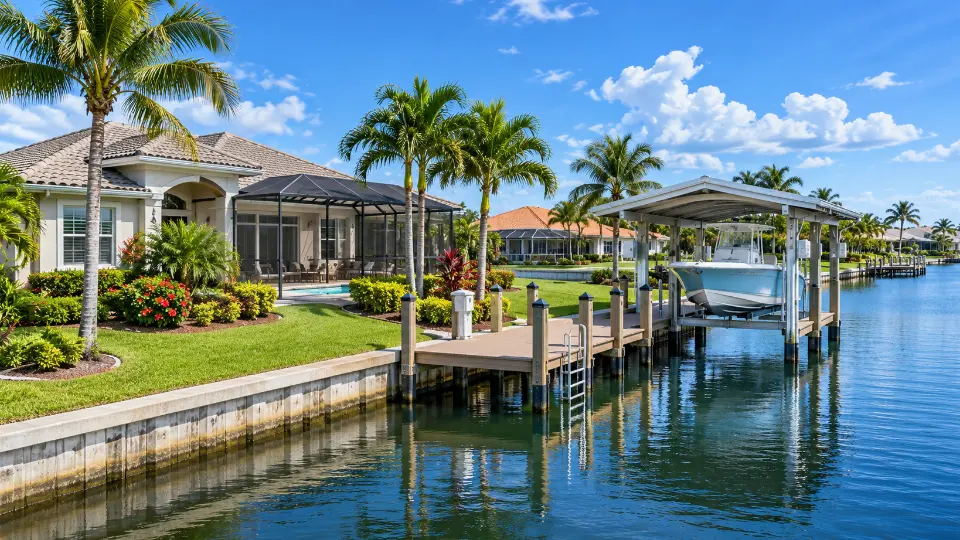
Maintaining a waterfront home in Florida generally costs more than maintaining a comparable inland home, but there is no dependable single annual figure. A waterfront owner may have the normal expenses of a Florida house plus a seawall or shoreline, dock, pilings, boat lift, marine electrical equipment, additional exterior maintenance, storm preparation and property-specific insurance considerations. Costs can vary dramatically between a protected canal home, direct bayfront property and Gulf-front residence. The most useful budget is therefore built from the actual home's systems, waterfront infrastructure, elevation, insurance profile and responsibility for shoreline maintenance rather than a generic percentage of the purchase price.
Quick Answers About Florida Waterfront Home Maintenance Costs
Do waterfront homes cost more to maintain in Florida?
Generally, yes. In addition to normal home maintenance, waterfront ownership can introduce seawalls, docks, pilings, boat lifts, shoreline conditions, marine electrical equipment and greater exposure to water, humidity, sun, wind and salt. FEMA also notes that coastal homes generally cost more to maintain, repair and insure than inland homes.
How much should I budget each year?
There is no responsible one-size-fits-all annual number. A newer waterfront home with recently improved marine infrastructure can have a very different cost profile from an older home requiring seawall, dock, roof or exterior work. Build the budget component by component using inspections, current insurance quotes and contractor estimates for the specific property.
Is the seawall usually the biggest waterfront maintenance concern?
It can be one of the most significant capital items when the homeowner is responsible for it. Condition, construction, length, access, permitting requirements and site conditions can materially affect repair or replacement costs. Some waterfront properties use different shoreline systems, and in certain communities responsibility may rest partly or entirely with another entity.
Are docks and boat lifts expensive to maintain?
They can add meaningful recurring and eventual capital expenses. Pilings, decking, fasteners, electrical equipment, lift motors, cables and other components operate in a demanding marine environment and should be inspected and serviced appropriately.
Does flood insurance cover a seawall or dock?
Do not assume it does. FEMA's National Flood Insurance Program documentation identifies seawalls, bulkheads, wharves, piers and docks as generally not insured property under the Standard Flood Insurance Policy, subject to limited circumstances involving structures integral to a building's foundation. Buyers should review coverage for the exact property with a qualified insurance professional.
Does every waterfront homeowner maintain their own seawall?
No. Responsibility varies by property. A homeowner, condominium association, homeowners association, municipality, special district or another entity may be responsible for some waterfront infrastructure. Determine ownership and maintenance responsibility before purchasing.
What should I inspect before buying a Florida waterfront home?
In addition to a general home inspection, consider the seawall or shoreline, dock, pilings, boat lift, marine electrical equipment, roof, windows, doors, HVAC, pool and other systems relevant to the property. Specialized components may require evaluation by an appropriately qualified marine contractor, inspector, engineer, electrician or other professional.
Why Is There No Single Average Cost for Maintaining a Florida Waterfront Home?
"Waterfront" describes many different properties, not one maintenance category. A Gulf-front house, Sarasota Bay estate, canal home, Intracoastal-oriented property, lakefront residence and waterfront condominium can have very different maintenance responsibilities.
Even two canal-front homes on the same street can differ in seawall age, dock configuration, boat-lift equipment, elevation, roof condition, storm protection and insurance options.
That is why Hunt Brothers Realty recommends evaluating waterfront home maintenance property by property rather than relying on a broad annual percentage.
What Costs Make Waterfront Ownership Different?
A Florida waterfront ownership budget can include all of the expenses associated with an inland home plus additional marine, coastal and storm-related items.
| Cost Category | What to Investigate | Why It Matters |
|---|---|---|
| Home maintenance | Roof, HVAC, plumbing, electrical, paint, windows and doors | Normal Florida ownership costs still apply |
| Seawall or shoreline | Condition, age, movement, erosion, responsibility and permits | Can create significant repair or capital expenses |
| Dock and pilings | Decking, structure, pilings, fasteners and electrical service | Marine exposure can accelerate deterioration |
| Boat lift | Motor, cables, pulleys, structure, electrical equipment and capacity | Requires service and eventual component replacement |
| Insurance | Homeowners, wind and flood coverage as applicable | Availability and premiums are highly property specific |
| Storm preparation | Shutters, outdoor items, boat preparation and post-storm inspections | Coastal exposure creates additional preparation responsibilities |
| Salt and moisture exposure | Metal, hardware, paint, outdoor equipment and HVAC components | Can increase cleaning, coating, repair and replacement needs |
How Much Should You Budget for a Seawall?
A seawall should be treated as a long-term capital component, not simply another routine monthly expense. Repair or replacement costs depend on factors including seawall length, construction type, access, soil and shoreline conditions, engineering requirements, permitting and the extent of deterioration.
Instead of relying on a generic per-foot estimate, a waterfront buyer should determine:
- Who owns the seawall?
- Who is legally responsible for maintaining it?
- Approximately when was it installed or last substantially repaired?
- Are permits or records available for previous work?
- Are there visible cracks, movement, separation or soil loss?
- Has a qualified professional recently evaluated it?
- What would current repair or replacement work cost for this particular site?
Local regulation can also affect waterfront work. For example, Manatee County's Environmental Planning Section explains that docks, seawalls and riprap are regulated waterfront structures and that construction, expansion or reconstruction can require applicable local, state and federal approvals.
Requirements vary by jurisdiction and project. Before planning shoreline work, owners should verify current requirements with the appropriate local permitting authority, Florida Department of Environmental Protection, U.S. Army Corps of Engineers and other agencies when applicable.
What About a Living Shoreline Instead of a Seawall?
Not every waterfront property requires or is suitable for the same shoreline solution. Some sites may use natural or living-shoreline approaches rather than traditional hardened seawalls.
Manatee County's living shoreline guidance notes that living shorelines are not appropriate for every location and that each shoreline should be evaluated individually. It also identifies potential installation and maintenance cost advantages in suitable settings.
Whether a seawall, riprap, living shoreline or another system is appropriate is a property-specific engineering, environmental and permitting question. Owners should consult qualified professionals and the applicable government agencies before altering shoreline protection.
How Much Maintenance Does a Dock Require?
A private dock adds another structure that should be inspected, maintained and eventually repaired or replaced. The maintenance profile depends on the dock's materials, age, construction, water conditions and exposure.
Important components can include:
- Pilings
- Decking
- Framing
- Fasteners and connectors
- Ladders and railings
- Water service
- Lighting
- Shore-power or other electrical equipment
- Boat-lift components
Waterfront electrical equipment deserves particular attention because electricity and a marine environment create specialized safety considerations. Appropriate electrical work and evaluation should be performed by qualified licensed professionals.
How Much Does a Boat Lift Add to Waterfront Maintenance?
A boat lift creates both recurring service needs and eventual component-replacement costs. Lift systems can include motors, cables, pulleys, beams, bunks, switches and electrical equipment that require appropriate inspection and maintenance.
Before buying, determine the lift's rated capacity and whether it is appropriate for the boat you intend to keep at the property. A functioning lift is not automatically suitable for a different vessel simply because the boat physically fits between the pilings.
Buyers should also investigate permits and determine whether a future lift modification or replacement is feasible under current rules.
Does Saltwater Increase Home Maintenance Costs?
Salt, moisture, intense sunlight and coastal weather can increase maintenance demands on exposed materials and equipment. The effect varies with distance from open water, wind exposure, construction materials and how well components are protected and maintained.
Owners may need to pay closer attention to:
- Exterior paint and coatings
- Metal railings and fasteners
- Outdoor light fixtures
- Doors and hardware
- Pool and outdoor equipment
- HVAC components exposed to coastal air
- Marine electrical equipment
- Dock and lift hardware
Preventive cleaning, inspection and protective maintenance can be important because small corrosion or deterioration issues can become larger repairs if ignored.
How Much Does Insurance Add to the Cost?
Insurance can be one of the most property-specific parts of a Florida waterfront ownership budget. The cost and availability of homeowners, wind and flood coverage can depend on location, elevation, flood information, roof characteristics, construction, storm protection, claims history and other underwriting factors.
Do not use the seller's current premium as the buyer's expected cost. The new owner should obtain property-specific quotes and ask exactly what is covered, excluded or subject to special deductibles and limits.
That is particularly important for waterfront infrastructure. FEMA's National Flood Insurance Program Claims Manual identifies fences, retaining walls, seawalls, bulkheads, wharves, piers, bridges and docks as generally not insured property under the Standard Flood Insurance Policy, with limited circumstances involving structures integral to a building's foundation.
Hunt Brothers Realty's guide to insurance questions to ask before making an offer in Florida explains why buyers should investigate coverage before becoming committed to a property.
Does Flood Zone Determine the Entire Cost?
No. Flood-zone designation is important, but it is only one part of evaluating a waterfront property. Buyers should also consider elevation, construction, drainage, previous flooding information when available, storm exposure and the property's specific insurance options.
A lower-risk map designation does not mean a property has no flood risk. Similarly, two waterfront homes in the same general area can have different elevations and insurance characteristics.
Hunt Brothers Realty's questions to ask before buying a home near the Florida coast provides a broader checklist for evaluating flood, insurance, storm protection and coastal ownership issues.
What Does Hurricane Preparation Cost?
Storm preparation should be treated as part of waterfront home ownership even though the cost will not be identical every year. The property may require preparation of shutters or other opening protection, outdoor furniture, pool equipment, landscaping, docks, lifts and boats.
Seasonal or absentee owners should also consider who will secure and inspect the property when they are away. Depending on the home, professional storm-preparation or property-management services may become part of the ownership budget.
After a significant storm, waterfront infrastructure may need inspection even when the residence itself appears undamaged. FEMA's coastal-facility guidance recommends monitoring, inspection and timely repair of exposed coastal structures, particularly following storms.
Do Waterfront Condos Have the Same Maintenance Costs?
Not necessarily. A waterfront condominium can shift responsibility for some exterior and waterfront components from the individual owner to the condominium association. That does not make those expenses disappear. They may instead be reflected in regular condominium assessments, reserve funding or special assessments.
Before buying a waterfront condominium, determine who is responsible for:
- Building exterior
- Roof
- Seawall or shoreline
- Docks
- Marina facilities
- Boat slips
- Pools and recreational facilities
- Common-area insurance
Review the association's current documents, financial information, reserve information and known assessments with the appropriate professionals. Questions about legal responsibility under condominium documents should be directed to a qualified Florida real estate attorney.
Who Maintains the Waterfront Infrastructure?
Never assume that owning waterfront property automatically means you own and maintain every waterfront structure behind it. Responsibility can vary significantly by location and community.
For example, some special waterfront districts have unusual maintenance arrangements. Hunt Brothers Realty's Punta Gorda Isles waterfront guide explains that the local canal district handles specified City-owned seawalls and canal maintenance, while property owners remain responsible for private docks, pilings, boat lifts and other private improvements.
Other Florida waterfront communities can operate very differently. Verify ownership, maintenance responsibility and assessment obligations for the individual parcel rather than applying one community's arrangement to another.
How Should Buyers Estimate the True Annual Waterfront Budget?
Separate predictable annual expenses from irregular capital expenses. This produces a more useful ownership budget than trying to force every waterfront cost into one annual maintenance percentage.
Recurring Ownership Costs
- Homeowners insurance
- Flood insurance when applicable or desired
- Property taxes
- HOA or condominium assessments when applicable
- Pool maintenance
- Landscaping
- Pest control
- HVAC servicing
- Dock and boat-lift servicing when applicable
- Routine exterior cleaning and protective maintenance
Long-Term Capital Costs
- Roof replacement
- Exterior painting or coatings
- HVAC replacement
- Window and door replacement
- Pool equipment replacement
- Seawall or shoreline rehabilitation
- Dock rehabilitation or replacement
- Boat-lift component replacement
- Post-storm repairs not covered by insurance
A buyer can then estimate a reasonable annual reserve contribution for future capital work based on the actual condition and expected remaining service life of those components. A qualified inspector, marine contractor, engineer and other appropriate professionals can help establish the condition of individual systems, while a financial professional can help with individualized budgeting decisions.
What Should You Inspect Before Buying a Waterfront Home?
The waterfront infrastructure deserves its own due diligence in addition to the house. Hunt Brothers Realty's waterfront guidance identifies a range of potential inspection areas depending on the property.
- General home condition
- Roof
- HVAC
- Plumbing and electrical systems
- Windows, doors and storm protection
- Pool and pool equipment
- Seawall or shoreline
- Dock and pilings
- Boat lift
- Marine electrical systems
- Drainage and signs of erosion or soil loss
- Available permits for waterfront improvements
Inspection findings should be evaluated with the appropriate licensed inspector, marine contractor, structural engineer, electrician, surveyor or other qualified professional before the buyer makes a decision involving condition, repair or future modification.
Does a More Expensive Waterfront Home Always Cost More to Maintain?
No. Purchase price alone is a poor predictor of near-term maintenance. A more expensive property with a newer roof, modern storm protection, recently improved seawall and updated dock may present a different maintenance profile from a lower-priced waterfront home with aging infrastructure.
This is why waterfront buyers should compare both purchase price and deferred maintenance. A seemingly attractive price can look different after obtaining estimates for major work.
Should I Buy Waterfront or Live Near the Water Instead?
Buyers who value the view or coastal location but do not need private waterfront infrastructure may want to compare direct waterfront ownership with nearby alternatives. Living several blocks or miles inland can provide convenient beach or boating access while reducing responsibility for a private seawall, dock or lift.
Waterfront condominiums provide another alternative. They can offer Gulf, bay or marina-oriented living while shifting some exterior and shoreline responsibilities to an association, although those costs can appear through association assessments and potential special assessments.
Buyers exploring the Sarasota area can compare different settings in Hunt Brothers Realty's guide to where to buy waterfront property near Sarasota.
What Questions Should I Ask Before Buying?
Turn the waterfront maintenance budget into a property-specific checklist before making a final decision.
- Who owns and maintains the seawall or shoreline?
- What is its condition?
- Who owns and maintains the dock?
- What is the condition and capacity of the boat lift?
- Are waterfront improvements properly permitted?
- What flood information applies to the property?
- Is an elevation certificate or other elevation information available?
- What will homeowners and flood insurance cost the buyer?
- What waterfront components are excluded from insurance coverage?
- What storm protection is installed?
- What major components are approaching replacement?
- What HOA, condominium, district or canal-maintenance assessments apply?
- Are there known upcoming waterfront projects or special assessments?
How Much Does It Cost to Maintain a Waterfront Home in Florida?
The most accurate answer is that waterfront maintenance costs depend on the individual property, and buyers should be skeptical of any universal annual number. A waterfront home combines ordinary Florida homeownership with potential marine infrastructure, coastal exposure, insurance considerations and long-term capital expenses that an inland homeowner may not have.
The biggest difference is often not routine lawn care or pool service. It is the possibility of major components such as a seawall, dock, boat lift, roof or storm-protection system eventually requiring significant work.
Before purchasing, obtain property-specific insurance quotes, inspect the home and waterfront infrastructure, identify who is responsible for each component, research permits and use qualified professionals to estimate significant repairs. That produces a much more realistic ownership budget than multiplying the purchase price by a generic maintenance percentage.
Plan Your Florida Waterfront Purchase With Hunt Brothers Realty
Hunt Brothers Realty helps buyers evaluate Florida waterfront properties with attention to the practical differences between Gulf-front, bayfront, canal, Intracoastal and other waterfront settings. That includes identifying the property-specific questions involving boating access, seawalls, docks, flood information, insurance and ongoing ownership responsibilities that buyers should investigate with the appropriate professionals.
Continue with Hunt Brothers Realty's waterfront home maintenance guide, explore where to buy waterfront property near Sarasota, review the questions to ask before buying near the coast, visit the Florida Buyer Resource Center, or contact Hunt Brothers Realty to discuss a waterfront property search.
Informational notice: This article provides general real estate and educational information only and is not individualized legal, financial, tax, insurance, lending, inspection, engineering, construction, environmental, permitting, title or other professional advice. Waterfront conditions, insurance availability, flood exposure, seawall and dock responsibility, permitting requirements and maintenance costs vary substantially by property. Buyers should obtain property-specific insurance quotes and use the appropriate licensed inspectors, marine contractors, structural engineers, electricians, surveyors, insurance professionals, lenders, attorneys, permitting authorities and other qualified professionals when evaluating a waterfront purchase or planning repairs or improvements.
Sources
- Hunt Brothers Realty, Waterfront Home Maintenance in Sarasota: Owner's Guide
- Hunt Brothers Realty, Where Can I Buy Waterfront Property Near Sarasota?
- Hunt Brothers Realty, Questions to Ask Before Buying a Home Near the Coast
- Hunt Brothers Realty, Insurance Questions Before Making an Offer in Florida
- FEMA, National Flood Insurance Program Claims Manual
- FEMA, Coastal Facilities Maintenance and Mitigation Guidance
- Manatee County, Environmental Planning and Waterfront Structures
- Manatee County, Living Shorelines
Contact Hunt Brothers Realty
46 N. Washington Blvd, Ste 3, Sarasota, FL 34236
Phone: (941) 388-7017
Email: info@huntbrothersrealty.com
Website: HuntBrothersRealty.com
Categories
- All Blogs 2734
- Anna Maria Island 93
- Bird Key 6
- Bradenton 243
- Buying a Home 1744
- Casey Key 4
- Clearwater 17
- Condos & HOA Living 1683
- Ellenton 9
- Englewood 16
- First Time Homebuyers 1869
- Foreclosures 4
- Home Selling 12
- Homeownership 1918
- Lakewood Ranch 38
- Lido Key 29
- Longboat Key 81
- Luxury/Waterfront Properties 1861
- Market Updates & Trends 1360
- Mortgages & Financing 91
- Move-Up Buyers 25
- Neighborhood Guides 1489
- New Construction 48
- Palmetto 4
- Parrish 39
- Port Charlotte 36
- Punta Gorda 165
- Real Estate Investing 1774
- Relocation to Florida 1802
- Safety Harbor 4
- Sarasota 178
- Sarasota - Downtown 177
- Selling a Home 149
- Siesta Key 95
- St. Petersburg 13
- Taxes and Homestead 7
- Tierra Verde 7
- Vacation & Second Homes 1967
- Venice 225
- Wellen Park 24
Recent Posts