
What Is the Difference Between Prequalification and Preapproval?
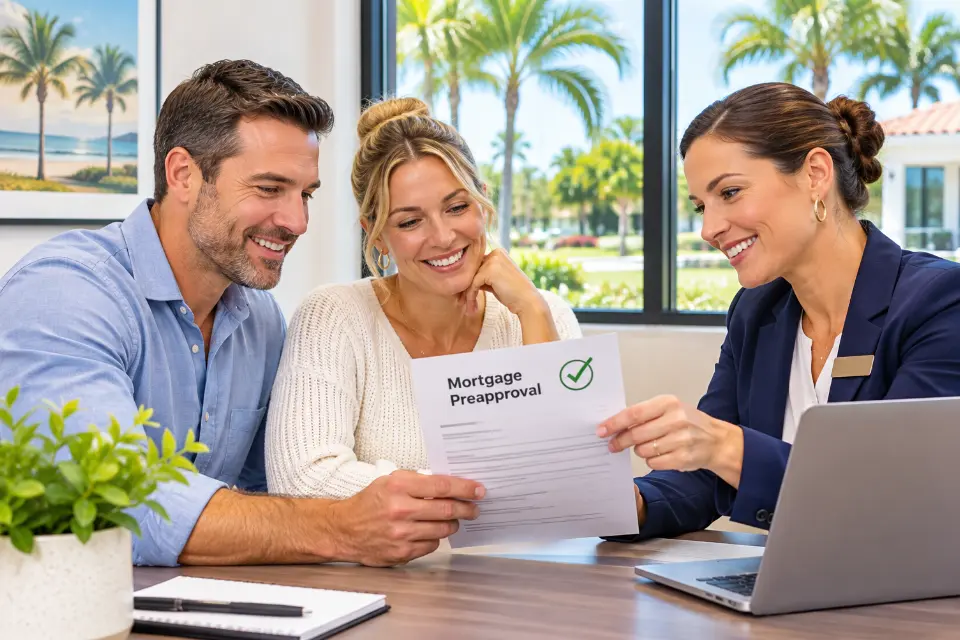
Mortgage prequalification generally provides an early estimate of how much a buyer might be able to borrow, while preapproval commonly involves a more detailed lender review of the buyer's financial information. However, lenders do not use these terms consistently, so the label alone does not tell you how thoroughly your finances have been reviewed. Neither a prequalification nor a preapproval guarantees that a mortgage will ultimately be approved. For buyers preparing to make an offer, the important question is what the lender actually verified and how current and reliable the resulting letter is.
Quick Answers About Prequalification and Preapproval
What Is Mortgage Prequalification?
Prequalification is commonly an early assessment of the mortgage amount a prospective borrower might qualify for. According to Fannie Mae, it can provide a general idea of financing options and is typically offered quickly, but lender procedures vary.
What Is Mortgage Preapproval?
A preapproval generally indicates that a lender is tentatively willing to lend a buyer up to a specified amount based on its review. The Consumer Financial Protection Bureau emphasizes that a preapproval is still based on assumptions and is not a guaranteed loan offer.
Is Preapproval Better Than Prequalification?
A preapproval often involves a more detailed financial review and can therefore provide more useful information when a buyer is seriously shopping for a home. However, because lenders use the terms differently, buyers should compare the actual review performed rather than assume every document labeled "preapproval" is stronger than every "prequalification."
Does Preapproval Guarantee a Mortgage?
No. A preapproval is not final loan approval. The lender may still need to evaluate the property, appraisal, title, updated borrower finances, insurance and other underwriting conditions before a mortgage can close.
Does a Lender Check Credit for Preapproval?
Lenders typically review credit when issuing a mortgage preapproval, although procedures differ. The CFPB also notes that lenders may check credit in connection with either a prequalification or preapproval, so buyers should ask the lender whether a credit inquiry will occur and what type of inquiry will be used.
Do I Need Preapproval Before Looking at Homes?
You do not necessarily need a preapproval merely to begin learning about the market, but obtaining one before seriously shopping can help establish a realistic financing range. A current preapproval letter can also be useful when a buyer is ready to submit an offer.
How Long Does a Mortgage Preapproval Last?
Expiration periods depend on the lender. The CFPB notes that preapproval letters commonly have expiration dates and may typically remain valid for approximately 30 to 60 days. Buyers should check the date and renewal requirements on their specific letter.
What Does Prequalification Actually Mean?
Prequalification is generally an early look at whether a prospective borrower may qualify for mortgage financing and approximately how much financing might be available.
Depending on the lender, the process may begin with information supplied by the prospective borrower about matters such as:
- Income
- Employment
- Monthly debts
- Available savings and assets
- Expected down payment
- General credit information
Some lenders may verify more of this information than others. That is why a buyer should ask exactly what was reviewed before treating a prequalification amount as a reliable home-shopping budget.
What Happens During Mortgage Preapproval?
A typical preapproval process goes deeper into the buyer's financial qualifications. Freddie Mac explains that buyers seeking preapproval provide information concerning credit, debts, work history, down payment and residential history.
The lender may request documentation involving:
- Income
- Employment
- Assets and available funds
- Existing debts
- Credit history
- Down payment resources
- Other financial information relevant to the loan program
The exact documentation depends on the lender, loan program and borrower's circumstances. Self-employed borrowers, for example, may be asked for different documentation than salaried employees.
Why Do Lenders Use Prequalification and Preapproval Differently?
There is no universal mortgage-industry rule requiring every lender to use these two marketing terms in exactly the same way. This is one of the most important points for homebuyers to understand.
The Consumer Financial Protection Bureau explains that lenders use "prequalification" and "preapproval" differently. One lender may call a preliminary assessment a prequalification, while another may use preapproval terminology for a similar process.
Other lenders reserve the term preapproval for a process involving verified financial information and a more comprehensive review.
For buyers, the better question is not simply, "Am I preapproved?" It is, "What did the lender actually review and verify before issuing this letter?"
Prequalification vs. Preapproval: What Is Usually Reviewed?
As a general framework, prequalification tends to be preliminary while preapproval tends to involve greater financial review, but individual lender procedures control.
| Question | Prequalification | Preapproval |
|---|---|---|
| Primary purpose | Early financing estimate | More detailed assessment before serious home shopping |
| Financial information | May rely more heavily on borrower-provided information | Commonly involves more detailed review and documentation |
| Credit review | Varies by lender | Typically reviewed |
| Useful for early budgeting | Yes | Yes |
| Useful when making an offer | May be, depending on the seller and lender process | Commonly used for this purpose |
| Guarantees final mortgage approval | No | No |
Because lender terminology and procedures vary, buyers should confirm these details directly with the lender providing the letter.
Does Prequalification Require a Credit Check?
It depends on the lender and its process. Some preliminary mortgage evaluations may be completed without a hard credit inquiry, while other lenders may review credit when issuing either a prequalification or preapproval letter.
The CFPB specifically notes that lenders may check credit in connection with prequalification or preapproval. Buyers concerned about their credit should ask before authorizing the process:
- Will you check my credit?
- Will the inquiry be hard or soft?
- At what stage will the inquiry occur?
- Will you need to check my credit again later?
Credit effects depend on the inquiry and individual credit profile. Buyers should discuss property-specific mortgage and credit questions with their lender or another qualified loan professional.
Why Is Preapproval Helpful Before You Start Making Offers?
A current preapproval can help a buyer understand a potential financing range and demonstrate to a seller that financing has already been discussed with a lender.
The CFPB notes that sellers frequently request a preapproval letter before accepting an offer. Freddie Mac similarly describes preapproval as a way to shop with greater confidence and demonstrate that the prospective buyer is serious.
Preapproval can also uncover financing questions before a buyer is working against contractual deadlines. If additional income, asset or credit documentation is needed, identifying that issue earlier may provide more time to address it with the lender.
Buyers preparing for a purchase can also review Hunt Brothers Realty's guide to starting the home-buying process in Florida.
Does a Preapproval Tell You How Much You Should Spend on a Home?
No. A lender's maximum preapproval amount is not automatically the same as a buyer's comfortable home-buying budget.
Freddie Mac specifically cautions that the maximum amount a lender is willing to lend is not necessarily the amount a borrower should borrow. A household's actual budget can include expenses and priorities that are not fully reflected by a lender's maximum qualification calculation.
Homeownership expenses can include:
- Principal and interest
- Property taxes
- Homeowners insurance
- Flood insurance when applicable
- Mortgage insurance when applicable
- HOA or condominium assessments
- CDD or other property-specific assessments when applicable
- Utilities
- Maintenance and repairs
Affordability and borrowing decisions are individual financial matters. Buyers should evaluate their complete budget and discuss mortgage options with a qualified lender or financial professional as appropriate.
Does Preapproval Lock Your Mortgage Interest Rate?
Do not assume that receiving a preapproval automatically locks an interest rate. Preapproval and rate locking are separate parts of the mortgage process.
Mortgage rates can change, and the rate ultimately available to a borrower depends on factors that can include market conditions, loan program, credit profile, property, down payment, points, lock period and lender pricing.
Buyers should ask their mortgage professional whether a quoted rate is merely illustrative or actually locked, how long any lock lasts and what conditions apply.
Does Preapproval Mean Underwriting Is Finished?
No. Preapproval does not mean the entire mortgage transaction has received final approval. Even after a lender has evaluated the prospective borrower, important parts of the transaction may remain unknown.
Once a buyer selects a home, the lender may still need to evaluate matters such as:
- The purchase contract
- The specific property
- Appraised value
- Title-related requirements
- Insurance
- Updated income or employment information
- Updated assets and debts
- Other loan-program and underwriting requirements
The lender's final decision depends on the complete loan file and applicable underwriting requirements.
Can Your Mortgage Be Denied After Preapproval?
Yes. A preapproval is not a guarantee that the mortgage will close. Freddie Mac explains that property value, loan type, income, assets and debts are among the details that can affect how much a borrower ultimately qualifies to borrow and whether the loan receives final approval.
Changes occurring after preapproval can also matter. Buyers should discuss with their lender before making financial changes while a home purchase is underway.
Potentially relevant changes can include new debt, employment changes, significant changes to available assets or other changes affecting the financial information the lender originally reviewed. The effect of any particular change should be evaluated by the buyer's mortgage professional.
How Long Is a Preapproval Letter Good For?
Preapproval letters are generally valid for a limited period rather than indefinitely. The CFPB states that a preapproval letter may typically expire within approximately 30 to 60 days.
The actual expiration period is determined by the lender. If a buyer is still shopping when the letter expires, the lender may request updated documentation or credit information before issuing a new letter.
Check the expiration date on the letter itself and ask the lender what will be required to update it.
Does Getting Preapproved Commit You to That Lender?
Generally, obtaining a preapproval letter does not by itself mean you must ultimately obtain your mortgage from that lender. The CFPB specifically advises consumers that getting preapproved does not commit them to using that lender for the eventual mortgage.
Buyers can compare lenders, loan programs, rates and costs. The CFPB recommends shopping among multiple mortgage lenders rather than assuming the first preapproval automatically represents the best financing available.
Loan pricing and eligibility are borrower-specific and time-sensitive, so comparisons should be made using current information supplied by qualified mortgage professionals.
Should You Get Prequalified or Preapproved First?
The appropriate starting point depends on where you are in the home-buying process and on the lender's procedures.
Someone who is months away from purchasing and simply wants a preliminary financing conversation may find an initial prequalification useful. Someone who is ready to tour seriously and submit offers may benefit from a more detailed lender review and current preapproval letter.
Because lenders define these processes differently, tell the mortgage professional what you are trying to accomplish. Ask what documentation will be reviewed and what type of letter will be provided.
What Should You Ask a Lender Before Relying on a Preapproval?
Rather than focusing entirely on the word printed at the top of the letter, ask how the lender reached its conclusion.
Useful questions include:
- Did you review my credit report?
- Did you verify my income?
- Did you review my assets and available funds?
- Did you evaluate my existing debts?
- What assumptions did you use?
- Which loan program is this based on?
- Does the letter assume a particular down payment?
- When does the letter expire?
- What could change the amount I qualify for?
- What additional documentation will be required later?
- Is any quoted interest rate locked?
Those answers provide substantially more information than the prequalification or preapproval label by itself.
What Happens After You Find a Home?
Once a buyer identifies a property and has an accepted offer, the financing process becomes property-specific. The lender can evaluate the proposed transaction using the purchase price, property information, loan program and the borrower's updated financial information.
This stage can involve the formal loan process, disclosures, appraisal, underwriting, verification of required information and satisfaction of lender conditions before closing.
Buyers should keep their real estate professional and mortgage professional informed as the transaction progresses, particularly when financing deadlines are included in the purchase contract.
What Is the Bottom Line on Prequalification vs. Preapproval?
Think of prequalification as commonly providing an early financing estimate and preapproval as commonly involving a more detailed review before serious home shopping, but always ask the lender what its terminology actually means.
Neither document guarantees final mortgage approval. A preapproval also does not establish what a buyer should personally feel comfortable spending. Its primary value is helping the buyer understand potential financing and providing a lender letter that can support the buyer when the time comes to make an offer.
Before relying on either document, verify what the lender reviewed, what assumptions were made, when the letter expires and what conditions remain.
Start Your Florida Home Search with Hunt Brothers Realty
Hunt Brothers Realty helps buyers navigate the real estate side of purchasing a Florida home, from identifying properties and comparing communities to preparing offers and moving through the transaction toward closing.
If you are preparing to buy, the Hunt Brothers Realty Florida home-buying process guide provides a useful overview of the steps involved.
When you are ready to begin searching for a home, contact Hunt Brothers Realty to discuss your property search and the next steps in the buying process.
Informational notice: This article provides general real estate and educational information and is not individualized financial, lending, legal, tax or insurance advice. Mortgage terminology, prequalification and preapproval procedures, credit inquiries, loan programs, qualification standards, rates, costs and underwriting requirements vary by lender and borrower. Buyers should verify financing information with a qualified mortgage lender or loan professional before making a borrowing or purchasing decision. Questions involving purchase-contract rights or legal obligations should be reviewed with a qualified Florida real estate attorney when individualized legal guidance is needed.
Sources
- Consumer Financial Protection Bureau, What's the Difference Between a Prequalification Letter and a Preapproval Letter?
- Consumer Financial Protection Bureau, Get a Preapproval Letter
- Consumer Financial Protection Bureau, Shopping for a Mortgage
- Consumer Financial Protection Bureau, When Will a Lender Run a Credit Check?
- Fannie Mae, Glossary of Key Mortgage Terms
- Freddie Mac, Applying for a Home Loan
- Freddie Mac, How Do I Get Preapproved for a Mortgage?
- Hunt Brothers Realty, How to Start the Home-Buying Process in Florida
Hunt Brothers Realty
46 N. Washington Blvd, Ste 3, Sarasota, FL 34236
Phone: (941) 388-7017
Email: info@huntbrothersrealty.com
Website: HuntBrothersRealty.com
Categories
- All Blogs 2421
- Anna Maria Island 87
- Bird Key 4
- Bradenton 238
- Buying a Home 1459
- Casey Key 2
- Clearwater 14
- Condos & HOA Living 1382
- Ellenton 6
- Englewood 13
- First Time Homebuyers 1574
- Foreclosures 5
- Home Selling 7
- Homeownership 1608
- Lakewood Ranch 28
- Lido Key 29
- Longboat Key 80
- Luxury/Waterfront Properties 1549
- Market Updates & Trends 1061
- Mortgages & Financing 71
- Move-Up Buyers 25
- Neighborhood Guides 1181
- New Construction 41
- Palmetto 4
- Parrish 7
- Port Charlotte 16
- Punta Gorda 164
- Real Estate Investing 1463
- Relocation to Florida 1496
- Safety Harbor 4
- Sarasota 100
- Sarasota - Downtown 167
- Selling a Home 146
- Siesta Key 92
- St. Petersburg 9
- Taxes and Homestead 1
- Tierra Verde 7
- Vacation & Second Homes 1656
- Venice 212
- Wellen Park 22
Recent Posts