What Should I Know Before Visiting a New Construction Model Home?
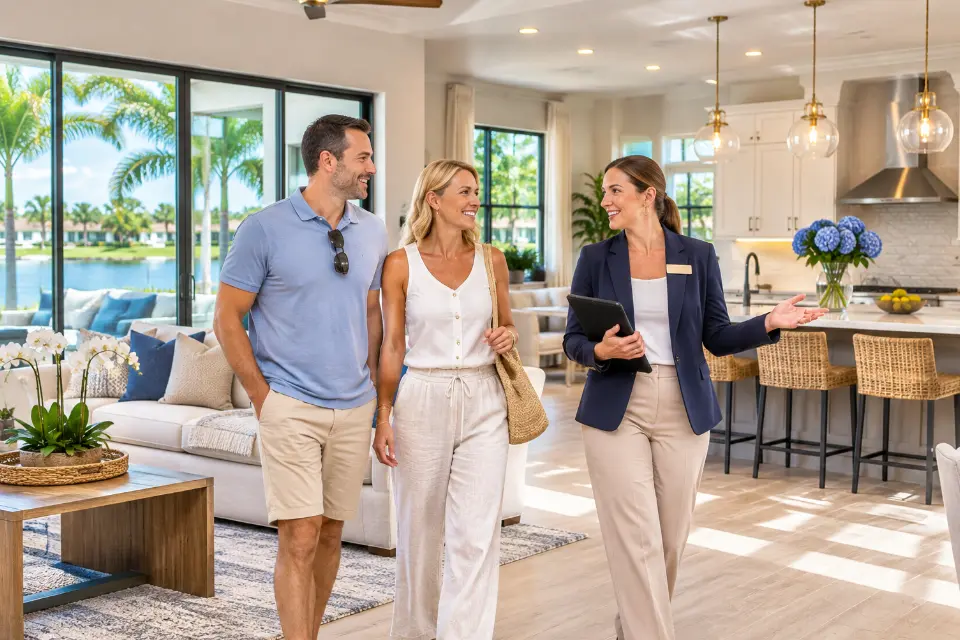
Before visiting a new construction model home in Florida, decide whether you want your own real estate professional involved, because some builders have registration procedures that can matter from the first visit. Remember that the on-site sales representative does not automatically represent you, and the decorated model may include upgrades that are not part of the advertised base price. Ask for written information about the exact home price, lot premium, included features, incentives, HOA and CDD costs, estimated completion, warranties and inspection access. Treat the model as a demonstration of possibilities, not necessarily the home you will receive at the starting price.
Quick Answers About Visiting a New Construction Model Home
Should I Contact a Realtor Before Visiting a Model Home?
If you want separate real estate representation, contacting your real estate professional before your first builder visit is generally a sensible approach. Builder policies differ, and some have registration or agent-accompaniment procedures that can affect whether an outside agent is recognized for compensation purposes. Representation and compensation arrangements should be clarified before touring.
Does the Salesperson in the Model Home Represent Me?
Do not assume so. The sales professional may be working for the builder or owner/developer. Ask directly about the person's role and brokerage relationship, and understand who is representing your interests before relying on transaction guidance.
Are Everything I See in the Model Home Included?
No. Model homes frequently showcase optional structural features, premium finishes, upgraded cabinetry, flooring, lighting, landscaping and other design choices. Request written specifications identifying what is standard and what costs extra.
Is the Advertised Starting Price What I Will Actually Pay?
Not necessarily. The completed price can change with the homesite, lot premium, structural options, design selections and other choices. Ask for a written price covering the exact home configuration you are considering.
Should I Ask About Builder Incentives?
Yes, but compare the complete financial picture. Incentives may involve closing-cost contributions, upgrades or financing through an affiliated or preferred lender, and eligibility and terms can change. Buyers should compare loan terms with a qualified mortgage professional rather than evaluating an incentive only by its headline value.
Can I Have a New Construction Home Independently Inspected?
Independent inspections are worth discussing, but inspection rights, access and timing should be confirmed before signing the builder contract. Buyers should use appropriately licensed inspectors and qualified specialists for property-specific evaluations.
Do New Construction Communities Have HOA or CDD Fees?
Some do, but the structure varies by development. A property may have HOA assessments, a Community Development District assessment, both, or neither. Verify the actual recurring and non-ad valorem obligations for the specific homesite rather than relying on general community marketing.
Why Should You Prepare Before Your First Model Home Visit?
Your first model-home visit can have more significance than simply deciding whether you like a floor plan. You may be asked to register, provide contact information, discuss financing, select a homesite or even consider a purchase agreement.
That is why preparation should begin before you walk into the sales center. Buyers should have a general budget, financing strategy and list of priorities, and should decide whether they want separate real estate representation.
For a broader overview of the process, read Hunt Brothers Realty's guide to buying new construction in Florida.
Should You Bring Your Own Real Estate Professional to a Model Home?
If you want your own real estate professional involved in a new construction purchase, it is generally better to establish that relationship before your first builder visit. Some builders have procedures requiring an outside agent to register a buyer, accompany the buyer or otherwise comply with the builder's policies.
There is no single Florida rule that makes every builder's registration policy identical. One builder may have a different procedure from another, and policies can change.
If you tour alone and later decide that you want an agent involved, the builder may take a different position on whether it will recognize or compensate that agent. That does not necessarily prevent you from obtaining representation, but it can affect compensation arrangements.
Hunt Brothers Realty's guide to using a Realtor for Florida new construction explains this issue in greater detail.
Who Does the Builder's Sales Representative Work For?
The friendly professional greeting you at the model home does not automatically represent you as the buyer. Builder sales centers exist to market and sell the builder's homes, and Florida licensing rules allow real estate sales associates to work under a broker or registered owner/developer.
The on-site representative can be an excellent source for information about available floor plans, homesites, construction schedules, options and current builder programs. Buyers should still clarify the representative's role and understand whose interests that person is serving in the transaction.
Florida recognizes different brokerage relationships. A buyer should understand the relationship and services being offered rather than assuming that everyone involved in a transaction has the same duties.
Why Is Builder Registration Important?
Registration can establish how the builder records your initial contact and whether an outside real estate professional is associated with your visit. Procedures vary by builder, so buyers should not assume that registration at one community works the same way at another.
Before entering a sales center, a buyer working with a real estate professional can have that professional confirm the builder's current registration requirements.
Buyers should also understand any buyer representation agreement they sign. Florida Realtors recommends addressing representation arrangements before property touring, and compensation should be clearly documented and understood.
Is the Model Home the Same as the Base Home?
Usually, buyers should not assume that every feature displayed in a model home is included in the builder's advertised starting price. Models are designed to demonstrate floor plans and available design possibilities, which can include optional features and premium finishes.
Potential upgrades may include:
- Extended lanais
- Swimming pools and outdoor kitchens
- Premium flooring
- Upgraded cabinetry and countertops
- Decorative lighting
- Built-in appliances
- Additional bedrooms or bathrooms
- Expanded garages
- Ceiling treatments
- Premium doors and windows
- Enhanced landscaping
- Furniture and interior decorating that are not part of the sale
Ask the sales representative to identify which visible features are standard, which are optional and which are simply model-home merchandising.
How Do You Compare the Model Home With What You Will Actually Buy?
Compare written specifications, not just appearances. Before making a decision, request documentation showing the standard features for the floor plan and the exact options included in the price being quoted to you.
When possible, ask to see a completed or nearly completed home with the same floor plan and a more comparable level of finishes. An unfurnished inventory home can sometimes provide a clearer sense of room dimensions and standard features than a professionally decorated model.
The final purchase decision should be based on the specific plans, specifications, selections and contractual documents associated with the home you are buying, not solely on what you remember seeing in the model.
Why Can the Final New Construction Price Be Higher Than the Starting Price?
An advertised starting price may represent a floor plan with standard specifications on a qualifying homesite, not the final cost of the configuration a buyer ultimately chooses.
The completed purchase price may be affected by:
- Homesite or lot premiums
- Structural options
- Design-center selections
- Pool and outdoor-living packages
- Garage changes
- Kitchen and bathroom upgrades
- Flooring and cabinetry
- Appliance packages
- Other buyer-selected options
The number worth comparing is the completed-home price, not simply the number printed on the community sign.
What Should You Know About Lot Premiums?
The same floor plan can have a different price depending on the homesite. Builders may charge premiums for certain locations or lot characteristics, and those premiums can materially affect the purchase price.
When comparing lots, consider objective property characteristics such as:
- Lot dimensions
- Home orientation
- Lake, preserve or other views
- Proximity to community amenities
- Proximity to major roads
- Utility and drainage easements
- Adjacent planned development
- Space available for a pool or other permitted improvements
A premium view today should also be evaluated against available plans for surrounding land. Buyers should verify relevant development, easement, boundary and permitting information with the appropriate builder, surveyor, title professional or local government authority rather than assuming nearby vacant land will remain unchanged.
What Should You Ask About Builder Incentives?
Ask what the incentive is worth, what conditions apply and whether accepting it requires using a particular lender, title provider or other affiliated service. Builder promotions can change with inventory, financing conditions, community phase and sales goals.
An incentive might involve:
- Closing-cost contributions
- Interest-rate programs
- Design-center credits
- Included upgrades
- Price adjustments on selected inventory homes
A large incentive is not automatically the lowest-cost financing choice. Interest rates, lender fees, loan terms, closing costs and qualification requirements should be compared with a qualified mortgage professional using the buyer's actual financial circumstances.
Should You Ask About HOA and CDD Costs During the Model Home Visit?
Yes. The purchase price is only one part of the cost of owning a new construction home. Many Florida master-planned communities have homeowners association assessments, and some properties are also located within Community Development Districts.
Ask for current written information addressing:
- HOA assessments
- What the HOA assessment covers
- CDD assessments, when applicable
- Other recurring community charges
- Community rules and architectural restrictions
- Amenity access and any separate charges
- Developer control and anticipated transition arrangements
Fees and assessments can change, and CDD obligations can be parcel-specific. Buyers should review current governing and assessment documents for the actual property and obtain professional guidance when interpretation is needed.
Are the Amenities You See Already Completed?
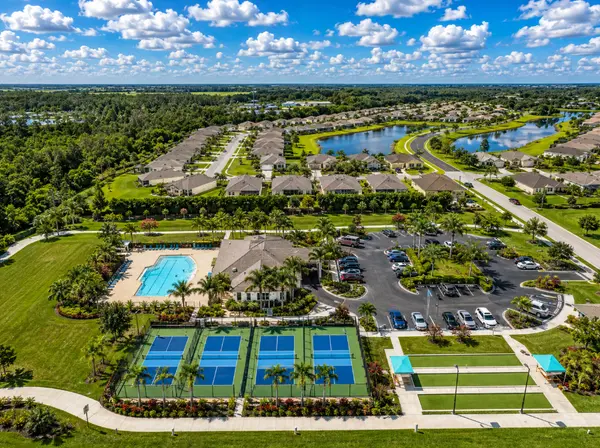
Do not assume every amenity shown in marketing materials is already completed or guaranteed to remain exactly as illustrated. In a developing community, some amenities may be open, under construction or planned for a future phase.
Ask which amenities currently exist, which are under construction and which are proposed. For future facilities, ask whether there is an estimated completion schedule and what contractual or governing documents address them.
Marketing renderings can help buyers visualize a community, but important purchasing decisions should be based on verified documents and current conditions.
What Should You Ask About Future Development?
A model home shows what exists today, but buyers should also investigate what may be built around the property in the future. New construction communities can continue developing for years after the first residents move in.
Ask about additional residential phases, planned roads, amenity sites, commercial parcels and other known development. If a particular adjacent parcel or view materially affects your decision, verify its current land-use and development information through appropriate official sources.
Future development plans can change. Buyers should avoid treating a verbal statement about an undeveloped parcel as a permanent guarantee.
What Should You Know Before Choosing a Homesite?
The homesite can be just as important as the floor plan. Two identical homes can have very different outdoor environments, orientations and surrounding conditions.
Walk the homesite when possible. Look beyond the lot itself and consider nearby roads, stormwater ponds, common areas, utility infrastructure, neighboring homesites and future construction.
Buyers considering a pool, fence, outdoor kitchen or other future improvement should confirm lot dimensions, setbacks, easements, HOA requirements and permitting constraints with the appropriate qualified professionals and authorities before assuming the improvement will be permitted.
Should You Ask About Flood Zones and Insurance Before Signing?
Yes. Insurance and flood considerations should be investigated before a buyer commits to a specific property, not postponed until the house is nearly complete. Florida insurance availability and premiums can vary substantially based on the property, construction details, location, coverage and insurer.
A new home's construction standards may be relevant to insurance underwriting, but buyers should not assume that new construction automatically guarantees a particular premium or coverage level.
Obtain property-specific insurance information and quotes from a qualified insurance professional before making a purchasing decision. Flood-zone information and any applicable elevation or property-specific documentation should also be independently verified.
Why Should You Ask About Property Taxes?
The current tax bill on a vacant or recently improved homesite may not represent the taxes a buyer will ultimately pay after construction and reassessment. This can make an existing public tax record a poor basis for estimating the completed home's future carrying cost.
Ask for an estimate based on the completed property, then independently review the relevant county property appraiser and tax collector information. Homestead status and other individual tax circumstances can also affect an owner's taxes.
Property tax consequences depend on the specific owner and property. Buyers should consult the appropriate county offices and a qualified tax professional regarding individualized tax questions.
Should You Get Preapproved Before Touring Model Homes?
Understanding your financing range before becoming attached to a model home can make the visit much more useful. A lender can help a buyer evaluate financing based on income, credit, down payment, interest rates and other individual factors.
The relevant budget should account for more than the base home price. Lot premiums, upgrades, HOA assessments, CDD obligations, taxes, insurance and closing costs can all affect the overall ownership expense.
Financing terms and affordability are individual financial matters. Buyers should review loan options and costs with qualified mortgage professionals before committing to a purchase.
What Should You Know About a Builder Contract?
A builder's purchase agreement may be substantially different from the contract commonly used in a Florida resale transaction. Buyers should not assume familiar resale provisions automatically apply to a new construction contract.
Before signing, buyers should understand provisions involving:
- Deposits
- Refundability
- Construction deadlines and extensions
- Price adjustments, if applicable
- Inspection access
- Financing provisions
- Change orders
- Substitutions
- Closing requirements
- Warranty provisions
- Dispute-resolution provisions
A licensed real estate professional can assist with the brokerage transaction and help identify questions. Legal interpretation of contract language, deposit rights, remedies, warranties and other legal obligations should be handled by a qualified Florida real estate attorney.
Can You Independently Inspect a Brand-New Home?
New construction should not automatically be treated as defect-free simply because the home has never been occupied. Independent inspections can provide another professional review of accessible systems, components and workmanship.
The key is to determine what the builder contract permits and when inspection access is available. Depending on the builder and construction process, buyers may want to ask about inspections at various stages and before closing.
Municipal inspections and an independent buyer inspection serve different purposes. Inspection findings should be evaluated with the appropriate licensed home inspector, contractor, engineer or other qualified professional before the buyer makes a decision.
What Should You Ask About the Builder's Warranty?
Ask for the actual warranty documents before relying on general statements that the home "comes with a warranty." Coverage, exclusions, claim procedures and time periods can differ among builders and warranty programs.
Useful questions include who administers warranty requests, how claims are submitted, which components are covered, what exclusions apply and what happens if an issue is discovered after closing.
Warranty documents can create legal rights and obligations. Buyers with questions about the legal meaning or enforceability of warranty provisions should consult a qualified Florida real estate or construction attorney.
Should You Research the Builder Before Buying?
A beautifully decorated model home does not provide a complete picture of the builder or construction process. Buyers should research the company before making a contractual commitment.
Questions worth asking include:
- How long has the builder operated in Florida?
- What other communities has the builder completed?
- Who supervises construction?
- How are construction updates communicated?
- How are incomplete items handled?
- How does the warranty service process work?
- What inspections can the buyer arrange?
Florida contractor and real estate licensing information can be researched through the Florida Department of Business and Professional Regulation. A license search is one part of due diligence and is not a guarantee of future construction quality or service.
What Should You Bring to a Model Home Visit?
A short written checklist can keep a model-home visit focused on the property rather than the decorating. Bring or save the questions that matter most to your purchase.
Useful items include:
- Your list of must-have features
- Your target price range
- Questions about standard features and upgrades
- Questions about available homesites
- Questions about HOA and CDD obligations
- Questions about construction timing
- Questions about inspections and warranties
- Questions about current incentives
- Your real estate professional, when applicable under the builder's registration procedure
Take notes on each community you visit. After several model homes, floor plans, incentives and fee structures can become surprisingly difficult to distinguish from memory.
What Questions Should You Ask at a New Construction Model Home?
The most useful questions focus on the exact property you might purchase, not simply the model you are touring.
- What is the current base price for this floor plan?
- Which features in this model are upgrades?
- What would this model cost with the displayed structural and design options?
- Which homesites are currently available?
- What lot premiums apply?
- Are quick move-in or inventory homes available?
- What deposits are required?
- What is the estimated construction timeline?
- What does the contract say about construction delays?
- What incentives are currently available, and what conditions apply?
- What are the current HOA assessments?
- Does the property have CDD assessments or other recurring charges?
- Which amenities are completed and which are planned?
- How much additional development is planned?
- What independent inspection access is permitted?
- What warranties apply?
- What happens if unfinished items remain at closing?
- What are the builder's current outside-agent registration procedures?
What Are Common Mistakes When Visiting Model Homes?
The biggest mistake is evaluating only the model's appearance instead of the complete purchase. A model home is a sales and design showcase, while the buyer ultimately owns a specific home on a specific lot under a specific contract.
Common mistakes include:
- Visiting before clarifying desired buyer representation
- Assuming the on-site salesperson represents the buyer
- Comparing only advertised base prices
- Assuming model-home upgrades are standard
- Ignoring lot premiums
- Failing to investigate HOA and CDD expenses
- Assuming future amenities or views are guaranteed
- Waiting too long to investigate insurance
- Assuming new construction does not need an independent inspection
- Signing a builder contract without understanding its terms
Should You Buy on Your First Model Home Visit?
A buyer does not need to make a purchase decision simply because an attractive homesite, incentive or inventory home is presented during the first visit. Availability can change, but the financial and contractual commitment deserves appropriate due diligence.
Before signing, compare the complete price, homesite, community expenses, financing, insurance, contract, inspection opportunities and alternatives in the resale market or competing new construction communities.
For another perspective on the decision, see Is New Construction Worth It in Florida?
The Bottom Line Before You Walk Into a Model Home
A new construction model home should be treated as the beginning of your research, not the end of it. Decide whether you want separate representation before visiting, understand the builder's registration procedure, identify what is standard versus upgraded, and compare the full completed-home cost rather than the advertised starting price.
Then investigate the homesite, HOA and CDD obligations, taxes, insurance, financing, construction timeline, inspection access, warranty and future development. The goal is to understand the property you will actually own, not simply the model home that introduced you to the community.
Tour Florida New Construction with Hunt Brothers Realty
Hunt Brothers Realty helps buyers compare new construction communities, builders, homesites, inventory homes and resale alternatives throughout Florida's Gulf Coast markets.
Before your first builder visit, review What Should I Know Before Buying New Construction in Florida? and Should I Use a Realtor When Buying New Construction in Florida?
If you are planning to tour model homes and want real estate representation, contact Hunt Brothers Realty before your first builder visit so current registration procedures and available communities can be reviewed with you.
Informational notice: This article provides general real estate and educational information and is not individualized legal, financial, tax, insurance, lending, inspection, engineering, construction, title or other professional advice. Builder policies, contracts, incentives, fees, financing programs, construction schedules, warranties and inspection procedures vary and can change. Buyers should verify property-specific information with the builder and appropriate qualified professionals. Financing should be reviewed with a qualified mortgage professional, insurance with a licensed insurance professional, inspection and construction conditions with appropriately licensed inspectors or specialists, and questions involving contract rights, deposits, warranties or other legal matters with a qualified Florida real estate attorney.
Sources
- Hunt Brothers Realty, What Should I Know Before Buying New Construction in Florida?
- Hunt Brothers Realty, Should I Use a Realtor When Buying New Construction in Florida?
- Hunt Brothers Realty, Is New Construction Worth It in Florida?
- Florida Realtors, Mastering Buyer Representation in Today's Market
- Florida Department of Business and Professional Regulation, Services Requiring a DBPR License
- Florida Department of Business and Professional Regulation
Hunt Brothers Realty
46 N. Washington Blvd, Ste 3, Sarasota, FL 34236
Phone: (941) 388-7017
Email: info@huntbrothersrealty.com
Website: HuntBrothersRealty.com
Categories
- All Blogs 2421
- Anna Maria Island 87
- Bird Key 4
- Bradenton 238
- Buying a Home 1459
- Casey Key 2
- Clearwater 14
- Condos & HOA Living 1382
- Ellenton 6
- Englewood 13
- First Time Homebuyers 1574
- Foreclosures 5
- Home Selling 7
- Homeownership 1608
- Lakewood Ranch 28
- Lido Key 29
- Longboat Key 80
- Luxury/Waterfront Properties 1549
- Market Updates & Trends 1061
- Mortgages & Financing 71
- Move-Up Buyers 25
- Neighborhood Guides 1181
- New Construction 41
- Palmetto 4
- Parrish 7
- Port Charlotte 16
- Punta Gorda 164
- Real Estate Investing 1463
- Relocation to Florida 1496
- Safety Harbor 4
- Sarasota 100
- Sarasota - Downtown 167
- Selling a Home 146
- Siesta Key 92
- St. Petersburg 9
- Taxes and Homestead 1
- Tierra Verde 7
- Vacation & Second Homes 1656
- Venice 212
- Wellen Park 22
Recent Posts