How Much Should Homeowners Budget for Repairs Each Year?
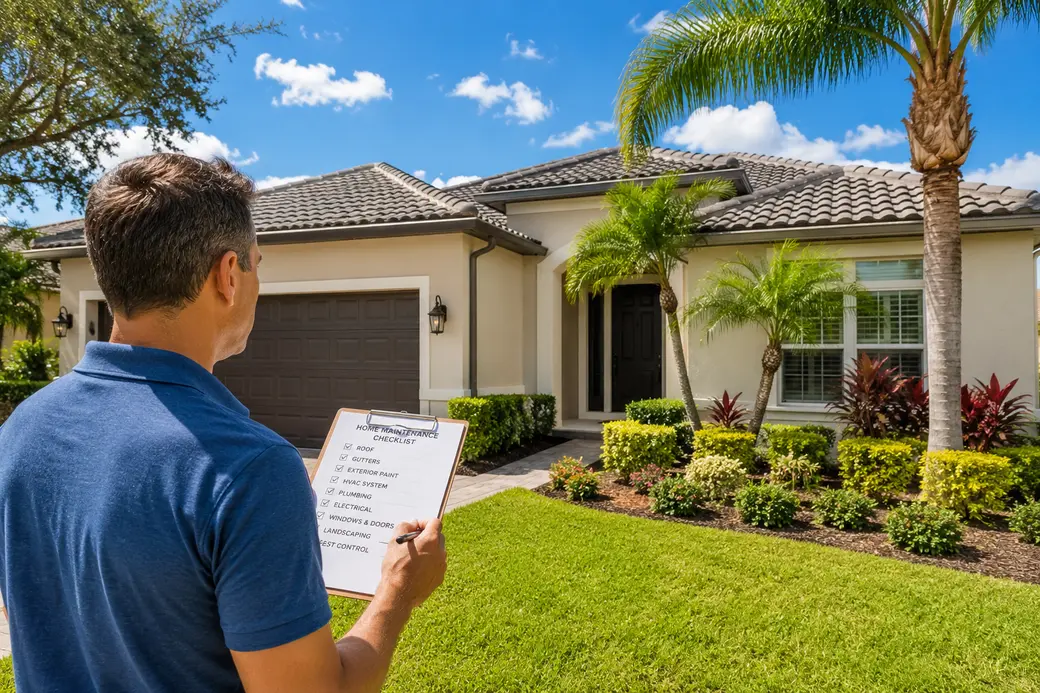
A useful starting point is to budget about 1% to 4% of your home’s value each year for maintenance, repairs and replacements, according to Fannie Mae. That means a $500,000 home might have a general savings target of $5,000 to $20,000 per year, but the right number depends much more on the individual property than its price alone. A newer home with recently installed systems may justify planning toward the lower end, while an older Florida home with an aging roof, HVAC system, pool or coastal exposure may require a larger reserve. The goal is to build a repair fund before a major component needs attention.
Quick Answers About Annual Home Repair Budgets
What percentage of a home’s value should you budget for repairs?
Fannie Mae suggests a general rule of thumb of saving 1% to 4% of the home’s value per year for maintenance costs, including repairs and replacements. This is a planning guideline rather than a prediction of actual expenses.
How much is that for a $500,000 home?
Using the 1% to 4% guideline, the annual savings range would be $5,000 to $20,000. The appropriate target depends on the home’s age, condition, systems, features and anticipated projects.
Do newer homes need the same repair budget?
Not necessarily. Fannie Mae notes that owners of newer homes may be able to plan closer to the lower end of its range because newer homes tend to have lower average maintenance costs. Condition and warranties still matter.
Should older Florida homes have a larger reserve?
Often, yes. Older homes may have multiple systems approaching repair or replacement periods. Fannie Mae specifically notes that homeowners with properties more than 30 years old may benefit from planning toward the higher end of its general savings range.
Does the repair budget include routine maintenance?
It should. A practical reserve needs to account for recurring maintenance as well as eventual repairs and replacements. Fannie Mae specifically includes maintenance, repairs and replacements within its budgeting guidance.
Do pools require extra budgeting?
Yes. Pools add recurring service and operating expenses as well as eventual equipment, surface, tile, coping, deck and enclosure repairs. A pool home should be evaluated differently from an otherwise similar home without one.
What about waterfront homes?
Waterfront properties can add seawalls, docks, boat lifts and additional coastal exterior maintenance to the ownership budget. These components should be inspected and budgeted separately rather than assumed to fit comfortably inside a generic percentage.
The 1% to 4% Home Maintenance Rule
One widely used starting point comes from Fannie Mae’s maintenance and repair budgeting guidance. It recommends considering an annual savings goal equal to approximately 1% to 4% of the home’s value.
Using that guideline:
- $300,000 home: approximately $3,000 to $12,000 per year
- $500,000 home: approximately $5,000 to $20,000 per year
- $750,000 home: approximately $7,500 to $30,000 per year
- $1 million home: approximately $10,000 to $40,000 per year
Those numbers are savings targets, not estimates of what you will necessarily spend. A homeowner could have a relatively inexpensive year followed by a year involving a roof, HVAC system or other major project. The reserve is intended to help absorb that uneven pattern.
Why Home Value Alone Is Not Enough
A percentage-of-value formula is convenient, but it has limitations. Two $700,000 homes can have dramatically different maintenance profiles.
One could be relatively new, with a newer roof, HVAC system and windows. Another could be an established coastal home with an aging roof, older mechanical systems, swimming pool, mature landscaping, dock and seawall. Their market values may be similar, but their likely repair schedules are not.
That is why Hunt Brothers Realty encourages buyers to evaluate total ownership cost and the condition of individual property systems rather than focusing only on purchase price.
Start With the Age and Condition of Major Systems
A more useful repair budget starts with an inventory of the home’s major components. Instead of asking only, “How much should I save this year?” ask, “What is most likely to need attention during the next several years?”
Important components can include:
- Roof
- HVAC equipment
- Water heater
- Plumbing
- Electrical equipment
- Windows and exterior doors
- Exterior paint and finishes
- Appliances
- Pool and pool equipment
- Screen enclosures
- Driveways, patios and walkways
- Drainage and landscaping
- Seawalls, docks and boat lifts when applicable
Age alone does not establish when a component must be replaced. Installation quality, material, maintenance, weather exposure and actual condition all matter. A qualified inspector, contractor or other appropriate professional can help evaluate individual systems when their condition materially affects your planning.
Why the Roof Can Change Your Entire Repair Budget
The roof deserves its own line in a Florida maintenance plan. It is a major building system, and its condition can affect maintenance planning, water-intrusion risk and potentially insurance underwriting.
As explained in Hunt Brothers Realty’s guide to evaluating a roof before buying a home, homeowners should consider documented roof age, material, visible condition, previous repairs, permits and remaining useful life rather than judging the roof by age alone.
If a qualified roofing professional indicates that substantial work is likely within the next several years, the homeowner can build that anticipated expense into a separate capital reserve instead of hoping the general annual maintenance allowance will cover it.
HVAC Is Another Florida Budget Priority
Florida’s climate makes air-conditioning equipment an important part of homeownership. Routine servicing, filters, drain-line maintenance, component repairs and eventual equipment replacement can all become part of the ownership budget.
Rather than assuming an HVAC system will last a particular number of years, determine its age, maintenance history and current condition. A qualified HVAC professional can provide property-specific information about performance, repair needs and replacement planning.
Older Plumbing and Electrical Systems Can Require Additional Planning
Established Florida homes deserve additional attention because some contain older plumbing and electrical components. Hunt Brothers Realty’s Florida home inspection red flags guide highlights roofs, cast iron plumbing and older electrical panels as examples of systems that may warrant closer investigation.
That does not mean an older home is automatically expensive to maintain. A decades-old house may already have a newer roof, updated electrical equipment, replacement plumbing, modern HVAC and upgraded windows. Conversely, several original systems could be approaching major work at roughly the same time.
The renovation history can therefore be more useful for budgeting than the year built by itself.
How Should Pool Owners Adjust Their Budget?
A swimming pool adds another set of components to maintain. Routine service is only one part of the expense.
Pool-related planning may need to include:
- Routine pool service and water treatment
- Pump and filtration equipment
- Pool heater when present
- Automation and controls
- Pool lighting
- Surface maintenance and eventual resurfacing
- Tile and coping
- Deck repairs
- Screen enclosure maintenance when applicable
The correct allowance depends on the individual pool and its equipment. Owners should obtain estimates from qualified pool professionals when known repair or replacement needs are approaching rather than relying on a generic annual figure.
Coastal Homes May Need a Different Maintenance Reserve
A home near Florida’s coast can have maintenance considerations that an inland property does not. Salt-air exposure can affect exterior metals and equipment, while waterfront homes may include infrastructure that requires specialized inspection and maintenance.
Hunt Brothers Realty’s coastal home buyer guide identifies potential ownership expenses including roof and exterior maintenance, pool care, landscaping, salt-air corrosion, hurricane preparation and future capital improvements.
For waterfront properties, the list may also include seawalls, docks and boat lifts. Those components should generally be treated as separate capital assets rather than assuming an ordinary home-maintenance reserve will be sufficient.
Should a Newer Home Have a Smaller Repair Fund?
Potentially. Fannie Mae notes that newer homes tend to have lower average maintenance costs and suggests that 1% of value may be sufficient as a general savings target for a newer property.
New construction can begin with a new roof, HVAC equipment, plumbing fixtures, electrical components and appliances. Hunt Brothers Realty’s older Florida home versus new construction guide explains why this can reduce the number of major replacement decisions expected during the early years of ownership.
That does not mean a new home is maintenance-free. Landscaping, pest control, HVAC servicing, exterior cleaning, pool care and ordinary repairs still occur. Owners should also understand applicable builder and manufacturer warranties and what maintenance is required to preserve them.
Should an Older Home Automatically Get a 4% Budget?
Not automatically. Fannie Mae suggests that owners of homes more than 30 years old may benefit from leaning toward a 4% savings goal, but an older home’s renovation history can substantially change the picture.
Consider two homes built in the same year. One still has several aging systems. The other has a recently replaced roof, newer HVAC equipment, updated plumbing and electrical systems, replacement windows and documented renovations. Their future repair needs may be very different.
For an older property, build the budget from the inspection findings, documented improvements and professional evaluations rather than applying a percentage without considering condition.
Separate Routine Maintenance From Major Replacements
One practical way to think about homeownership expenses is to divide the repair budget into two categories.
Routine maintenance
These are the recurring tasks that help keep the home functioning and can reduce deferred maintenance.
- HVAC servicing and filters
- Landscaping
- Pool service
- Exterior cleaning
- Pest management
- Minor plumbing or electrical repairs
- Caulking and sealing
- Small paint and finish repairs
Capital replacements
These are larger projects that may happen only occasionally but can require substantially more money at once.
- Roof replacement
- HVAC replacement
- Major plumbing work
- Electrical upgrades
- Exterior painting or major repairs
- Pool resurfacing or equipment replacement
- Screen-enclosure repairs or replacement
- Seawall, dock or boat-lift work when applicable
Separating these categories makes it easier to distinguish predictable annual expenses from the reserve needed for larger future projects.
Build a Property-Specific Five-Year Repair Plan
A five-year maintenance plan can be more useful than relying entirely on a percentage rule. Begin with the home inspection, maintenance records, permits and invoices, then identify major systems that may require attention.
For each major component, record:
- Approximate installation or replacement date
- Current observed condition
- Available maintenance records
- Known repairs
- Professional recommendations
- Current replacement estimate when appropriate
- Priority level
Then divide anticipated larger expenses into manageable savings goals. For example, if a qualified professional identifies a likely future project, obtaining a current estimate can help the homeowner establish a reserve target. Actual timing and costs can change, so the plan should be reviewed periodically.
Track What You Actually Spend
Fannie Mae recommends tracking maintenance spending throughout the year. That creates a property-specific record instead of relying indefinitely on a national rule of thumb.
Keep invoices and records for landscaping, leaks, painting, flooring, HVAC service, pool work, appliance repairs and other maintenance. Over several years, those records can reveal the home’s actual baseline expenses.
Documentation can also be useful when you eventually sell. Records of roof work, HVAC replacement, plumbing repairs, permitted improvements and other major projects can help establish what was done and when.
Do HOA and Condo Fees Replace a Repair Budget?
Not necessarily. Association fees may cover certain maintenance, amenities or common expenses, but the extent of that responsibility depends on the governing documents and property type.
A condominium owner, for example, may not be directly responsible for maintaining certain common structural or exterior components, but can still have unit-level maintenance expenses and may be affected by association assessments. A single-family HOA may maintain common areas while leaving virtually all home repairs to the individual owner.
Owners should review current association documents and budgets to understand what the association maintains and what remains their responsibility. Association financial, assessment and legal questions should be reviewed with the appropriate association representatives and qualified legal, financial or other professionals when individualized guidance is needed.
Maintenance Budget vs. Emergency Fund
It can be useful to distinguish expected home maintenance from broader household emergency savings. Routine maintenance and foreseeable replacements are not truly unexpected. Roofs, air-conditioning systems, water heaters and appliances eventually require attention.
A dedicated home-maintenance reserve can therefore be used for anticipated ownership expenses, while a broader emergency fund may be reserved for circumstances outside the normal maintenance plan. How much a household should hold in either category depends on its finances, property and risk tolerance.
Homeowners seeking individualized savings, cash-reserve or investment guidance should discuss their circumstances with an appropriate qualified financial professional.
What Should Buyers Do Before Closing?
The best time to begin a maintenance budget is before the home becomes yours. During due diligence, investigate the age and condition of major systems and identify potential near-term projects.
Useful questions include:
- How old is the roof, and what is its documented condition?
- How old is the HVAC equipment?
- What plumbing materials are present?
- What electrical equipment and wiring are present?
- Are there signs of moisture or drainage problems?
- When were major appliances replaced?
- What repairs or renovations have been completed?
- Were applicable improvements permitted?
- What additional systems, such as pools or waterfront infrastructure, require maintenance?
Hunt Brothers Realty’s Florida inspection guide provides additional context for evaluating major systems before purchase.
Frequently Asked Questions About Home Repair Budgets
Is 1% of home value enough for maintenance?
It may be a reasonable starting point for some newer or well-maintained homes, consistent with Fannie Mae’s general guidance. It may be insufficient for an older property or one with several systems approaching major work.
Should I spend my entire repair budget every year?
No. The purpose of a reserve is to prepare for uneven expenses. Money not needed during a low-repair year can remain available for larger future maintenance and replacement needs.
Does homeowners insurance pay for normal repairs?
Homeowners should not assume insurance will pay for ordinary maintenance, aging or every type of damage. Coverage depends on the policy, cause of loss, exclusions, deductibles and other terms. Review your specific coverage with a qualified insurance professional rather than using insurance as a substitute for a maintenance reserve.
What if I am buying a home that already needs repairs?
Immediate known repairs should generally be evaluated separately from an ordinary annual reserve. Obtain appropriate inspections and estimates so the initial repair requirement can be considered as part of the property’s total acquisition and ownership cost.
A Better Budget Starts With the House, Not Just a Percentage
The 1% to 4% guideline provides homeowners with a useful place to begin, but the best maintenance plan is built around the actual property. A recently constructed inland home and an established Gulf Coast residence with a pool and waterfront infrastructure should not automatically have the same repair strategy simply because they have similar market values.
Inventory the major systems, understand their condition, track routine spending and build reserves for larger projects that may be approaching. That turns home maintenance from a series of financial surprises into a more manageable part of long-term ownership.
Planning the Full Cost of Florida Homeownership?
Hunt Brothers Realty helps Florida Gulf Coast buyers compare more than asking prices. Understanding roof condition, major systems, pools, associations, coastal features and other ownership responsibilities can provide a clearer picture of how two similarly priced homes may differ after closing.
Review Hunt Brothers Realty’s older Florida home versus new construction guide, explore questions to ask before buying near the coast, or contact Hunt Brothers Realty to discuss a Gulf Coast home search.
Informational notice: This article provides general real estate and home-maintenance information for educational purposes. Percentage-based maintenance guidelines are planning tools and are not individualized financial, insurance, inspection, engineering, construction, tax or other professional advice. Actual maintenance and repair costs vary substantially by property, condition, location, materials, labor and scope of work. Homeowners and buyers should obtain property-specific inspections and estimates from qualified contractors, inspectors, engineers and other appropriate professionals. Questions involving personal savings or financial planning should be reviewed with an appropriate qualified financial professional, and insurance questions should be reviewed with a qualified insurance professional.
Sources
- Fannie Mae, How to Build Your Maintenance and Repair Budget
- Hunt Brothers Realty, What to Look for in a Roof Before Buying a Home
- Hunt Brothers Realty, Florida Home Inspection Red Flags
- Hunt Brothers Realty, Older Florida Home vs. New Construction
- Hunt Brothers Realty, Questions to Ask Before Buying a Home Near the Coast
Contact Hunt Brothers Realty
46 N. Washington Blvd, Ste 3, Sarasota, FL 34236
Phone: (941) 388-7017
Email: info@huntbrothersrealty.com
Website: HuntBrothersRealty.com
Categories
- All Blogs 2112
- Anna Maria Island 86
- Bird Key 4
- Bradenton 236
- Buying a Home 1171
- Casey Key 2
- Clearwater 11
- Condos & HOA Living 1088
- Ellenton 5
- Englewood 11
- First Time Homebuyers 1280
- Foreclosures 5
- Home Selling 6
- Homeownership 1304
- Lakewood Ranch 25
- Lido Key 28
- Longboat Key 80
- Luxury/Waterfront Properties 1244
- Market Updates & Trends 766
- Mortgages & Financing 48
- Move-Up Buyers 22
- Neighborhood Guides 879
- New Construction 34
- Palmetto 3
- Parrish 6
- Port Charlotte 10
- Punta Gorda 17
- Real Estate Investing 1160
- Relocation to Florida 1200
- Safety Harbor 3
- Sarasota 81
- Sarasota - Downtown 162
- Selling a Home 146
- Siesta Key 91
- St. Petersburg 8
- Tierra Verde 5
- Vacation & Second Homes 1353
- Venice 193
- Wellen Park 19
Recent Posts