What Should I Inspect Before Buying a Home With a Pool?
Before buying a home with a pool, inspect more than whether the water looks clean. Buyers should investigate the pool surface, structure, decking, coping, pumps, filters, heaters, plumbing, electrical components, drainage, safety features and any screened enclosure. Ask about the age of major equipment, previous leaks or repairs, permits and ongoing maintenance. In Florida, where pools are a common part of outdoor living, these items can affect both enjoyment and ownership costs. A general home inspection is useful, but a qualified pool professional may be appropriate when the pool’s condition, equipment or repair history requires specialized evaluation before you make a purchasing decision.
Quick Answers About Inspecting a Home With a Pool
Should I get a separate pool inspection?
It can be appropriate, particularly when the pool is older, has specialized equipment or shows signs of deterioration. A general home inspector may evaluate visible pool conditions within the scope of the inspection, while a qualified pool professional can provide more specialized evaluation when needed.
What are the biggest pool problems to look for?
Look for visible cracks, deteriorated finishes, damaged coping or decking, leaks, malfunctioning pumps or filters, corrosion, electrical concerns, drainage problems and damaged safety barriers or enclosures. Visible symptoms do not always reveal the underlying cause, so significant concerns should be professionally evaluated.
How do I know if a pool is leaking?
Unexplained water loss, wet areas around equipment, saturated soil, visible plumbing leaks or repeated water-level concerns can justify further investigation. Evaporation also lowers pool water levels, so suspected leakage should be evaluated rather than diagnosed from one observation.
Should I inspect the pool equipment?
Yes. Identify the pump, filter, heater when present, automation, sanitizer and other equipment. Ask about age, maintenance and repairs, and have the systems operated and evaluated within the appropriate inspection scope.
Do pool safety features matter when buying a Florida home?
Yes. Florida law contains residential swimming pool safety requirements, including requirements applicable to qualifying barriers and gates. Buyers should have the specific property evaluated for current requirements rather than assuming an existing fence, screen enclosure or alarm establishes legal compliance.
Should I check permits for the pool?
Yes, when permit history is relevant and available. Buyers may want to investigate permits for the original pool and later improvements such as heaters, electrical work, structural changes, decks or enclosures. The appropriate local permitting authority can address property-specific permit questions.
What costs should I investigate before buying?
Consider routine service, electricity, water, chemicals or treatment systems, heating, screen maintenance, equipment replacement and eventual surface, tile, coping or deck work. Actual expenses vary substantially by pool, equipment, usage and service arrangement.
Why Does a Pool Need Its Own Due Diligence?
A pool can be one of the most visible features of a Florida home, but its condition is not always easy to judge during a showing. Clear water and attractive landscaping do not tell you the age of the pump, whether underground plumbing is leaking or how much useful life may remain in the pool finish.
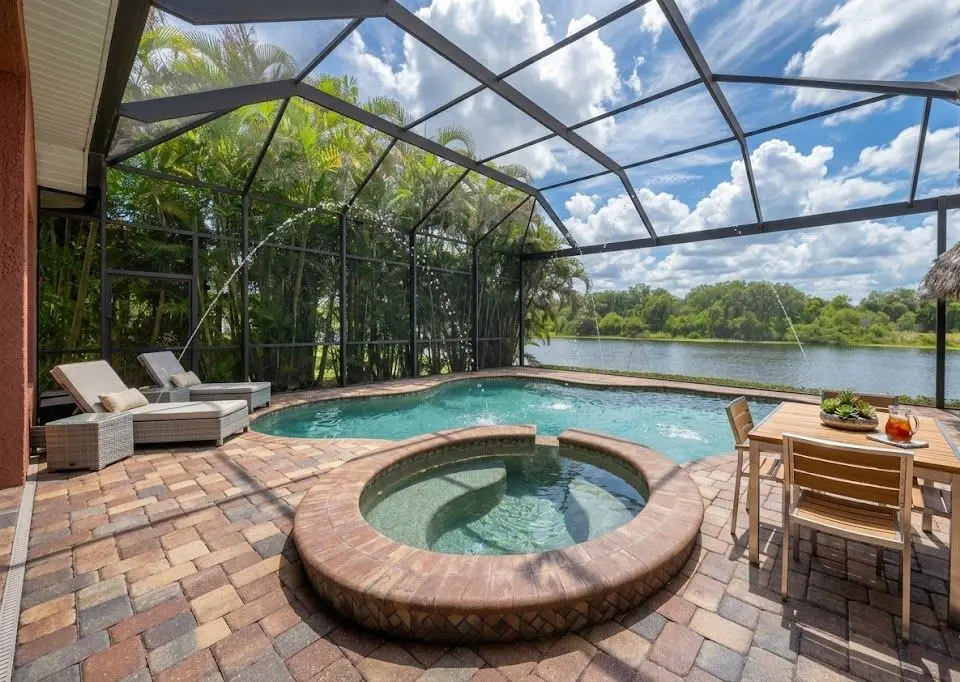
The pool is better viewed as a collection of systems. There is the vessel itself, the finish, plumbing, circulation equipment, electrical components, heating equipment when present, decking, drainage and safety features. A screened Florida pool may also have an enclosure with its own maintenance and repair considerations.
That is consistent with Hunt Brothers Realty’s Florida home inspection guidance, which encourages buyers to look beyond cosmetic finishes and understand the condition of the property and its major systems before closing.
1. Inspect the Pool Surface and Interior Finish
Begin with the visible interior of the pool. The surface may be plaster, aggregate, tile or another finish, and age and maintenance can affect its condition.
Conditions worth investigating include:
- Visible cracking
- Areas of deteriorated or missing finish
- Rough or uneven surfaces
- Discoloration or staining
- Loose or damaged tile
- Deterioration around fittings, drains or returns
- Previous patches or repairs
Not every crack or stain indicates a major structural problem. Likewise, attractive water can make surface deterioration harder to notice. A qualified pool professional can help determine whether an observed condition is cosmetic, maintenance-related or something requiring further evaluation.
2. Look Closely at the Coping and Pool Deck
The area surrounding the water deserves as much attention as the pool itself. Coping forms the edge around the pool, while the deck may consist of pavers, concrete, stone, tile or other materials.
Walk the area and look for loose materials, significant cracking, settlement, uneven surfaces, deteriorated joints and evidence of previous repairs. Notice whether water appears able to drain away appropriately rather than collecting beside the home or pool.
Drainage deserves particular attention because a pool deck is part of the home’s broader exterior water-management system. Hunt Brothers Realty’s Florida water-intrusion guide recommends evaluating exterior drainage and standing water as part of a buyer’s property investigation.
3. Check for Signs of Pool Leakage
A pool naturally loses some water through evaporation and normal use, so a lower water level does not automatically mean there is a leak. Repeated or unexplained water loss, however, deserves investigation.
Potential observations worth discussing with an inspector or pool professional include:
- A history of frequent water additions
- Wet areas around pool equipment
- Visible plumbing leakage
- Persistently saturated soil in an unusual location
- Previous leak-detection or plumbing repairs
- Unexplained repairs to the pool shell or surrounding deck
Determining whether a pool actually leaks, locating the source and identifying the appropriate repair can require specialized testing. Buyers should avoid treating a casual visual observation as a diagnosis.
4. Inspect the Pool Pump
The pump circulates water through the pool’s filtration and treatment system. Ask about its age, service history and whether it has been repaired or replaced.
During an appropriate professional inspection, the pump can be evaluated while operating. Conditions such as abnormal noise, visible leakage, corrosion or difficulty maintaining circulation can justify further investigation.
Do not assume that equipment is near the end of its useful life based solely on age. Maintenance, installation, environment and usage can affect equipment condition. The objective is to understand what is installed and its current condition.
5. Identify the Filter and Its Condition
Pools use filtration systems to remove debris and help maintain water quality. Identify what type of filter is installed and ask how it has been maintained.
Look for visible deterioration around the filter housing, valves and connecting plumbing. Ask when filter elements or media were last serviced or replaced, where applicable. A qualified pool professional can explain the condition of the installed system and likely maintenance requirements.
6. Test the Pool Heater When One Is Included
A pool heater can be particularly relevant to buyers who expect to use the pool during cooler periods. Depending on the property, heating may involve electric, heat-pump, gas or other equipment.
Ask about the heater’s age, fuel or energy source, maintenance and repair history. If the heater is included in the purchase, have it evaluated and operated when conditions and the inspection scope permit.
Heating cost depends on factors such as pool size, desired temperature, equipment efficiency, weather, frequency of use and whether a pool cover is used. Buyers should obtain property-specific information rather than relying on a generic monthly estimate.
7. Understand the Pool’s Water Treatment System
Ask how the pool is sanitized and what equipment is involved. Some Florida pools have salt-based chlorine-generation systems, while others use different treatment arrangements.
If specialized treatment equipment is installed, determine whether it is operational and what components require periodic service or replacement. Visible corrosion around equipment should also be investigated rather than dismissed as normal.
8. Review the Pool’s Electrical Components
Pools combine electricity and water, making electrical evaluation an important part of due diligence. Equipment, lighting, controls, bonding, grounding and protective devices may all be relevant depending on the installation.
Buyers should not attempt to diagnose or modify pool electrical systems themselves. Visible damaged wiring, improvised installations, corrosion or malfunctioning equipment should be evaluated by the appropriate qualified professional. A licensed electrician may be appropriate when an inspector or pool professional identifies an electrical concern.
9. Inspect the Pool Lights and Automation
Modern pools may include underwater lighting, automated valves, timers, remote controls, smartphone-connected systems, fountains, water features or integrated spa controls.
If these features are included in the sale, confirm what equipment is present and have it operated within the appropriate inspection scope. Ask whether manuals, service records, warranties, remotes or account-transfer information are available.
A pool should be evaluated based on the systems actually installed, not on assumptions from a listing description.
10. Inspect an Attached Spa Separately
An attached spa can share some pool equipment while also adding jets, valves, controls, heating requirements and additional plumbing. Ask for the spa to be operated during the appropriate professional inspection when practical.
Confirm whether water circulates correctly between the pool and spa, whether the heating system operates and whether the controls and visible components function as intended. Any suspected plumbing or equipment problem should receive appropriate professional evaluation.
11. Check the Screened Lanai or Pool Cage
Screened pool enclosures are common features in Florida outdoor living. If the home has one, inspect it as a separate improvement rather than treating it as decoration.
Look for:
- Torn or missing screen panels
- Loose screening
- Visible frame damage or movement
- Corrosion
- Damaged doors or hardware
- Evidence of previous storm repairs
- Changes or additions that warrant permit verification
The condition of a screen enclosure can affect both immediate repair needs and future maintenance. Structural concerns should be evaluated by the appropriate contractor, engineer or other qualified professional.
12. Evaluate Pool Safety Features
Pool safety deserves specific attention during a Florida home purchase. The 2026 Florida Statutes establish requirements for qualifying residential swimming pool barriers.
Among other provisions, Florida law states that a qualifying residential pool barrier must be at least four feet high on the outside and addresses openings, placement and access. Gates serving as pool access must open outward away from the pool and meet self-closing and self-latching requirements described in the statute.
Those statutory provisions should not be used as a do-it-yourself compliance checklist. Applicable requirements can depend on the pool, property and construction history. Buyers should verify the specific property with the appropriate licensed inspector, contractor and local building or permitting authority. Questions about the legal application of Florida pool-safety requirements should be reviewed with a qualified Florida real estate attorney or other appropriate legal professional.
13. Look at Drainage Around the Pool and House
The pool area should also be considered in relation to the home. Observe where rainwater and water from the deck appear to travel. Low areas, standing water, damaged drains or water directed toward the building deserve further investigation.
This becomes particularly important when the lanai or deck is immediately adjacent to doors, exterior walls or enclosed living space. Moisture problems can have many causes, so unusual conditions should be evaluated in the context of the home’s complete drainage and water-management system.
For a broader moisture checklist, review how to check a Florida home for signs of water intrusion.
14. Review Pool Permits and Repair History
Ask whether documentation is available for the original pool and significant later work. Depending on the property, relevant records could involve pool construction, electrical work, gas service, heaters, screen enclosures, structural changes or substantial remodeling.
Available invoices can also help establish when major equipment was installed or repaired. A seller’s statement or service invoice does not necessarily establish permit compliance, so permit questions should be verified with the appropriate local authority when material to the purchase.
If an inspector identifies modifications that appear unusual or undocumented, additional investigation with the appropriate contractor, electrician, engineer or permitting authority may be warranted before the buyer makes a decision.
15. Check Whether the Pool Appears on the Property Survey
A pool is also an improvement to the real property. Depending on the survey type and scope, a professional survey may identify the pool and related improvements in relation to property boundaries, easements and other physical features.
Hunt Brothers Realty’s Florida property survey guide explains that surveys can be particularly useful when pools, fences, walls or other significant improvements are near apparent property boundaries or easements.
A survey does not determine whether a pool complies with every zoning, permitting or legal requirement. Questions involving setbacks, easements, encroachments, boundaries or ownership rights should be reviewed with the appropriate licensed surveyor, title professional, local authority and, when legal interpretation is required, a qualified Florida real estate attorney.
16. Ask About Previous Pool Repairs
Repair history can provide useful context. Ask whether the pool has previously been resurfaced, whether leaks have been repaired and whether pumps, filters, heaters, automation or other equipment have been replaced.
Useful questions can include:
- When was the pool last resurfaced?
- Has the pool ever required leak detection or plumbing repair?
- When were the pump and filter installed?
- Has the heater been repaired or replaced?
- Has the deck been repaired or replaced?
- Has the pool enclosure had storm-related repairs?
- Are invoices, warranties or permits available?
Documentation can help establish what work was reportedly performed, but it does not replace an evaluation of the pool’s current condition.
17. Understand the Ongoing Cost of Pool Ownership
A pool creates recurring expenses in addition to the home’s other ownership costs. The amount depends heavily on the specific pool and how it is used.
Potential expenses include:
- Professional pool service or owner-performed maintenance
- Water treatment and sanitation
- Electricity for circulation equipment
- Water
- Pool heating when used
- Pump, filter and equipment repairs
- Eventual resurfacing
- Tile and coping repairs
- Deck maintenance
- Screen-enclosure repairs when applicable
Buyers should obtain property-specific service information and repair estimates when these expenses materially affect their purchasing decision. Historical owner expenses can provide context but do not guarantee what a future owner will pay.
18. Consider How Sun, Shade and Orientation Affect the Pool
Pool condition is important, but so is how the outdoor area functions throughout the day. The orientation of the home, surrounding buildings, roof overhangs, screen enclosure and landscaping can influence how much direct sun or shade reaches the pool and lanai.
If sunlight is important to you, do not rely entirely on listing photographs taken at one time of day. Consider visiting the property at a relevant time when practical and observe where the sun falls across the deck, pool and covered lanai.
Hunt Brothers Realty’s guide to home orientation, sun and shade in Florida explains why outdoor spaces should be evaluated based on how they actually function rather than direction alone.
19. Ask Whether the Pool Affects Insurance
A swimming pool is one of the property characteristics an insurance professional may need to know when evaluating coverage. Pools, diving features, slides, fences, enclosures and other characteristics can be relevant to underwriting depending on the insurer and property.
Insurance availability, coverage requirements and premiums vary by property and insurer. Buyers should disclose the property’s actual features and obtain a property-specific insurance quote from a qualified insurance professional before making a decision that depends on coverage or cost.
20. Do Not Forget the Rest of the House
An attractive pool can easily become the focal point of a showing, especially for buyers relocating to Florida. It should not distract from the condition of the house.
Buyers should still investigate the roof, HVAC, electrical system, plumbing, windows, doors, drainage, moisture conditions, structure, appliances and other property components appropriate to the home. Hunt Brothers Realty’s home showing guide recommends comparing Florida homes based on condition, layout, storage, parking, outdoor areas and potential insurance or maintenance considerations rather than finishes alone.
Pool Inspection Checklist for Florida Home Buyers
Use this checklist to organize questions for your home inspector, pool professional and real estate professional:
- Pool surface and visible shell condition
- Tile and coping
- Deck condition and drainage
- Signs of leakage or previous leak repairs
- Pump age and operation
- Filter type and condition
- Heater condition when present
- Sanitation or treatment equipment
- Visible plumbing condition
- Electrical components
- Pool lighting
- Automation and controls
- Spa equipment when applicable
- Screen enclosure condition
- Safety barriers, gates and other safety features
- Permit and repair history
- Survey and location of pool improvements
- Maintenance records
- Estimated ongoing ownership expenses
- Sun, shade and outdoor-area functionality
- Property-specific insurance considerations
Frequently Asked Questions About Buying a Home With a Pool
Does a normal home inspection include the swimming pool?
Inspection scope varies. Buyers should ask the inspector exactly what pool components are included and what is excluded. When specialized evaluation is appropriate, a qualified pool professional can inspect components beyond the scope of a general home inspection.
Is an older pool automatically a problem?
No. Current condition, maintenance, renovations and equipment replacement can matter more than the original construction date alone. An older pool may have undergone substantial improvements, while a newer pool can still have maintenance or installation concerns.
Should I worry about cracks in a pool?
Cracks deserve evaluation, but their significance depends on location, depth, movement and cause. A qualified pool contractor, engineer or other appropriate professional should evaluate conditions that may involve the pool structure rather than a buyer trying to diagnose them visually.
Should the pool be inspected even if the seller maintains it professionally?
Yes. Routine pool service and a buyer’s inspection serve different purposes. Maintenance records can be useful, but they do not replace an independent evaluation of current condition when the pool is material to the purchasing decision.
A Beautiful Pool Should Still Pass a Practical Evaluation
A Florida pool can expand the way a home is used, turning the backyard or lanai into an important part of everyday living. The best time to understand what comes with that lifestyle is before the purchase, not after the first equipment failure or unexpected repair.
Look beyond the water. Understand the pool surface, equipment, plumbing, electrical components, deck, drainage, enclosure, safety features, repair history and likely maintenance responsibilities. Then use qualified professionals to investigate anything that could materially affect your decision. The objective is not to find a perfect pool, but to understand the condition of the one you are buying.
Buying a Florida Home With a Pool?
Hunt Brothers Realty helps buyers evaluate homes throughout Sarasota and Florida’s Gulf Coast based on the features that affect both everyday living and long-term ownership. When a pool is important to your search, comparing condition, outdoor space, equipment and maintenance considerations can help you ask better questions before closing.
Review Hunt Brothers Realty’s Florida home inspection red flags, learn what a property survey can show Florida buyers, or contact Hunt Brothers Realty to discuss your Florida home search.
Informational notice: This article provides general real estate and pool-related information for educational purposes and is not individualized legal, insurance, inspection, engineering, electrical, plumbing, construction, pool-service, permitting or other professional advice. Pool condition, safety requirements, permit history, repair needs, insurance considerations and ownership costs vary by property. Buyers should verify property-specific conditions and consult the appropriate licensed home inspector, pool professional, contractor, electrician, engineer, surveyor, insurance professional, Florida real estate attorney, local permitting authority or other qualified professional before making a purchasing decision.
Sources
- Hunt Brothers Realty, Florida Home Inspection Red Flags
- Hunt Brothers Realty, How to Check a Florida Home for Signs of Water Intrusion
- Hunt Brothers Realty, What Is a Property Survey and Do I Need One?
- Hunt Brothers Realty, What Should You Bring to a Home Showing?
- Hunt Brothers Realty, How Home Orientation Affects Sun and Shade in Florida
- Florida Senate, 2026 Florida Statutes, Residential Swimming Pool Barrier Requirements
Contact Hunt Brothers Realty
46 N. Washington Blvd, Ste 3, Sarasota, FL 34236
Phone: (941) 388-7017
Email: info@huntbrothersrealty.com
Website: HuntBrothersRealty.com
Categories
- All Blogs 2112
- Anna Maria Island 86
- Bird Key 4
- Bradenton 236
- Buying a Home 1171
- Casey Key 2
- Clearwater 11
- Condos & HOA Living 1088
- Ellenton 5
- Englewood 11
- First Time Homebuyers 1280
- Foreclosures 5
- Home Selling 6
- Homeownership 1304
- Lakewood Ranch 25
- Lido Key 28
- Longboat Key 80
- Luxury/Waterfront Properties 1244
- Market Updates & Trends 766
- Mortgages & Financing 48
- Move-Up Buyers 22
- Neighborhood Guides 879
- New Construction 34
- Palmetto 3
- Parrish 6
- Port Charlotte 10
- Punta Gorda 17
- Real Estate Investing 1160
- Relocation to Florida 1200
- Safety Harbor 3
- Sarasota 81
- Sarasota - Downtown 162
- Selling a Home 146
- Siesta Key 91
- St. Petersburg 8
- Tierra Verde 5
- Vacation & Second Homes 1353
- Venice 193
- Wellen Park 19
Recent Posts