Builder Incentives in Florida: 10 Questions to Ask Before Signing a New Construction Contract
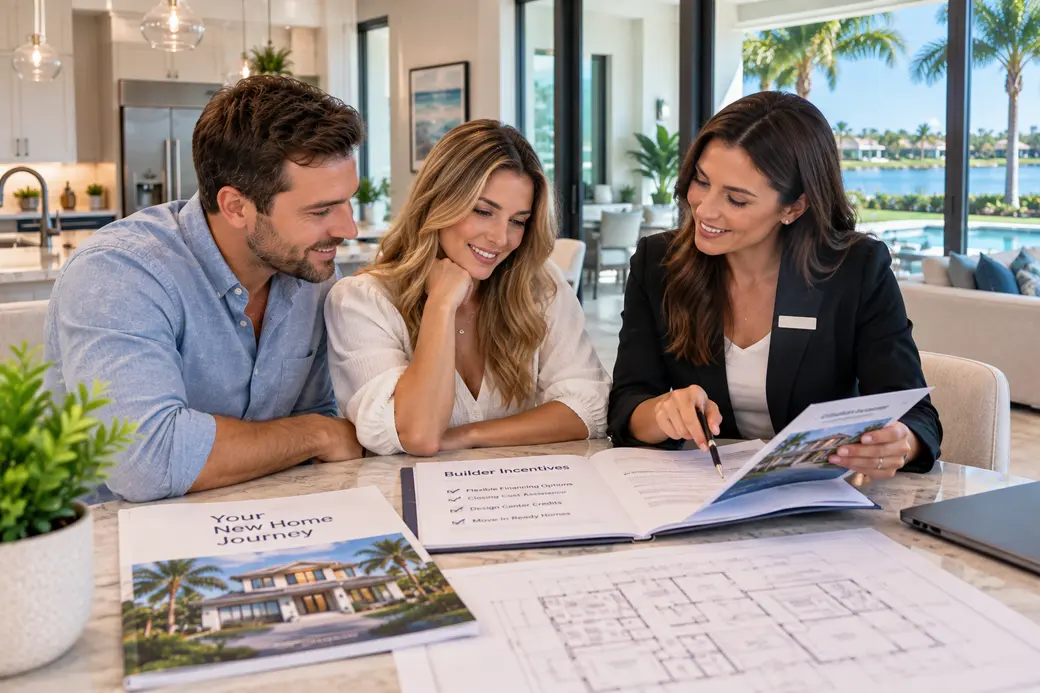
Builder incentives in Florida can reduce upfront costs or change the economics of buying a new construction home, but the headline incentive rarely tells the whole story. Builders may offer closing-cost contributions, mortgage rate buydowns, design-center credits, upgrades or other incentives, often subject to specific financing, closing-date or lender requirements. Before signing a builder contract, compare the home's total price, financing terms, cash required at closing, included features, deposit rules and contractual obligations. Buyers exploring buying a home in Florida should evaluate the complete transaction rather than choosing a property because an incentive sounds valuable.
Quick Answers About Builder Incentives in Florida
What Are Builder Incentives?
Builder incentives are financial or property-related benefits offered in connection with a new construction purchase. Depending on the builder and community, they may include closing-cost contributions, financing incentives, rate buydowns, upgrades or design credits. Availability and conditions can change, so buyers should obtain the exact offer in writing.
Do You Have to Use the Builder's Preferred Lender?
Not simply because a builder has an affiliated or preferred lender. The Consumer Financial Protection Bureau advises new construction buyers that builders often work with associated mortgage lenders but buyers can shop around for another mortgage offer. However, a particular builder incentive may be conditioned on using a specified lender, so compare the complete economics of both choices.
Is a Mortgage Rate Buydown Always the Best Builder Incentive?
No. A lower advertised rate can be valuable, but buyers should determine whether it is temporary or permanent, what it costs, who funds it and how the underlying loan compares with alternatives. Have the lender provide written scenarios showing the rate, payment, points, credits, closing costs and cash required.
Can You Negotiate Builder Incentives?
Some builder terms or incentives may be negotiable, while others may be fixed for a particular home, phase or promotion. Inventory level, construction stage, sales goals and the specific property can affect what is available. Buyers should ask what can be negotiated rather than assuming the advertised package is the only option.
Is a Builder Contract the Same as a Typical Florida Resale Contract?
Not necessarily. Builders may use their own purchase agreements containing provisions specific to construction, deposits, completion, financing, selections, changes, inspections, warranties and closing. Buyers should read the actual agreement they are being asked to sign and have legal questions reviewed by a qualified Florida real estate attorney.
Can You Still Have a New Construction Home Inspected?
Inspection rights and timing depend on the contract and construction process. Buyers who want independent inspections should determine what the contract permits, when inspections can occur and how identified items are handled before signing. Inspection findings should be evaluated with the appropriate licensed inspector, contractor, engineer or other qualified professional.
Why Do Florida Builders Offer Buyer Incentives?
Builder incentives can help a builder sell particular homes, move completed inventory, encourage purchases within a specific timeframe or promote the use of affiliated services. The structure can differ substantially between communities and even between homes within the same development.
For buyers, this means the advertised incentive should be treated as one component of the transaction rather than proof that a home is a bargain. A $20,000 incentive, for example, cannot be properly evaluated without knowing the home's price, what the credit can be used for, whether another incentive is forfeited, the financing terms and whether the same home could be purchased under different terms without the promotion.
The following 10 questions can help buyers evaluate a Florida builder incentive before committing to a new construction contract.
1. What Exactly Is the Builder Offering?
Ask for the complete incentive package in writing. Do not rely solely on a sign at the model center, an online advertisement or a verbal explanation of how much you could "save."
An incentive could involve:
- Closing-cost contributions
- Discount points or another mortgage rate incentive
- Temporary mortgage rate buydowns
- Design-center credits
- Included appliance packages
- Flooring, cabinetry or countertop upgrades
- Lot or homesite incentives
- Other builder-specific credits or concessions
Then ask what conditions apply. An incentive advertised as a dollar amount may not be available as cash or a direct reduction in the purchase price. Its permitted use should be confirmed in the written transaction documents.
2. Do I Have to Use the Builder's Preferred Lender to Receive the Incentive?
Ask whether any portion of the incentive depends on financing through a builder-affiliated or preferred lender. This can materially change the value of the offer because a large credit is only one part of the mortgage calculation.
The Consumer Financial Protection Bureau specifically notes that buyers of homes not yet built may encounter builders with associated mortgage lenders and that buyers have the ability to shop around for financing. Comparing lenders can therefore be useful even when the builder's lender offers an incentive.
Ask competing lenders to quote the same loan assumptions whenever possible. Compare:
- Interest rate
- Annual Percentage Rate
- Discount points
- Lender credits
- Origination and other lender fees
- Estimated monthly payment
- Estimated closing costs
- Estimated cash to close
- Rate-lock terms
A qualified mortgage professional can help explain financing differences, but buyers should independently compare the written numbers rather than evaluating a loan based only on the size of a builder credit.
3. Is the Advertised Mortgage Rate Temporary or Permanent?
Determine exactly how the advertised financing works. A promotional payment may result from a temporary buydown, while another offer may involve discount points used to obtain a lower interest rate under the applicable loan terms.
For any advertised rate, ask:
- What is the actual note rate?
- Is the reduced payment temporary?
- If temporary, how and when does the payment change?
- Are discount points being paid?
- Who is paying those points?
- What loan program is required?
- What borrower qualifications apply?
- How long is the quoted rate locked?
- What happens if construction delays closing beyond the rate-lock period?
The CFPB explains that discount points generally reduce the interest rate in exchange for additional upfront cost, while lender credits generally reduce upfront closing costs in exchange for a higher rate. Buyers should have the lender explain the actual structure of a builder financing incentive and provide the relevant disclosures before making a financing decision.
4. What Happens to the Incentive If I Choose Another Lender?
Find out what remains available if you finance elsewhere or pay cash. Some builder incentives may be tied specifically to a preferred lender, while other pricing, upgrade or property incentives may have different eligibility requirements.
This allows you to compare two complete scenarios rather than asking only which lender has the lower rate:
- Scenario A: Builder's lender plus all qualifying incentives
- Scenario B: Outside lender plus whatever builder incentives remain available
Compare cash to close, monthly payment and financing costs under the same purchase assumptions. A larger incentive does not necessarily produce the lower overall financing cost.
5. Can I Take a Lower Price Instead of Upgrades or Credits?
Ask, but do not assume the builder will treat different incentives as interchangeable. A builder may be willing to provide an upgrade or financing contribution while being less willing to reduce the recorded sale price, or the reverse may be true for a particular property.
If multiple options are available, compare them based on your own priorities. A buyer who needs to preserve cash at closing may evaluate a closing-cost contribution differently from a buyer who has sufficient cash but wants a lower purchase price or particular upgrades.
Also determine whether the incentive can actually be used in full. Financing rules can limit how credits or concessions are applied in an individual transaction. Your lender should confirm the treatment of any financing-related credit before you assign it a dollar-for-dollar value.
6. What Is Included in the Base Price of the Home?
The model home and the base home may be very different. Before evaluating an upgrade credit, determine exactly what the contracted purchase price includes and which features shown in the model are upgrades, options or decorator items.
Depending on the builder and property, questions may include:
- Which flooring is standard?
- Which cabinetry and countertops are included?
- Which appliances are included?
- Are window treatments included?
- Are lighting fixtures shown in the model standard?
- Is landscaping included?
- Are the pool or outdoor-living features included?
- Does the homesite carry an additional premium?
- Which structural options are included in the contract price?
Request a written specification or selection sheet when available. A design-center credit is much easier to evaluate when you know what the standard home includes and what your preferred configuration will actually cost.
7. How Much Is the Deposit, and When Can I Get It Back?
Understand the deposit provisions before signing or transferring funds. New construction purchases can involve an initial deposit and, depending on the builder and contract, additional deposits connected with selections, upgrades or construction milestones.
The Consumer Financial Protection Bureau specifically recommends that buyers purchasing homes not yet built ask the builder under what circumstances an upfront builder deposit can be returned.
Before signing, identify:
- The amount of the initial deposit
- Whether additional deposits will be required
- When each payment is due
- Whether deposits are refundable or nonrefundable under specified circumstances
- What happens to the deposit if financing is unavailable
- What happens if the buyer does not close
- What happens if the builder does not perform as required
- How deposits for upgrades or selections are treated
Deposit provisions create contractual and potentially significant financial consequences. Buyers who are uncertain about their rights, remedies or refund conditions should have the contract reviewed by a qualified Florida real estate attorney before signing.
8. What Happens If Construction Is Delayed?
Ask how the contract addresses estimated completion, notice of closing, construction delays and circumstances that can extend the builder's timeline. This matters for moving plans, leases, home sales, temporary housing and financing.
Financed buyers should also ask their lender how a construction delay could affect the mortgage. A rate lock may expire before the home is ready, and extension terms or costs can depend on the lender and loan arrangement.
Do not assume an estimated completion month is a guaranteed closing date. Read the contract language governing completion and delays, and ask a qualified Florida real estate attorney to explain contractual rights or remedies you do not understand.
9. What Inspection Rights Do I Have Before Closing?
Determine your inspection rights before you sign the builder contract, not after construction is nearly complete. The contract may establish when the buyer or an independent inspector can access the property and how identified items are reported or addressed.
Depending on the construction stage and contract, buyers may want to ask about opportunities for:
- Independent inspections during construction when permitted
- A pre-drywall inspection when applicable and allowed
- A final independent home inspection
- A builder orientation or walkthrough
- Documentation of incomplete or deficient items
- A final walkthrough before closing
A new home should not be treated as automatically defect-free simply because it has never been occupied. The CFPB recommends inspecting the home before closing and confirming that agreed-upon repairs have been completed. Buyers should use appropriately licensed or qualified inspectors and specialists for property-specific evaluations.
10. What Does the Builder Contract Say About Warranties, Changes and Closing?
Read the builder contract as a legal agreement, not as an extension of the sales brochure. Promotional materials describe the home and incentives, while the signed agreement establishes contractual obligations.
Pay particular attention to provisions addressing:
- Purchase price and adjustments
- Deposits and default
- Financing requirements
- Builder incentives
- Construction and completion timelines
- Changes to plans, specifications or materials
- Buyer selections and change orders
- Inspection and walkthrough procedures
- Closing costs and title-related provisions
- Warranty provisions
- Dispute-resolution provisions
- Buyer and builder default provisions
Florida law can also provide specific requirements or warranties for certain types of new construction. For example, Chapter 718 contains statutory warranty provisions applicable to condominium developers and purchasers. The rights applicable to a particular property and contract should be determined from the actual transaction documents and current law.
Contract interpretation is a legal matter. If a provision affects your deposit, cancellation rights, financing, construction obligations, warranty rights, closing or remedies, consider having a qualified Florida real estate attorney review it before you sign.
Should You Bring a Real Estate Agent When Visiting a Florida Builder?
A buyer can benefit from having a real estate professional help compare the builder's offering with other available homes, review market information, identify questions and coordinate the transaction within the scope of brokerage services. The builder's sales representative represents the builder's interests in the sale, not automatically the buyer's.
Builder policies regarding buyer-agent registration and compensation can vary. If you want representation, it is useful to discuss that with your real estate professional before visiting or registering with a new construction community so you understand the builder's current procedures.
Hunt Brothers Realty's Florida buyer resources provide additional information about financing, contracts, relocation and the Florida purchasing process.
What Should You Compare Before Choosing a Builder Incentive?
Put the alternatives side by side using actual written numbers. This can prevent a large promotional credit from distracting from a higher purchase price, different loan cost or expense that appears elsewhere in the transaction.
- Purchase price: What are you actually paying for the home?
- Incentive: What is its stated value and permitted use?
- Financing: What are the rate, APR, points, credits and loan terms?
- Monthly payment: What will you actually owe under the proposed financing?
- Cash to close: How much cash is required under each option?
- Features: What is included in the contracted home?
- Upgrades: Which options cost extra?
- Deposits: How much money is committed before closing and under what terms?
- Ownership costs: What should you investigate regarding taxes, insurance and association or CDD obligations when applicable?
For financed purchases, the CFPB's Loan Estimate guidance encourages borrowers to review the loan amount, loan type, interest rate, monthly principal and interest, mortgage insurance, estimated taxes and insurance, closing costs and estimated cash to close. Those figures can make builder financing comparisons much more concrete.
Do Not Forget Florida Property Taxes, Insurance, HOA and CDD Costs
A builder incentive can reduce one part of the transaction without changing the home's ongoing ownership expenses. Before deciding what a new construction home costs, investigate property taxes, homeowners and applicable flood insurance, HOA assessments, condominium assessments and Community Development District obligations when relevant.
Do not base future Florida property taxes solely on a builder's estimate or a tax bill associated with undeveloped land or a prior assessment. The completed property's future taxable value and the individual owner's exemptions can affect the eventual tax obligation. Hunt Brothers Realty's Florida Homestead Exemption guide explains additional considerations for eligible primary-residence owners.
Insurance should also be investigated for the specific home rather than estimated solely from its new construction status. Coverage availability, deductibles and premiums vary by property and buyer circumstances. Obtain property-specific quotes and review coverage with a qualified Florida insurance professional before making a purchasing decision.
The Bottom Line on Florida Builder Incentives
A builder incentive can have real value, but its value depends on the terms attached to it. A closing-cost credit, mortgage rate offer or upgrade allowance should be evaluated as part of the entire new construction transaction, including the purchase price, financing, deposits, specifications, inspections, ongoing ownership costs and contract provisions.
Before signing, get the incentive in writing, understand what is required to receive it and compare alternatives using the same assumptions. Most importantly, do not allow a limited-time promotion to replace appropriate financial, property and contract due diligence.
Considering New Construction on Florida's Gulf Coast?
Hunt Brothers Realty can help buyers compare new construction with resale opportunities across Sarasota and Florida's Gulf Coast, evaluate property and community considerations, and navigate the real estate side of the purchase. Buyers can begin with Hunt Brothers Realty's Florida home buyer resources, explore Sarasota real estate, or contact Hunt Brothers Realty before visiting new construction communities.
Important: This article provides general real estate information for educational purposes and is not individualized legal, financial, lending, tax, insurance, inspection, engineering or construction advice. Builder contracts, incentives, deposits and warranty provisions can create significant legal and financial obligations. Buyers should have financing terms reviewed with a qualified mortgage professional, insurance questions reviewed with a qualified insurance professional, property conditions evaluated by appropriate inspectors or specialists, tax questions reviewed with a qualified tax professional, and contractual or legal questions reviewed by a qualified Florida real estate attorney before making a purchasing decision.
Sources
- Consumer Financial Protection Bureau, Find the Right Home and New Construction Considerations
- Consumer Financial Protection Bureau, Lender Credits and Discount Points
- Consumer Financial Protection Bureau, Loan Estimate Explainer
- Consumer Financial Protection Bureau, Review Documents Before Closing
- Florida Department of Business and Professional Regulation, Florida Condominium Act
- Hunt Brothers Realty, Florida Buyer Resources
Hunt Brothers Realty
46 N. Washington Blvd, Ste 3, Sarasota, FL 34236
Phone: (941) 388-7017
Email: info@huntbrothersrealty.com
Website: HuntBrothersRealty.com
Categories
- All Blogs 1526
- Anna Maria Island 68
- Bird Key 3
- Bradenton 102
- Buying a Home 669
- Casey Key 2
- Clearwater 5
- Condos & HOA Living 575
- Ellenton 4
- Englewood 5
- First Time Homebuyers 748
- Foreclosures 3
- Homeownership 729
- Lakewood Ranch 15
- Lido Key 24
- Longboat Key 65
- Luxury/Waterfront Properties 666
- Market Updates & Trends 334
- Mortgages & Financing 33
- Move-Up Buyers 20
- Neighborhood Guides 486
- New Construction 26
- Palmetto 2
- Parrish 4
- Port Charlotte 7
- Punta Gorda 11
- Real Estate Investing 600
- Relocation to Florida 650
- Safety Harbor 2
- Sarasota - Downtown 133
- Selling a Home 136
- Siesta Key 87
- St. Petersburg 3
- Tierra Verde 4
- Vacation & Second Homes 782
- Venice 21
- Wellen Park 7
Recent Posts