How Do I Know if a House Is in a Flood Zone?
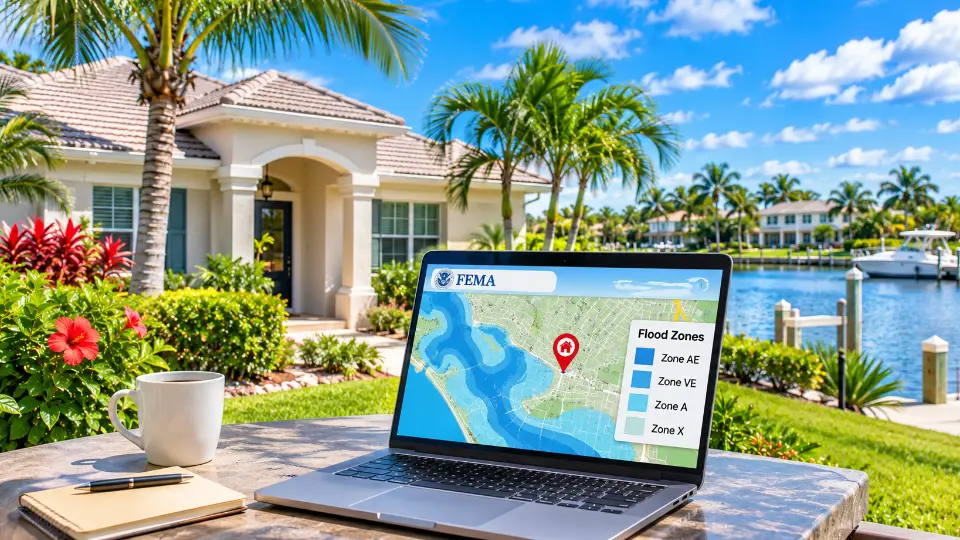
To find out whether a Florida house is in a flood zone, start with the FEMA Flood Map Service Center and search the exact property address. Then check the applicable county flood map, review any available survey or elevation certificate, investigate previous flooding, and obtain property-specific flood insurance information. Do not rely only on a real estate listing or assume that Zone X means a home cannot flood. A FEMA flood-zone designation describes mapped flood hazard, but an informed buyer should also consider the home's elevation, drainage, storm history, insurance requirements and surrounding conditions.
Quick Answers About Checking a House's Flood Zone
Where can I check a home's official FEMA flood zone?
Start with FEMA's Flood Map Service Center. FEMA identifies the Map Service Center as its official public source for flood-hazard information produced for the National Flood Insurance Program. Search the exact street address and review the effective Flood Insurance Rate Map information.
What does it mean if the house is in Zone AE?
Zone AE is within FEMA's Special Flood Hazard Area and is associated with the 1-percent-annual-chance flood. Base Flood Elevations are generally established for Zone AE. If a building securing a federally backed mortgage is within a Special Flood Hazard Area, federal mandatory flood-insurance purchase requirements generally apply.
What does Zone VE mean?
Zone VE is a coastal high-hazard area within the Special Flood Hazard Area where the mapped hazard includes additional wave action. This designation is particularly relevant to some coastal and barrier-island properties. Buyers should have property-specific elevation, construction, insurance and floodplain questions reviewed by the appropriate qualified professionals.
Does Zone X mean the house cannot flood?
No. Zone X means the property is outside FEMA's mapped Special Flood Hazard Area, but flooding can still occur. Zone X should never be interpreted as zero flood risk, especially when local drainage, heavy rainfall, storm surge, canals, rivers or other conditions may affect a property.
Is a flood zone the same as a hurricane evacuation zone?
No. A FEMA flood zone is used for flood-hazard mapping, floodplain management and insurance-related purposes. An evacuation zone is used by emergency-management officials to determine which areas may need to evacuate during hurricanes or other emergencies. Hunt Brothers Realty's Florida flood zone versus evacuation zone guide explains the distinction.
Will the seller tell me if the house has flooded?
Florida law currently requires a seller of residential real property to provide a statutory flood disclosure at or before the sales contract is executed. Among other items, the disclosure addresses the seller's knowledge of flooding that damaged the property during the seller's ownership, flood-related insurance claims and flood assistance received. Buyers should still perform their own property-specific investigation rather than treating a disclosure as a substitute for due diligence.
Does being outside a high-risk flood zone mean I do not need flood insurance?
Not necessarily. The federal mandatory purchase requirement generally applies to qualifying mortgages on buildings in Special Flood Hazard Areas, but a lender can have additional requirements. A buyer outside a high-risk mapped area may also choose to purchase flood coverage after discussing the property's exposure, available policies, coverage and cost with a qualified insurance professional.
Step 1: Search the Address on FEMA's Flood Map
The most direct starting point is the FEMA Flood Map Service Center. Enter the property's complete street address and review the effective map information for that location.
FEMA's Flood Insurance Rate Maps, commonly called FIRMs, divide mapped areas into flood-hazard zones. These maps are important for floodplain management and insurance-related determinations, but they should not be treated as predictions of whether an individual house will or will not flood during a future storm.
FEMA's address search identifies an approximate property location. When a building is close to a flood-zone boundary, a parcel contains multiple designations or the exact structure location is unclear, buyers should seek more precise property-specific information rather than estimating from the online map.
For a detailed walkthrough, see Hunt Brothers Realty's 2026 guide to checking a Florida home's flood zone.
Step 2: Understand What the Flood-Zone Letters Mean
Knowing the flood-zone designation is only useful if you understand what it represents. FEMA uses several designations, but Florida homebuyers commonly encounter A, AE, V, VE and X zones.
| Flood Zone | General Meaning | Buyer Consideration |
|---|---|---|
| A / AE | Special Flood Hazard Area associated with the 1-percent-annual-chance flood | Investigate elevation, flood insurance and lender requirements |
| V / VE | Coastal high-hazard area with additional wave-related hazard | Carefully evaluate elevation, construction, insurance and coastal exposure |
| Shaded X | Moderate mapped flood hazard, generally including the 0.2-percent-annual-chance flood area | Outside the SFHA, but flood risk remains |
| Unshaded X | Minimal mapped flood hazard | Does not mean the property cannot flood |
The phrase "100-year flood zone" can also be misleading. FEMA's 1-percent-annual-chance flood does not mean flooding happens only once every 100 years. It means that level of flooding has a 1-percent chance of being equaled or exceeded in any given year.
For a broader explanation of these designations, read How Do Flood Zones Work in Florida?
Step 3: Check the County's Flood Map Too
Local government flood resources can make FEMA information easier to evaluate at the parcel level and may provide additional local records. For Sarasota-area buyers, check both the federal map and the appropriate county resource.
Sarasota County
Sarasota County provides flood-map information and resources for local properties. Sarasota County states that FEMA's updated flood maps affecting county property owners became effective March 27, 2024, another reason buyers should use current maps rather than relying on older documents.
Manatee County
Manatee County Floodplain Management provides property-specific flood-risk resources. The county allows users to search by address or parcel identification and review information such as the applicable flood zone, Base Flood Elevation where relevant and available flood-related documents.
Manatee County's GIS resources also allow residents and buyers to search an address and review flood-zone information.
Step 4: Find Out Whether the House Is Actually Inside the Mapped Area
Flood-zone boundaries do not necessarily follow property lines. A parcel can contain more than one flood-zone designation, and the zone affecting an undeveloped portion of the lot may not necessarily be the same designation affecting the house itself.
That distinction can become important when the building sits near a mapped boundary. A lender's flood determination, current survey and other property-specific documentation can help establish how the mapped hazard relates to the actual structure.
If the map is unclear or the answer could materially affect your purchase, have the property's location and elevation information evaluated by an appropriately qualified surveyor, floodplain professional, lender or other relevant professional rather than trying to resolve a boundary from an online screenshot.
Step 5: Ask for an Elevation Certificate or Survey
The flood-zone letter is not the same thing as the home's elevation. Two houses on the same street can have different finished-floor elevations, lot elevations and relationships to nearby roads, canals and drainage systems.
Ask whether the seller or local government has an existing elevation certificate. A current survey may also identify the flood-zone category or provide other useful information. In Manatee County, for example, the county provides an address-based search for available elevation certificates and other flood-related records.
What does an elevation certificate tell you?
An elevation certificate documents elevation information about a building and the applicable floodplain. Depending on the property and purpose, that information can be relevant to floodplain compliance and insurance analysis.
Buyers should not attempt to make technical conclusions from elevation data without appropriate expertise. When elevation materially affects the purchasing decision, have the documentation reviewed by a qualified surveyor, insurance professional, engineer, local floodplain authority or other appropriate professional.
Step 6: Investigate Whether the House Has Flooded Before
A FEMA flood map does not tell you the complete history of an individual house. A property currently shown in Zone X may have experienced flooding, drainage problems or water intrusion in the past.
Florida's current residential flood-disclosure law, Florida Statute 689.302, requires a seller to provide a flood disclosure to the purchaser at or before execution of the sales contract. The statutory disclosure addresses whether the seller knows of flooding that damaged the property during the seller's ownership, whether the seller filed a flood-damage insurance claim and whether the seller received flood-damage assistance.
A buyer's investigation can go further. Depending on the property and available information, consider reviewing:
- The seller's flood disclosure
- Known previous flooding or water intrusion
- Available flood-related insurance claim information
- Storm and flood repair documentation
- Building permits associated with significant repairs
- Invoices and contractor records when available
- Inspection findings involving moisture or previous water intrusion
- Drainage patterns around the house, lot and street
Hunt Brothers Realty's guide to researching flood risk before buying a Sarasota-area home explains why previous flooding, elevation and drainage should be considered alongside the FEMA designation.
Step 7: Get a Property-Specific Flood Insurance Quote
Knowing the flood zone does not tell you exactly what flood insurance will cost. Insurance availability, coverage, deductibles and premiums can vary by property and policy.
Standard homeowners insurance generally does not provide coverage for flooding from rising water. Flood coverage should therefore be investigated separately with a qualified insurance professional. Buyers should obtain a quote for the actual property rather than using the cost paid by another homeowner or a generic neighborhood estimate.
When is flood insurance required?
Federal mandatory purchase requirements generally apply when a building in a Special Flood Hazard Area secures a federally backed mortgage. The buyer's lender makes the applicable flood determination for the loan, and lenders can impose requirements beyond the federal minimum.
A cash purchase removes the mortgage lender's requirement, but it does not remove the physical possibility of flooding or make insurance unnecessary for every owner. Whether to purchase coverage, and what coverage is appropriate, is a property-specific insurance and financial decision that should be discussed with qualified professionals.
For more detail, read Do You Need Flood Insurance in Sarasota?
Does Zone X Mean a Florida Home Is Safe From Flooding?
No flood-zone designation guarantees that a home will not flood. FEMA maps identify mapped flood hazards for specific regulatory and insurance purposes. They cannot account for every possible future rainfall event, drainage problem, storm, construction change or local condition.
This distinction is particularly important with Zone X. Shaded Zone X generally represents moderate mapped flood hazard, while unshaded Zone X generally represents minimal mapped flood hazard. Both are outside the Special Flood Hazard Area, but neither means "no flood risk."
If two otherwise similar Florida homes are both in Zone X, they can still have different elevations, drainage, construction, storm histories and insurance considerations. Evaluate the individual property rather than choosing solely by the letter on the map.
Flood Zone vs. Evacuation Zone: What Is the Difference?
Florida buyers frequently confuse these two systems. They answer different questions.
| Designation | Primary Purpose |
|---|---|
| FEMA Flood Zone | Identifies mapped flood hazards for floodplain management and insurance-related purposes |
| Hurricane Evacuation Zone | Helps emergency-management officials identify areas that may need evacuation during a hurricane or other emergency |
A house can be outside FEMA's Special Flood Hazard Area and still be in a hurricane evacuation zone. Manatee County specifically notes that its evacuation levels are not the same as flood zones. Sarasota and Manatee County buyers should check both independently.
What About Waterfront and Beach Homes?
A waterfront address does not automatically tell you the home's FEMA flood zone, elevation or insurance cost. Likewise, an inland address does not guarantee that flooding is impossible.
For waterfront and coastal properties, buyers may need to consider additional factors such as finished-floor elevation, storm-surge exposure, coastal wave hazards, seawalls, drainage, canals and previous storm impacts. These issues are especially relevant when comparing properties on Siesta Key, Lido Key, Longboat Key and other Sarasota-area waterfront locations.
Questions involving the condition or adequacy of seawalls, drainage systems, foundations or other structural components should be evaluated by the appropriate licensed inspector, engineer, contractor or other qualified professional.
Can Flood Maps Change After You Buy?
Yes. Flood maps can change as FEMA and local communities incorporate updated flood studies, topographic information and other mapping data. A designation shown on an old survey, previous appraisal or years-old real estate listing may therefore no longer represent the effective map.
Sarasota County's current FEMA flood maps became effective March 27, 2024. Buyers should use the effective mapping available when they are evaluating the property and ask the appropriate local authority about known mapping updates when that information could affect the purchase.
What Should You Check Before Buying a House With Flood Exposure?
A practical flood-risk review should go beyond asking whether the listing says "AE" or "X." Consider investigating the following before completing the purchase:
- Current FEMA flood-zone designation
- Whether the structure is within a Special Flood Hazard Area
- Current county flood-map information
- Available elevation certificate
- Current survey and structure location
- Base Flood Elevation where applicable
- Finished-floor elevation when relevant and reliably documented
- Known previous flooding or water intrusion
- Seller's Florida flood disclosure
- Flood or storm repair permits and documentation
- Lot, street and neighborhood drainage
- Hurricane evacuation zone
- Lender's flood-insurance requirement
- Property-specific flood insurance quote
A flood map is an important starting point, not a complete property-risk analysis. For coastal purchases, Hunt Brothers Realty's questions to ask before buying a home near the Florida coast provides a broader due-diligence checklist.
How Do You Know for Sure if a House Is in a Flood Zone?
Start with FEMA's current map, confirm the information through the applicable local government, and then verify how the mapped zone applies to the actual structure. If financing is involved, the lender will also make a flood determination for the loan.
For a Florida homebuyer, however, the better question is not only, "Is this house in a flood zone?" Every property has some level of flood exposure. The more useful questions are what FEMA currently maps at the property, how high the structure sits, whether the home has flooded before, how water drains around it, what insurance is available and what the lender will require.
Hunt Brothers Realty can help Sarasota-area buyers identify the property information and public resources that should be investigated when comparing homes. Buyers can also explore Sarasota and Manatee County communities and review Hunt Brothers Realty's additional Florida flood-zone guidance before narrowing their search.
Informational notice: This article provides general real estate and educational information and is not individualized legal, financial, insurance, lending, surveying, engineering or floodplain advice. Flood-zone determinations, insurance requirements, premiums, coverage, elevation information and property conditions vary by property and can change. Buyers should verify the current FEMA and local flood information for the exact property, obtain property-specific insurance information from a qualified insurance professional, confirm loan requirements with their lender, and have surveying, elevation, structural, drainage or legal questions evaluated by the appropriate qualified professional before making a purchasing decision.
Sources
- FEMA Flood Map Service Center
- FEMA Flood Maps
- Florida Statute 689.302, Disclosure of Flood Risks to Prospective Purchaser
- Sarasota County Flood Maps
- Manatee County Floodplain Management
- Manatee County Geographic Information Systems
- Hunt Brothers Realty, How to Check a Florida Home's Flood Zone
- Hunt Brothers Realty, How Do Flood Zones Work in Florida?
- Hunt Brothers Realty, How to Research Flood Risk Before Buying a Sarasota Home
Hunt Brothers Realty
46 N. Washington Blvd, Ste 3, Sarasota, FL 34236
Phone: (941) 388-7017
Email: info@huntbrothersrealty.com
Website: HuntBrothersRealty.com
Categories
- All Blogs 2574
- Anna Maria Island 91
- Bird Key 5
- Bradenton 241
- Buying a Home 1602
- Casey Key 2
- Clearwater 15
- Condos & HOA Living 1531
- Ellenton 6
- Englewood 15
- First Time Homebuyers 1722
- Foreclosures 4
- Home Selling 9
- Homeownership 1760
- Lakewood Ranch 34
- Lido Key 29
- Longboat Key 81
- Luxury/Waterfront Properties 1702
- Market Updates & Trends 1203
- Mortgages & Financing 82
- Move-Up Buyers 24
- Neighborhood Guides 1331
- New Construction 44
- Palmetto 4
- Parrish 38
- Port Charlotte 36
- Punta Gorda 165
- Real Estate Investing 1614
- Relocation to Florida 1644
- Safety Harbor 4
- Sarasota 138
- Sarasota - Downtown 171
- Selling a Home 148
- Siesta Key 94
- St. Petersburg 9
- Taxes and Homestead 3
- Tierra Verde 7
- Vacation & Second Homes 1808
- Venice 222
- Wellen Park 24
Recent Posts