How to Research Flood Risk Before Buying a Sarasota-Area Home
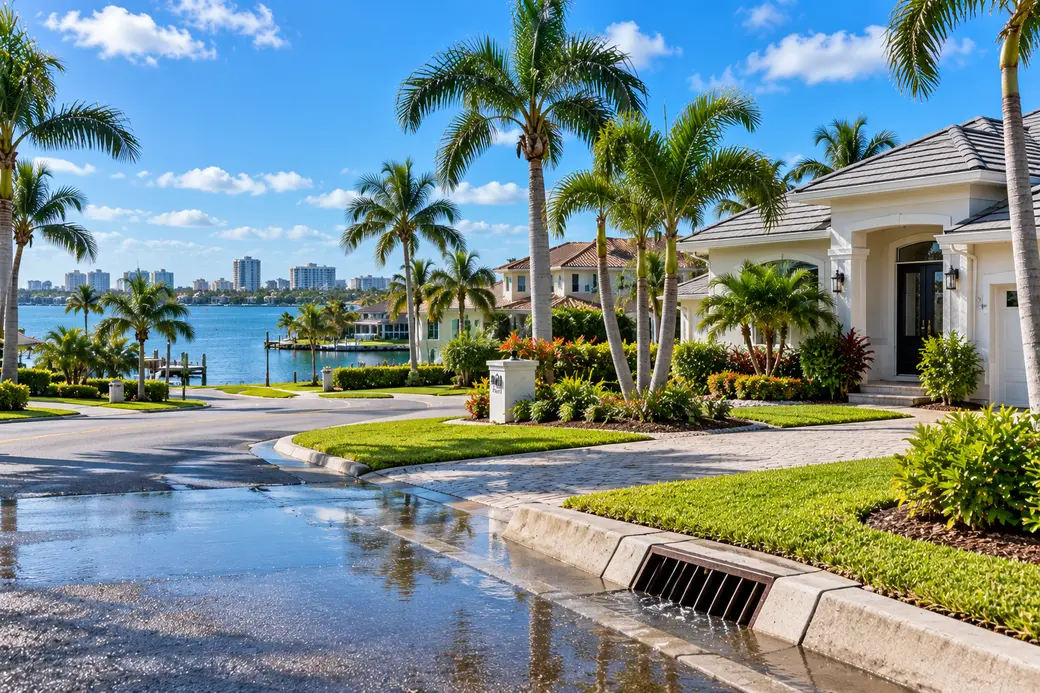
To research flood risk before buying a Sarasota-area home, start with the property's current FEMA flood zone, then investigate elevation, previous flooding, lot and street drainage, storm-surge exposure, hurricane evacuation information and property-specific flood insurance. Do not rely on a single flood-zone letter or assume an inland address cannot flood. Sarasota County is susceptible to coastal, riverine and urban flooding, and storm surge can extend inland through rivers and canals. Buyers exploring Sarasota-area communities with Hunt Brothers Realty should evaluate flood risk at the individual-property level.
Quick Answers About Researching Sarasota Flood Risk
Where can I check a Sarasota home's flood zone?
Start with the Sarasota County flood map resources and the FEMA Flood Map Service Center. Search the individual address and confirm the current map information rather than relying solely on a real estate listing.
Does Flood Zone X mean a Sarasota home cannot flood?
No. Sarasota County identifies unshaded Zone X as minimal mapped flood risk and shaded Zone X or X500 as moderate mapped flood risk, but the county also emphasizes that all properties have some element of flood risk. A Zone X designation should not replace investigation of elevation, drainage, storm history and insurance.
Is a flood zone the same as a hurricane evacuation level?
No. Sarasota County specifically notes that flood-map changes do not change hurricane evacuation levels. Flood zones and evacuation levels serve different purposes, so buyers should research both separately.
Should I ask for an elevation certificate?
If one exists, an elevation certificate can provide useful property-specific elevation information. Buyers should have elevation information interpreted by the appropriate insurance, surveying, engineering or floodplain professional when it could materially affect the purchase.
Does Florida require a seller to disclose previous flooding?
Florida Statute 689.302 requires a residential seller to provide a statutory flood disclosure at or before execution of the sales contract. The disclosure addresses specified information including the seller's knowledge of flooding that damaged the property during the seller's ownership, flood-related insurance claims and flood assistance.
Should I get a flood insurance quote before buying?
Yes, when flood exposure is relevant to the purchase, obtain property-specific insurance information early. Standard homeowners insurance generally does not cover flood damage, and the seller's existing insurance costs should not be assumed to represent what a new owner will pay.
Can storm surge affect homes away from Sarasota's beaches?
Yes. Sarasota County warns that storm surge is not exclusively a beachfront hazard. Water can travel through rivers and canals and reach inland areas, so distance from the Gulf alone is not a complete measure of storm-surge exposure.
1. Start With the Current Sarasota County and FEMA Flood Maps
The first step is identifying the property's current mapped flood hazard. Sarasota County provides flood map information and property-search resources, while FEMA maintains the Flood Map Service Center.
A Flood Insurance Rate Map, commonly called a FIRM, identifies Special Flood Hazard Areas and other mapped flood-risk zones. Sarasota County explains that land in the Special Flood Hazard Area is generally identified by zones beginning with A or V, while areas outside the Special Flood Hazard Area are generally identified with Zone X classifications.
Do not copy a flood-zone designation from an old listing and consider the research finished. Flood risk and maps can change as flood studies, development, environmental conditions and watershed information change.
What should you record from the flood map?
- The current FEMA flood-zone designation
- Whether the structure is in a Special Flood Hazard Area
- The Base Flood Elevation when applicable
- Whether a Coastal A Zone or Limit of Moderate Wave Action is relevant
- Whether different portions of the parcel fall within different mapped areas
- The effective map information used for the determination
2. Understand What the Flood-Zone Letters Mean
Flood-zone terminology can sound more definitive than it really is. The designation describes mapped flood hazard, not a guarantee of what will or will not happen to an individual home.
Zone AE
Sarasota County describes Zone AE as an area subject to inundation by the 1-percent-annual-chance flood, with Base Flood Elevations established through detailed analysis. It is within the Special Flood Hazard Area.
Zone VE
Zone VE applies to portions of the 1-percent-annual-chance coastal floodplain with additional hazards associated with storm waves. Buyers considering direct coastal property should pay close attention to both the mapped designation and the home's actual elevation and construction.
Zone X
Sarasota County identifies unshaded Zone X as minimal mapped flood risk, while shaded Zone X and X500 identify moderate mapped flood risk associated with the 0.2-percent-annual-chance flood. Neither designation means a home cannot flood.
That distinction is particularly important when buyers hear a property described simply as being "in X." Ask which Zone X designation applies and investigate the individual property beyond the map.
3. Look at the Home's Elevation, Not Just Its Flood Zone
Two homes on the same Sarasota street can have different elevations and different relationships to surrounding roads, canals and drainage systems. That is why a neighborhood name or flood-zone letter does not tell the entire story.
Ask whether an elevation certificate, survey or other reliable elevation documentation is available. When relevant, compare the structure's elevation with applicable flood-elevation information and surrounding conditions.
Why can elevation matter even within the same neighborhood?
Individual lots can sit higher or lower than neighboring parcels. The home's finished-floor elevation, garage elevation, grading, nearby roads and drainage can also differ. When elevation materially affects your purchasing decision, have the information evaluated by an appropriately qualified surveyor, engineer, insurance professional or floodplain professional.
4. Research the Property's Actual Flood History
A flood map models flood hazard. It does not provide a complete history of what happened inside a particular house during previous storms or heavy rainfall events.
Florida's current residential flood disclosure law, Florida Statute 689.302, requires a seller to provide the statutory disclosure at or before execution of the sales contract. Among other specified information, the form addresses whether the seller knows of flooding that damaged the property during the seller's ownership, whether a flood-damage insurance claim was filed and whether flood assistance was received.
What else should you ask about?
- Previous water intrusion
- Standing water on the lot
- Garage flooding
- Flood or storm-related repairs
- Remediation work
- Drainage improvements
- Available permits and contractor invoices
- Previous flood-related insurance claims disclosed or otherwise available
Where repairs or water intrusion are material to the purchase, inspection findings and repair documentation should be evaluated with the appropriate licensed inspector, contractor, engineer or other qualified professional.
5. Investigate Drainage Around the House and Street
Flood research should extend beyond coastal storm surge. Sarasota County states that its Gulf Coast location, relatively flat topography and subtropical climate make the county susceptible to coastal, riverine and urban flooding from heavy rainfall, tropical storms, hurricanes and storm surge.
The county's Flood Protection resources summarize the issue with a useful principle: anywhere it rains, it can flood.
Look at the property after rain when possible
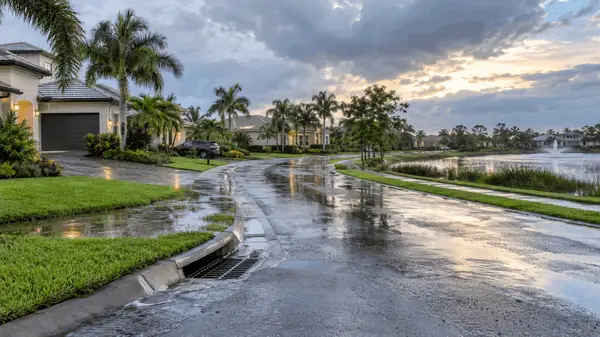
If practical during your buying process, observe the property and surrounding streets after significant rainfall. Look at how water moves across the lot, whether water collects near the structure and how surrounding drainage features appear to function.
Visible conditions during one rain event cannot establish the property's overall flood risk, but they can identify questions that deserve further investigation. Drainage, grading or structural concerns should be evaluated by the appropriate qualified professionals.
6. Research Storm Surge Separately
A Sarasota buyer should not equate flood-zone research with storm-surge research. Storm surge is an abnormal rise of water generated by a storm above the predicted astronomical tide, and Sarasota County warns that it can cause severe coastal and inland flooding.
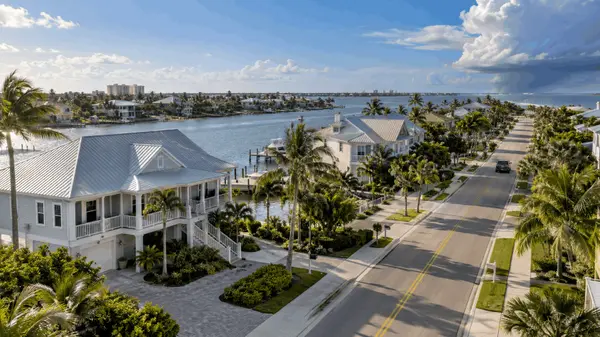
The county's storm-surge guidance specifically notes that surge can travel through rivers and canals and extend miles inland. That makes storm-surge research relevant to more than beachfront homes.
Sarasota County reports that Hurricane Helene produced 4 to 7 feet of storm surge along the county's Gulf Coast in 2024. Hurricane Milton followed approximately two weeks later, producing an isolated peak of 10 feet in the southernmost areas of the county and 4 to 9 feet along other parts of the coastline. Those historical measurements describe those specific storms and locations, not what a future storm will produce at an individual property.
7. Check the Hurricane Evacuation Level Separately
Flood zones and hurricane evacuation levels are different systems. Sarasota County explicitly notes that changes to FEMA flood maps do not change hurricane evacuation levels.
Use Sarasota County's hurricane risk and preparedness resources to investigate the property's current evacuation information.
Ask practical evacuation questions too
- What is the property's current evacuation level?
- Is access dependent on a bridge or causeway?
- What roads connect the property to inland routes?
- Could low-lying roads affect access before the home itself floods?
- How would you prepare the property if you were away when a storm approached?
8. Obtain Property-Specific Flood Insurance Information
Flood insurance should be researched separately from standard homeowners coverage. Sarasota County states that most homeowners insurance does not cover flood damage.
A lender may require flood insurance for certain financed properties in a Special Flood Hazard Area. However, the absence of a lender requirement should not be interpreted as proof that a home cannot flood.
Hunt Brothers Realty's guide to shopping for Florida homeowners insurance recommends obtaining property-specific insurance information early rather than treating insurance as a final closing task.
Insurance availability, flood coverage, deductibles, exclusions and premiums can vary substantially by property. Buyers should obtain quotes for the actual address and review appropriate coverage with a qualified insurance professional before making a purchasing decision.
9. Do Not Assume Inland Sarasota Means No Flood Risk
Distance from the Gulf is useful geographic context, but it does not replace property-specific research. Sarasota County can experience urban flooding from heavy rain, riverine flooding and storm-surge impacts that move inland.
That means buyers comparing a barrier-island property, a West of the Trail home and a residence farther inland should investigate each address independently. Hunt Brothers Realty's West of the Trail Sarasota buyer's guide likewise emphasizes that flood exposure in the area is property-specific rather than determined simply by the neighborhood label.
10. Investigate Waterfront Infrastructure When Applicable
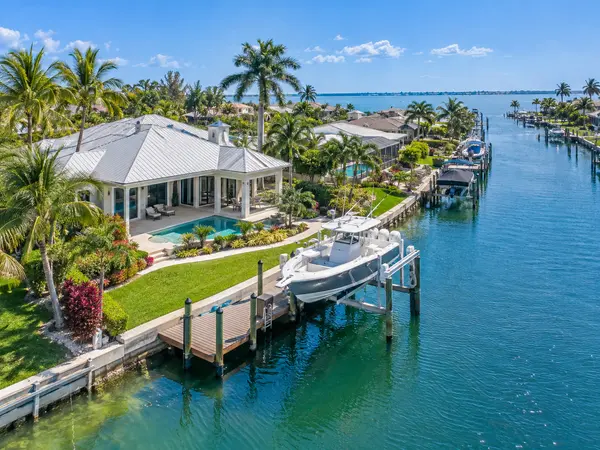
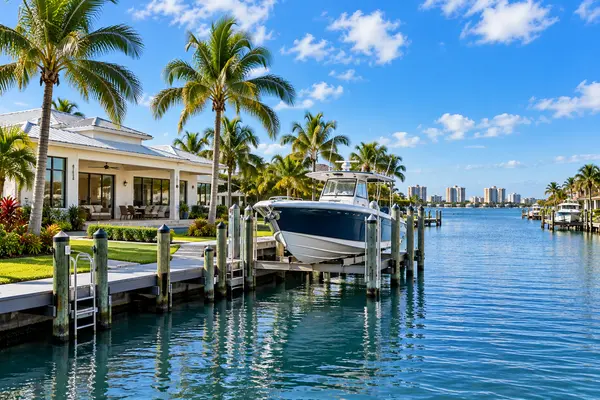
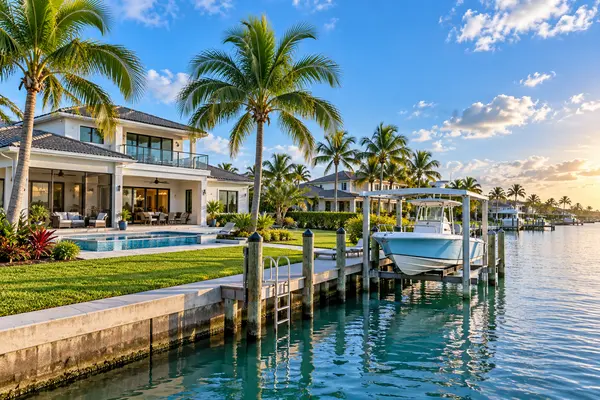
For a waterfront home, flood research should be combined with an evaluation of the property's shoreline infrastructure. Seawalls, docks, boat lifts and shoreline conditions can create separate structural, permitting and maintenance questions.
Hunt Brothers Realty's Buyer's Guide to Waterfront Homes on Florida's Gulf Coast covers seawalls, docks and flood zones in greater detail. Our guide to buying waterfront property in Florida also explains why flood exposure should be evaluated alongside boating access, waterfront infrastructure and insurance.
Physical conditions should be evaluated by appropriately qualified inspectors, marine contractors, engineers or other professionals when material to the purchase.
11. Review Repairs and Permits After Previous Storms
If a home experienced previous storm or flood damage, understanding what happened afterward can be as important as knowing that damage occurred.
When available, review permits, invoices, inspection reports, contractor documentation and other records associated with significant repairs. Ask what was replaced, what was repaired and whether any mitigation improvements were completed at the same time.
Sarasota County also maintains floodplain requirements that can affect certain construction, repairs and substantial improvements in regulated flood-hazard areas. Buyers planning significant renovation should verify current requirements with the applicable local permitting authority and appropriate design or construction professionals before assuming a project is feasible.
12. Put All the Flood Information Together Before Deciding
No single data point gives a complete picture of a Sarasota home's flood risk. A useful property-level review combines multiple sources of information.
- Current FEMA flood-zone information
- Applicable Base Flood Elevation
- Available elevation certificate or survey information
- The home's finished-floor elevation when relevant
- Seller's statutory flood disclosure
- Known previous flooding or water intrusion
- Storm and repair history
- Lot, street and neighborhood drainage
- Storm-surge exposure
- Current hurricane evacuation information
- Property-specific flood insurance information
- Waterfront infrastructure when applicable
The goal is not to reduce every Sarasota home to a single "safe" or "unsafe" label. It is to understand the property's specific conditions well enough to make an informed purchasing decision.
What Flood-Risk Questions Should You Ask Before Making an Offer?
For a Sarasota-area property you are seriously considering, these questions can help organize your research:
- What is the current FEMA flood zone?
- Is the structure within a Special Flood Hazard Area?
- What Base Flood Elevation applies, if any?
- Is an elevation certificate available?
- Has the property experienced known damaging flooding or water intrusion?
- How does the lot drain after heavy rain?
- What is the current hurricane evacuation level?
- Could storm surge reach the surrounding area?
- Are access roads vulnerable to flooding?
- What flood insurance options and premiums are available for this address?
- What repairs were made after previous storms?
- Could floodplain regulations affect planned renovations?
For additional coastal due diligence, Hunt Brothers Realty's Questions to Ask Before Buying a Home Near the Coast covers flood exposure, insurance, elevation, wind protection and other issues Florida Gulf Coast buyers should investigate.
Should Flood Risk Automatically Rule Out a Sarasota Home?
Flood information is one part of a broader property decision. Two Sarasota homes can have different elevations, construction, drainage, insurance costs and storm histories even when they are geographically close to one another.
Rather than making the decision from the flood-zone letter alone, understand the individual property's mapped hazard, elevation, history, physical condition and insurance implications. That gives you a more complete basis for comparing properties.
Researching a Sarasota Home Before You Buy
Flood due diligence is especially important when comparing Sarasota's barrier islands, waterfront neighborhoods, West of the Trail properties and other coastal or low-lying locations, but it should not be ignored simply because a home is farther inland.
Hunt Brothers Realty helps buyers investigate the real estate considerations surrounding Sarasota-area properties while comparing communities, homes and ownership costs. You can explore Sarasota-area communities, review our coastal homebuyer due-diligence guide, or read our Florida Gulf Coast waterfront buyer's guide when waterfront living is part of your search.
Informational note: This article provides general real estate and educational information and is not individualized flood-risk, insurance, legal, financial, lending, surveying, engineering, inspection or construction advice. Flood maps, property conditions, insurance requirements and premiums can change and can vary substantially by property. Buyers should verify current flood and evacuation information with FEMA and the appropriate local authorities, obtain property-specific coverage information from a qualified insurance professional, confirm lending requirements with their mortgage professional, and consult qualified surveyors, inspectors, engineers, contractors, attorneys or other appropriate professionals when individualized evaluation is required.
Sources
- Sarasota County, Flood Maps
- Sarasota County, Flood Protection
- Sarasota County, Storm Surge
- Sarasota County, What's My Risk?
- FEMA, Flood Map Service Center
- Florida Legislature, Florida Statute 689.302, Disclosure of Flood Risks to Prospective Purchaser
- Hunt Brothers Realty, Questions to Ask Before Buying a Home Near the Coast
- Hunt Brothers Realty, A Buyer's Guide to Waterfront Homes on Florida's Gulf Coast
- Hunt Brothers Realty, Buying Waterfront Property in Florida
- Hunt Brothers Realty, When Should Florida Home Buyers Shop for Homeowners Insurance?
Contact Hunt Brothers Realty
46 N. Washington Blvd, Ste 3, Sarasota, FL 34236
Phone: (941) 388-7017
Email: info@huntbrothersrealty.com
Website: HuntBrothersRealty.com
Categories
- All Blogs 1486
- Anna Maria Island 68
- Bird Key 3
- Bradenton 82
- Buying a Home 634
- Casey Key 2
- Clearwater 5
- Condos & HOA Living 537
- Ellenton 4
- Englewood 5
- First Time Homebuyers 709
- Foreclosures 3
- Homeownership 689
- Lakewood Ranch 15
- Lido Key 24
- Longboat Key 65
- Luxury/Waterfront Properties 626
- Market Updates & Trends 311
- Mortgages & Financing 31
- Move-Up Buyers 20
- Neighborhood Guides 462
- New Construction 24
- Palmetto 2
- Parrish 4
- Port Charlotte 7
- Punta Gorda 11
- Real Estate Investing 560
- Relocation to Florida 610
- Safety Harbor 2
- Sarasota - Downtown 128
- Selling a Home 136
- Siesta Key 87
- St. Petersburg 3
- Tierra Verde 4
- Vacation & Second Homes 744
- Venice 21
- Wellen Park 7
Recent Posts