Is It Better to Buy a Condo or a House in Florida?
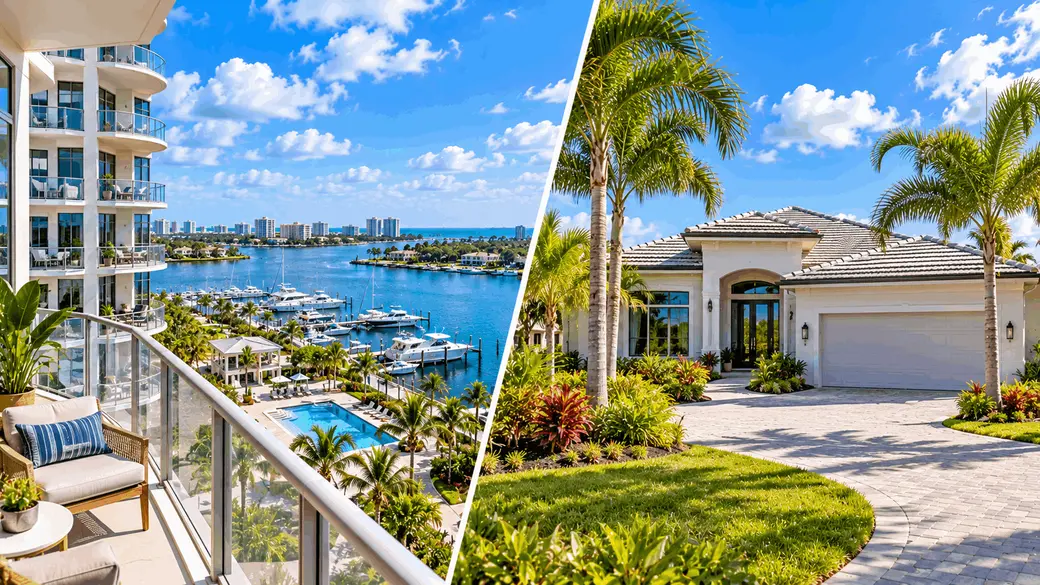
Buying a condo may be better in Florida if you want less direct exterior maintenance, shared amenities, or a location near the beach or downtown. Buying a single-family house may be better if you prioritize privacy, outdoor space, and greater control over your property. However, neither option is automatically cheaper, safer, or a better investment. Florida condo buyers must evaluate association finances, reserves, insurance, special assessments, and applicable building inspections. House buyers generally take on more direct maintenance and property insurance responsibilities. Whether you are buying in Sarasota, Venice, Bradenton, or elsewhere on Florida's Gulf Coast, the best choice depends on the specific property and your long-term ownership priorities.
Quick Answers About Buying a Condo vs. a House in Florida
Is it better to buy a condo or a house in Florida?
A condo may be the better fit for buyers seeking shared amenities, a smaller private footprint, and less direct exterior maintenance. A house may be preferable for buyers who want a yard, more privacy, and greater control over improvements. The decision should account for the full ownership cost, not just the purchase price.
Are condos cheaper than houses in Florida?
Condos often have lower purchase prices than comparable detached homes in the same general market, but not always. Association fees, insurance, special assessments, and financing costs can significantly affect affordability. A luxury waterfront condo may cost more than many single-family homes.
Are Florida condos more expensive to maintain?
Not necessarily. Condo owners usually share certain building and common-property expenses through association assessments, while house owners generally pay directly for their own roofs, exterior repairs, landscaping, and other maintenance. The amount and timing of those costs vary by property.
Are Florida condos risky to buy in 2026?
Condo purchases require careful building and association due diligence, especially when significant repairs, reserve obligations, or special assessments are involved. However, an older building is not automatically a poor purchase, and a newer building is not automatically free of problems. The specific property's condition and financial records matter most.
Is a condo or house better for a Florida vacation home?
A condo can be appealing for seasonal ownership because an association may manage specified exterior and common-property maintenance. A house offers more privacy and space but may require additional arrangements for landscaping, storm preparation, security, and upkeep while the owner is away.
Do Florida condo owners need their own insurance?
Generally, yes. An association's master insurance policy does not necessarily cover everything inside an individual unit. Condo owners commonly obtain an HO-6 policy for applicable unit improvements, personal property, liability, and other coverage. Flood insurance may require separate consideration. A qualified insurance professional should review the actual policies.
Which is easier to sell in Florida, a condo or a house?
Neither property type is universally easier to sell. Demand depends on location, condition, price, insurance, financing availability, association obligations, and local inventory. Condo buyers may also evaluate the building's finances and inspection history, while house buyers often focus heavily on property condition and maintenance needs.
Condo vs. House in Florida: A Side-by-Side Comparison
The main difference between a condominium and a detached single-family home is not simply size. It is how ownership, maintenance, financial obligations, and decision-making are structured.
| Consideration | Florida Condo | Florida House |
|---|---|---|
| Purchase Price | Often lower in some markets, but varies widely | Often higher for comparable locations and sizes |
| Exterior Maintenance | Specified responsibilities shared through association | Generally handled directly by owner |
| Association Fees | Typically required | May apply, depending on neighborhood |
| Special Assessments | Possible for shared association expenses | Possible in HOA communities; owners also face direct repair bills |
| Privacy | Often more shared walls and common spaces | Generally greater physical separation |
| Outdoor Space | Balcony, terrace, patio, or shared grounds | Potential for private yard and pool |
| Amenities | May include pools, fitness centers, and other shared facilities | Private, community-based, or absent |
| Insurance | Association master policy plus applicable unit-owner coverage | Owner generally insures the dwelling and personal property |
| Rules | Condominium declaration, bylaws, and rules | Zoning, permits, deed restrictions, and HOA rules if applicable |
| Major Repairs | Shared obligations for common components, plus unit-specific repairs | Owner typically responsible for property-specific repairs |
These are general comparisons. Florida also has detached homes with extensive HOA services and condominium communities made up of villas or other low-rise residences. Buyers should verify the legal ownership structure rather than relying only on a property's appearance.
For a Sarasota-specific comparison, read Hunt Brothers Realty's Condo vs. Single-Family Home in Sarasota Buyer Guide.
1. Which Costs Less to Buy: A Condo or a House in Florida?
A condo may have a lower purchase price than a detached home, particularly when comparing smaller condominium units with larger single-family residences. However, location, waterfront access, building amenities, condition, and square footage can produce substantial differences.
For example, a modest inland house may cost less than a luxury Gulf-front condominium. Likewise, a smaller condo in mainland Sarasota may offer a lower entry price than a detached home in the same general area.
What Do Sarasota Home Prices Suggest?
Hunt Brothers Realty's analysis of July 2026 Sarasota County market data reported a median sale price of $493,500 for single-family homes and $340,000 for condos and townhouses combined.
That comparison illustrates a difference between broad market segments, but it does not establish that an individual condo is more affordable to own. The condo and townhouse category also includes different property formats, so buyers should not treat the median as a condo-only price.
See the full local discussion in Hunt Brothers Realty's 2026 Sarasota condo and house comparison.
Why Is Purchase Price Only Part of the Decision?
A lower-priced condo with substantial monthly fees and an upcoming special assessment may create a different financial commitment from a house with higher upfront pricing but fewer association obligations.
The reverse can also be true. A house with an aging roof, pool equipment, drainage issues, or major exterior repairs may require significant expenditures that are not reflected in a simple comparison of monthly association fees.
2. Are Florida Condos Really Lower Maintenance Than Houses?
Condos often involve less direct exterior maintenance for the individual owner because the association is responsible for specified common elements and building systems. However, those responsibilities are funded collectively, and owners remain responsible for expenses assigned to their units.
What Maintenance Does a Condo Association Handle?
Depending on the condominium documents, the association may maintain common roofs, exterior surfaces, elevators, landscaping, pools, hallways, and shared mechanical systems.
The unit owner may still be responsible for interior finishes, appliances, certain plumbing or electrical components, and other items specified in the declaration.
A buyer should never assume that a condominium is completely maintenance-free.
What Maintenance Does a House Owner Handle?
A detached homeowner commonly handles or pays directly for roof maintenance, exterior painting, landscaping, irrigation, pest control, air conditioning, plumbing, electrical systems, and other property components.
Properties with private pools, docks, seawalls, or extensive landscaping can involve additional responsibilities.
Key distinction: Condo ownership can reduce the amount of maintenance an owner personally coordinates, but it does not eliminate the cost of maintaining the property.
3. How Do Florida Condo Fees Compare With House Expenses?
Condo fees and house expenses should be compared by what they cover, not simply by their monthly amounts. A condominium assessment may include costs that a detached homeowner pays separately.
What Do Florida Condo Fees Usually Include?
- Common-area maintenance
- Association insurance
- Property management
- Landscaping and grounds maintenance
- Shared recreation facilities
- Elevator maintenance, where applicable
- Reserve contributions
- Certain utilities or bundled services, depending on the building
Actual inclusions vary by association. Buyers should review the current budget, governing documents, and assessment schedule before relying on a listing description.
Can a House Have HOA Fees Too?
Yes. Many Florida single-family homes are located in homeowners associations, including communities in Lakewood Ranch, Palmer Ranch, Wellen Park, and other master-planned developments.
Some neighborhoods also have community development district assessments. Other homes have minimal association obligations or no HOA at all.
The specific property determines which recurring charges apply.
4. What Should Buyers Know About Florida Condo Special Assessments?
A special assessment is an additional charge an association may impose on owners to fund expenses beyond regular assessments, subject to applicable law and governing documents. Such expenses may involve repairs, capital projects, insurance costs, or other association obligations.
Special assessments can materially affect the affordability of a condominium purchase, particularly when significant building work is planned or underway.
Does a Special Assessment Mean a Condo Is a Bad Purchase?
No. An assessment may fund necessary repairs or improvements that benefit the building. The important questions are what work is being funded, why it is needed, how the cost was calculated, and whether additional expenses may follow.
Buyers should obtain written information about approved, pending, and discussed assessments and review relevant meeting minutes, budgets, engineering reports, and project documents.
Do House Owners Face Similar Unexpected Expenses?
Yes, although the expense may arrive differently. A detached homeowner may receive a major repair estimate for a roof, HVAC system, foundation issue, pool, or seawall rather than an association assessment.
An HOA community may also levy special assessments under its governing documents. Buyers should investigate both direct repair exposure and shared association obligations.
5. How Do Florida Condo Reserve Requirements Affect Buyers in 2026?
Florida's condominium reserve and inspection requirements are important considerations for buyers, particularly in certain multistory residential buildings. These rules are intended to address building conditions and funding for major maintenance and replacement obligations.
Not every condominium is subject to the same requirements. Applicability depends on factors including building configuration, height, age, and statutory provisions.
What Is a Structural Integrity Reserve Study?
A Structural Integrity Reserve Study, commonly called a SIRS, evaluates specified building components and provides information about estimated remaining useful lives, repair or replacement costs, and recommended reserve funding.
Under Florida law, residential condominium associations generally must obtain a SIRS for qualifying buildings that are three habitable stories or higher. The law includes specific exceptions and timing provisions.
The Florida Department of Business and Professional Regulation's condominium FAQs explain these requirements and their application.
What Is a Florida Condo Milestone Inspection?
A milestone inspection is a structural inspection required for certain aging condominium and cooperative buildings. It is separate from a reserve study, although the processes may overlap under specified circumstances.
The state's condominium inspection guidance explains that qualifying buildings generally become subject to milestone inspections at 30 years of age, with a possible 25-year initial inspection threshold when the local enforcement agency determines that local circumstances warrant it. Subsequent inspections are generally required every 10 years.
Does Every Florida Condo Need a SIRS or Milestone Inspection?
No. Florida law contains specific eligibility criteria and exceptions. For example, many buildings below the applicable height threshold are not subject to the same SIRS requirements as qualifying multistory condominium buildings.
Buyers should verify the actual building's obligations, compliance status, inspection findings, and reserve information rather than assuming the rules apply identically to every condominium.
Why Do These Requirements Matter When Comparing a Condo and a House?
For a condominium, the financial condition and maintenance obligations of the broader building can materially affect an individual owner's costs. A detached homeowner generally evaluates major building components directly rather than through a condominium association's shared reserve program.
For more detail, see Florida Condo Reserves Explained: A 2026 Buyer Guide and Buying a Condo in Florida in 2026: 12 Questions to Ask Before Making an Offer.
Structural findings should be reviewed with an appropriately qualified engineer or inspector. Reserve funding and association finances may require review by a qualified CPA or other financial professional, while legal questions about statutory obligations or governing documents should be addressed by a qualified Florida real estate attorney.
6. Is Condo Insurance or Homeowners Insurance More Expensive in Florida?
Neither insurance arrangement is automatically cheaper. A condo owner may purchase an individual unit-owner policy while also contributing through association assessments toward a master policy. A detached homeowner generally purchases insurance covering the dwelling and other applicable property exposures.
How Does Florida Condo Insurance Work?
A condominium association typically maintains insurance for specified association property. An individual owner may need an HO-6 policy for covered unit components, personal property, liability, and other protections.
The division of insurance responsibilities depends on applicable law, the condominium documents, and the actual policy terms.
The Florida Department of Financial Services' homeowners insurance overview explains the distinction between common residential policy forms, including HO-3 homeowners coverage and HO-6 condominium unit-owner coverage.
How Does Insurance Work for a Florida House?
A detached homeowner typically insures the residence directly, subject to the policy's terms, deductibles, exclusions, and coverage limits. Windstorm exposure, roof characteristics, property location, and other underwriting factors may affect availability and premiums.
Does Either Property Type Need Flood Insurance?
Flood insurance needs depend on the property, its location, financing requirements, existing coverage, and insurer conditions. Neither condo ownership nor detached-home ownership automatically eliminates flood exposure.
A condo association may have flood coverage for certain shared property, but an individual unit owner should verify what that policy covers and whether additional protection is appropriate.
Insurance availability, premiums, deductibles, and coverage can vary substantially by property. Buyers should obtain property-specific quotes and review the proposed coverage with a qualified insurance professional before making a purchasing decision.
7. Which Offers More Privacy and Freedom: A Condo or a House?
A detached single-family home generally offers greater physical separation from neighbors and more opportunities for private outdoor space. A condominium usually involves shared property, closer neighboring units, and association rules governing certain uses.
What Are the Privacy Advantages of a House?
Depending on the lot and neighborhood, a detached house may offer a private driveway, garage, yard, pool, garden, and greater distance from neighboring residences.
Owners may also have more flexibility to modify their properties, subject to zoning, permitting, deed restrictions, and any HOA requirements.
What Restrictions Might Apply to a Florida Condo?
Condominium governing documents may regulate pets, leasing, parking, renovations, balcony use, storage, and access to shared amenities.
A detached home in an HOA can also be subject to substantial restrictions. Buyers should compare the actual rules of each property rather than assuming that every house provides unrestricted ownership.
8. Is a Condo or House Better for Seasonal Living in Florida?
A condo may be convenient for seasonal residents because specified exterior and common-property responsibilities are managed through the association. However, individual owners remain responsible for preparing and maintaining their units, including during extended absences.
Why Do Some Seasonal Owners Prefer Condos?
- Less direct responsibility for certain exterior maintenance tasks
- Access to shared amenities
- Potentially smaller private spaces to maintain
- Common-property management through the association
- Condominium options in desirable coastal and downtown locations
Why Might a Seasonal Owner Still Choose a House?
A detached house may offer a private pool, garage, additional guest space, and a larger outdoor area. Owners can arrange property management, landscaping, and maintenance services when away.
For either property type, buyers should confirm insurer requirements related to occupancy, vacancy, storm preparation, and maintenance with a qualified insurance professional.
9. Is a Condo or House Better Near Florida's Gulf Coast Beaches?
A condo can provide access to beachfront or downtown locations where detached homes may be limited or substantially more expensive. A house can offer private outdoor space, parking, and greater separation from neighbors, but coastal houses may involve additional maintenance and insurance considerations.
Where Can Buyers Compare Condos and Houses Around Sarasota?
Sarasota-area buyers can investigate several distinct locations:
- Downtown Sarasota: A substantial selection of condominiums near dining, shopping, arts, and Sarasota Bay.
- Siesta Key: Beachfront condominiums, detached homes, and other coastal residences.
- Longboat Key: Gulf-front and bayfront condominiums alongside detached waterfront properties.
- Lido Key: Condominium and single-family options near beaches and St. Armands Circle.
- Venice: Downtown and coastal condominiums, villas, and detached homes in surrounding neighborhoods.
- Lakewood Ranch: A broad selection of mainland residential communities, including detached homes, townhomes, and condominium-style options.
For buyers considering Sarasota's urban core, see The Best Downtown Sarasota Condos: A Buyer's Guide.
Buyers comparing coastal and mainland locations can also review Sarasota Island Living vs. Mainland Living.
Does Living Near the Beach Change the Ownership Calculation?
Yes. Coastal location can affect insurance, flood exposure, storm preparation, maintenance, and property-specific construction considerations. Waterfront homes may also have docks, seawalls, or other infrastructure requiring professional evaluation.
For condos, coastal exposure should be evaluated alongside association insurance, building maintenance history, reserves, and structural information. Neither property type should be assumed to have lower coastal risk without reviewing the actual property.
10. Which Is Easier to Finance: A Florida Condo or House?
Financing a condominium can involve additional project-level review beyond the buyer's personal qualifications. A detached single-family home typically does not require the same condominium project review, although it must still meet the lender's property and underwriting requirements.
Why Can Condo Financing Be More Complicated?
Depending on the loan program, a lender may evaluate condominium project characteristics such as insurance, association finances, litigation, deferred maintenance, occupancy, or other eligibility factors.
A borrower may qualify financially while a particular condominium project does not meet the requirements of the intended loan program.
Does That Mean Houses Are Always Easier to Finance?
No. A house may have condition, appraisal, insurance, title, or other issues that affect financing. The loan program, borrower qualifications, and property details all matter.
Buyers should ask a qualified mortgage lender to evaluate financing options and property eligibility before making assumptions about either ownership type.
11. Is a Condo or House a Better Investment in Florida?
Neither condos nor houses are guaranteed to appreciate faster, generate stronger returns, or be easier to resell. Investment performance depends on the specific property, purchase price, ownership costs, condition, location, and future market conditions.
Do Single-Family Homes Appreciate More Than Condos?
There is no reliable rule that applies to every Florida market or time period. Detached homes and condominiums serve different buyer segments, and their values respond to local supply, demand, location, condition, and ownership expenses.
A well-located condominium with strong maintenance and financial records may perform differently from a building facing major unresolved projects. Similarly, a detached house with substantial deferred maintenance may be less competitive than a comparable home in better condition.
What If You Plan to Rent the Property?
Rental plans introduce additional considerations. Condominium associations may restrict leasing frequency, minimum rental periods, tenant approval, and other rental activities. Some single-family HOA communities also have rental restrictions.
Local regulations, insurance requirements, financing terms, taxes, and operating expenses may also affect a rental property's suitability.
Buyers considering rental income should verify the applicable rules and consult qualified tax, legal, lending, and financial professionals before relying on projected returns.
12. Are Florida Property Taxes Different for Condos and Houses?
Florida property taxes are not determined solely by whether a residence is a condominium or detached house. Taxable value, exemptions, local millage rates, assessments, and other property-specific factors affect the amount owed.
Can a Florida Condo Qualify for a Homestead Exemption?
A qualifying condominium residence may be eligible for Florida homestead benefits, just as a qualifying detached home may be. Eligibility depends on the owner's circumstances, the property's use, and applicable law, not simply the property type.
Will the Seller's Current Tax Bill Be My Tax Bill?
Not necessarily. A change in ownership can affect assessed value and exemptions. Buyers should obtain property-specific estimates from the appropriate county property appraiser or tax professional rather than relying on the seller's current tax amount.
Tax consequences depend on the individual owner and property. Buyers should consult a qualified tax professional or CPA regarding their specific circumstances.
13. How Should You Compare the Total Cost of Owning a Condo vs. a House?
The most useful comparison is the estimated total annual cost of owning each specific property, including recurring expenses and reasonable planning for major repairs or assessments.
What Expenses Should a Condo Buyer Include?
- Mortgage principal and interest, if financed
- Property taxes
- Regular condominium assessments
- Approved special assessments
- Potential future association obligations identified in available records
- Individual unit-owner insurance
- Applicable flood insurance
- Utilities not included in association fees
- Interior repairs and maintenance
- Parking, storage, or other separately charged services
What Expenses Should a House Buyer Include?
- Mortgage principal and interest, if financed
- Property taxes
- Homeowners insurance
- Applicable flood insurance
- HOA dues and CDD assessments, where applicable
- Roof and exterior maintenance
- Landscaping and irrigation
- Pool maintenance, if applicable
- HVAC, plumbing, and electrical repairs
- Utilities
- Major repair and replacement planning
Why Can the Lower-Priced Property Cost More to Own?
A lower purchase price does not guarantee lower annual expenses. Association fees, insurance premiums, taxes, maintenance, financing costs, and anticipated capital expenses may outweigh the difference in initial pricing.
For a broader Gulf Coast budget comparison, see What Does $400K Buy on Florida's Gulf Coast?.
14. When Does Buying a Florida Condo Make More Sense?
A condo may be the better choice when the location, amenities, and shared maintenance structure align with your priorities and the specific association's condition and financial obligations are acceptable after appropriate due diligence.
Condominium living may be especially worth comparing if you want:
- A smaller private residence
- Less direct exterior maintenance
- Shared recreation and fitness amenities
- A downtown or beachfront location
- A seasonal residence with a suitable maintenance arrangement
- A building with services you would otherwise arrange independently
The tradeoff is accepting shared governance, association rules, recurring assessments, and potential financial obligations connected to the broader property.
15. When Does Buying a Florida House Make More Sense?
A detached house may be the better choice when private space, separation from neighbors, and greater direct control over the property matter more than shared amenities or reduced exterior maintenance responsibilities.
Single-family ownership may be worth prioritizing if you want:
- A private yard or garden
- A private swimming pool
- More garage or storage space
- Greater physical separation from neighbors
- More control over maintenance decisions
- Additional space for guests, hobbies, or other personal uses
The tradeoff is accepting direct responsibility for major repairs, exterior upkeep, and other property-specific expenses. HOA rules may still apply in many Florida neighborhoods.
16. What Should You Investigate Before Buying a Florida Condo?
A condo buyer should evaluate both the individual residence and the association responsible for the common property. A beautiful unit does not provide a complete picture of the building's condition or financial obligations.
- Obtain the current condominium declaration, bylaws, and rules.
- Review the current association budget and recent financial statements.
- Confirm regular assessment amounts and what they cover.
- Investigate approved, pending, and discussed special assessments.
- Review reserve balances and applicable reserve study information.
- Obtain applicable Structural Integrity Reserve Study documentation.
- Obtain applicable milestone inspection information and related reports.
- Investigate completed and planned major building projects.
- Review association insurance coverage and deductibles with an insurance professional.
- Obtain a quote for appropriate unit-owner and flood insurance.
- Verify condominium project financing eligibility with the intended lender.
- Review rental, pet, parking, storage, and renovation restrictions.
- Investigate relevant meeting minutes and available association records.
- Arrange appropriate professional inspections of the unit and review available building reports.
- Have material legal, engineering, financial, and insurance questions reviewed by qualified professionals.
For additional guidance, read Buying a Condo in Florida in 2026: 12 Questions to Ask Before You Make an Offer.
17. What Should You Investigate Before Buying a Florida House?
A detached-home buyer should focus on the property's physical condition, insurance, location, title, and any applicable association obligations.
- Arrange a comprehensive home inspection appropriate to the property.
- Evaluate the roof's condition and relevant insurance considerations.
- Investigate HVAC, plumbing, electrical, and other major systems.
- Review drainage, grading, and site conditions.
- Confirm flood information and obtain appropriate insurance quotes.
- Investigate prior permits and material renovation history where relevant.
- Review HOA documents and assessments, if applicable.
- Confirm any CDD assessments or other recurring charges.
- Evaluate pool, irrigation, landscaping, and outdoor maintenance needs.
- For waterfront properties, investigate seawalls, docks, boat lifts, and applicable permits.
- Review title, survey, easements, and legal matters with appropriate professionals.
- Obtain estimates from qualified contractors for material repairs or improvements.
Inspection findings should be evaluated with the appropriate licensed inspector, contractor, engineer, or other qualified professional before a purchasing decision is made.
Frequently Asked Questions About Condos vs. Houses in Florida
Is buying a Florida condo a bad idea in 2026?
No. A condominium can be a suitable purchase when the residence, location, association finances, building condition, insurance, and ownership costs meet the buyer's needs. Careful due diligence is particularly important because association obligations extend beyond the individual unit.
Is an older Florida condo automatically riskier than a newer one?
No. Older buildings may have completed major improvements and established reserve programs, while newer buildings can still face construction, insurance, financial, or association issues. Compare actual building records and professional findings rather than age alone.
See Older vs. Newer Florida Condos: What Buyers Should Compare.
Can a condo have lower insurance costs than a house?
An individual condo owner's policy may cost less than insurance for a detached dwelling in some circumstances, but the owner also contributes toward association insurance through assessments. Compare the combined costs and actual coverage with a qualified insurance professional.
Can you rent out a Florida condo?
Some Florida condominium communities allow rentals, subject to restrictions. Others limit rental frequency, minimum lease duration, or other leasing terms. Buyers should verify association rules, local regulations, insurance requirements, and applicable legal obligations before purchasing for rental purposes.
Can you buy a Florida house without an HOA?
Yes. Florida has detached homes in neighborhoods without homeowners associations. Other houses are subject to HOA rules and assessments. Buyers should confirm the actual property's governing arrangements and deed restrictions.
Is a condo or house better for retirement in Florida?
The better fit depends on desired maintenance responsibilities, accessibility, location, privacy, amenities, and budget. A condo may offer shared amenities and less direct exterior upkeep, while a detached house may provide more private space. Buyers should evaluate individual properties based on their own needs rather than assume one ownership type suits everyone.
What is the biggest mistake when comparing a condo and a house?
One major mistake is comparing purchase prices without examining the full ownership obligations. Condo buyers need to evaluate association finances and building responsibilities, while house buyers need to investigate property condition and direct maintenance expenses. Both need property-specific insurance, tax, and financing information.
The Bottom Line: Should You Buy a Condo or a House in Florida?
A Florida condo may be the better fit if you value location, shared amenities, and less direct exterior maintenance. A detached house may be preferable if you want privacy, a yard, and greater control over your property.
The financial comparison requires more than identifying which property has the lower asking price. Florida condo buyers should carefully evaluate association budgets, reserves, insurance, assessments, building condition, and applicable inspections. House buyers should investigate insurance, roofing, mechanical systems, maintenance, and other property-specific expenses.
For Sarasota and Gulf Coast buyers, location can be just as important as property type. A downtown condominium, a Siesta Key waterfront residence, and a detached home in Lakewood Ranch offer very different ownership experiences.
Rather than asking whether all condos are better than all houses, compare the specific properties that fit your priorities and have material financial, legal, insurance, lending, and inspection questions reviewed by the appropriate qualified professionals.
Compare Florida Condos and Houses With Hunt Brothers Realty
If you are deciding between a condo and a single-family home in Sarasota or along Florida's Gulf Coast, Hunt Brothers Realty can help you compare available properties, neighborhoods, locations, and real estate market considerations.
Explore our Sarasota Condo vs. Single-Family Home Guide, review important questions to ask before buying a Florida condo, or browse Florida Gulf Coast real estate with Hunt Brothers Realty.
Important Information: This article is provided for general informational and educational purposes only and does not constitute individualized legal, financial, tax, insurance, lending, accounting, inspection, engineering, construction, association, or other professional advice. Florida condominium requirements, association obligations, insurance availability, financing eligibility, and property-specific circumstances vary. Buyers should verify current association records and statutory requirements with the relevant association and qualified professionals. Questions involving contracts, title, ownership rights, and legal obligations should be reviewed with a qualified Florida real estate attorney. Reserve funding and financial matters may require a CPA or other qualified financial professional. Structural and inspection findings should be evaluated by appropriate licensed inspectors, engineers, or contractors. Buyers should obtain property-specific insurance quotes from a qualified insurance professional and review financing and tax questions with qualified lenders and tax professionals before making a purchasing decision. Hunt Brothers Realty provides real estate brokerage services and does not provide professional advice outside that scope.
Sources
- Florida Legislature, Section 718.112, Condominium Association Governance and Reserve Requirements
- Florida Department of Business and Professional Regulation, Condominium and Cooperative FAQs
- Florida Department of Business and Professional Regulation, Milestone Inspections and Structural Integrity Reserve Studies
- Florida Department of Financial Services, Homeowners Insurance Overview
- Hunt Brothers Realty, Condo vs. Single-Family Home in Sarasota: 2026 Buyer Guide
- Hunt Brothers Realty, Buying a Condo in Florida in 2026: 12 Questions to Ask
- Hunt Brothers Realty, Florida Condo Reserves Explained
- Hunt Brothers Realty, Older vs. Newer Florida Condos
- Hunt Brothers Realty, Best Downtown Sarasota Condos
- Hunt Brothers Realty, Sarasota Island Living vs. Mainland Living
- Hunt Brothers Realty, What Does $400K Buy on Florida's Gulf Coast?
Contact Hunt Brothers Realty
Hunt Brothers Realty
46 N. Washington Blvd, Ste 3
Sarasota, FL 34236
Phone: (941) 388-7017
Email: info@huntbrothersrealty.com
Website: www.huntbrothersrealty.com
Categories
- All Blogs 1910
- Anna Maria Island 82
- Bird Key 4
- Bradenton 234
- Buying a Home 983
- Casey Key 2
- Clearwater 8
- Condos & HOA Living 894
- Ellenton 5
- Englewood 9
- First Time Homebuyers 1086
- Foreclosures 3
- Homeownership 1107
- Lakewood Ranch 20
- Lido Key 27
- Longboat Key 78
- Luxury/Waterfront Properties 1045
- Market Updates & Trends 580
- Mortgages & Financing 38
- Move-Up Buyers 20
- Neighborhood Guides 706
- New Construction 30
- Palmetto 3
- Parrish 6
- Port Charlotte 10
- Punta Gorda 15
- Real Estate Investing 963
- Relocation to Florida 1008
- Safety Harbor 2
- Sarasota 68
- Sarasota - Downtown 157
- Selling a Home 142
- Siesta Key 89
- St. Petersburg 6
- Tierra Verde 5
- Vacation & Second Homes 1156
- Venice 82
- Wellen Park 9
Recent Posts