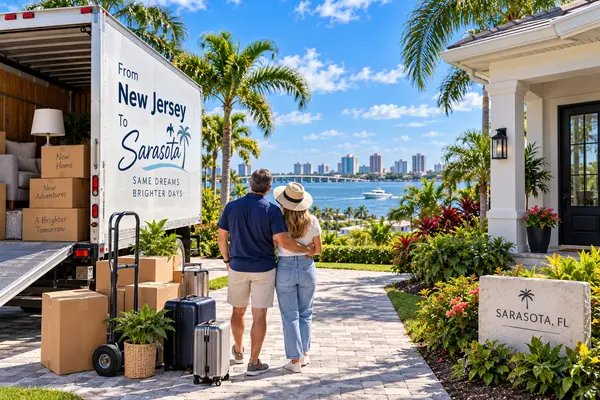
Moving to Florida from New York: What Changes When You Buy a Home on the Gulf Coast?

Moving to Florida from New York changes more than your weather and address. When you buy a home on Florida's Gulf Coast, property-specific insurance, flood exposure, hurricane preparation, homestead rules, condominium finances and coastal maintenance can become much more important parts of the purchase. The housing itself may also be different, with pools, lanais, tile roofs, storm-protection features, waterfront infrastructure and condominium associations appearing frequently in the Sarasota area. Buyers relocating from New York should approach Florida Gulf Coast real estate as a different ownership environment rather than assuming the process and ongoing costs will mirror what they know in New York.
Quick Answers About Moving to Florida from New York
What is one of the biggest differences when buying a Florida Gulf Coast home?
Insurance and coastal risk deserve attention much earlier in the buying process. A Florida buyer should investigate homeowners coverage, applicable hurricane or wind deductibles, flood exposure, roof condition and wind-mitigation features for the specific property before relying on an estimated monthly housing cost.
Does homeowners insurance cover flooding in Florida?
Standard homeowners insurance generally does not cover flood damage. Florida's Department of Financial Services advises consumers that flood coverage is separate, so buyers should obtain property-specific insurance information and discuss appropriate coverage with a qualified insurance professional.
Will the seller's current Florida property-tax bill show what I will pay?
Not necessarily. Florida property-tax benefits can depend on the owner and property, and a sale can change the assessed-value picture. Buyers should obtain a property-specific estimate from the appropriate county property appraiser rather than budgeting solely from the seller's current tax bill.
Does Florida have a homestead exemption?
Eligible owners who make a Florida property their permanent residence may qualify for homestead benefits. The Florida Department of Revenue states that qualifying homestead property may receive an exemption that reduces taxable value by as much as $50,000 and qualifies the property for the Save Our Homes assessment limitation. Eligibility should be confirmed with the county property appraiser.
What should New York buyers know about Florida condominiums?
Do not evaluate a condominium solely by the unit and monthly fee. Depending on the building, buyers may need to understand association budgets, reserves, assessments, master insurance, governing documents, structural inspection information and applicable Structural Integrity Reserve Study requirements.
Is buying near the Gulf different from buying inland?
It can be. Coastal properties may introduce additional questions about elevation, flood exposure, storm surge, salt-air maintenance, seawalls, docks, boat lifts and evacuation planning. The closer relationship with the water can be a major lifestyle benefit, but buyers should understand the property's specific ownership responsibilities.
Should I wait until I move to Florida before beginning my home search?
No. Buyers can begin comparing Gulf Coast communities, financing, insurance considerations and property types while still in New York. Hunt Brothers Realty's Florida buyer resources provide a starting point for understanding the Florida purchase and relocation process.
Why Should New York Buyers Treat Florida as a Different Ownership Environment?
Because the variables that determine whether a property works can be different. In Sarasota and other Gulf Coast communities, buyers may need to give greater weight to roof age, wind protection, flood information, drainage, elevation, homeowners insurance and hurricane preparation.
The physical design of the home may also reflect the climate. Pools, lanais, outdoor kitchens, covered patios and indoor-outdoor living spaces can receive much more attention during a showing. Tile and other Florida-oriented exterior materials, air-conditioning performance, humidity management and storm protection can become important parts of property evaluation.
For coastal homes, the differences can become even more pronounced. Hunt Brothers Realty's questions to ask before buying a home near the coast covers flood exposure, elevation, insurance, roofs, storm protection, seawalls, docks and other property-specific issues worth investigating.
Why Should Insurance Come Up Early in Your Florida Home Search?
Because insurance can materially change the cost of owning two otherwise similarly priced Florida homes. The property's location, roof, construction characteristics, wind-mitigation features, flood exposure and other underwriting factors can affect coverage availability and premiums.
The Florida Department of Financial Services notes that an insurer may request documentation concerning updates to systems such as plumbing, wiring or heating and air conditioning. An insurer may also request a wind-mitigation inspection. Underwriting ultimately determines property eligibility and the final premium.
For that reason, a New York buyer should avoid assuming that insurance will simply be a predictable percentage of the home's price. Obtain actual quotes for the property under consideration and review coverage, exclusions and deductibles with a qualified Florida insurance professional before making a purchasing decision.
What Is Different About Flood Insurance on the Gulf Coast?
Flood coverage should be evaluated separately from homeowners insurance. Florida's Department of Financial Services states that flood damage is not covered by a standard homeowners policy, while flood policies are available through the National Flood Insurance Program and private insurers.
A flood-zone designation is important, but it should not be the only piece of the analysis. Elevation, drainage, construction, proximity to tidal water and the property's history can add useful context. A property outside a mapped high-risk flood area is not necessarily a property with no flood risk.
Florida also requires specified flood information to be disclosed to purchasers of residential real property at or before execution of the sales contract. A seller's disclosure is useful, but buyers should still perform independent property-specific due diligence rather than treating the disclosure as a substitute for flood research or insurance review.
Is a flood zone the same as a hurricane evacuation zone?
No. Flood-risk mapping and hurricane evacuation planning serve different purposes. Gulf Coast buyers should investigate both for the individual property using current official information.
How Do Florida Property Taxes Change the Buying Calculation?
A seller's existing tax bill should not automatically become the number you use for your future budget. Florida's property-tax system includes exemptions and assessment limitations that can depend on the current owner's circumstances, while a transfer of ownership can change the property's assessed-value situation.
For an eligible owner who makes the Florida property a permanent residence, the Florida Department of Revenue states that the homestead exemption may decrease taxable value by as much as $50,000. Qualifying homestead property also receives the Save Our Homes assessment limitation.
A buyer moving from New York should therefore request a property-specific tax estimate rather than extrapolating from what the seller currently pays. Homestead eligibility, taxable value and individual tax consequences should be verified with the appropriate county property appraiser and, when individualized tax guidance is needed, a qualified tax professional or CPA.
What Changes When You Buy a Florida Condominium?
A Florida condominium purchase requires evaluating both the residence and the association responsible for significant parts of the property. For buyers comparing Gulf Coast condominiums, the condition and finances of the building can be as important as the finishes inside an individual unit.
Florida has specific structural inspection and reserve-study requirements for certain condominium buildings. Current Florida DBPR guidance explains that residential condominium buildings three or more habitable stories in height are subject to Structural Integrity Reserve Study requirements, while applicable aging buildings are also subject to milestone inspection requirements under Florida law.
What condominium information should a buyer investigate?
- Current association budget and financial statements
- Reserve information and applicable reserve studies
- Applicable milestone inspection documentation
- Current or proposed special assessments
- Master insurance policies and deductibles
- Recent association and board meeting information
- Rental restrictions
- Pet restrictions
- Parking and storage rights
- Responsibility for windows, doors, balconies and other building components
Association documents, structural reports, reserve information, insurance and assessments can materially affect a purchase. Buyers should review current documents for the specific condominium and obtain appropriate legal, insurance, inspection, engineering or financial guidance when the information requires individualized professional interpretation.
What Should New York Buyers Look for During a Florida Home Inspection?
The inspection should evaluate the actual Florida property, not simply apply assumptions carried from another housing market. Roof condition, moisture, HVAC performance, electrical and plumbing systems, windows, doors, storm-protection features, pools and exterior conditions can all warrant attention depending on the home.
Wind mitigation can also intersect with insurance. A qualified inspector can document qualifying construction features on the appropriate Florida form, while an insurance professional can explain whether and how those features affect coverage or premiums for the buyer.
Inspection findings should be evaluated with the appropriate licensed home inspector, contractor, engineer or other qualified professional before the buyer makes a decision. A real estate showing is not a substitute for a professional property inspection.
What Changes If You Want a Waterfront Home?
Waterfront property adds another layer of due diligence because the water itself and the infrastructure around it can affect how the property functions. A canal-front house, Sarasota Bay residence and Gulf-front condominium provide very different forms of waterfront living.
For a single-family waterfront property, buyers may need to investigate seawall condition, docks, boat lifts, permits, water depth, tides, bridges and the actual boating route. A dock does not automatically mean a property is suitable for a particular boat.
What should a waterfront buyer verify?
- Current flood information and available elevation documentation
- Seawall age, material, condition and maintenance responsibility
- Dock and boat-lift condition
- Permits for waterfront improvements
- Water depth and tidal variation
- Fixed bridges and relevant bridge clearances
- Boat-lift capacity for the intended vessel
- Property-specific insurance options and costs
Marine structures and boating suitability should be evaluated with the appropriate qualified inspectors, contractors, engineers, marine professionals, surveyors and permitting authorities as needed. Legal ownership or use rights involving docks, slips or waterfront areas should be verified through current title, association and legal documentation.
Does Salt, Sun and Humidity Change Home Maintenance?
Yes, particularly near the coast. Salt exposure can contribute to corrosion and weathering of exterior hardware, railings, lighting, mechanical components and other materials. Florida's heat and humidity also make air conditioning, ventilation and moisture management important parts of homeownership.
Pools, lanais, landscaping, docks and seawalls can add maintenance categories that a New York homeowner may not have previously managed. This does not make one home inherently better or worse than another, but it means buyers should compare expected ownership responsibilities along with purchase prices.
How Should You Compare the True Cost of Two Florida Homes?
Compare total expected ownership costs, not simply purchase prices and mortgage payments. A less expensive home can potentially carry higher insurance, association, maintenance or repair costs, while a more expensive property may have different construction features or recently completed improvements.
A useful property-by-property budget can include:
- Principal and interest when financing
- Estimated property taxes after purchase
- Homeowners insurance
- Flood insurance when applicable or desired
- Applicable hurricane or wind deductibles
- HOA or condominium fees
- Known or anticipated assessments
- Pool and landscaping expenses
- Roof and exterior maintenance
- Waterfront infrastructure maintenance when applicable
- Cash reserves for repairs and unexpected ownership costs
Financing terms, tax consequences and insurance costs depend on the buyer and property. Obtain individualized estimates from the appropriate lender, insurance professional, county property appraiser and tax professional before making a financial decision.
Where on Florida's Gulf Coast Should a New York Buyer Start Looking?
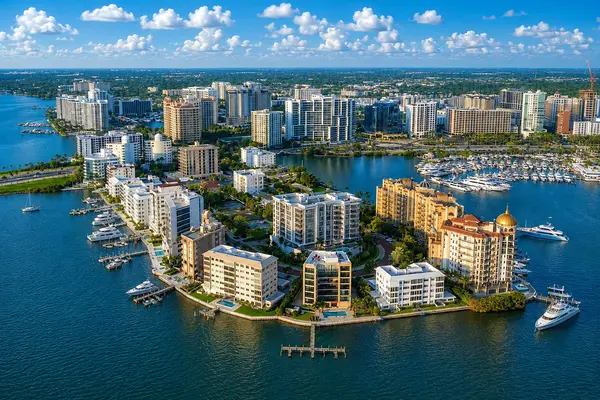
Start with the lifestyle and property type you want, then identify the communities that support it. Sarasota and the surrounding Gulf Coast offer urban condominiums, established residential neighborhoods, master-planned communities, barrier-island properties, waterfront homes and quieter coastal settings.
Hunt Brothers Realty's Gulf Coast community guides include Sarasota, Siesta Key, Longboat Key, Lido Key, Anna Maria Island, Bradenton, Bird Key, Casey Key, Lakewood Ranch, Nokomis, Osprey, Palmetto and other Florida communities.
A buyer prioritizing walkability and restaurants may evaluate a different part of Sarasota than someone whose main goal is boating access. Someone who wants a newer home and community amenities may search differently from a buyer focused on an established neighborhood near downtown or a Gulf beach.
Should you choose a Gulf Coast community during a short vacation?
Avoid judging a community solely by how it feels during a few vacation days. Test the routes you expect to drive, visit grocery stores and everyday services, compare mainland and island access, and consider how the location will function during different seasons.
What Should You Do Before Flying Down for a Home-Buying Trip?
Do the financial and geographic preparation first. A focused buying trip is much more useful when you already understand your financing range, likely ownership costs, preferred communities and the property features that matter most.
- Speak with a qualified lender if you plan to finance the purchase.
- Define a total housing budget rather than only a purchase-price ceiling.
- Decide whether the property will be a primary residence, second home or another permitted use.
- Compare Gulf Coast communities based on your everyday priorities.
- Identify whether you prefer a single-family home, condominium, newer community or waterfront property.
- Prepare questions about insurance, flood exposure and property taxes.
- Allow enough time to see neighborhoods as well as individual homes.
Hunt Brothers Realty's Florida homebuyer information can help relocating buyers prepare for the process before beginning property tours.
What Is the Biggest Adjustment for a New York Buyer?
The biggest adjustment may be learning to evaluate a Florida home as a complete ownership package. Purchase price matters, but so do insurance, flood characteristics, taxes after purchase, association obligations, building condition, storm resilience and ongoing coastal maintenance.
A home with the perfect pool or Gulf view can still require careful investigation. Conversely, coastal considerations should not automatically rule out a property. The objective is to understand what you are buying, what it is likely to require and whether those responsibilities fit your budget and intended lifestyle.
Moving from New York to Florida's Gulf Coast
Moving from New York to Florida's Gulf Coast can mean replacing cold winters with a lifestyle built around outdoor living, beaches, boating and a very different relationship with the coast. The home-buying process, however, deserves more than a change in scenery.
Learn how Florida insurance works before assuming a monthly budget. Estimate taxes based on the purchase rather than the seller's current bill. Investigate flood exposure for the individual property. Review condominium finances when applicable. Inspect coastal infrastructure carefully. Then compare communities according to how you actually intend to live.
Those steps turn a relocation search from a collection of attractive listings into a more informed comparison of Florida homes and ownership responsibilities.
Plan Your Florida Move with Hunt Brothers Realty
If you are moving from New York and considering Sarasota or another Florida Gulf Coast community, Hunt Brothers Realty can help you compare locations, property types and real estate considerations before you narrow the search. Explore the Florida Gulf Coast community guides, review Hunt Brothers Realty buyer resources, and use the firm's coastal homebuyer due-diligence guide as you prepare for your move.
Informational notice: This article provides general educational real estate and relocation information and is not individualized legal, financial, tax, insurance, lending, inspection, engineering, construction, title or association advice. Florida property taxes, homestead eligibility, insurance, flood exposure, financing, association obligations and property conditions vary by buyer and property. Buyers should verify material information for the specific home and consult the appropriate lender, insurance agent, county property appraiser, tax professional or CPA, Florida real estate attorney, inspector, engineer, contractor, condominium or homeowners association, title professional, surveyor or other qualified specialist when individualized guidance is required.
Sources
- Florida Department of Revenue, Property Tax Exemptions and Benefits
- Florida Department of Financial Services, Homeowners Insurance Overview
- Florida Department of Financial Services, Flood Insurance Overview
- Florida Department of Financial Services, Purchasing Insurance
- Florida Department of Financial Services, Property Insurance Changes and Flood Disclosure
- Florida DBPR, Condominium Milestone Inspections and Structural Integrity Reserve Studies
- Florida Statutes, Mandatory Structural Inspections for Condominium and Cooperative Buildings
- Hunt Brothers Realty, Florida Buyer Resources
- Hunt Brothers Realty, Explore Gulf Coast Communities
- Hunt Brothers Realty, Questions to Ask Before Buying a Home Near the Coast
Contact Hunt Brothers Realty
Hunt Brothers Realty
46 N Washington Blvd, Ste #3
Sarasota, Florida 34236
Phone: (941) 388-7017
Email: info@huntbrothersrealty.com
Website: HuntBrothersRealty.com
Categories
- All Blogs 1467
- Anna Maria Island 68
- Bird Key 3
- Bradenton 72
- Buying a Home 618
- Casey Key 2
- Clearwater 5
- Condos & HOA Living 524
- Ellenton 4
- Englewood 5
- First Time Homebuyers 692
- Foreclosures 3
- Homeownership 670
- Lakewood Ranch 15
- Lido Key 24
- Longboat Key 65
- Luxury/Waterfront Properties 607
- Market Updates & Trends 300
- Mortgages & Financing 30
- Move-Up Buyers 20
- Neighborhood Guides 449
- New Construction 24
- Palmetto 2
- Parrish 4
- Port Charlotte 7
- Punta Gorda 11
- Real Estate Investing 541
- Relocation to Florida 591
- Safety Harbor 2
- Sarasota - Downtown 126
- Selling a Home 136
- Siesta Key 87
- St. Petersburg 3
- Tierra Verde 4
- Vacation & Second Homes 725
- Venice 21
- Wellen Park 7
Recent Posts