Should I Buy a House That Needs a New Roof?
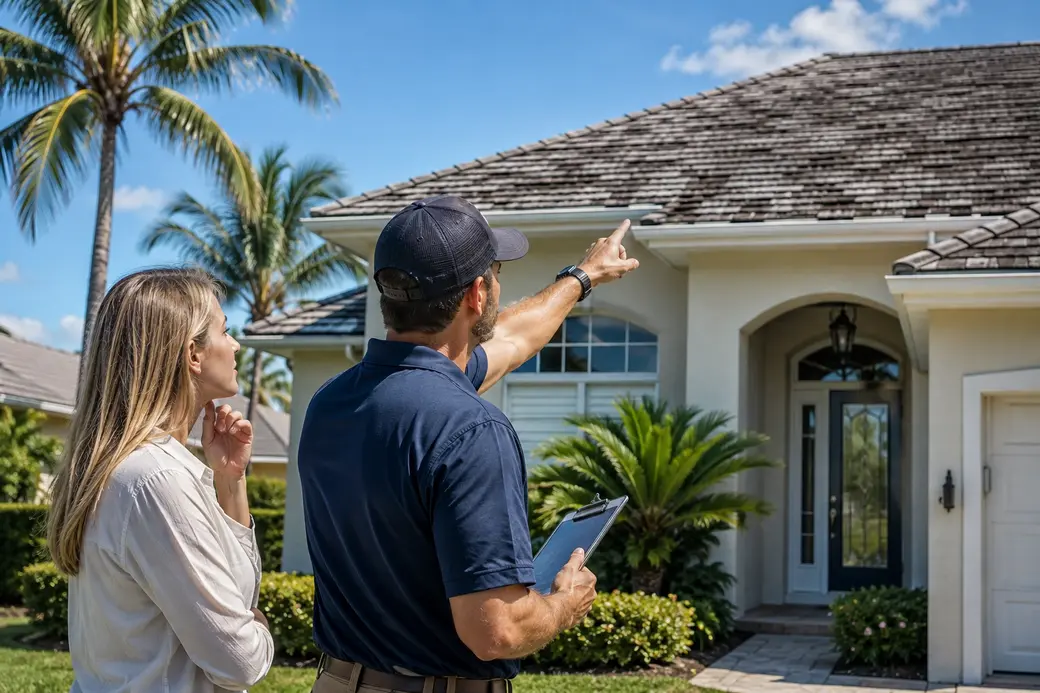
A house that needs a new roof can still be worth buying if you understand the roof's condition, replacement scope, cost, insurance implications, financing requirements, and how those factors affect the overall value of the property. An aging roof by itself is not necessarily a reason to walk away. The bigger concern is buying without knowing what you are taking on. Before deciding, obtain an independent home inspection, consider a separate evaluation and written estimate from a qualified roofing contractor, and verify property-specific insurance and mortgage requirements with the appropriate professionals.
This issue deserves particular attention in Florida, where a roof can affect future maintenance, water intrusion risk, wind resistance, insurance underwriting, and sometimes financing. Hunt Brothers Realty's detailed guide to what to look for in a roof before buying a home explains why buyers should investigate more than the roof's age.
Quick Answers About Buying a House That Needs a New Roof
Is it a bad idea to buy a house that needs a new roof?
Not automatically. A roof replacement is a significant project, but it is also a definable property condition that can be professionally evaluated and priced. The decision depends on the home's overall value, the actual scope of the roofing work, insurance and financing requirements, your available funds, and the terms you can negotiate with the seller.
How do I know if the roof really needs replacement?
Do not make that determination from age or appearance alone. Start with an independent home inspection and, when roof condition is material to your decision, obtain an evaluation from an appropriately qualified roofing contractor or other suitable professional. Ask about the roof covering, underlayment, flashing, decking, penetrations, previous repairs, leaks, and remaining useful life.
Can an old roof make a Florida home difficult to insure?
Potentially. Florida insurers may consider roof age, construction, type, condition, and other property characteristics when underwriting coverage. Buyers should obtain property-specific insurance quotes before making a final purchasing decision rather than assuming that an older roof will or will not qualify.
Does Florida require every 15-year-old roof to be replaced for insurance?
No. Under Florida Statute 627.7011, an insurer cannot refuse to issue or renew a homeowners policy solely because a roof is less than 15 years old. For a roof at least 15 years old, the law provides an inspection process and protection based solely on age when an authorized inspection indicates at least five years of useful life remaining. Other lawful underwriting considerations can still apply.
Can a lender require the roof to be replaced before closing?
Potentially. The Consumer Financial Protection Bureau notes that some loan programs may require major repairs, such as a new roof, before closing or may impose another requirement for completing the repair. Buyers should notify their lender promptly when an inspection identifies a major roof issue.
Can I ask the seller to replace the roof?
Depending on the purchase agreement and circumstances, buyers and sellers may negotiate about repairs, replacement, price, credits, or other terms. The seller does not automatically have to provide the buyer's preferred solution. Contractual rights and obligations depend on the actual agreement and should be reviewed with a qualified Florida real estate attorney when legal guidance is needed.
Is a roof credit better than having the seller replace the roof?
Neither option is universally better. A buyer-controlled replacement can provide more control over contractor and materials, while replacement before closing may solve an immediate insurance or financing issue. Credits are also subject to mortgage-program and lender rules, so buyers should confirm that a proposed credit can actually be used as intended before negotiating it.
First, Determine Whether the Roof Actually Needs Replacement
There is an important difference between an older roof and a failed roof. Chronological age tells you when a roof was installed. It does not independently establish the roof's present condition or remaining useful life.
Roof performance can be affected by roofing material, installation quality, maintenance, weather exposure, storm history, ventilation, flashing, penetrations, repairs, and other property-specific conditions. This is why broad claims such as "that roof is too old" or "this type of roof lasts a certain number of years" should not replace an evaluation of the actual property.
A qualified inspection may identify conditions such as:
- Missing or damaged roofing materials
- Cracked, broken, or displaced tiles
- Deteriorated flashing
- Multiple prior repairs
- Problems around vents or other penetrations
- Sagging or uneven areas
- Deteriorated underlayment or other roofing components
- Evidence of current or previous water intrusion
These findings should be interpreted by the appropriate qualified inspector, roofing contractor, engineer, or other professional rather than diagnosed by the buyer during a showing.
Find Out the Roof's Documented Age and History
If a listing says "older roof" or "roof approximately 15 years old," investigate further. Ask for documentation that helps establish when the roof was installed and what work was actually performed.
Useful records may include:
- Roofing permits
- Contractor invoices
- Product warranties
- Workmanship warranties
- Prior inspection reports
- Wind mitigation reports
- Seller disclosures
- Documentation of previous leaks or repairs
Documentation can also help determine whether previous work involved a complete roof replacement, a partial replacement, or a repair. Questions about permits, inspections, code compliance, or open permits should be verified with the applicable local permitting authority or another appropriately qualified professional.
Get a Roof Replacement Estimate Before Deciding
If professional evaluation indicates that replacement is needed, turn the problem into a number before deciding whether the house still makes sense. Obtain property-specific written estimates from appropriately licensed roofing contractors rather than relying on a generic online cost-per-square-foot estimate.
Roof replacement cost can vary based on factors such as:
- Roof size and geometry
- Pitch and accessibility
- Shingle, tile, metal, or other roofing material
- Condition of the roof deck
- Underlayment and flashing requirements
- Removal and disposal of existing materials
- Required permits and inspections
- Wind-resistance and current code requirements
- Labor and property-specific site conditions
A contractor should also clarify what the estimate assumes about hidden conditions. If deteriorated decking or another concealed problem is discovered after the existing roof is removed, the final project can differ from the initial estimate.
Look for Water Damage Before Treating This as Only a Roof Project
A worn-out roof and a leaking roof are not necessarily the same problem. If the roof has allowed water into the structure, replacing the roof covering may be only part of the work.
Inside the house and attic, professionals may look for ceiling stains, damaged drywall, stained roof decking or framing, visible moisture, deterioration, and evidence of previous repairs. Hunt Brothers Realty's guide to checking a Florida home for signs of water intrusion explains why moisture findings should be investigated rather than assumed to originate from the roof.
A ceiling stain, for example, could relate to a current roof leak, an older repaired leak, plumbing, condensation, HVAC equipment, or another moisture source. Conversely, the absence of visible stains does not establish that the roof is problem-free.
How Can an Older Roof Affect Homeowners Insurance in Florida?
Insurance should be investigated early, not after the buyer has already assumed that replacing the roof can wait several years. Florida insurers may consider roof age, type, construction, condition, wind mitigation features, location, claims history, and other characteristics when evaluating a property.
For an older property, an insurer may also request inspections or documentation before determining whether it will offer coverage and on what terms. Requirements vary by insurer and property.
The practical approach is to obtain insurance quotes for the actual home while you are conducting due diligence. Insurance availability, coverage, deductibles, underwriting requirements, and premiums can vary substantially by property. Buyers should review the roof and proposed replacement timing with a qualified Florida insurance professional before making a purchasing decision.
What Does Florida's 15-Year Roof Rule Mean for Buyers?
Florida's roof-age insurance law is frequently reduced to the inaccurate idea that every roof must be replaced when it turns 15 years old. The actual law is more specific.
Under Florida Statute 627.7011:
- An insurer may not refuse to issue or renew a homeowners policy solely because a residential structure has a roof less than 15 years old.
- For a roof at least 15 years old, the insurer must allow the homeowner to obtain a roof inspection by an authorized inspector, at the homeowner's expense, before requiring replacement as a condition of issuance or renewal based solely on age.
- If the authorized inspection indicates at least five years of useful life remaining, the insurer may not refuse issuance or renewal solely because of the roof's age.
The Florida Department of Financial Services also summarizes these roof-age provisions for consumers.
These protections are based on roof age and do not mean an insurer must ignore condition or other lawful underwriting criteria. Buyers should not rely on the statute as a substitute for obtaining an actual quote and confirming underwriting requirements for the specific property.
Can a Bad Roof Affect Your Mortgage?
Potentially. Mortgage approval involves more than the borrower's finances. Depending on the loan program and property condition, significant repair issues can also affect the transaction.
The Consumer Financial Protection Bureau's home inspection guidance explains that when major repairs such as a new roof are needed, a lender can sometimes require the work to be completed before closing as a condition of the loan. In other circumstances, a lender may impose another requirement related to completing the repair.
Loan programs and lender property requirements vary. If an inspection indicates that the roof needs replacement, give that information to your mortgage professional promptly rather than assuming you can simply replace the roof after closing.
Should You Ask the Seller to Replace the Roof Before Closing?
Having the seller complete the roof before closing can be attractive when insurance or financing requires replacement, or when the buyer does not want to take on a major construction project immediately after purchasing the home.
There are also details to consider. If the seller is paying for the roof, buyers may want to understand:
- Which roofing contractor will perform the work?
- What roofing system and materials will be installed?
- What happens if deteriorated decking is discovered?
- What permits and inspections are required?
- What warranties will be provided?
- Are those warranties transferable to the buyer?
- How will completion be documented before closing?
A licensed real estate professional can help facilitate negotiations within the scope of brokerage services. Contract language, legal obligations, completion standards, escrow arrangements, remedies, and other legal questions should be reviewed with a qualified Florida real estate attorney when appropriate.
What About Asking for a Seller Credit Instead?
A buyer may prefer to control the roof replacement after closing rather than have the seller choose the contractor and materials. Depending on the transaction, one possible negotiation approach may involve a seller credit or another adjustment.
However, a seller credit is not simply unrestricted cash that can always be handed to the buyer for a future roof. Mortgage programs place limits on seller contributions and specify how credits can be applied. A lender may also require the roof to be repaired before closing, which could make a post-closing replacement strategy impractical for that financing.
Before negotiating this structure, review Hunt Brothers Realty's guide to seller concessions and how they can help a buyer, then have the proposed credit reviewed by your mortgage professional to confirm how it would work with your specific loan.
Is a Price Reduction Better Than a Roof Credit?
A price reduction and a seller credit affect a transaction differently. Reducing the purchase price does not necessarily give a financed buyer the same amount of additional cash after closing to pay a roofing contractor. A permitted seller credit may reduce certain eligible closing expenses, potentially allowing the buyer to preserve more personal funds, but lender rules determine how that credit can be used.
A seller-completed roof replacement presents a third possibility. Which structure is workable depends on the contract, lender, insurer, appraisal, roof condition, available funds, and negotiations between the parties.
Buyers should have a mortgage professional explain the financing implications of each option and obtain appropriate financial advice when deciding how much cash to commit to the transaction.
Could Buying the House and Replacing the Roof Yourself Have Advantages?
If insurance and financing permit the transaction to close with the existing roof, handling the replacement afterward may give a buyer more control over the project. The buyer can select the contractor, roofing material, color, specifications, and available upgrades rather than accepting choices made primarily to complete the sale.
That control comes with responsibility. The buyer assumes the financial risk of the project, including possible hidden conditions, cost changes, scheduling, permitting, and construction management. There may also be a period immediately after closing when the buyer is living in or carrying the property while a major project is underway.
Before choosing this approach, obtain professional estimates and confirm with the prospective insurer and lender that the proposed timing is acceptable.
Do Not Forget About Wind Mitigation
For Florida Gulf Coast buyers, a roof is not only a covering that keeps rain out. Roof-related construction features can also be relevant to how a home performs in high winds and how an insurer evaluates certain wind-mitigation characteristics.
A wind mitigation inspection may document features involving:
- Roof covering
- Roof deck attachment
- Roof-to-wall attachment
- Roof geometry
- Secondary water resistance
- Opening protection elsewhere on the home
Depending on the property and insurer, qualifying features may affect available windstorm premium credits. The actual insurance effect should be determined from the property-specific inspection and reviewed with a qualified insurance professional.
Look at the Whole House, Not Just the Roof
One major replacement may be manageable. Several major systems approaching replacement at the same time can create a very different ownership picture.
If a home needs a roof, also understand the condition of:
- HVAC equipment
- Electrical system and panels
- Plumbing and drain lines
- Water heater
- Windows and exterior doors
- Drainage and moisture conditions
- Pool and pool equipment where applicable
- Structural and exterior components
Hunt Brothers Realty's guide to Florida home inspection red flags explains why roof, plumbing, electrical, HVAC, moisture, and other major components should be considered together when evaluating an older property.
When Might a House That Needs a Roof Still Be Worth Considering?
A roof nearing replacement does not determine whether a property is a good or bad purchase. Buyers should evaluate the roof as one component of the complete transaction.
A property may still deserve consideration when:
- The roof's condition and replacement scope have been professionally evaluated
- The buyer has reliable written replacement estimates
- Insurance has been investigated for the specific property
- The lender has confirmed how the roof affects financing
- The buyer understands whether water or structural damage exists beyond the roof covering
- The transaction terms appropriately account for the property's condition from the buyer's perspective
- The buyer has sufficient funds for the anticipated work and appropriate contingencies
A home can have an older roof while offering a location, lot, floor plan, waterfront position, neighborhood, or other characteristics that are difficult to reproduce. The roof problem should be quantified and evaluated, not automatically ignored or treated as a reason to reject the entire property.
When Should a Buyer Be More Cautious?
Additional caution may be appropriate when the roof problem is poorly documented, multiple leaks have occurred, significant water intrusion is present, structural concerns are identified, the replacement cost is uncertain, insurance is difficult to obtain, financing is affected, or several other major building systems also require substantial work.
The important distinction is between a known project with a reasonably understood scope and an open-ended condition with substantial unanswered questions. The latter deserves additional professional investigation before the buyer commits to a decision.
Roof Checklist Before Buying the House
- Verify the age: Look for permits, invoices, warranties, and other documentation.
- Get an independent inspection: Understand observable conditions throughout the property.
- Get specialist input: Have significant roof concerns evaluated by an appropriately qualified roofing professional.
- Investigate leaks: Determine whether there is evidence of water intrusion or related damage.
- Obtain written estimates: Quantify the anticipated replacement rather than guessing.
- Check permits: Verify available records with the applicable permitting authority.
- Call the insurer: Obtain property-specific quotes and underwriting information.
- Talk to the lender: Confirm whether roof condition affects mortgage approval or closing.
- Review warranties: Determine whether existing or proposed warranties transfer to you.
- Evaluate the whole property: Consider the roof alongside other major systems and anticipated ownership costs.
The Bottom Line: Should You Buy a House That Needs a New Roof?
A house needing a new roof is not automatically a bad purchase. What matters is whether you understand the condition before buying and whether the total transaction still works after accounting for the roof, related repairs, insurance, financing, and the condition of the rest of the home.
Do not make the decision based solely on the seller's estimate, the roof's age, or what the roof looks like from the driveway. Obtain professional evaluations, property-specific estimates, insurance information, and lender guidance. Then evaluate the home based on real information rather than uncertainty.
Buying a Home on Florida's Gulf Coast?
Roof age and condition are only part of evaluating a Florida home. Buyers may also need to consider inspections, insurance, financing, flood exposure, association requirements, maintenance, and other property-specific factors. Contact Hunt Brothers Realty to discuss your Gulf Coast home search and the real estate due-diligence process.
Informational notice: This article is provided for general real estate and educational purposes only and is not individualized inspection, roofing, engineering, construction, insurance, lending, financial, legal, or other professional advice. Roof condition, remaining useful life, replacement scope, code requirements, insurance eligibility, premiums, financing requirements, and repair costs are property-specific. Buyers should obtain an independent home inspection and, when appropriate, evaluations from qualified roofing contractors, engineers, insurance professionals, lenders, local permitting authorities, and other appropriate professionals before making a purchasing decision. Questions involving contractual rights, obligations, remedies, credits, or legal consequences should be reviewed with a qualified Florida real estate attorney when appropriate.
Sources
- Florida Statute 627.7011, Homeowners' Policies and Roof Age Provisions
- Florida Department of Financial Services, Property Insurance Changes
- Consumer Financial Protection Bureau, Schedule a Home Inspection
- Hunt Brothers Realty, What to Look for in a Roof Before Buying a Home
- Hunt Brothers Realty, Florida Home Inspection Red Flags
- Hunt Brothers Realty, How to Check a Florida Home for Signs of Water Intrusion
- Hunt Brothers Realty, What Is a Seller Concession and How Does It Help a Buyer?
Contact Hunt Brothers Realty
Hunt Brothers Realty
46 N. Washington Blvd, Ste 3
Sarasota, FL 34236
Phone: (941) 388-7017
Email: info@huntbrothersrealty.com
Website: HuntBrothersRealty.com
Categories
- All Blogs 2152
- Anna Maria Island 86
- Bird Key 4
- Bradenton 236
- Buying a Home 1211
- Casey Key 2
- Clearwater 11
- Condos & HOA Living 1127
- Ellenton 6
- Englewood 11
- First Time Homebuyers 1320
- Foreclosures 5
- Home Selling 6
- Homeownership 1344
- Lakewood Ranch 25
- Lido Key 28
- Longboat Key 80
- Luxury/Waterfront Properties 1283
- Market Updates & Trends 804
- Mortgages & Financing 51
- Move-Up Buyers 23
- Neighborhood Guides 919
- New Construction 36
- Palmetto 3
- Parrish 6
- Port Charlotte 10
- Punta Gorda 17
- Real Estate Investing 1200
- Relocation to Florida 1239
- Safety Harbor 3
- Sarasota 86
- Sarasota - Downtown 163
- Selling a Home 146
- Siesta Key 92
- St. Petersburg 8
- Tierra Verde 5
- Vacation & Second Homes 1393
- Venice 209
- Wellen Park 20
Recent Posts