How to Check a Florida Home for Signs of Water Intrusion
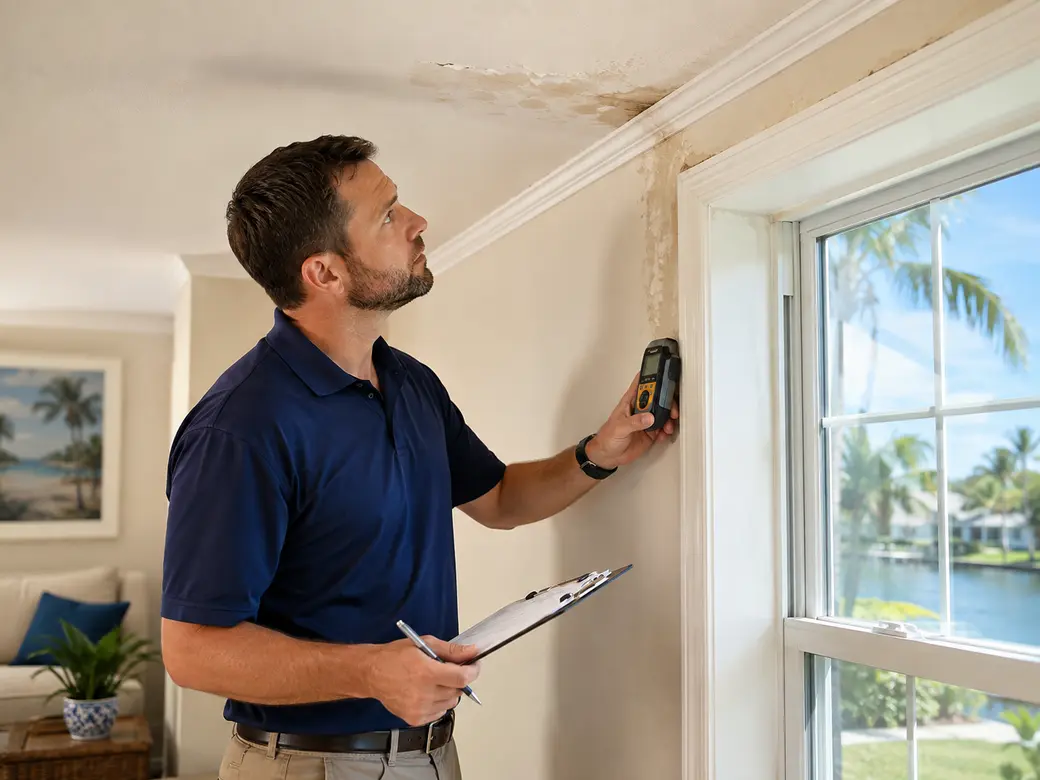
When buying a Florida home, look for water stains, peeling or bubbling paint, swollen trim, damaged drywall, musty odors, visible mold growth, condensation, deteriorated caulk, roof or flashing problems, poor exterior drainage and moisture around plumbing or air-conditioning equipment. Water intrusion is not always obvious, and a recently painted wall does not establish that the area is dry. Buyers should use their observations to identify questions, then have suspected moisture conditions evaluated by a qualified home inspector and, when appropriate, a roofer, plumber, contractor, mold professional, engineer or other specialist before making a purchasing decision.
Quick Answers About Signs of Water Intrusion in a Florida Home
What are the most obvious signs of water intrusion?
Look for stains on ceilings and walls, damaged drywall, peeling or bubbling paint, warped materials, standing water, visible mold growth and deterioration around windows or doors. These conditions do not necessarily reveal the source, so further investigation may be needed.
Can a musty smell indicate a moisture problem?
Yes. The Florida Department of Health recommends investigating areas with earthy or musty odors because they can indicate a mold or moisture problem. An odor alone does not identify where the water is coming from, so the underlying source still needs to be found.
Does a clean-looking house mean there is no water damage?
No. Moisture can occur behind walls, under flooring, around windows, inside roof assemblies or near plumbing and HVAC equipment without producing an obvious surface stain. A visual showing is not a substitute for an appropriate home inspection.
Where should Florida buyers look first?
Start with ceilings, exterior walls, windows, doors, bathrooms, kitchens, areas under sinks, plumbing fixtures, the attic when safely accessible, and air-conditioning equipment. Outside, look at the roof, gutters where present, exterior wall penetrations, grading and drainage around the structure.
Is condensation the same as a roof or plumbing leak?
No. Condensation can result from humid air contacting cooler surfaces, while water intrusion can also originate from roofs, exterior walls, windows, plumbing, drainage or other sources. Because different causes require different repairs, identifying the source is more important than simply drying or repainting the visible area.
Should every buyer order mold testing?
Not automatically. The Florida Department of Health states that it does not recommend mold testing or sampling simply to determine whether a mold problem exists. When visible mold, water damage or suspicious conditions are present, the priority is to investigate the moisture source and obtain appropriate professional evaluation.
Does previous water intrusion automatically make a home a bad purchase?
Not necessarily. What matters is what caused the water intrusion, how extensive it was, whether the source was properly corrected, what materials were affected and whether repairs were appropriately completed. Buyers should evaluate the individual property with qualified professionals rather than assuming either that previous water damage is harmless or that it makes the home unacceptable.
Why Water Intrusion Deserves Extra Attention in Florida
Florida homes routinely operate in a warm, humid environment, and properties can be exposed to heavy rain, tropical weather and substantial indoor and outdoor moisture. That does not mean Florida homes inevitably have water problems. It means buyers should take moisture observations seriously and understand that water can enter or accumulate through several different pathways.
The Florida Department of Health identifies potential moisture sources that include roof and exterior leaks, plumbing leaks, flooding, condensation, air-conditioning drain pans, poor kitchen and bathroom ventilation and humid outdoor air.
For a buyer, the important lesson is that a moisture problem is not synonymous with a roof leak. Finding the source is part of understanding the condition.
1. Look at the Ceilings Before You Look at the Finishes
Ceilings can provide some of the easiest visual clues to previous or active moisture. Walk through the home slowly and look upward, particularly below roof areas, bathrooms, plumbing fixtures and mechanical equipment located above the living space.
Conditions worth asking about include:
- Brown, yellow or irregular discoloration
- Circular or spreading stains
- Bubbling or peeling paint
- Sagging or damaged drywall
- Texture that appears different from the surrounding ceiling
- Localized areas that appear recently patched or painted
None of these conditions proves there is an active leak. A stain may remain after a properly completed repair. Conversely, fresh paint does not prove that an underlying moisture source has been corrected.
Ask what caused the condition, when it occurred, what repairs were performed and whether documentation is available.
2. Inspect Walls for More Than Water Stains
Water intrusion does not always produce the classic brown stain buyers expect. Moisture can affect paint, drywall, trim and other materials in less obvious ways.
Look for:
- Paint bubbles or blisters
- Peeling paint
- Discoloration
- Soft or deteriorated drywall
- Swollen baseboards
- Separating trim
- Deterioration near exterior walls
- Visible mold-like growth
- Unexplained patching or isolated repainting
Pay attention to where the condition appears. Damage directly below a window can suggest a different investigation than staining below a bathroom or around an air-conditioning component.
3. Use Your Nose as Well as Your Eyes
A home can look freshly renovated and still have an odor that deserves investigation.
The Florida Department of Health recommends searching areas where earthy or musty odors are noticeable. The U.S. Environmental Protection Agency similarly notes that a moldy or musty odor can suggest mold growth that should be investigated.
Notice whether the odor is strongest in a particular room, closet, bathroom, cabinet, enclosed area or near HVAC equipment. An odor does not establish the source or extent of a problem, but it is a reasonable reason to ask for further evaluation.
4. Check Windows and Exterior Doors Carefully
Windows and exterior doors are important parts of the building envelope. Water can appear around an opening because of failed sealants, installation issues, deterioration, exterior drainage or other conditions.
During a showing, look around the complete opening rather than focusing only on the glass.
- Check drywall immediately above and below windows.
- Look at window sills and trim for swelling or deterioration.
- Notice damaged or missing caulk where visible.
- Look for staining at lower corners.
- Check flooring immediately below doors and windows.
- Notice condensation or recurring moisture on interior surfaces.
Hunt Brothers Realty's Florida heat and humidity guide specifically recommends paying attention to areas around windows and exterior doors when looking for moisture problems.
5. Look Under Every Sink You Can Access
Plumbing leaks can be small enough to remain unnoticed while still repeatedly wetting cabinetry or surrounding materials.
In kitchens, bathrooms, laundry areas and wet bars, visually check accessible areas around plumbing for:
- Staining
- Swollen cabinet material
- Deteriorated shelving
- Corrosion
- Visible dripping
- Musty odors
- Previous patches or repairs
Also look around toilets, tubs, showers, refrigerators with water connections, washing machines, water heaters and other plumbing-related equipment where accessible.
Do not dismantle components or move appliances during a showing without authorization. A qualified inspector can perform a more systematic evaluation during the inspection process.
6. Pay Attention to Bathrooms and Showers
Bathrooms combine plumbing, water use, humidity and multiple transitions between building materials. That makes them logical places to look for moisture-related conditions.
Look around shower enclosures, tubs, toilets, vanities, baseboards and adjacent walls. Deteriorated caulk, damaged grout, loose materials, staining or swelling can justify a closer inspection.
Also notice whether the bathroom has effective ventilation. The Florida Department of Health identifies poor venting of bathroom and kitchen moisture as one potential contributor to indoor moisture conditions.
7. Do Not Forget the Air-Conditioning System
Air conditioning is closely connected to moisture management in a Florida home. The system removes moisture from indoor air, but condensate also has to be collected and drained correctly.
The Florida Department of Health recommends checking around air-handling equipment for standing water and routinely inspecting drain pans and drain lines. The EPA likewise recommends keeping air-conditioning drip pans clean and drain lines unobstructed.
During a showing or inspection, pay attention to:
- Standing water near equipment
- Staining around the air handler
- Damaged surrounding drywall or flooring
- Condensation on accessible components
- Musty odors near the system
- Evidence of previous condensate overflow
HVAC performance and condensate concerns should be evaluated by an appropriately qualified inspector or HVAC professional when necessary.
8. Check Indoor Humidity and Condensation
Not every moisture problem comes from liquid water entering through a hole or leaking pipe. High indoor humidity and condensation can also create damp conditions.
The Florida Department of Health recommends keeping indoor relative humidity below 60 percent and notes that below 50 percent is best for controlling mold growth and dust mites. The EPA similarly recommends keeping indoor humidity below 60 percent when possible.
A portable humidity monitor can provide a snapshot of conditions at the time it is used, but one reading does not establish the home's long-term humidity history. If a property consistently feels damp or clammy, or condensation appears on windows, walls or pipes, the cause deserves investigation.
9. Look at the Attic When It Can Be Safely Inspected
The attic can reveal evidence that is not visible from the finished rooms below. Roof leaks may first affect roof decking, framing or insulation before producing an obvious ceiling stain.
A professional inspection may look for conditions such as staining, deteriorated materials, evidence of previous repairs, damp insulation, moisture around roof penetrations or other indications that warrant additional evaluation.
Buyers should not enter an attic that is unsafe or inaccessible during a casual showing. Attics can contain exposed wiring, limited walking surfaces, extreme heat and other hazards. Leave a detailed attic evaluation to the appropriate professional.
10. Inspect the Roof, but Do Not Diagnose It Yourself
The roof is one of the first systems buyers associate with water intrusion, and for good reason. Roof coverings, flashing, penetrations and transitions all play a role in keeping water outside the building envelope.
Hunt Brothers Realty's Florida home inspection guide recommends looking for issues such as damaged roof coverings, soft spots or signs of water intrusion, previous repairs, sagging roof lines, flashing problems and evidence of attic leaks.
A buyer should not climb onto a roof during a showing. Roof condition should be evaluated by an appropriate inspector or roofing professional, particularly when visible conditions, age or inspection findings raise questions.
11. Walk Around the Exterior After Looking Inside
Interior moisture can sometimes be better understood after examining the corresponding exterior area.
Walk around the property and observe:
- Visible exterior wall deterioration
- Openings and penetrations through exterior walls
- Condition around windows and doors
- Roof drainage patterns
- Gutters and downspouts where present
- Areas where water appears likely to collect
- Soil or landscaping immediately against the structure
- Visible signs of erosion or poor drainage
- Low areas near the house
EPA moisture-control guidance recommends maintaining roof drainage and having ground slope away from the foundation so water does not enter or collect around the structure.
12. Ask What Happens During Heavy Rain
A property can look completely dry on a sunny afternoon while behaving differently during a prolonged Florida downpour.
Hunt Brothers Realty's coastal home buyer guide recommends considering what a property looks like after heavy rain, including grading, drainage, nearby low areas and signs of previous standing water or intrusion.
This matters even when the property is not directly on the Gulf, bay or a canal. Heavy rainfall and site drainage are separate considerations from coastal storm surge.
13. Investigate Previous Flooding and Storm Repairs
A home's current appearance does not tell you its complete history. Florida buyers, particularly in coastal areas, should investigate available information concerning previous flooding, storm damage, water intrusion and significant repairs.
Depending on the property and information available, buyers may want to review:
- Seller disclosures
- Permit records
- Invoices for major repairs
- Roof documentation
- Information concerning previous water intrusion
- Available flood and elevation information
- Documentation concerning significant storm-related repairs
Documents should be considered together with the current physical inspection. A completed repair does not necessarily mean there is an ongoing problem, while a lack of visible damage does not establish that water intrusion has never occurred.
14. Understand the Difference Between Water Intrusion and Flood Risk
Water intrusion is a broad property-condition issue. A roof leak, plumbing failure, window leak or overflowing air-conditioning drain can occur regardless of whether a house is in a high-risk flood zone.
Flood risk is a separate part of due diligence. Coastal buyers should investigate the property's current flood-zone information, elevation when relevant, previous flooding information and available insurance options.
For waterfront properties, Hunt Brothers Realty's guide to buying waterfront property in Florida recommends evaluating flood exposure together with property condition, insurance and waterfront infrastructure rather than treating any one factor as the complete risk picture.
15. Do Not Assume Visible Mold Tells You the Whole Story
Mold and moisture are closely connected, but buyers should avoid trying to identify mold species or determine health implications from appearance alone.
The Florida Department of Health states that indoor mold growth can usually be seen or smelled and does not recommend routine mold sampling simply to determine whether a mold problem exists or which type is present. Its guidance emphasizes finding and correcting the moisture source.
If visible growth or significant moisture damage is discovered during due diligence, buyers should discuss appropriate next steps with qualified professionals. Florida regulates mold assessment and remediation activities, and the appropriate scope of professional evaluation depends on the individual circumstances.
16. Know Why the 24 to 48 Hour Window Matters
When water intrusion occurs, response time can matter. The EPA recommends drying water-damaged areas and materials within 24 to 48 hours to help prevent mold growth. Florida Department of Health guidance similarly emphasizes quickly drying wet building materials.
For a buyer investigating previous damage, this creates useful questions. How long was the material wet? How was it dried? Was damaged material removed? Was the water source corrected? Were repairs documented?
The answers may not always be available, but they can help a qualified inspector or other professional determine whether additional evaluation is appropriate.
17. What Can a Home Inspector Do?
A home inspection provides an independent evaluation of the property's visible condition within the scope of the inspection. An inspector can identify observed conditions, evidence of moisture and components that may warrant further evaluation.
Depending on the property and inspection findings, further evaluation could involve:
- A roofing contractor
- A licensed plumber
- An HVAC professional
- A qualified contractor
- A structural engineer
- An appropriately licensed mold assessor or remediator
- Another specialist appropriate to the observed condition
The purpose is not to turn every stain into a worst-case scenario. It is to determine what caused the condition, whether the source remains active, what materials were affected and what corrective work may be appropriate.
18. What About Moisture Meters and Infrared Cameras?
Inspection professionals may use moisture meters, infrared cameras or other tools as part of an evaluation. These tools can provide useful information, but their readings require context and professional interpretation.
A moisture meter reading does not, by itself, explain why moisture is present. Likewise, a temperature pattern on an infrared image is not automatically proof of a leak or mold growth.
Buyers should focus on the professional's overall findings, observations and recommendations rather than treating one instrument reading as a complete diagnosis.
Florida Home Water Intrusion Checklist
When touring or inspecting a Florida home, consider investigating the following areas:
- Ceiling stains or patches
- Peeling, bubbling or discolored paint
- Soft or damaged drywall
- Swollen baseboards or trim
- Musty or earthy odors
- Visible mold-like growth
- Moisture around windows and doors
- Deteriorated exterior sealants
- Evidence of plumbing leaks
- Cabinet damage below sinks
- Bathroom and shower deterioration
- Standing water near HVAC equipment
- Air-conditioning drain issues
- Excessive condensation
- Roof or flashing concerns
- Attic staining or moisture when professionally inspected
- Exterior drainage problems
- Low areas or standing water near the house
- Evidence of previous storm or flood repairs
- Seller disclosures concerning previous water intrusion
- Available repair invoices and permits
- Current property-specific flood information
Frequently Asked Questions About Water Intrusion in Florida Homes
Should I worry about a small ceiling stain?
A small stain deserves investigation, but it does not establish the severity of the problem. Ask what caused it, whether the source was repaired and whether a qualified inspector recommends further evaluation.
What if the seller says the leak was already fixed?
A previous repair can be useful information, but buyers should still evaluate the present condition. Request available documentation and have the relevant area inspected. The important questions are whether the original water source was corrected and whether affected materials were appropriately addressed.
Can fresh paint hide water damage?
Paint can cover staining, but fresh paint does not prove that anyone intentionally concealed a problem. Recently painted areas should simply be considered along with disclosures, inspection findings, moisture observations and available repair documentation.
Can a house have moisture problems without visible mold?
Yes. A leak, condensation or elevated moisture condition can exist without visible mold growth. Water stains, damaged materials, odors, standing water and condensation are all reasons to investigate moisture independently of whether mold can be seen.
Should I walk away from a house with previous water damage?
Previous water damage is information to investigate, not an automatic answer about whether to purchase. The source, extent, repairs, present condition, insurance implications and cost of any remaining work should be evaluated before the buyer decides how to proceed.
Can water intrusion affect homeowners insurance?
Property condition, previous losses and the source of water can be relevant to insurance, but coverage and underwriting vary substantially by property and insurer. Buyers should discuss known water-related conditions and property history with a qualified insurance professional and obtain property-specific coverage information before making a final purchasing decision.
Look for the Source, Not Just the Stain
The most useful question when you find a suspicious stain is not simply, “Is this water damage?” It is, “Where did the moisture come from, and has that source been corrected?”
A roof leak, window problem, plumbing leak, HVAC condensate issue, exterior drainage problem, flood event and high indoor humidity can require very different solutions. Identifying the source helps buyers understand whether they are looking at a past event, an active problem or a condition requiring additional professional investigation.
That is why water intrusion should be evaluated as part of the home's complete condition rather than through one stain, one odor or one moisture reading.
Buying a Florida Home? Make Moisture Due Diligence Part of the Process
Hunt Brothers Realty helps Florida Gulf Coast buyers look beyond finishes and evaluate the property considerations that can affect a purchase. Before closing, buyers can review Florida home inspection red flags, learn more about questions to ask when buying near the coast, or contact Hunt Brothers Realty to discuss a Florida home search.
Informational notice: This article provides general real estate and educational information and is not individualized inspection, engineering, construction, mold, environmental, health, insurance, legal or other professional advice. Water and moisture conditions vary substantially by property, and visible observations do not establish the source, extent or appropriate repair. Buyers should have suspected water intrusion evaluated by a qualified home inspector and, when appropriate, a licensed roofer, plumber, HVAC professional, contractor, engineer, mold professional or other qualified specialist. Insurance availability, coverage and claims treatment should be reviewed with a qualified insurance professional before making a purchasing decision.
Sources
- Florida Department of Health, Indoor Mold and Moisture Guidance
- U.S. Environmental Protection Agency, A Brief Guide to Mold, Moisture and Your Home
- U.S. Environmental Protection Agency, Moisture Control Guidance
- Hunt Brothers Realty, Florida Home Inspection Red Flags
- Hunt Brothers Realty, How to Protect Your Florida Home From Heat and Humidity
- Hunt Brothers Realty, Questions to Ask Before Buying a Home Near the Coast
- Hunt Brothers Realty, Buying Waterfront Property in Florida
Contact Hunt Brothers Realty
Hunt Brothers Realty
46 N. Washington Blvd, Ste 3
Sarasota, FL 34236
Phone: (941) 388-7017
Email: info@huntbrothersrealty.com
Website: HuntBrothersRealty.com
Categories
- All Blogs 2010
- Anna Maria Island 83
- Bird Key 4
- Bradenton 235
- Buying a Home 1072
- Casey Key 2
- Clearwater 10
- Condos & HOA Living 989
- Ellenton 5
- Englewood 9
- First Time Homebuyers 1180
- Foreclosures 3
- Home Selling 3
- Homeownership 1203
- Lakewood Ranch 23
- Lido Key 27
- Longboat Key 78
- Luxury/Waterfront Properties 1144
- Market Updates & Trends 672
- Mortgages & Financing 42
- Move-Up Buyers 21
- Neighborhood Guides 790
- New Construction 33
- Palmetto 3
- Parrish 6
- Port Charlotte 10
- Punta Gorda 17
- Real Estate Investing 1062
- Relocation to Florida 1105
- Safety Harbor 2
- Sarasota 75
- Sarasota - Downtown 158
- Selling a Home 144
- Siesta Key 89
- St. Petersburg 7
- Tierra Verde 5
- Vacation & Second Homes 1253
- Venice 129
- Wellen Park 13
Recent Posts