What Is a Home Inspection?
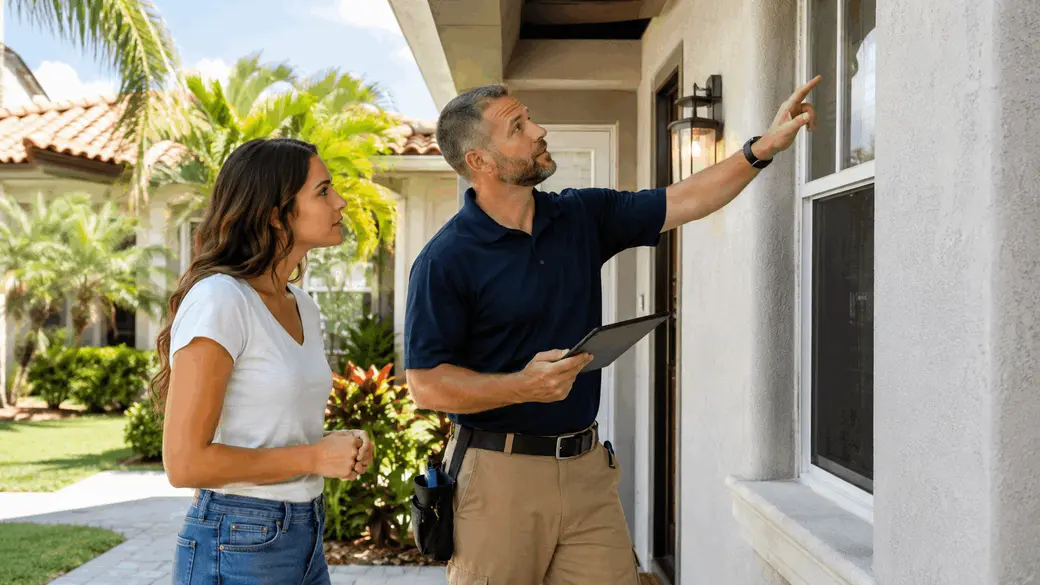
A home inspection is a professional evaluation of a home's visible, readily accessible condition at the time of the inspection. In Florida, home inspection services are defined as a limited visual examination of specified installed systems and components, including the structure, electrical system, HVAC system, roof covering, plumbing, interior and exterior components, and site conditions affecting the structure. The inspector provides a written professional opinion of the home's condition. For buyers, an inspection can identify defects, maintenance concerns, aging components, and conditions that may deserve additional evaluation before making a purchasing decision.
Quick Answers About Home Inspections
What is the purpose of a home inspection?
The purpose is to give the buyer better information about the home's observable condition. An inspection can identify visible defects, aging systems, maintenance issues, and conditions that may require further evaluation, helping the buyer better understand the property before completing the purchase.
What does a Florida home inspector examine?
Florida law defines home inspection services as a limited visual examination of readily accessible installed systems and components including the structure, electrical system, HVAC system, roof covering, plumbing system, interior components, exterior components, and site conditions affecting the structure. The actual inspection agreement should be reviewed for the scope of a particular inspection.
Does a home inspection tell me whether I should buy the house?
No. A home inspection provides information about the property's condition, not a recommendation to buy or reject it. The buyer can use the findings, along with the purchase contract and advice from appropriate specialists, to decide whether the home's condition and expected ownership costs fit the buyer's plans.
Is a home inspection pass or fail?
No. A general home inspection is better understood as an evaluation of condition than a pass-or-fail test. Even well-maintained homes can have inspection findings, and a lengthy report does not automatically mean the property is a poor purchase.
Does the seller have to fix everything in the inspection report?
Not automatically. A seller's obligations and a buyer's options depend on the purchase contract and circumstances. Inspection findings do not by themselves create a universal requirement that a seller repair every item, so contractual questions should be reviewed under the agreement actually signed.
Does a new-construction home need an inspection?
New construction can still have incomplete work, installation problems, or defects. Buyers should discuss appropriate inspection opportunities and timing with a qualified home inspector and review the builder contract and applicable warranty provisions rather than assuming a newly built home cannot have inspection findings.
Is a home inspection the same as an appraisal?
No. A home inspection evaluates physical condition within the inspection's scope, while an appraisal develops an opinion of property value for its intended purpose. One does not replace the other.
How Does Florida Define a Home Inspection?
Florida Statute 468.8311 provides a useful starting point. It defines home inspection services as a limited visual examination of readily accessible installed systems and components of a home for the purpose of providing a written professional opinion of the home's condition.
The statutory definition identifies these areas:
- Structure
- Electrical system
- HVAC system
- Roof covering
- Plumbing system
- Interior components
- Exterior components
- Site conditions that affect the structure
The words “limited visual examination” and “readily accessible” are important. A standard home inspection should not be treated as an exhaustive investigation of every concealed part of the property.
What Does a Home Inspector Look At?
A home inspector evaluates observable conditions within the inspection's scope. The inspection can help identify signs of deterioration, improper installation, aging equipment, maintenance concerns, or conditions that deserve more specialized evaluation.
Depending on the property and scope, the inspector may evaluate visible conditions involving the following major areas.
Roof
The inspector may identify observable deterioration, damage, leakage indicators, installation concerns, or other roof conditions within the inspection's scope. In Florida, roof findings can also become relevant to insurance, so significant concerns may require evaluation by a qualified roofing professional and discussion with the buyer's insurance professional.
Electrical System
An inspector can evaluate readily accessible portions of the electrical system and identify visible defects or conditions that deserve further attention. If a significant concern is identified, a licensed electrician may be appropriate for a more specialized evaluation.
Plumbing System
Visible plumbing conditions, leaks, fixtures, water-heating equipment, and other accessible components can be part of the inspection. Some plumbing concerns involve concealed or underground components that may require a qualified plumber or additional testing, such as a sewer-camera evaluation when appropriate.
HVAC System
The home's heating, ventilation, and air-conditioning system is included in Florida's statutory definition of home inspection services. An inspector may identify visible condition or operational concerns, while specialized diagnosis or repair recommendations may require a qualified HVAC contractor.
Structure and Exterior
The inspection may identify observable cracking, movement, deterioration, drainage concerns, exterior damage, or other conditions affecting the structure. A general inspector may recommend evaluation by a structural engineer, contractor, or other qualified specialist when a condition requires expertise beyond the inspection.
Interior Components
The inspection can address visible interior components and signs of conditions such as moisture intrusion, deterioration, damaged materials, or other issues that deserve attention. The inspector's observations can lead to further investigation when the source or extent of a problem is not apparent.
What Does a Home Inspection Not Tell You?
A home inspection is valuable, but it has limits. It should not be treated as a guarantee that every defect has been discovered or that the home's systems will continue performing for a specific period.
A general inspection also does not automatically answer every specialized question about a property. Depending on the home and findings, additional investigation may be appropriate for matters involving:
- Structural engineering
- Roofing
- Electrical diagnosis or repair
- Plumbing or underground drain lines
- HVAC diagnosis
- Wood-destroying organisms
- Pools and specialized pool equipment
- Septic or well systems
- Waterfront structures such as seawalls or docks
- Environmental or other specialized testing
The appropriate scope depends on the individual property. Buyers should discuss additional inspections or specialist evaluations with qualified professionals rather than assuming the general inspection covers every possible condition.
Is a Home Inspection a Pass-or-Fail Test?
No. A home inspection is intended to provide information. It is common for an inspector to identify maintenance items, aging components, minor defects, and conditions that deserve further evaluation.
A long report does not necessarily mean the house is in poor condition. Photographs, informational observations, maintenance recommendations, and minor items can add considerable length to an inspection report.
Instead of asking whether the house “passed,” buyers can focus on which findings materially change their understanding of the property, expected maintenance, repair costs, insurance, financing, or willingness to proceed.
What Happens After the Home Inspection?
After receiving the report, the buyer should review significant findings promptly and pay attention to the deadlines and procedures in the signed purchase agreement. If a condition requires more expertise, the next step may be an evaluation by a roofer, plumber, electrician, structural engineer, HVAC contractor, or another appropriate specialist.
Depending on the contract and circumstances, potential outcomes can include accepting the property in its current condition, requesting repairs, proposing a credit or other concession, obtaining additional evaluations, or exercising another contractual option when available.
These are not universal rights in every Florida transaction. For a detailed explanation, see Hunt Brothers Realty's guide to what happens when a home inspection finds problems in Florida. Questions about contractual rights, repair obligations, deadlines, termination, or deposits should be reviewed with a qualified Florida real estate attorney when legal guidance is needed.
What Inspection Issues Deserve More Attention in Florida?
Every Florida property is different, but some findings deserve additional attention because they can affect repair costs, maintenance, insurance, financing, or the need for specialist evaluation.
Potential areas for further investigation can include:
- Roof deterioration or leakage
- Electrical panels, wiring, or visible electrical defects
- Plumbing leaks or aging plumbing materials
- HVAC condition
- Moisture intrusion
- Structural movement or deterioration
- Exterior drainage
- Windows and exterior doors
- Pool and outdoor equipment when applicable
- Septic, well, or sewer concerns when applicable
- Seawalls, docks, and waterfront infrastructure when applicable
Hunt Brothers Realty's Florida home inspection red flags guide explains why roof age, cast iron plumbing, older electrical equipment, moisture, HVAC systems, drainage, and other conditions can deserve property-specific investigation.
Can an Inspection Finding Affect Homeowners Insurance?
Potentially. A general home inspection and an insurance inspection serve different purposes, but information discovered during the home inspection can become relevant to insurance underwriting. Conditions involving the roof, electrical system, plumbing, HVAC equipment, and other property characteristics may deserve further review.
This is one reason Florida buyers should investigate insurance early. A buyer may be comfortable with a future repair but later learn that an insurer needs additional documentation or corrective work for the coverage being considered.
Insurance eligibility, underwriting, coverage, deductibles, and premiums vary by property and insurer. Buyers should obtain property-specific quotes and review relevant inspection findings with a qualified insurance professional before making a purchasing decision. Hunt Brothers Realty's guide to when Florida buyers should start shopping for homeowners insurance explains why this process is worth starting early.
Can Inspection Findings Affect Financing?
They can in some transactions. Property-condition requirements can vary by loan program, lender, and property. A buyer may be willing to accept a condition that still creates a financing issue or requires additional evaluation.
Buyers should discuss significant property-condition findings with their lender or qualified mortgage professional before assuming that a proposed repair, seller concession, or post-closing plan will work with the financing being used.
Is a Home Inspection the Same as a Four-Point Inspection?
No. A general home inspection is intended to provide a broader professional opinion of the home's observable condition within its scope. A four-point inspection is commonly associated with insurance underwriting and focuses on four major areas: the roof, electrical system, plumbing system, and heating and cooling system.
Insurance companies can have different inspection and documentation requirements. Buyers should confirm exactly what their insurer requires rather than assuming a general home inspection report will satisfy every insurance requirement.
Is a Home Inspection the Same as a Property Survey?
No. A home inspection and property survey answer different questions. The inspection evaluates the physical condition of the home and systems within its scope. A survey documents physical facts about the real estate, which can include boundaries, improvements, easements, encroachments, and other features depending on the type and scope of the survey.
One does not replace the other. Buyers can learn more in Hunt Brothers Realty's guide, What Is a Property Survey, and Do I Need One?
Should You Attend the Home Inspection?
If the inspector permits or encourages buyer attendance, being present for an appropriate portion of the inspection can help a buyer better understand significant observations and ask questions about the report. The inspector can explain what was observed and identify conditions that may deserve additional professional evaluation.
Attendance should not be treated as a substitute for reading the completed written report. The report provides the inspector's documented professional opinion and should be reviewed carefully while applicable contractual deadlines remain open.
Does a New-Construction Home Need an Inspection?
A newly constructed home can still have incomplete work, installation issues, damaged components, or defects. New construction should not be assumed to be problem-free simply because the property has never been occupied.
The appropriate inspection opportunities and timing depend on the builder, contract, construction stage, property, and applicable warranty arrangements. Buyers should review their contractual inspection rights and discuss the appropriate scope with a qualified inspector.
What Should You Look for Before the Professional Inspection?
During a home showing, buyers can notice visible conditions and create a list of questions for later investigation. That does not mean trying to perform an amateur inspection.
Visible moisture staining, drainage concerns, aging exterior components, roof condition viewed safely from the ground, HVAC equipment, windows, doors, pools, and signs of deferred maintenance can all become useful questions for the inspector.
Hunt Brothers Realty's guide to what to look for during a Florida home showing explains how to observe a property without confusing a showing with a professional inspection.
How Should Buyers Read a Home Inspection Report?
Do not assume every item carries equal importance. Inspection reports can contain a combination of defects, maintenance recommendations, informational observations, photographs, inaccessible areas, and recommendations for further evaluation.
When reviewing the report, useful questions include:
- Which findings require prompt attention?
- Which findings are routine maintenance?
- Which items require a specialist?
- Could any finding affect insurance or financing?
- Are additional inspections or tests appropriate?
- What contractual deadline applies to the buyer's decision?
- Does a significant finding change the expected cost or responsibility of owning the property?
When repair cost is material to the purchasing decision, obtain information from an appropriately qualified contractor or specialist rather than treating a general inspection report as a final repair scope or construction estimate.
Frequently Asked Questions About Home Inspections
Can I inspect a house myself?
Buyers can observe a property during showings, but that is not equivalent to a professional inspection. Technical conditions should be evaluated by appropriately qualified inspectors and specialists rather than relying on a buyer's visual walkthrough.
Will a home inspector find every hidden problem?
No inspection should be assumed to reveal every concealed or future defect. Florida's statutory definition specifically describes home inspection services as a limited visual examination of readily accessible installed systems and components. Buyers should understand the inspection's scope and follow recommendations for specialized evaluation when appropriate.
Does an inspection guarantee the house will not need repairs?
No. Homes require ongoing maintenance, and components can fail or deteriorate after an inspection. The inspection provides information about observable conditions at the time of the evaluation within its scope, not a guarantee of future performance.
What if the inspector recommends another specialist?
Arrange the additional evaluation promptly when the issue could materially affect your decision. A roofer, plumber, electrician, HVAC contractor, structural engineer, or other qualified professional can provide expertise beyond the general inspection's scope. Keep the purchase contract's applicable deadlines in mind when scheduling follow-up evaluations.
Should I skip an inspection if the house looks well maintained?
Appearance alone does not establish the condition of a home's major systems or components. A property can show beautifully while still having conditions that deserve professional evaluation. Buyers should make inspection decisions based on the property, contract, and appropriate professional guidance rather than appearance alone.
A Home Inspection Helps You Understand What You Are Buying
A home inspection is not about finding a perfect house. It is about gaining a clearer understanding of the condition of the property you are considering. The report can identify visible defects, maintenance needs, aging components, and conditions that deserve specialized evaluation while the buyer still has an opportunity to consider that information within the purchase process.
For Florida buyers, the inspection can also connect with other parts of due diligence, including insurance, financing, repair planning, and the purchase contract. Significant findings should be evaluated with the appropriate qualified professionals before the buyer makes a decision based on the property's condition.
If you are preparing to buy a home in Sarasota or elsewhere on Florida's Gulf Coast, explore Hunt Brothers Realty's Florida buyer resources or contact Hunt Brothers Realty for help navigating the real estate side of your home search and purchase.
Informational notice: This article provides general real estate information for educational purposes and is not individualized legal, inspection, engineering, construction, insurance, financial, or lending advice. Inspection scope, findings, repair needs, contract rights, insurance requirements, and financing implications vary by property and transaction. Buyers should evaluate physical conditions with the appropriate licensed inspector, contractor, engineer, or other qualified professional, discuss property-specific insurance matters with a qualified insurance professional, review financing issues with their lender or loan professional, and consult a qualified Florida real estate attorney when contract rights or other legal matters require individualized guidance.
Sources
- Florida Legislature, Florida Statute 468.8311, Home Inspection Definitions
- Hunt Brothers Realty, What Happens If a Home Inspection Finds Problems in Florida?
- Hunt Brothers Realty, Florida Home Inspection Red Flags
- Hunt Brothers Realty, What Should You Look for During a Home Showing in Florida?
- Hunt Brothers Realty, When Should Florida Home Buyers Shop for Homeowners Insurance?
- Hunt Brothers Realty, What Is a Property Survey, and Do I Need One?
Contact Hunt Brothers Realty
Hunt Brothers Realty
46 N. Washington Blvd, Ste 3
Sarasota, FL 34236
Phone: (941) 388-7017
Email: info@huntbrothersrealty.com
Website: HuntBrothersRealty.com
Categories
- All Blogs 2172
- Anna Maria Island 86
- Bird Key 4
- Bradenton 237
- Buying a Home 1230
- Casey Key 2
- Clearwater 11
- Condos & HOA Living 1146
- Ellenton 6
- Englewood 11
- First Time Homebuyers 1339
- Foreclosures 5
- Home Selling 6
- Homeownership 1363
- Lakewood Ranch 25
- Lido Key 28
- Longboat Key 80
- Luxury/Waterfront Properties 1303
- Market Updates & Trends 823
- Mortgages & Financing 54
- Move-Up Buyers 23
- Neighborhood Guides 938
- New Construction 36
- Palmetto 3
- Parrish 6
- Port Charlotte 10
- Punta Gorda 22
- Real Estate Investing 1220
- Relocation to Florida 1258
- Safety Harbor 3
- Sarasota 90
- Sarasota - Downtown 163
- Selling a Home 146
- Siesta Key 92
- St. Petersburg 8
- Tierra Verde 5
- Vacation & Second Homes 1412
- Venice 209
- Wellen Park 20
Recent Posts