What Is a Wind Mitigation Inspection?
A wind mitigation inspection documents construction features that can help a Florida home resist damage from hurricanes and other high-wind events. For qualifying residential properties, an authorized inspector records these features on Florida's Uniform Mitigation Verification Inspection Form. The report can document characteristics such as the roof covering, roof-deck attachment, roof-to-wall connection, secondary water resistance and protection of windows and doors. An insurance company then reviews the report to determine whether the home qualifies for applicable windstorm premium credits. A wind mitigation inspection does not guarantee an insurance discount and is not a substitute for a comprehensive home inspection.
Quick Answers About Wind Mitigation Inspections in Florida
What does a wind mitigation inspection check?
A Florida wind mitigation inspection documents specific construction and storm-protection characteristics. Depending on the property, these can include building-code information, roof covering, roof-deck attachment, roof-to-wall attachment, secondary water resistance, roof characteristics and protection of exterior openings such as windows, doors and skylights.
Can a wind mitigation inspection lower homeowners insurance?
It can help document features that qualify for available wind mitigation credits or discounts. The inspector does not determine the premium or promise a particular amount of savings. The insurance company reviews the completed form and determines which credits apply to the property and policy.
Is a wind mitigation inspection required in Florida?
A homeowner may elect to obtain a wind mitigation inspection to document qualifying features for insurance purposes. Inspection and documentation requirements can vary by insurer, property and policy, so buyers and homeowners should ask the insurance professional providing the property-specific quote what is required or useful.
How long is a Florida wind mitigation inspection valid?
Florida's Uniform Mitigation Verification Inspection Form can be valid for up to five years provided no material changes have been made to the structure and no inaccuracies are found on the form. A roof replacement or other significant mitigation improvements may make updated documentation useful before the five-year period expires.
Is a wind mitigation inspection the same as a 4-point inspection?
No. A wind mitigation inspection documents wind-resistant construction features that may support insurance credits. A Florida 4-point inspection focuses on the roof, electrical system, plumbing system and HVAC system, commonly for insurance underwriting.
Is a wind mitigation inspection a full home inspection?
No. It has a much narrower insurance-related purpose. A favorable wind mitigation report does not establish that the roof is leak-free, the electrical and plumbing systems are satisfactory or the home has no structural or maintenance problems.
Should a Florida homebuyer get a wind mitigation inspection?
It can be useful when obtaining property-specific insurance quotes because it documents construction features relevant to potential wind mitigation credits. Buyers should discuss the property with a qualified insurance professional early in the purchase process and determine which inspections and documentation the proposed insurer needs.
Why Are Wind Mitigation Inspections Important in Florida?
Florida homes can be exposed to hurricane-force winds and wind-driven rain. Construction methods and protective features can affect how a building responds to those forces.
Florida law and insurance regulations recognize qualifying hurricane-loss mitigation features in residential property insurance rating. The Florida Department of Financial Services explains that admitted insurers provide policyholders with information about available hurricane mitigation features and potential premium discounts.
The inspection creates a standardized way to document those features. Rather than assuming a home qualifies because it has a newer roof or storm shutters, the insurer can review specific construction characteristics and supporting documentation.
What Does a Florida Wind Mitigation Inspection Look At?
The inspection is more technical than simply checking whether a home has hurricane shutters. The inspector evaluates and documents several characteristics that can affect wind resistance.
1. Building Code Information
The inspection documents relevant information about the home's construction and applicable building-code criteria. Construction date and permit records can help establish which standards applied, but the age of a house alone does not prove that every individual mitigation feature qualifies for an insurance credit.
2. Roof Covering
The inspector documents the roof covering and supporting information relevant to the mitigation form. Permits, invoices and product information can be valuable when the installation details cannot be established visually.
This is different from determining whether the roof is worn out or needs replacement. Buyers concerned about roof condition should have the roof evaluated for that separate purpose. Hunt Brothers Realty's guide to evaluating a roof before buying a home explains that distinction in more detail.
3. Roof-Deck Attachment
The roof deck is the structural surface beneath the roof covering. The inspection looks at how that deck is attached to the roof framing, including characteristics such as fastening methods that can affect resistance to wind uplift.
Citizens Property Insurance Corporation notes that attic access can be necessary to verify roof-deck attachment. If the inspector cannot see the relevant components and acceptable supporting documentation is unavailable, the feature may not be documented for the applicable credit.
4. Roof-to-Wall Attachment
The inspection documents how the roof framing is connected to the walls. These connections are important because high winds can create uplift forces on a roof.
Different connection types and installation details can result in different classifications on the mitigation form. The inspector must document what is actually present rather than simply assuming that a visible metal connector qualifies for a particular category.
5. Secondary Water Resistance
Secondary water resistance, commonly abbreviated SWR, is another characteristic addressed by the mitigation form. Its purpose is related to reducing water intrusion if the primary roof covering is damaged during severe weather.
Not every roofing underlayment or water-resistant material automatically satisfies the applicable mitigation criteria. Documentation of the specific installation matters.
6. Opening Protection
Windows, exterior doors, garage doors and other openings can be vulnerable to wind pressure and windborne debris. The inspection documents qualifying protection based on the applicable standards and available evidence.
Opening protection can include qualifying impact-resistant products or approved shutters and panels. A seller describing windows as "hurricane windows" is not the same as having the documentation needed to establish a particular insurance credit. Hunt Brothers Realty's comparison of impact windows and hurricane shutters explains the differences buyers should investigate.
7. Roof Characteristics
Roof configuration can affect wind performance and is part of Florida's mitigation framework. The current 2026 form includes updated roof-related information, including roof slope, while roof geometry remains relevant to the overall mitigation evaluation.
What Changed With Florida's Wind Mitigation Form in 2026?
Florida introduced an updated Uniform Mitigation Verification Inspection Form, OIR-B1-1802 (Rev. 04/26), for inspections performed beginning April 1, 2026. The Florida Department of Financial Services says the new form is more comprehensive and provides additional categories and documentation requirements.
Existing areas addressed by the revised form include:
- Building code
- Roof covering
- Roof-deck attachment
- Roof-to-wall attachment
- Secondary water resistance
- Opening protection
The revised form also adds information involving FORTIFIED Home certifications, geographic region based on design wind speed and roof slope. Citizens has advised that these form changes themselves do not currently create additional mitigation credits.
Can a Wind Mitigation Inspection Save You Money?
Potentially, but there is no responsible way to promise a specific savings amount without the property, inspection and insurance quote. The inspection documents qualifying features. The insurer determines the actual credits or discounts under its approved rating structure.
The Florida Office of the Insurance Consumer Advocate advises homeowners to provide the completed mitigation form to their insurance company, which then determines the applicable credits or discounts.
That means two homes with similar sale prices can receive different insurance treatment. Their roof construction, opening protection, structural connections, location, coverage, deductibles and other underwriting characteristics may differ.
For a broader explanation, see Hunt Brothers Realty's guide to Florida wind mitigation inspections and insurance costs.
What Is the Difference Between a Wind Mitigation and 4-Point Inspection?
Florida buyers frequently encounter both terms while obtaining homeowners insurance, but the inspections answer different questions.
| Inspection | Primary Purpose | Typical Focus |
|---|---|---|
| Wind Mitigation | Documents qualifying wind-resistant features for potential insurance credits | Roof construction, structural connections, secondary water resistance and opening protection |
| 4-Point | Provides information commonly used for insurance underwriting | Roof, electrical, plumbing and HVAC systems |
| General Home Inspection | Broader property-condition evaluation for buyer due diligence | Accessible structural, exterior, interior and mechanical components within the inspection scope |
A buyer may encounter all three inspections on the same transaction. One does not automatically replace another.
Read Hunt Brothers Realty's 4-Point Inspections in Florida: Homebuyer Guide for a more detailed explanation of that insurance inspection.
Does a Wind Mitigation Inspection Tell You Whether the Roof Is Good?
Not by itself. This is an important distinction for Florida homebuyers. A wind mitigation inspection documents particular construction characteristics rather than providing a comprehensive opinion about the roof's overall condition or remaining service life.
A roof can have favorable mitigation characteristics and still have deterioration, leaks, damaged flashing or other conditions requiring repair. Conversely, a roof may appear to be in good physical condition but lack documentation for certain mitigation credits.
Material roof concerns should be evaluated by the appropriate licensed inspector, roofing contractor, engineer or other qualified professional before a buyer makes a purchasing decision.
Do Impact Windows Automatically Give You a Wind Mitigation Discount?
Do not assume they do. The inspector and insurer need appropriate evidence that the applicable openings satisfy the relevant requirements. Documentation can be especially important when product markings are unavailable or difficult to verify.
Opening protection is also broader than the windows alone. Exterior doors, garage doors, skylights and other applicable openings can affect the home's classification.
This is why a listing description stating that a home has impact windows should not be treated as proof of a particular insurance discount. Verify the installed products and documentation and have the prospective insurance company determine the actual credit.
Why Does Attic Access Matter?
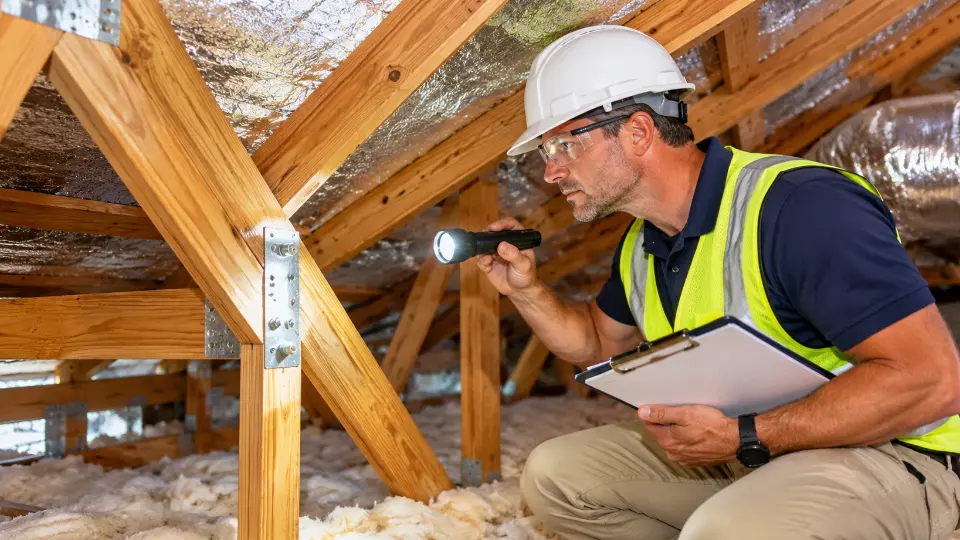
Several important wind mitigation features may need to be observed from inside the attic. Citizens specifically advises homeowners to make attic access available because the inspector may need it to verify roof-to-wall attachment, roof-deck attachment and secondary water-resistance characteristics.
Stored belongings, insulation or inaccessible openings can prevent the inspector from seeing necessary components. Depending on the feature and insurer, acceptable prior photographs, blueprints or other documentation may sometimes provide supporting evidence.
What Documents Should You Give the Inspector?
Documentation can make a substantial difference when a construction feature cannot be fully verified through visual observation. Citizens recommends making relevant mitigation records available to the inspector.
Useful records may include:
- Roofing permits
- Roof replacement invoices
- Work orders
- Receipts containing product specifications
- Product approval documentation
- Applicable Notice of Acceptance documentation
- Impact-window and door documentation
- Shutter or storm-panel documentation
- Construction plans or other records supporting concealed features
Homeowners completing roof replacements or storm-hardening improvements should retain permits, invoices and product records. Those documents may be useful for future insurance inspections and when the property is eventually sold.
Who Can Perform a Florida Wind Mitigation Inspection?
Florida limits who may complete and sign the Uniform Mitigation Verification Inspection Form. Depending on the applicable licensing and statutory requirements, qualified professionals can include certain licensed home inspectors, contractors, professional engineers, architects and building-code inspectors.
The Florida Department of Financial Services maintains current information on the professionals authorized to sign the form. Homeowners should confirm that the person performing the inspection meets current requirements and has an active applicable license.
How Long Is the Wind Mitigation Form Good For?
The Florida Department of Financial Services states that a completed wind mitigation inspection form is valid for up to five years provided no material changes have been made to the structure and no inaccuracies are found on the form.
That does not mean a homeowner should automatically wait five years after making improvements. If you replace the roof, install qualifying opening protection or make other material mitigation changes, an updated inspection may document features that were not present on the earlier report.
Ask your insurance agent or carrier whether an existing report remains acceptable and whether obtaining an updated inspection could affect the current policy.
Can the Insurance Company Verify the Inspection?
Yes. Florida DFS states that an insurer may require independent verification of a Uniform Mitigation Verification Inspection Form. Citizens similarly advises that it may order an independent inspection to verify a submitted wind mitigation form.
That is another reason accurate documentation and photographs matter. A wind mitigation inspection is not simply a checklist for obtaining discounts. The reported features must be supportable.
Should Florida Homebuyers Ask for the Seller's Wind Mitigation Report?
Yes, if one is available, it can be useful information. Buyers can review the report to understand which mitigation features were documented and when the inspection occurred.
However, do not assume the seller's report or current premium determines what the buyer will pay. The buyer's insurer should confirm whether the report is acceptable, whether updated documentation is needed and what premium applies to the buyer's proposed policy.
Hunt Brothers Realty recommends investigating insurance early in a Florida purchase. See When Should Florida Home Buyers Shop for Homeowners Insurance? and What to Ask About Home Insurance Before Making an Offer in Florida.
What Should Florida Buyers Remember About Wind Mitigation?
The most useful way to think about a wind mitigation inspection is as documentation, not a pass-or-fail test.
- It documents specific wind-resistant construction features.
- Qualifying documented features may support insurance credits or discounts.
- The insurance company determines the actual premium effect.
- It is different from a 4-point inspection.
- It is not a substitute for a comprehensive home inspection.
- A favorable report does not establish that the roof is in good condition.
- Impact windows alone do not prove that every opening qualifies for a particular credit.
- Attic access and supporting documentation can be important.
- The completed form can remain valid for up to five years if the applicable conditions continue to be met.
- Buyers should obtain their own property-specific insurance quote rather than relying on the seller's premium.
Buying a Florida Home? Investigate Insurance Early
Hunt Brothers Realty helps Florida Gulf Coast buyers identify property questions that should be investigated during the purchase process. For insurance-related due diligence, that can include asking about roof documentation, existing wind mitigation reports, 4-point inspection requirements, flood considerations and property-specific insurance quotes.
Continue with Hunt Brothers Realty's Florida wind mitigation inspection guide, 4-point inspection guide, and Florida hurricane insurance guide for homebuyers.
Informational notice: This article provides general real estate and educational information and is not individualized insurance, legal, financial, lending, inspection, engineering, construction or other professional advice. Insurance eligibility, underwriting requirements, coverage, mitigation credits, deductibles and premiums vary by property, insurer and policy. Buyers and homeowners should have insurance questions reviewed by a qualified insurance professional and property or construction conditions evaluated by the appropriate licensed inspector, contractor, engineer or other qualified professional before making a purchasing, insurance or improvement decision.
Sources
- Florida Department of Financial Services, Mitigation Notices, Inspections and Forms
- Florida Department of Financial Services, Homeowners Insurance Overview
- Florida Office of the Insurance Consumer Advocate, Wind Mitigation
- Citizens Property Insurance Corporation, Your Wind Inspection
- Citizens Property Insurance Corporation, Wind Mitigation Inspections
- Hunt Brothers Realty, Wind Mitigation Inspections in Florida
- Hunt Brothers Realty, 4-Point Inspections in Florida
- Hunt Brothers Realty, Florida Hurricane Insurance for Homebuyers
Hunt Brothers Realty
46 N. Washington Blvd, Ste 3, Sarasota, FL 34236
Phone: (941) 388-7017
Email: info@huntbrothersrealty.com
Website: HuntBrothersRealty.com
Categories
- All Blogs 2555
- Anna Maria Island 91
- Bird Key 4
- Bradenton 241
- Buying a Home 1584
- Casey Key 2
- Clearwater 15
- Condos & HOA Living 1514
- Ellenton 6
- Englewood 15
- First Time Homebuyers 1704
- Foreclosures 4
- Home Selling 8
- Homeownership 1741
- Lakewood Ranch 33
- Lido Key 29
- Longboat Key 80
- Luxury/Waterfront Properties 1683
- Market Updates & Trends 1185
- Mortgages & Financing 82
- Move-Up Buyers 24
- Neighborhood Guides 1312
- New Construction 43
- Palmetto 4
- Parrish 37
- Port Charlotte 36
- Punta Gorda 165
- Real Estate Investing 1595
- Relocation to Florida 1625
- Safety Harbor 4
- Sarasota 133
- Sarasota - Downtown 170
- Selling a Home 147
- Siesta Key 94
- St. Petersburg 9
- Taxes and Homestead 3
- Tierra Verde 7
- Vacation & Second Homes 1789
- Venice 220
- Wellen Park 24
Recent Posts