What Makes a Waterfront Property More Valuable?
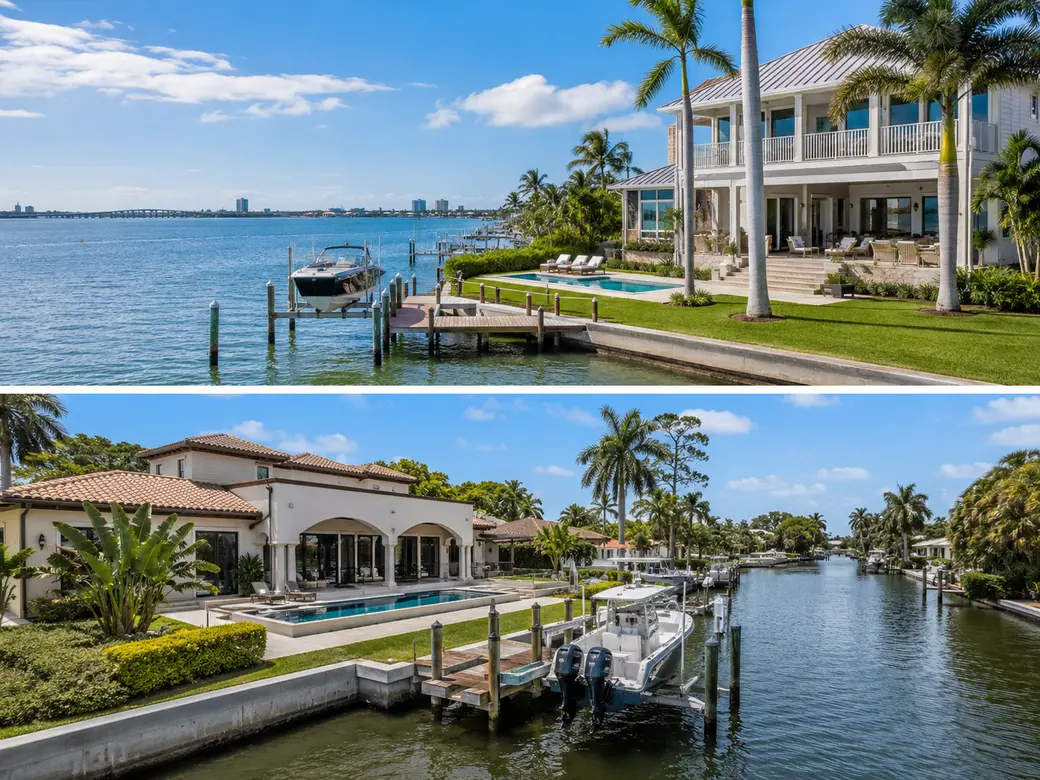
Waterfront property value is driven by much more than simply having water behind the house. In Sarasota and along Florida's Gulf Coast, the type of water, quality of the view, navigable boating access, water depth, bridge restrictions, dock and seawall condition, lot orientation, location, flood exposure, insurance considerations, and condition of the residence can all influence what buyers are willing to pay.
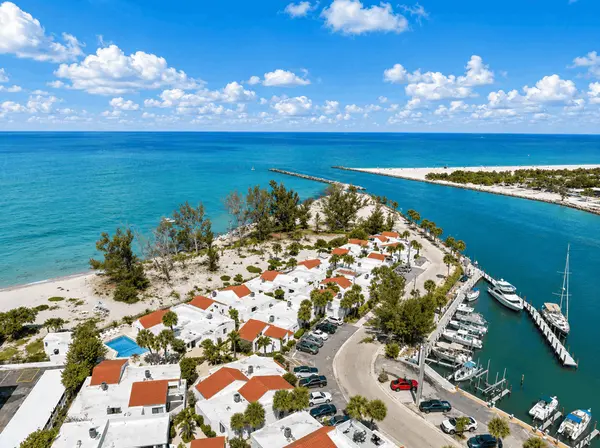
Two homes can both be advertised as waterfront and provide dramatically different experiences. One may have an unobstructed Sarasota Bay view but no private dock. Another may sit on a protected canal with a boat lift and convenient access to open water. A third may be directly on the Gulf of Mexico. All three are waterfront, but they are not interchangeable.
That distinction matters whether you are buying or selling. Understanding what the water actually allows an owner to see, access, and do is one of the keys to understanding waterfront value.
Buyers considering Sarasota's waterfront market can explore Sarasota waterfront real estate with Hunt Brothers Realty and review the Hunt Brothers Realty guide to Gulf Coast waterfront homes, seawalls, docks, and flood zones.
Quick Answer: What Adds the Most Value to Waterfront Property?
The waterfront features that tend to matter most are the quality and scarcity of the location, the view, usable water access, boating convenience where relevant, and the condition of expensive waterfront infrastructure.
For boating properties, buyers may place particular importance on water depth, distance to open water, bridge clearance, dock configuration, boat-lift capacity, and seawall condition. For a Gulf-front or bayfront property, the breadth and permanence of the view may carry greater weight.
There is no universal formula assigning a fixed premium to any one feature. The contribution to market value depends on the property, neighborhood, comparable sales, buyer demand, and current market conditions.
1. The Type of Waterfront Matters
The word “waterfront” describes a location, not a standardized real estate product. Sarasota-area buyers encounter several very different forms of waterfront property:
- Direct Gulf-front property
- Sarasota Bay frontage
- Intracoastal or bayfront property
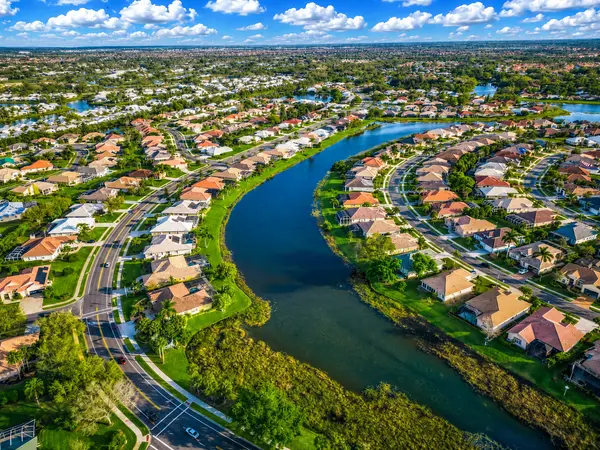
- Navigable canal frontage
- Lagoon or protected-water frontage
- Lakefront property
- Properties with water views but no direct water access
Each appeals to buyers for different reasons. A Gulf-front buyer may prioritize beach access and sunset views. A serious boater may prefer a protected canal with deep water, a substantial dock, and quick access to Sarasota Bay even if the backyard view is less dramatic.
This is why waterfront properties should generally be compared with properties offering similar waterfront characteristics rather than with every home that happens to touch water.
2. A Better Water View Can Make a Major Difference
Water views are not equal, and the quality of the view can be one of the clearest differentiators between otherwise similar waterfront properties.
Consider the difference between a narrow canal view and a wide panorama across Sarasota Bay. Both homes may technically have waterfront exposure, but the visual experience is substantially different.
Buyers evaluating a view should consider:
- Width of the waterway
- How much water is visible from the primary living areas
- Whether the view is open or obstructed
- Orientation toward sunrise or sunset
- Views from bedrooms, kitchens, terraces, and pools
- Privacy from neighboring properties
- Whether future development could affect the view
A view should also be distinguished from actual waterfront rights. A residence can have exceptional water views without owning shoreline or providing direct boating access. Hunt Brothers Realty discusses that distinction in its guide to The Evolution on Golden Gate Point, where selected residences have Sarasota Bay views even though the property itself is not directly waterfront.
3. For Boaters, Access Can Matter More Than the View
A boating buyer may evaluate waterfront property very differently from a buyer primarily interested in scenery.
Imagine two canal-front homes. One requires a lengthy trip through canals and under restrictive bridges before reaching open water. The other provides a relatively direct route to Sarasota Bay with adequate water depth for the owner's boat.
To the right boating buyer, those properties may have very different utility—and therefore potentially different market appeal.
Important boating questions include:
- How long does it take to reach open water?
- Are there fixed bridges?
- What are the relevant bridge clearances?
- What is the practical water depth, including at lower tides?
- Is the channel maintained?
- Can the existing dock accommodate the intended vessel?
- Can the boat lift safely handle the vessel's weight and dimensions?
Buyers can explore this topic further in Hunt Brothers Realty's guide to 10 things to know before buying waterfront property in Florida.
4. Water Depth Can Be a Valuable Waterfront Feature
Waterfront access has limited value to a boater if the intended vessel cannot reliably use it. Water depth is therefore one of the most important practical characteristics of many boating properties.
A buyer should not rely solely on how deep the water appears during a showing. Tide conditions, shoaling, vessel draft, channel depth, and conditions between the dock and open water all matter.
If boating access is central to the purchase, buyers should verify water depth and navigability for their specific vessel with appropriate marine professionals and governmental sources before making a decision.
5. Bridge Clearance Can Separate One Boating Property From Another
A beautiful waterfront home can be poorly suited to a particular boat if fixed bridges stand between the property and open water.
This is especially important for sailboats and larger powerboats with substantial vertical clearance requirements. A property offering what boaters commonly describe as access without fixed bridges can appeal to a different pool of buyers than a canal restricted by low bridges.
Clearances and navigational suitability should be verified for the actual vessel and route. Do not assume that a neighbor's boat proves your boat will fit.
6. A Good Dock Can Add Real Utility
A permitted, well-maintained dock that is properly configured for the property can make waterfront ownership considerably more useful to a boating buyer.
The dock should be evaluated as infrastructure rather than simply as an attractive feature in listing photographs. Buyers should investigate:
- Dock dimensions and configuration
- Condition of pilings and decking
- Boat-lift capacity
- Electrical and water service
- Water depth alongside the dock
- Permits and prior approvals
- Environmental restrictions
- Potential repair or replacement needs
Sarasota County confirms that new docks, modifications to existing docks, boat lifts, bulkheads, seawalls, and certain dredging work can require county environmental permits. State and federal approvals may also apply depending on the project and location.
7. Do Not Assume You Can Build or Expand a Dock Later
The theoretical possibility of adding a larger dock or different boat lift should not be valued the same as an existing permitted improvement.
Sarasota County regulates docks, boat lifts, bulkheads, rock revetments, seawalls, and maintenance dredging through its Water and Navigation Control Authority permitting process. Florida Department of Environmental Protection requirements may also apply, including rules involving aquatic preserves and state-owned submerged lands.
Environmental resources, shoreline dimensions, water depth, navigation, riparian considerations, setbacks, and other conditions can affect what is permissible. Florida DEP's current aquatic-preserve criteria, for example, establish design standards for qualifying single-family docks and require authorization for certain uses of state-owned submerged lands.
Before purchasing based on plans to construct, enlarge, replace, or substantially modify waterfront infrastructure, buyers should verify feasibility with Sarasota County, Florida DEP, any applicable association, and appropriately qualified marine contractors, engineers, surveyors, attorneys, or environmental professionals.
8. Seawall Condition Can Protect—or Complicate—Waterfront Value
On properties where a seawall protects the shoreline, its condition can be financially significant.
Hunt Brothers Realty's waterfront buyer's guide recommends investigating the seawall's age, construction material, overall condition, repair history, maintenance responsibility, and permit records.
Visible warning signs can include cracking, leaning, separation, erosion, and soil washout. However, a casual visual inspection should not substitute for an appropriate professional evaluation.
An aging seawall does not automatically make a property undesirable. It does mean that buyers should understand its condition and potential repair or replacement needs before deciding what the property is worth to them.
Seawall condition and anticipated work should be evaluated with an appropriately qualified marine contractor, structural engineer, or other professional. Required permits should be verified with the relevant governmental authorities.
9. Waterfront Lot Width Can Matter
The amount of shoreline associated with a property can influence the overall waterfront experience. Greater frontage may provide broader views, additional separation from neighboring docks, and more flexibility in how outdoor areas relate to the water.
But frontage should be verified rather than estimated visually. Survey boundaries, shoreline geometry, riparian considerations, setbacks, environmental regulations, and permitting requirements can affect what an owner may actually do along that frontage.
Buyers for whom shoreline dimensions are material should review an appropriate survey and obtain professional guidance regarding boundaries and waterfront rights.
10. Orientation Can Change the Waterfront Experience
Which direction the backyard, terrace, or primary water view faces can affect how owners experience the property throughout the day.
Some buyers specifically seek western exposure for sunset views. Others may prefer morning light or reduced late-afternoon sun around a pool and outdoor living area.
Orientation is therefore not automatically good or bad. Its value depends on buyer preference, architecture, landscaping, shade, outdoor spaces, and the particular view.
11. Privacy Can Add to Waterfront Appeal
Waterfront buyers are often paying for an outdoor experience as much as an interior one. Privacy around the pool, terrace, dock, and primary living areas can therefore influence buyer preference.
A wide bay outlook can feel very different from a narrow canal where neighboring homes and outdoor spaces sit directly across the water. Landscaping and lot configuration may improve privacy, but buyers should also consider whether vegetation is protected or subject to trimming restrictions before assuming it can be altered.
12. Flood Exposure and Elevation Affect the Value Equation
Water creates much of a waterfront property's appeal, but proximity to water also makes flood exposure an important part of the ownership analysis.
Buyers should investigate the property's current flood information along with elevation, building design, drainage, prior flooding information when available, and the relationship of the structure to surrounding water.
A flood-zone designation alone should not be treated as a complete measure of risk, and classifications can change. Buyers should use current official flood information and discuss property-specific flood risk and insurance with appropriate qualified professionals.
13. Insurance Costs Can Influence What Buyers Will Pay
Purchase price is only part of the cost of owning waterfront property. Insurance can materially affect the total ownership budget, particularly for coastal and barrier-island homes.
A buyer comparing two waterfront homes may discover that their insurance profiles differ because of location, elevation, construction, roof characteristics, flood exposure, wind mitigation, claims history where available, or other underwriting factors.
Insurance availability, coverage, underwriting requirements, and premiums can vary substantially by property and insurer. Buyers should obtain property-specific quotes and review appropriate coverage with a qualified Florida insurance professional before making a purchasing decision.
14. The House Still Matters
An exceptional waterfront location does not make the condition, design, and functionality of the residence irrelevant.
Buyers still evaluate:
- Overall condition and age
- Floor plan
- Kitchen and bathroom updates
- Roof and major systems
- Windows and doors
- Storm-resistance features
- Pool and outdoor living spaces
- Garage and storage
- How effectively the interior captures the water view
A home designed around its waterfront setting may have broad glass openings, primary rooms facing the water, covered outdoor areas, and a pool positioned to take advantage of the view. Those features can make the waterfront relationship feel substantially stronger than it does in a home whose design turns away from the water.
15. Location Beyond the Water Still Counts
Waterfront does not erase the traditional rule that real estate remains highly location-dependent.
A property's relationship to downtown Sarasota, beaches, restaurants, shopping, cultural destinations, schools where relevant, airports, clubs, and other amenities can influence demand independently of the water.
This is one reason two waterfront properties with superficially similar views may sell at very different prices. Buyers are purchasing both the waterfront and the address.
16. Scarcity Can Be a Powerful Value Driver
Some combinations of waterfront characteristics are difficult to duplicate. A wide bay view, substantial frontage, favorable boating access, useful dock infrastructure, privacy, desirable orientation, and a sought-after neighborhood may exist together on relatively few properties.
When comparable alternatives are limited, buyers who specifically want that combination may place greater value on it. But scarcity should still be demonstrated through local market evidence rather than assumed.
Water View vs. Water Access: Which Is More Valuable?
Neither is automatically more valuable because they satisfy different buyer priorities.
A buyer who does not own a boat may happily choose a spectacular bay view over a canal property with superior boating infrastructure. A serious boater may make exactly the opposite decision.
Some properties provide both. A residence with an expansive view and practical direct boating access can attract buyers seeking the complete waterfront experience, but its actual market premium must be evaluated against relevant comparable sales.
The distinction applies to condominiums as well. Hunt Brothers Realty's guide to Condo on the Bay in Sarasota explains how actual boating facilities differentiate a bayfront condominium from buildings that provide water views without boating infrastructure.
Does a Boat Dock Automatically Increase Property Value?
Not automatically. A dock's contribution depends on whether it is permitted, structurally sound, appropriately configured, useful for the waterway, and desirable to likely buyers.
A deteriorated dock requiring substantial work may be viewed very differently from a well-maintained dock with a suitable lift and convenient navigable access. Likewise, a large dock offers limited additional boating utility if shallow water or bridge restrictions prevent the buyer's vessel from reaching open water.
The correct question is therefore not simply, “Does this property have a dock?” It is, “What can this dock legally and practically allow an owner to do?”
Does a New Seawall Increase Value?
A recently completed, properly permitted seawall may reduce concern about near-term waterfront infrastructure work compared with an otherwise similar property with an aging or compromised seawall. That can affect buyer perception and negotiations.
It should not, however, be assumed that the seller will recover every dollar spent on seawall work. Market value depends on comparable sales and how buyers perceive the overall property. Documentation of permits, construction, engineering, warranties where applicable, and invoices can help buyers understand what was completed.
How Should Sellers Think About Waterfront Value?
Sellers should identify the waterfront characteristics that distinguish their property rather than relying on the word “waterfront” to communicate value.
Depending on the home, useful factual information may include:
- Type of water frontage
- Approximate waterfront dimensions supported by survey or other reliable documentation
- View and orientation
- Dock and boat-lift specifications
- Available dock and seawall permits
- Documented waterfront infrastructure improvements
- Boating route and known bridge considerations
- Relevant surveys and elevation information
Material facts and boating characteristics should be verified before being used in marketing. A licensed real estate professional can help identify appropriate comparable sales and explain how buyers are responding to similar waterfront features in the current market.
What Should Buyers Verify Before Paying a Waterfront Premium?
Before paying more for a waterfront feature, confirm that the feature actually provides the benefit you expect.
- Waterfront rights: Confirm the property's actual shoreline and access rights.
- Survey: Review boundaries, easements, and relevant waterfront dimensions.
- Dock: Verify permits, condition, dimensions, utilities, and lift capacity.
- Boating: Investigate water depth, tides, bridge restrictions, channels, and route to open water.
- Seawall: Determine age, material, condition, repairs, and maintenance responsibility.
- Flood: Review current official flood information and property-specific conditions.
- Insurance: Obtain quotes before assuming the property's carrying costs.
- Future improvements: Verify permitting feasibility rather than assuming a dock, lift, seawall, pool, or other waterfront feature can be added or modified.
- Home condition: Complete appropriate inspections of the residence and waterfront infrastructure.
Questions involving title, riparian or ownership rights, easements, contracts, or other legal matters should be reviewed with a qualified Florida real estate attorney or other appropriate legal professional. Waterfront structures and site conditions should be evaluated by the appropriate licensed inspector, marine contractor, engineer, surveyor, environmental professional, or governmental authority.
Frequently Asked Questions About Waterfront Property Value
Is Gulf-Front Property Always Worth More Than Canal-Front Property?
No. Direct Gulf frontage can command substantial prices, but property value depends on the entire package: location, lot, home, condition, views, beach access, boating utility, flood and insurance considerations, and comparable sales. A highly desirable canal-front property with excellent boating access can also command a significant premium.
Is No-Bridge Boating Access Valuable?
Access without fixed-bridge restrictions can be particularly desirable to buyers with vessels that cannot clear lower bridges. Its actual contribution to value depends on the market, water depth, route, dock, property, and buyer demand.
Does a Boat Lift Add Value?
A functioning and appropriately sized boat lift can add convenience and may improve appeal to boating buyers. Buyers should verify its capacity, condition, permits where applicable, and suitability for their particular vessel.
Is a Water View Valuable Without Direct Water Access?
It can be. Buyers who prioritize scenery rather than boating may place substantial value on an expansive Gulf or bay view even when the property provides no private dock or direct boating access. The market contribution should be evaluated using comparable properties with similar views and rights.
Does More Waterfront Footage Always Mean a Higher Price?
Not automatically. Greater frontage may be desirable, but value also depends on water type, lot shape, view, usable area, boating access, location, improvements, and market demand. Survey and waterfront rights should be verified before relying on an advertised frontage measurement.
How Do You Determine What a Waterfront Feature Is Worth?
Relevant local comparable sales are generally more useful than applying a generic percentage premium. A licensed real estate professional can compare properties with similar waterfront type, views, access, infrastructure, location, and condition to help evaluate how the current market is responding to those characteristics.
The Most Valuable Waterfront Is the Waterfront Buyers Can Actually Use
Waterfront value is ultimately about more than proximity to water. The strongest waterfront properties often combine desirable location with a compelling view, practical access, usable infrastructure, and a home designed to take advantage of its setting.
For a boater, deep navigable water, a suitable dock, adequate lift capacity, and an efficient route to open water may be the defining features. For another buyer, a broad sunset view across Sarasota Bay may matter much more than owning a boat.
The important question is not simply, “Is it waterfront?” It is, “What makes this particular waterfront difficult to replace?” The answer helps explain why seemingly similar waterfront properties can command very different prices.
Explore Sarasota Waterfront Real Estate
Hunt Brothers Realty can help buyers and sellers compare Sarasota waterfront properties based on the characteristics that matter to the market: water type, views, boating access, location, docks, seawalls, property condition, and relevant comparable sales.
Before buying, review Hunt Brothers Realty's 10 things to know before buying waterfront property in Florida and its detailed guide to seawalls, docks, and flood zones. You can also contact Hunt Brothers Realty for help evaluating a specific Sarasota waterfront property.
Informational notice: This article provides general real estate and educational information only and is not individualized legal, financial, tax, insurance, lending, appraisal, inspection, engineering, construction, marine, environmental, title, permitting, or other professional advice. Waterfront rights, navigability, water depth, dock and seawall condition, permits, flood exposure, insurance, property boundaries, and market value vary by property. Buyers and sellers should verify property-specific information and consult the appropriate licensed real estate professional, appraiser, insurance agent, Florida real estate attorney, surveyor, home inspector, marine contractor, engineer, environmental professional, governmental permitting authority, or other qualified professional before making a decision.
Sources
- Hunt Brothers Realty — A Buyer's Guide to Waterfront Homes on Florida's Gulf Coast
- Hunt Brothers Realty — Buying Waterfront Property in Florida: 10 Things to Know Before You Buy
- Hunt Brothers Realty — Questions to Ask Before Buying a Home Near the Coast
- Sarasota County — Environmental Permitting and Shoreline Construction
- Florida Department of Environmental Protection — Dock Permitting in Florida
- Hunt Brothers Realty — Sarasota Real Estate
Contact Hunt Brothers Realty
Hunt Brothers Realty
46 N Washington Blvd, Ste #3
Sarasota, Florida 34236
Phone: (941) 388-7017
Email: info@huntbrothersrealty.com
Website: HuntBrothersRealty.com
Categories
- All Blogs 1910
- Anna Maria Island 82
- Bird Key 4
- Bradenton 234
- Buying a Home 983
- Casey Key 2
- Clearwater 8
- Condos & HOA Living 894
- Ellenton 5
- Englewood 9
- First Time Homebuyers 1086
- Foreclosures 3
- Homeownership 1107
- Lakewood Ranch 20
- Lido Key 27
- Longboat Key 78
- Luxury/Waterfront Properties 1045
- Market Updates & Trends 580
- Mortgages & Financing 38
- Move-Up Buyers 20
- Neighborhood Guides 706
- New Construction 30
- Palmetto 3
- Parrish 6
- Port Charlotte 10
- Punta Gorda 15
- Real Estate Investing 963
- Relocation to Florida 1008
- Safety Harbor 2
- Sarasota 68
- Sarasota - Downtown 157
- Selling a Home 142
- Siesta Key 89
- St. Petersburg 6
- Tierra Verde 5
- Vacation & Second Homes 1156
- Venice 82
- Wellen Park 9
Recent Posts