Why Can a Home’s Property Taxes Increase After It Is Sold?
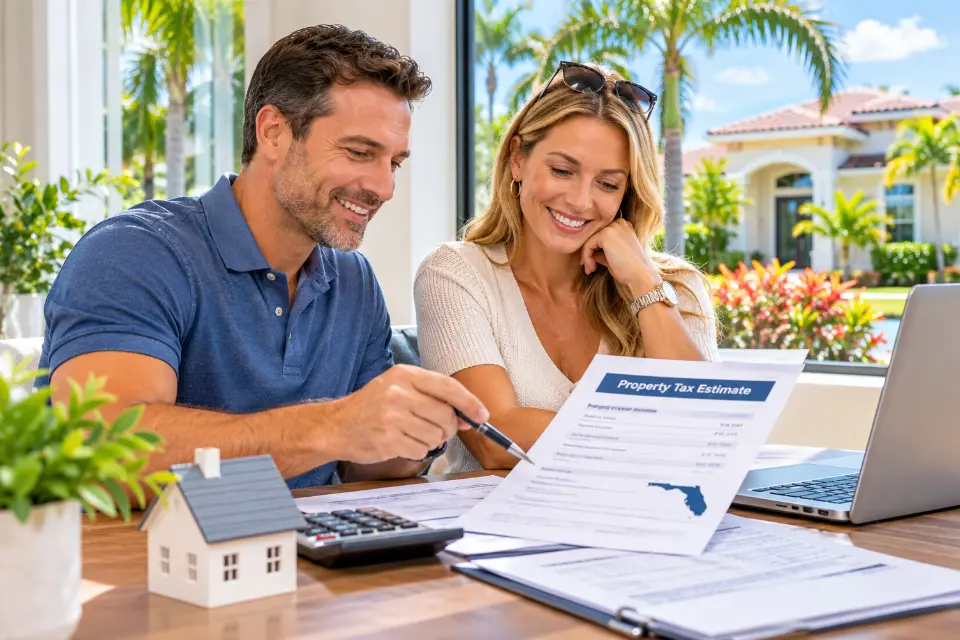
A Florida home’s property taxes can increase after it is sold because a change of ownership can cause the property’s assessed value to be reset closer to its current just, or market, value. A longtime owner may have benefited from years of Homestead Exemption and Save Our Homes assessment limitations, resulting in an assessed value well below the home’s current market value. Those seller-specific benefits generally do not simply remain attached to the property for the buyer. For that reason, a buyer’s future tax bill can be substantially different from the amount the seller currently pays.
This is an important Florida homebuying concept because the seller’s existing tax bill is easy to find in property records and real estate listings. It is useful historical information, but it should not be treated as a prediction of the buyer’s future property taxes.
Quick Answers About Florida Property Taxes After a Home Is Sold
Can Property Taxes Go Up After I Buy a Florida Home?
Yes. A qualifying change of ownership can result in the property being reassessed at just value. If the seller had a substantially lower assessed value because of years of Save Our Homes protection, the difference after reassessment can be significant.
Will I Pay the Same Property Taxes as the Seller?
Not necessarily. The seller’s tax bill can reflect the seller’s assessed value, exemptions, length of ownership, and other circumstances. Your future taxable value will depend on the property’s post-purchase assessment and the exemptions or assessment benefits for which you qualify.
Does the Seller’s Homestead Exemption Transfer to Me?
No. A seller’s Homestead Exemption does not simply transfer with the property. A buyer who will use the home as a qualifying permanent residence must independently qualify and apply for the buyer’s own homestead benefits.
What Is Save Our Homes?
Save Our Homes is a Florida assessment limitation for qualifying homestead property. Once applicable, annual increases in assessed value are generally limited to the lower of 3 percent or the applicable change in the Consumer Price Index. The limitation applies to assessed value, not directly to the final property-tax bill.
Is There a 3 Percent Cap on My Property Tax Bill?
No. Calling Save Our Homes a 3 percent property-tax cap is misleading. It limits qualifying increases in assessed value, while the final tax bill can also be affected by exemptions, tax rates, non-ad valorem assessments, property improvements, and other factors.
Can I Transfer My Save Our Homes Benefit to Another Florida Home?
Potentially. Eligible Florida homeowners moving from one qualifying homestead to another may be able to transfer, or port, some or all of their accumulated Save Our Homes assessment difference. Portability has eligibility requirements and filing deadlines, so buyers should verify their circumstances with the appropriate county property appraiser.
How Should Buyers Estimate Future Property Taxes?
Buyers should estimate taxes using the expected post-purchase assessment rather than simply copying the seller’s current tax bill. County property appraisers can provide property records and, in many counties, tax-estimation tools. Buyers should verify property-specific estimates with the county and consult a qualified tax professional when the tax consequences are material to their decision.
Why Can the Seller’s Property Tax Bill Be So Different?
Florida property taxation distinguishes among a property’s just value, assessed value, and taxable value. Understanding those three numbers helps explain why two owners of the same home at different points in time can have very different tax bills.
Just Value
Just value generally represents the property’s market value for property-tax purposes as determined by the county property appraiser under Florida law. It is determined annually as of January 1.
Assessed Value
Assessed value reflects the property’s value after applicable assessment limitations are considered. For a longtime qualifying homestead owner, Save Our Homes can create a substantial difference between the property’s just value and assessed value.
Taxable Value
Taxable value is generally the assessed value after applicable exemptions are deducted. Different taxing authorities can also have different taxable-value calculations because not every exemption applies identically to every levy.
Property Tax Liability
The applicable taxable value is combined with the millage rates established by the relevant taxing authorities to determine ad valorem taxes. A tax bill can also include non-ad valorem assessments that are calculated differently.
How Does Save Our Homes Create a Difference Over Time?
Imagine a Florida homeowner who purchased a property many years ago, established it as a qualifying homestead, and continued to own and occupy it while local home values increased.
The property’s market value might rise substantially, but Save Our Homes limits how quickly its assessed value can increase. Over enough time, the difference between just value and assessed value can become significant.
For 2026, the Florida Department of Revenue lists the Save Our Homes assessment limitation at 2.7 percent because the applicable CPI change is below 3 percent.
That assessment history helps explain why a longtime owner’s tax bill can be substantially lower than a new buyer might expect to pay after the property changes ownership.
What Happens to Assessed Value After the Home Is Sold?
A qualifying change of ownership generally removes the prior owner’s accumulated assessment limitation from the property. Florida law generally provides for the property to be assessed at just value as of January 1 following the qualifying ownership change.
This is often described as the assessed value being reset after the sale. The important point for buyers is that the previous owner’s assessed value may no longer be the relevant starting point.
A sale price can be relevant to valuation, but buyers should not assume the county will simply use the contract price as the new assessed value. The county property appraiser is responsible for determining the property’s official just value under Florida law.
A Simple Example of Why Property Taxes Can Increase
Consider a simplified example of a longtime homeowner selling a Florida property:
| Example | Seller | New Buyer |
|---|---|---|
| Illustrative Just Value | $600,000 | $600,000 |
| Illustrative Assessed Value | $325,000 | Potentially much closer to current just value after reassessment |
| Why the Difference? | Long-term Save Our Homes benefit | Seller’s accumulated assessment limitation generally does not remain with the property |
This example is illustrative only and is not a property-tax calculation. The buyer’s actual assessed value, exemptions, taxable value, millage rates, non-ad valorem assessments, portability benefits, and final taxes must be determined using the specific property and owner circumstances.
Does Homestead Exemption Prevent the Increase?
Not necessarily. A buyer who establishes the new home as a qualifying permanent residence may be eligible for Florida’s Homestead Exemption, but the buyer must qualify independently.
Homestead Exemption and Save Our Homes perform different functions. Homestead Exemption can reduce taxable value, while Save Our Homes limits qualifying future increases in assessed value after the limitation applies.
For a more detailed explanation, read Hunt Brothers Realty’s Florida Homestead Exemption 2026 Guide.
What Is Save Our Homes Portability?
Portability can help certain Florida homeowners who are moving from one Florida homestead to another. Rather than inheriting the seller’s assessment history, an eligible buyer may be able to transfer some or all of the buyer’s own accumulated Save Our Homes assessment difference from a previous Florida homestead.
Portability does not mean the old Homestead Exemption itself moves to the new property. The homeowner applies for Homestead Exemption on the new residence and, when eligible, separately applies to transfer the Save Our Homes assessment difference.
Eligibility, deadlines, and the amount that can be transferred depend on the owner’s circumstances and applicable Florida requirements. Buyers can review Hunt Brothers Realty’s guide to Save Our Homes portability and should verify the actual calculation with the appropriate county property appraiser.
Why Is the Seller’s Current Tax Bill a Poor Budgeting Number?
The seller’s bill tells a buyer what that particular owner was taxed under that owner’s circumstances. It does not necessarily show what a new owner will pay.
The seller may have:
- Owned the property for many years
- Accumulated a substantial Save Our Homes assessment difference
- Qualified for Homestead Exemption
- Qualified for additional exemptions or tax benefits
- Purchased the property when its market value was significantly lower
A buyer may have a completely different combination of assessed value, exemptions, and portability. Hunt Brothers Realty’s guide to how much property taxes can change after buying a house explains this issue in greater detail.
Does Save Our Homes Mean Taxes Can Only Increase 3 Percent Per Year?
No. Save Our Homes limits qualifying increases in assessed value, not the entire property-tax bill. This distinction is important when budgeting for Florida homeownership.
A final property-tax bill can also be affected by:
- Changes in millage rates
- Changes in exemptions
- New construction or qualifying property improvements
- Non-ad valorem assessments
- Changes in property use or exemption eligibility
- Other property-specific circumstances
For 2026, Florida’s Save Our Homes assessment limitation is 2.7 percent for qualifying property, rather than 3 percent, because the applicable CPI change is lower. Future annual limits can differ based on the applicable CPI calculation.
Can Non-Homestead Property Taxes Change After a Sale?
Yes. Florida also has assessment limitations that can apply to certain non-homestead residential and nonresidential property, but a qualifying change of ownership or control can affect those assessment protections as well.
Buyers purchasing second homes, investment properties, rental properties, or other non-homestead real estate should not assume the prior owner’s assessed value will continue. The applicable assessment rules and tax consequences should be verified for the particular property and ownership structure.
When Does the Reassessment Happen?
Florida property appraisers establish property values annually as of January 1. Following a qualifying ownership change, the property is generally reassessed at just value as of January 1 of the following year.
That timing can create confusion for buyers because the historical tax bill may remain visible immediately after closing. A buyer might therefore own the home for a period before the full post-purchase assessment is reflected in a later tax cycle.
Closing tax prorations are a separate issue from the property appraiser’s future assessment. Questions about prorations and closing statements should be reviewed with the title or closing professional handling the transaction.
How Should Florida Homebuyers Estimate Property Taxes?
A realistic property-tax estimate should consider the buyer’s expected post-purchase situation rather than simply carrying forward the seller’s historical tax amount.
Buyers should investigate:
- The property’s current just value
- The seller’s current assessed and taxable values
- The expected effect of reassessment after purchase
- Applicable local millage rates
- Non-ad valorem assessments
- Potential Homestead Exemption eligibility
- Potential Save Our Homes portability
- Other exemptions for which the buyer may qualify
The appropriate county property appraiser is the best official source for property-specific assessment information and available estimation tools. Individual tax consequences depend on the buyer and property, so buyers should consult a qualified tax professional or CPA when a tax calculation is material to the purchase decision.
Frequently Asked Questions About Property Taxes After a Home Sale
If I Buy a $500,000 Florida Home, What Will My Property Taxes Be?
The purchase price alone is not enough to determine the tax bill. The official assessment, applicable exemptions, millage rates, taxing jurisdictions, non-ad valorem assessments, and any portability benefit must also be considered. Buyers should use county resources for a property-specific estimate.
Does the County Automatically Assess the Home at the Purchase Price?
Not necessarily. The sale is relevant information, but the county property appraiser determines just value under Florida law. Buyers should use the property appraiser’s official assessment rather than assuming the contract price automatically becomes the assessed value.
Will My Taxes Increase Immediately at Closing?
Not necessarily. Property assessments are established as of January 1, and the post-sale reassessment generally becomes relevant in a subsequent tax year. Closing prorations and future assessment are separate matters.
Can Property Taxes Ever Decrease After a Purchase?
They can under some circumstances, but buyers should not assume a decrease. Just value, exemptions, portability, tax rates, assessments, and other factors can all affect the final bill.
What If I Think the County’s Assessment Is Incorrect?
Florida property owners have procedures for questioning or challenging an assessment. A property owner can first discuss the value with the county property appraiser and may have the right to petition the county Value Adjustment Board within applicable deadlines. Property-specific legal or tax questions should be reviewed with an appropriate qualified professional.
Where Can I Learn More Before Buying a Florida Home?
Hunt Brothers Realty provides additional buyer resources on Florida property taxes after buying a home, Florida Homestead Exemption, and Save Our Homes portability.
Plan for the Buyer’s Property Taxes, Not the Seller’s
The most important takeaway for Florida homebuyers is straightforward: the seller’s current property-tax bill should not automatically become the tax number in your homeownership budget.
A longtime owner may have accumulated substantial Save Our Homes protection, while a new owner can face reassessment at current just value. Your own Homestead Exemption eligibility and any portability benefit can then affect your future taxable value.
When comparing Florida homes, use a realistic post-purchase tax estimate as part of the complete ownership budget. Explore Hunt Brothers Realty’s detailed Florida property-tax guide, browse Hunt Brothers Realty listings, or contact Hunt Brothers Realty for help with the real estate aspects of purchasing a home on Florida’s Gulf Coast.
Informational notice: This article provides general real estate and property-tax information and is not individualized legal, financial, tax, accounting, lending, title, or other professional advice. Property assessments, exemptions, portability, taxable values, millage rates, non-ad valorem assessments, filing requirements, and tax consequences depend on the individual owner, property, taxing jurisdictions, and applicable law. Buyers and property owners should verify property-specific information with the appropriate county property appraiser and tax collector. Individual tax consequences should be reviewed with a qualified tax professional or CPA, and questions involving ownership rights, trusts, estates, title, or other legal matters should be reviewed with a qualified Florida attorney.
Sources
- Florida Department of Revenue, Property Tax Information for Taxpayers
- Florida Department of Revenue, Homestead Exemption, Save Our Homes and Portability
- Florida Department of Revenue, Property Tax Data Portal and Assessment Limitation Rates
- Florida Department of Revenue, Find a County Property Appraiser or Tax Collector
- Hunt Brothers Realty, How Much Can Property Taxes Change After Buying a House?
- Hunt Brothers Realty, Florida Homestead Exemption 2026 Guide
- Hunt Brothers Realty, Save Our Homes Portability Florida
Hunt Brothers Realty
46 N. Washington Blvd, Ste 3, Sarasota, FL 34236
Phone: (941) 388-7017
Email: info@huntbrothersrealty.com
Website: HuntBrothersRealty.com
Categories
- All Blogs 2453
- Anna Maria Island 87
- Bird Key 4
- Bradenton 238
- Buying a Home 1491
- Casey Key 2
- Clearwater 14
- Condos & HOA Living 1414
- Ellenton 6
- Englewood 13
- First Time Homebuyers 1606
- Foreclosures 5
- Home Selling 7
- Homeownership 1640
- Lakewood Ranch 28
- Lido Key 29
- Longboat Key 80
- Luxury/Waterfront Properties 1581
- Market Updates & Trends 1091
- Mortgages & Financing 72
- Move-Up Buyers 25
- Neighborhood Guides 1213
- New Construction 41
- Palmetto 4
- Parrish 10
- Port Charlotte 35
- Punta Gorda 164
- Real Estate Investing 1495
- Relocation to Florida 1528
- Safety Harbor 4
- Sarasota 102
- Sarasota - Downtown 168
- Selling a Home 146
- Siesta Key 92
- St. Petersburg 9
- Taxes and Homestead 1
- Tierra Verde 7
- Vacation & Second Homes 1688
- Venice 213
- Wellen Park 22
Recent Posts