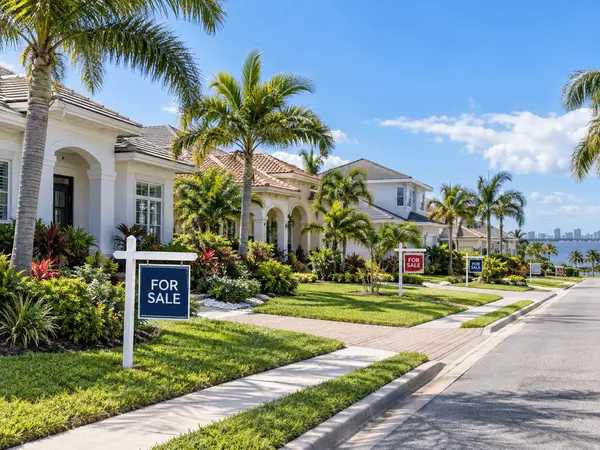
What Makes a Florida Home More Hurricane-Resilient? Features Buyers Should Look For
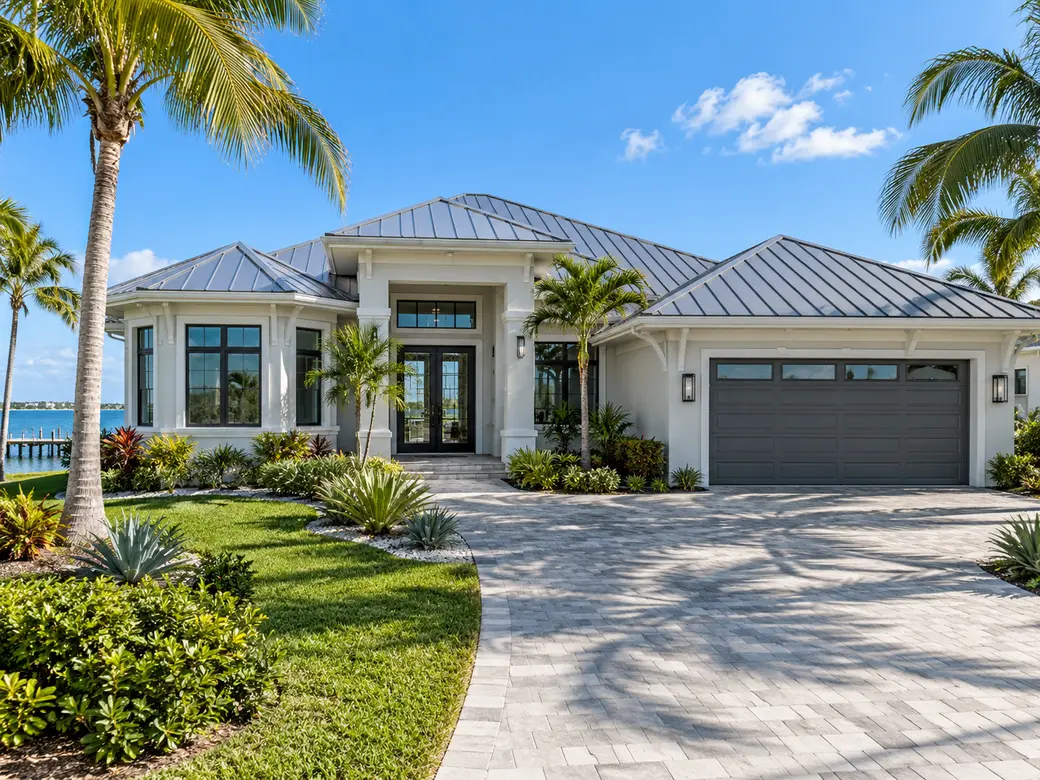
A more hurricane-resilient Florida home combines multiple systems designed to resist high winds, windborne debris and water intrusion. Buyers should investigate the roof covering and roof deck, roof-to-wall connections, impact-rated windows or approved shutters, exterior doors, garage doors, soffits, and other parts of the home's exterior envelope. For coastal properties, flood exposure, elevation and drainage deserve separate attention because wind resilience and flood resilience are not the same thing. No feature makes a house hurricane-proof, so buyers should verify the actual construction and condition of an individual property rather than relying on marketing descriptions.
Quick Answers About Hurricane-Resilient Florida Homes
What are the most important hurricane-resilient features to look for?
Start with the roof, roof deck, roof-to-wall connections, windows, exterior doors and garage door. The Florida Division of Emergency Management identifies the roof, straps, windows, doors and garage doors as critical areas to strengthen against hurricane winds. Buyers should evaluate these components as a connected system rather than assuming one upgrade protects the entire home.
Are impact windows enough to make a home hurricane-resistant?
No. Impact-rated windows can provide important opening protection, but the roof, doors, garage door, structural connections and other exterior components still matter. A home's hurricane resilience depends on how these systems work together and whether they are properly installed and maintained.
Why are hurricane straps or clips important?
Roof-to-wall connectors such as clips or straps help transfer wind forces from the roof structure into the walls. Their type, installation and condition matter, so buyers should have the actual connections evaluated rather than assuming a home has adequate protection because someone says it has "hurricane straps."
Does the shape of the roof matter?
Yes. Roof geometry is one of the characteristics evaluated in Florida wind mitigation, and the Florida Department of Financial Services identifies hip roofs as more wind resistant than some alternative configurations. Roof shape is only one factor, however, and should be considered together with the covering, deck attachment, connections, condition and installation.
Should buyers ask for a wind mitigation inspection?
A wind mitigation inspection can provide valuable property-specific information about features such as roof geometry, roof-deck attachment, roof-to-wall connections and opening protection. Florida uses the Uniform Mitigation Verification Inspection Form for documenting qualifying mitigation characteristics, but buyers should also discuss inspection needs and insurance requirements with qualified professionals.
Is a newer Florida home automatically more hurricane-resilient?
Not automatically. The Florida Division of Emergency Management notes that homes built in relation to the Florida Building Code beginning in 2002 may be more hurricane resistant when critical exterior systems remain in proper condition. Buyers should still verify the specific roof, connections, windows, doors, garage door, construction documents and current condition of the individual property.
Does hurricane resilience mean a home has low flood risk?
No. Wind resistance and flood exposure are different issues. A well-built home with strong wind-mitigation features can still be exposed to flooding or storm surge, so coastal buyers should separately investigate flood-zone information, elevation, drainage, prior flooding and property-specific insurance.
1. Start With the Roof
The roof is one of the first places Florida buyers should investigate because roof damage can lead to extensive wind and water intrusion. Florida's Hurricane Retrofit Guide identifies roof covering damage as a major source of hurricane damage and emphasizes the roof covering, roof sheathing and structural anchorage as important parts of the home's defense.
Ask about:
- Roof age and current condition
- Roof covering material
- Available roof permits and replacement records
- Roof-deck attachment
- Secondary water resistance or a sealed roof deck
- Roof-to-wall connections
- Roof geometry
- Soffit and roof-vent condition
The Insurance Institute for Business & Home Safety also emphasizes enhanced roof-deck attachment, sealed roof decks, improved roof edges and water-intrusion protection as components of its hurricane-focused FORTIFIED standards. A sealed roof deck is designed to help limit water intrusion if the outer roof covering is damaged.
Is a newer roof automatically a stronger roof?
No. Installation, deck attachment, roof-to-wall connections, materials, geometry, permits and other construction details can matter in addition to age. Buyers should have roof condition and relevant mitigation features evaluated by qualified professionals and review available permit and installation documentation.
2. Look for Strong Roof-to-Wall Connections
A hurricane-resilient home needs more than a durable roof covering. The roof structure also needs effective connections to the walls below it. Clips, straps and other approved connectors can strengthen this roof-to-wall connection and help the structure resist uplift forces.
The Florida Department of Financial Services specifically identifies strengthening roof-to-wall connections with clips or straps as a mitigation measure that can decrease the risk of roof damage or removal during a storm.
Buyers should not rely on a casual statement that a house "has hurricane clips." A qualified inspector should identify the connection type and available documentation, and structural questions should be referred to an appropriately licensed contractor, engineer or other qualified professional.
3. Verify Impact-Rated Windows or Approved Opening Protection
Windows and glass doors should have appropriate impact protection because a breached opening can allow wind and rain into the house and increase pressure on the structure. Buyers should determine whether openings use impact-rated products, approved shutters, or another appropriate protection system.
Florida's Hurricane Retrofit Guide cautions that a window, door or shutter should not be assumed to be impact rated simply because it is newer or marketed for hurricane use. Impact-rated products must satisfy applicable testing standards and be properly installed. Product approvals and installation documentation can therefore be important parts of buyer due diligence.
What should buyers ask about hurricane shutters?
Ask which openings are protected, what type of shutters are provided, whether the protection is approved for the application, how the system is installed, and whether all necessary panels, tracks, hardware and fasteners are present. A stack of unidentified panels in the garage should not be treated as verified whole-home opening protection.
Buyers comparing older homes and newer construction can review Hunt Brothers Realty's Older Florida Home vs. New Construction buyer guide, which includes questions about hurricane protection, wind mitigation and insurance.
4. Do Not Overlook Exterior and Sliding Glass Doors
Exterior doors are part of the home's protective envelope and deserve the same attention as windows. Florida hurricane guidance specifically identifies entry doors and sliding glass doors among the openings that can be vulnerable to wind pressure, debris and water intrusion.
Buyers should investigate:
- Impact or pressure ratings where applicable
- Approved shutter protection for glazed doors when needed
- Door-frame and anchoring condition
- Double-entry or French-door protection
- Sliding glass door protection
- Visible deterioration, gaps or water-intrusion evidence
5. Check the Garage Door
The garage door is a major opening and can be an important vulnerability during high winds. Florida hurricane guidance specifically calls attention to large two-car garage doors, particularly older doors that are not adequately braced or pressure rated for the home's wind exposure.
If a garage door fails, wind can enter a large portion of the structure and increase internal pressure. Buyers should investigate whether the door is appropriately wind rated, how it is anchored, whether glazing is protected, and whether an older door has been properly reinforced.
Does a heavy-looking garage door mean it is hurricane rated?
No. Appearance alone does not establish a wind or impact rating. Ask for product information, permits or other available documentation, and have the door evaluated when its performance is material to your purchasing decision.
6. Ask About a Sealed Roof Deck or Secondary Water Resistance
A secondary water barrier can provide another layer of protection if the primary roof covering is damaged. This does not prevent all storm damage, but it can help reduce water intrusion through the roof deck when properly designed and installed.
This is an example of why buyers should look beyond visible finishes. Two homes with similar-looking roofs may have different roof-deck attachments, secondary water protection and roof-to-wall connections underneath the covering.
7. Inspect Soffits, Vents and Other Potential Water-Entry Points
Hurricane resilience also depends on less obvious parts of the exterior envelope. Soffits, roof vents, wall penetrations and other openings can become paths for wind-driven rain if they are damaged, poorly installed or inadequately protected.
Florida's emergency-management guidance specifically recommends strengthening soffits as part of home retrofitting. Buyers should therefore look beyond the headline features of impact glass and a newer roof and have the entire exterior system evaluated.
8. Understand the Importance of a Continuous Load Path
A resilient structure needs a way to transfer wind forces through connected building components. In stronger construction systems, the roof, walls and foundation are connected so loads can move through the structure rather than concentrating at a weak connection.
IBHS incorporates a continuous load path into its higher-level FORTIFIED Gold standard. For an individual home, determining whether an adequate load path exists is a technical question and should be evaluated by the appropriate qualified building professional rather than inferred from the home's appearance.
9. Separate Hurricane Wind Protection From Flood Protection
A hurricane-resilient buying strategy must consider both wind and water, but they are different risks. Impact windows, roof straps and a reinforced garage door address wind-related vulnerabilities. They do not tell you whether the property is appropriately elevated or how it may perform during flooding or storm surge.
This distinction is particularly important when considering waterfront homes on Florida's Gulf Coast. Buyers should separately investigate current flood information, elevation, drainage, previous flooding or storm-related repairs when available, and property-specific insurance.
Hunt Brothers Realty's questions to ask before buying a home near the coast provides additional due-diligence guidance covering flood exposure, elevation, insurance, storm protection and previous storm damage.
10. Review the Wind Mitigation Inspection
A Florida wind mitigation inspection can help buyers understand documented characteristics of the home's wind-resistant construction. Depending on the property and applicable form, the inspection can address roof construction, roof-deck attachment, roof-to-wall connections, roof geometry, secondary water resistance and opening protection.
The Florida Department of Financial Services states that a revised Uniform Mitigation Verification Inspection Form, OIR-B1-1802 (Rev. 04/26), is required for inspections as of April 1, 2026. A completed form may be valid for up to five years provided no material structural changes or inaccuracies affect it.
Do not treat an existing report as a substitute for appropriate buyer inspections. Buyers should confirm the document remains applicable to the property and discuss inspection requirements with their insurer and appropriately qualified inspectors.
11. Ask for Documentation, Not Just a List of Upgrades
Documentation can be as important as the seller's description of hurricane upgrades. Buyers should try to verify what was installed, when it was installed, whether permits were required and obtained, and whether the products and installation are appropriate for the property.
Depending on the home, useful records may include:
- Roof permits and invoices
- Window and door permits
- Product-approval information
- Shutter documentation
- Garage-door permits or product information
- Wind mitigation reports
- Available construction plans
- Records of storm-related repairs
Permit records and product documentation do not replace a physical inspection, but they can help qualified professionals determine what is actually present.
12. Get Insurance Information Before You Commit
Hurricane-mitigation features can affect the insurance picture, but buyers should never assume that a particular upgrade guarantees coverage or a specific premium discount. Florida's Department of Financial Services notes that insurers offer mitigation credits or discounts in qualifying circumstances and may use wind mitigation information during the insurance process.
Coverage availability and premiums can vary substantially by property, insurer, location, roof, construction, flood exposure, replacement cost, deductibles and other underwriting considerations. Buyers should obtain quotes for the specific home and review coverage with a qualified insurance professional before making a purchasing decision. The seller's current premium should not be assumed to predict the buyer's future insurance cost.
A Hurricane-Resilience Checklist for Florida Home Buyers
When touring a Florida home, use this list as a starting point for questions rather than as a substitute for professional inspection:
- What is the roof age, material and documented condition?
- How is the roof deck attached?
- Is there secondary water resistance or a sealed roof deck?
- What type of roof-to-wall connections are present?
- Are windows impact rated or protected by an approved system?
- Are exterior and sliding glass doors appropriately protected?
- Is the garage door appropriately wind rated or reinforced?
- What is the condition of soffits, vents and other exterior openings?
- Is a current wind mitigation inspection available?
- Are permits and product documentation available for major mitigation upgrades?
- What is the property's flood exposure and elevation?
- Is there evidence of previous storm, flood or water-intrusion damage?
- What insurance is available for this specific property and at what estimated cost?
What Should Sarasota and Gulf Coast Buyers Prioritize?
For buyers exploring Sarasota and Florida Gulf Coast communities, hurricane resilience should be evaluated alongside location, property condition, insurance, flood exposure and total ownership cost. The questions can become especially important for barrier-island, waterfront and other coastal properties.
A newer coastal home may offer more recent construction, but an older property may have undergone substantial mitigation upgrades. Hunt Brothers Realty's research on buying on Siesta Key similarly emphasizes investigating roof condition, windows, doors, storm protection, flood information and property-specific insurance rather than making assumptions based on location or age alone.
Can Any Florida Home Be Called Hurricane-Proof?
Buyers should be cautious with the term "hurricane-proof." Hurricanes vary in wind intensity, rainfall, duration, storm surge, debris and local impacts, and no ordinary residential feature eliminates all storm risk.
A more useful question is whether the home contains verified features that improve its ability to resist relevant hazards and whether those systems are properly installed, maintained and appropriate for the property's location. That approach produces a much more informative comparison between homes.
The Bottom Line for Florida Buyers
The strongest hurricane-resilience features are rarely one dramatic upgrade. Buyers should look for a system: a well-constructed and maintained roof, strong roof-deck attachment, effective roof-to-wall connections, appropriate opening protection, a wind-rated garage door, protected exterior components and measures that help limit water intrusion.
Then evaluate flood exposure separately. Review the home's documentation, obtain appropriate inspections, investigate permits and prior repairs, and obtain property-specific insurance information. A house should be evaluated on what can actually be verified, not simply on claims that it is "built for hurricanes."
Buying a Florida Home With Hurricane Resilience in Mind
If hurricane resilience is important to your Florida home search, Hunt Brothers Realty can help you compare Sarasota and Gulf Coast properties while identifying questions to investigate during due diligence. Buyers considering coastal property can also review Hunt Brothers Realty's guide to buying waterfront property in Florida for additional guidance on flood exposure, insurance, storm considerations and waterfront infrastructure.
This article provides general real estate information for educational purposes and is not individualized engineering, construction, inspection, insurance, legal, financial, lending, flood, permitting or other professional advice. Hurricane resilience is property-specific. Buyers should have structural and building-condition questions evaluated by the appropriate licensed home inspector, contractor, structural engineer or other qualified professional. Product approvals and permits should be verified with appropriate documentation and local authorities when material. Insurance availability, coverage and premiums should be reviewed with a qualified insurance professional before a purchasing decision is made.
Sources
- Florida Division of Emergency Management, Planning for Your Home
- Florida Hurricane Retrofit Guide, Understanding the Risks
- Florida Hurricane Retrofit Guide, Debris Impact Standards
- Florida Department of Financial Services, Mitigation Notices, Inspections and Forms
- Florida Department of Financial Services, Hurricane Mitigation
- Florida Department of Financial Services, Homeowners Insurance Overview
- Insurance Institute for Business & Home Safety, Codes and Standards Primer
- Hunt Brothers Realty, Older Florida Home vs. New Construction
- Hunt Brothers Realty, Questions to Ask Before Buying a Home Near the Coast
Contact Hunt Brothers Realty
46 N. Washington Blvd, Ste 3, Sarasota, FL 34236
Phone: (941) 388-7017
Email: info@huntbrothersrealty.com
Website: HuntBrothersRealty.com
Categories
- All Blogs 1506
- Anna Maria Island 68
- Bird Key 3
- Bradenton 92
- Buying a Home 651
- Casey Key 2
- Clearwater 5
- Condos & HOA Living 556
- Ellenton 4
- Englewood 5
- First Time Homebuyers 728
- Foreclosures 3
- Homeownership 709
- Lakewood Ranch 15
- Lido Key 24
- Longboat Key 65
- Luxury/Waterfront Properties 646
- Market Updates & Trends 317
- Mortgages & Financing 32
- Move-Up Buyers 20
- Neighborhood Guides 470
- New Construction 24
- Palmetto 2
- Parrish 4
- Port Charlotte 7
- Punta Gorda 11
- Real Estate Investing 580
- Relocation to Florida 630
- Safety Harbor 2
- Sarasota - Downtown 132
- Selling a Home 136
- Siesta Key 87
- St. Petersburg 3
- Tierra Verde 4
- Vacation & Second Homes 763
- Venice 21
- Wellen Park 7
Recent Posts