Saltwater Canal vs. Freshwater Canal Homes in Florida: What Buyers Should Know
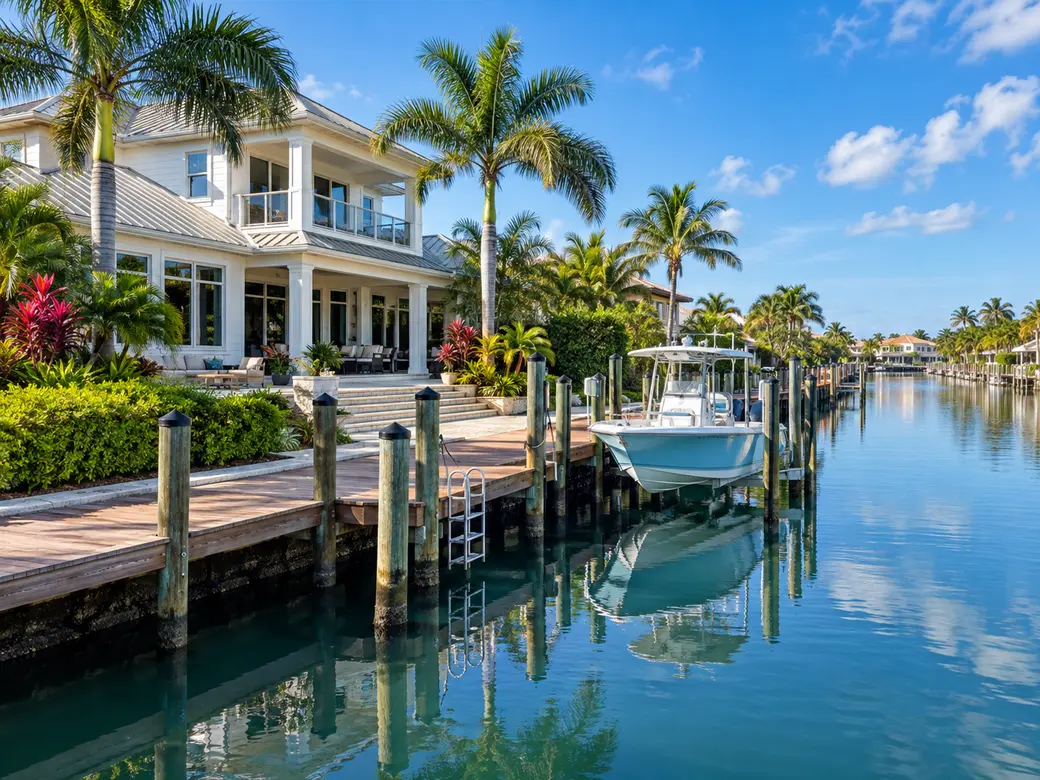
The biggest difference between saltwater and freshwater canal homes in Florida is usually how the waterway can be used. A saltwater canal may connect to a bay, harbor, Intracoastal Waterway or Gulf boating route, while a freshwater canal may provide water views, fishing, kayaking or limited boating without direct access to coastal waters. But the label alone tells buyers very little. Before purchasing either type, investigate the canal's actual route, water depth, bridge and lock restrictions, dock rights, seawall condition, flood exposure, insurance and maintenance requirements for the specific property.
Quick Answers About Saltwater and Freshwater Canal Homes in Florida
What is a saltwater canal home?
A saltwater canal home generally fronts a canal connected to tidal or coastal waters. Depending on the location, the canal may provide boating access toward a bay, harbor, Intracoastal Waterway or the Gulf of Mexico. Buyers should verify the actual route because not every saltwater canal provides unrestricted boating access.
What is a freshwater canal home?
A freshwater canal home fronts an inland freshwater waterway or canal system. Depending on the community, it may support fishing, kayaking, paddleboarding or certain boats, but it may not connect directly to saltwater boating routes. The specific canal system determines what is practical and permitted.
Does a saltwater canal automatically provide Gulf access?
No. A listing described as saltwater, navigable or Gulf access still requires property-specific verification. Bridges, locks, shallow sections, tides, canal dimensions and other navigation conditions can determine whether the route works for a particular vessel.
Are freshwater canal homes only for buyers who do not own boats?
No. Some freshwater canal systems support boating, fishing and paddling. What differs is where the waterway leads and which vessels are practical or permitted. Buyers should investigate the individual canal rather than assuming all freshwater systems function alike.
Do both types of canal homes have flood risk?
They can. Flood exposure depends on the individual property's location, elevation, drainage, flood-zone designation, surrounding waterways and other factors. Being on a freshwater canal does not by itself mean a property has little or no flood risk.
Which canal type is better for serious boaters?
Buyers who want to reach coastal waters from a private dock will generally focus on properties with suitable navigable access to those waters. The important questions are the route, water depth, tides, bridge clearance, locks, canal width, dock configuration and travel time, not simply whether the listing says "saltwater canal."
Should the seawall and dock be inspected separately from the house?
Waterfront infrastructure deserves its own due diligence. A standard home inspection may not provide the specialized evaluation needed for a seawall, dock, pilings or boat lift. Buyers should use appropriate marine contractors, engineers, inspectors or other qualified professionals when those components materially affect the purchase.
The First Question Is Not Saltwater or Freshwater, It Is What the Canal Actually Does
Florida waterfront listings can use terms such as canal-front, saltwater canal, freshwater canal, navigable water, boating access and Gulf access. Those descriptions can be useful starting points, but they should not replace investigation of the actual waterway.
Hunt Brothers Realty's guide to buying waterfront property in Florida recommends determining exactly what type of waterfront you are buying and whether it matches your intended use before evaluating the view alone.
Two homes can both have canals behind them while offering completely different ownership experiences. One might provide a short boating route toward open coastal water. Another might sit on an inland freshwater network designed primarily for drainage, fishing or recreation.
For waterfront buyers, understanding the water can be just as important as understanding the house.
What Is a Saltwater Canal Home in Florida?
Saltwater canals are generally associated with coastal or tidal water systems. Depending on where the property is located, a canal may connect to Sarasota Bay, Charlotte Harbor, the Intracoastal Waterway, Tampa Bay or another waterway that ultimately provides access toward Gulf waters.
For boating buyers, this can be one of the primary reasons to pay a premium for canal frontage. Keeping a boat behind the house can provide a very different lifestyle from trailering a vessel to a public ramp or keeping it at a marina.
However, saltwater access should never be interpreted as unrestricted access. The useful question is whether the entire route from the dock to the buyer's intended destination works for the specific vessel.
What Is a Freshwater Canal Home in Florida?
Freshwater canals are generally inland waterways that are not directly part of a tidal saltwater system. Florida communities can have extensive freshwater canal networks serving different purposes, including drainage, water management and recreation.
For a homeowner who values a water view, fishing, kayaking, paddleboarding or smaller-boat recreation more than direct coastal boating, a freshwater canal can provide a waterfront lifestyle without requiring Gulf access.
Again, the individual system matters. Buyers should verify permitted uses, water levels, navigation, dock rights and maintenance responsibilities for the specific property and community.
Saltwater vs. Freshwater Canal Homes at a Glance
| Question | Saltwater Canal | Freshwater Canal |
|---|---|---|
| Typical water system | Coastal or tidal waterway | Inland freshwater system |
| Coastal boating access | May provide access, subject to the actual route and restrictions | Often absent unless the specific waterway connects through another controlled or navigable system |
| Tidal effects | Can be important for water depth and dock use | Generally not tidal, but water levels can still fluctuate |
| Boating questions | Depth, tides, bridges, locks, canal width, route and travel time | Permitted uses, depth, water level, canal connections and navigation restrictions |
| Waterfront infrastructure | May include seawall, dock and boat lift | May include seawall or shoreline stabilization and a dock, depending on property and rules |
| Flood investigation | Important | Also important |
These are general distinctions. Individual Florida waterways can function differently, so property-specific verification is essential.
If You Own a Boat, Start With the Boat
A waterfront home can have a beautiful dock and still be unsuitable for your boat. Serious boating buyers should evaluate the waterway against the vessel they actually intend to keep at the property.
Important characteristics can include:
- Boat length
- Beam
- Draft
- Overall height
- Loaded weight
- Required boat-lift capacity
Then compare those characteristics with the entire boating route. Hunt Brothers Realty's Florida Gulf Coast waterfront home guide recommends evaluating water depth, channel access, dock configuration and lift capacity rather than assuming a private dock works for every boat.
How Important Is Water Depth?
Water depth can determine whether a canal-front property is practical for a particular vessel. A listing may advertise boating access while the available depth is unsuitable for a deeper-draft boat.
On tidal saltwater canals, depth can change with the tide. Buyers should investigate depth at the dock and along the intended route, including lower-water conditions that may be more restrictive than what is visible during a showing.
Freshwater canals can also experience changing water levels. Seasonal conditions, rainfall and water-management practices may affect a canal differently from a tidal system.
Do not rely on a visual estimate from the dock. When water depth is material to the purchase, verify it using appropriate marine, survey or local waterway resources for the specific property and vessel.
Fixed Bridges Can Change the Value of Saltwater Access to a Boater
For some boating buyers, bridge clearance is as important as water depth. A canal may connect to larger coastal waters, but a fixed bridge along the route can limit the height of vessels able to pass beneath it.
This is why terms such as "no fixed bridges" can matter in Florida waterfront real estate. But even when a listing uses that description, buyers should independently verify the intended navigation route and any restrictions that could affect their vessel.
Also investigate whether the route includes locks, overhead utilities, shallow passages or other limitations. A map showing a canal connected to a bay does not establish that every boat can make the trip.
How Long Does It Actually Take to Reach Open Water?
Two saltwater canal homes can both provide coastal access while offering very different boating experiences. One may be minutes from a bay or harbor. Another may require a longer trip through canals, slow-speed areas, bridges or other waterways before reaching the buyer's preferred destination.
For someone who boats occasionally, that difference may matter little. For someone who expects to fish offshore regularly or use the boat several times each week, route convenience can become a major part of the property's utility.
Ask where the canal connects, identify the route you expect to use and investigate realistic travel conditions before deciding what the location is worth to you.
Does Canal Width Matter?
Yes, particularly for larger boats. Canal width can affect maneuvering around docks, neighboring vessels and the buyer's own lift or mooring arrangement.
A wide canal may also provide a different visual experience from a narrow canal, even when both properties offer similar boating access. Waterfront buyers should therefore evaluate both the practical use of the canal and the view from the residence.
Saltwater Can Be Harder on Waterfront Equipment
Saltwater and the coastal environment can contribute to corrosion and deterioration of metals, electrical components, fasteners, lifts and other waterfront equipment. That makes material selection and ongoing maintenance particularly important around saltwater.
Freshwater waterfront property still requires maintenance. Docks, shoreline structures, decking, electrical systems and other improvements can deteriorate regardless of whether the water is fresh or salty.
Instead of assuming one canal type will automatically be inexpensive to maintain, inspect the actual infrastructure and develop a property-specific maintenance budget with appropriate qualified professionals.
The Seawall Can Be One of the Most Important Parts of a Canal Home
A canal home should not be evaluated as if the shoreline were simply part of the landscaping. Where a seawall or other shoreline structure exists, its condition can have substantial maintenance and cost implications.
Hunt Brothers Realty's guide to seawalls, docks and flood zones recommends investigating the seawall's age, material, condition, previous repairs and maintenance responsibility.
Potential questions include:
- What type of seawall or shoreline structure is present?
- How old is it?
- Are previous repair records available?
- Is there visible cracking, movement, separation or soil loss?
- Who is responsible for maintenance?
- Have previous repairs or replacement work been permitted?
- What maintenance or replacement may be anticipated?
A visual observation by the buyer or real estate agent is not a structural evaluation. When seawall condition could materially affect the purchase, use an appropriately qualified marine contractor, engineer or other specialist.
Inspect the Dock and Boat Lift, Too
The presence of a dock does not establish that it is structurally sound, properly permitted or suitable for the buyer's boat.
Depending on the property, investigate:
- Dock dimensions and configuration
- Pilings
- Decking and hardware
- Electrical service
- Water connections
- Boat-lift rated capacity
- Lift age and condition
- Available permits and approvals
- Water depth alongside the dock
- Ability to repair, replace or expand the dock
If keeping a boat at the property is an important reason for purchasing the home, verify dock dimensions, lift capacity and water access against the actual vessel before making a final decision.
Do Not Assume You Can Build or Expand a Dock Later
Waterfront improvements can be subject to state, local, environmental and association requirements. The fact that neighboring homes have larger docks does not establish that a buyer can construct the same improvement on another property today.
Florida's Department of Environmental Protection provides permitting information for docks, piers and related waterfront structures. Additional local approvals or other requirements may apply depending on the property and proposed work.
If your purchase depends on adding, replacing or expanding a dock, boat lift, seawall or other waterfront structure, confirm feasibility with the appropriate government agencies, association when applicable, marine contractor, surveyor, engineer and other qualified professionals before relying on that improvement in your purchasing decision.
How Does Flood Risk Compare?
Do not assume a freshwater canal home has minimal flood exposure or that every saltwater canal home has the same flood risk. Flood risk is property-specific.
Buyers should investigate factors such as:
- Current FEMA flood-zone designation
- Property and finished-floor elevation
- Proximity and connection to tidal water
- Drainage characteristics
- Known previous flooding or water intrusion
- Storm-surge exposure where applicable
- Property-specific flood insurance availability and cost
Hunt Brothers Realty's guide to questions to ask before buying a home near Florida's coast explains why buyers should consider elevation, insurance, storm exposure, seawalls, docks and long-term maintenance together.
Does Canal Type Affect Insurance?
Insurance should be evaluated for the individual property rather than estimated solely from whether the canal is saltwater or freshwater. Location, flood risk, elevation, construction, roof, wind mitigation features, claims history and other characteristics can affect coverage availability and premiums.
Waterfront structures may also create questions about what is and is not covered under a particular policy. Buyers should not assume a homeowners or flood policy automatically provides the desired coverage for seawalls, docks, boat lifts or other waterfront improvements.
Insurance availability, coverage, exclusions, deductibles and premiums can vary substantially by property. Obtain property-specific quotes and review coverage with a qualified insurance professional before making a purchasing decision.
Can You Fish From Both Types of Canal?
Fishing opportunities can exist on both saltwater and freshwater canals, but the species, conditions, regulations and quality of fishing vary by waterway.
A buyer who considers backyard fishing an important part of the property should investigate the specific canal rather than assuming every waterfront home provides the same experience. Current fishing regulations and licensing requirements should be confirmed with the appropriate Florida authorities.
What About Alligators and Other Wildlife?
Florida waterways support wildlife, and buyers should avoid treating "freshwater" and "saltwater" as simple wildlife boundaries. Animals can move through connected aquatic environments, and conditions vary by location.
If wildlife is a concern, investigate the specific waterway and follow current guidance from the appropriate Florida wildlife authorities rather than relying on assumptions based on the canal's label.
Does a Saltwater Canal Home Cost More Than a Freshwater Canal Home?
There is no reliable statewide price rule. Waterfront value depends on far more than whether the water is fresh or salty.
For canal-front properties, buyer demand can be influenced by:
- Actual boating access
- Water depth
- Fixed bridges
- Locks
- Travel time to larger waterways
- Canal width
- Quality and width of the water view
- Dock and lift
- Seawall condition
- Flood exposure and elevation
- Insurance costs
- Condition and features of the home
- Neighborhood and location
For a boating buyer, a saltwater canal property with an efficient route to open water may command different demand than a property with multiple navigation restrictions. A buyer primarily interested in a peaceful water view may value those characteristics differently.
Property-specific value should be evaluated using relevant recent comparable sales, ideally including homes with similar waterfront and boating characteristics.
Where Do Florida Buyers Find Canal-Front Homes?
Canal-front real estate exists throughout Florida, but the character of the waterways changes significantly by region and community. Along Florida's Gulf Coast, buyers can find canal-oriented properties in Sarasota, Bradenton, Palmetto, Charlotte County and other waterfront markets.
Sarasota-area buyers can use Hunt Brothers Realty's guide to Sarasota's waterfront areas to compare canal-front living with Gulf-front and bayfront alternatives.
Farther south, Port Charlotte waterfront homes illustrate why canal buyers need to compare boating routes, bridge restrictions, water depth, seawalls and docks instead of treating all canal frontage as equivalent.
Buyers can also explore Florida Gulf Coast communities with Hunt Brothers Realty to compare waterfront and inland options.
Saltwater Canal Homes May Be a Better Fit If You Want:
- Potential boating access toward coastal waters
- A private dock for a suitable coastal boat
- Saltwater fishing access
- A boating-oriented waterfront lifestyle
- Convenient access to bays, harbors or larger waterways when the specific canal provides it
The property still needs to work for your vessel and intended route. Saltwater frontage by itself does not establish practical Gulf access.
Freshwater Canal Homes May Be a Better Fit If You Want:
- A backyard water view without requiring coastal boating access
- Freshwater fishing where available
- Kayaking or paddleboarding where permitted and practical
- Recreational use of an inland canal system
- Waterfront living where direct Gulf access is not a priority
Buyers should verify what activities are allowed and practical on the individual canal rather than assuming all freshwater waterways provide the same recreational opportunities.
12 Questions to Ask Before Buying Any Florida Canal Home
- Where does this canal actually lead?
- Can my specific boat navigate the complete route?
- What is the water depth at the dock and along the route?
- Are there fixed bridges, locks, overhead restrictions or shallow passages?
- How do tides or seasonal water levels affect navigation?
- What is the condition and expected maintenance of the seawall or shoreline?
- Are the dock and boat lift suitable for my vessel?
- Are existing waterfront improvements appropriately permitted?
- Can the dock, lift or seawall be repaired, replaced or expanded under current rules?
- What are the property's flood zone, elevation and known flooding considerations?
- What will property-specific homeowners and flood insurance cost?
- What are the realistic annual and long-term waterfront maintenance expenses?
The Bottom Line: Buy the Waterway, Not Just the Waterfront View
The difference between a saltwater and freshwater canal home matters, but it is only the beginning of the comparison.
A saltwater canal can be highly attractive to a boating buyer, but only if the depth, bridge clearance, route, dock and lift work for the intended vessel. A freshwater canal can provide an appealing water-oriented lifestyle for buyers who prioritize views, fishing or paddling over coastal boating access.
For either property type, the house is only part of what you are purchasing. The canal, shoreline, seawall, dock, boating route, flood exposure, insurance and ongoing maintenance can materially affect how the property functions and what it costs to own.
Comparing Florida Canal Homes?
Hunt Brothers Realty helps Florida Gulf Coast buyers compare waterfront properties based on more than the view. For canal-front homes, that means identifying questions about actual boating access, water depth, bridges, docks, lifts, seawalls, flood exposure, insurance and the property's complete ownership profile before making a decision.
Buyers can review Hunt Brothers Realty's Florida waterfront property guide and explore Gulf Coast communities when comparing canal, bayfront, Gulf-front and inland homes.
This article provides general real estate and educational information only and is not individualized legal, financial, insurance, inspection, engineering, construction, environmental, surveying, permitting or other professional advice. Waterfront conditions and regulations vary by property and waterway. Buyers should verify boating access and waterfront infrastructure with appropriate marine professionals, surveyors, inspectors or engineers, confirm permits and proposed improvements with the applicable government authorities and association when relevant, obtain property-specific insurance information from a qualified insurance professional, and have legal or ownership questions reviewed by a qualified Florida real estate attorney before making a purchasing decision.
Sources
- Hunt Brothers Realty, Buying Waterfront Property in Florida: 10 Things to Know Before You Buy
- Hunt Brothers Realty, A Buyer's Guide to Waterfront Homes on Florida's Gulf Coast
- Hunt Brothers Realty, Questions to Ask Before Buying a Home Near the Coast
- Hunt Brothers Realty, Best Sarasota Areas for Waterfront Living: 2026 Buyer's Guide
- Hunt Brothers Realty, Port Charlotte Waterfront Homes: Canals, Boating and Gulf Access
- Florida Department of Environmental Protection, Docks, Piers and Marinas
Contact Hunt Brothers Realty
46 N. Washington Blvd, Ste 3, Sarasota, FL 34236
Phone: (941) 388-7017
Email: info@huntbrothersrealty.com
Website: HuntBrothersRealty.com
Categories
- All Blogs 1506
- Anna Maria Island 68
- Bird Key 3
- Bradenton 92
- Buying a Home 651
- Casey Key 2
- Clearwater 5
- Condos & HOA Living 556
- Ellenton 4
- Englewood 5
- First Time Homebuyers 728
- Foreclosures 3
- Homeownership 709
- Lakewood Ranch 15
- Lido Key 24
- Longboat Key 65
- Luxury/Waterfront Properties 646
- Market Updates & Trends 317
- Mortgages & Financing 32
- Move-Up Buyers 20
- Neighborhood Guides 470
- New Construction 24
- Palmetto 2
- Parrish 4
- Port Charlotte 7
- Punta Gorda 11
- Real Estate Investing 580
- Relocation to Florida 630
- Safety Harbor 2
- Sarasota - Downtown 132
- Selling a Home 136
- Siesta Key 87
- St. Petersburg 3
- Tierra Verde 4
- Vacation & Second Homes 763
- Venice 21
- Wellen Park 7
Recent Posts