How to Evaluate a High-End Waterfront Property
Evaluating a high-end waterfront property in Florida requires looking beyond the architecture, finishes and view. Buyers should investigate the type of waterfront, flood exposure, elevation, insurance, seawall or shoreline condition, dock and boat-lift infrastructure, water depth, bridge clearance, permits, storm-related features and long-term maintenance. For buyers exploring luxury waterfront real estate with Hunt Brothers Realty, the central question is not simply whether a property is beautiful. It is whether the residence and the waterfront work together for the lifestyle you intend to have.
Quick Answers About Evaluating Luxury Waterfront Property
What Should You Check First When Buying a High-End Waterfront Home?
First determine exactly what kind of waterfront you are buying and whether it supports the lifestyle you want. Direct Gulf frontage, bayfront property, Intracoastal frontage, canal-front boating property and homes with water views can provide very different ownership experiences. If boating matters, investigate the complete route from the dock to the water you intend to use.
What Is Most Important When Evaluating a Waterfront Home for Boating?
Water depth, tides, bridge clearance, canal width, dock configuration, boat-lift capacity and the route to open water can all be important. Buyers should evaluate these factors using the dimensions and requirements of the vessel they own or expect to own rather than assuming that an existing dock makes the property suitable for every boat.
Should You Have a Seawall Inspected Before Buying?
A seawall or other shoreline structure can be a significant component of a waterfront property and deserves property-specific evaluation. Buyers should investigate its age, material, condition, previous repairs, available permits and signs of deterioration or soil loss. Questions about structural condition or anticipated work should be evaluated by an appropriately qualified marine contractor, engineer or other waterfront specialist.
How Important Is Flood Risk for a Luxury Waterfront Property?
Flood considerations can materially affect a waterfront purchase. Buyers should investigate current flood information, available elevation documentation, property design, drainage, prior flooding information when available and property-specific insurance options. A flood-zone designation is important, but it should not be treated as the only measure of a property's flood exposure.
Does an Expensive Waterfront Home Automatically Have a Permitted Dock?
No. Purchase price does not establish permit status. Buyers should investigate available documentation for docks, lifts, shoreline work and other material waterfront improvements. Florida waterfront permitting can involve state and local requirements, exemptions or other authorizations depending on the property and proposed work.
Is the View Enough to Justify a Waterfront Premium?
The value of a particular view depends on the property and market, but buyers should evaluate more than the view itself. Privacy, orientation, boating access, shoreline condition, flood considerations, insurance, maintenance and the possibility of future changes around the property can all influence the ownership experience.
A Waterfront Property Is Really Two Purchases
One of the most useful ways to evaluate high-end waterfront real estate is to think of it as two interconnected purchases.
You are buying the residence itself, including its architecture, construction, condition, floor plan, finishes, pool, mechanical systems and outdoor living areas.
You are also buying a particular relationship with the water. That can include a view, shoreline, seawall, dock, lift, navigational route, beach access or some combination of these features.
A spectacular home does not automatically have spectacular waterfront utility. Likewise, an older or less elaborate house can occupy an exceptional waterfront site. Buyers should evaluate both components separately before deciding what the overall property is worth to them.
For a broader overview of these issues, read Hunt Brothers Realty's guide to buying waterfront property in Florida.
1. Identify the Type of Waterfront You Are Actually Buying
“Waterfront” is a broad real estate description. It does not tell you how you can use the water.
A Florida luxury property might offer:
- Direct Gulf frontage
- Bay frontage
- Intracoastal Waterway frontage
- Canal frontage
- Lake frontage
- Beach access
- A water view without private water access
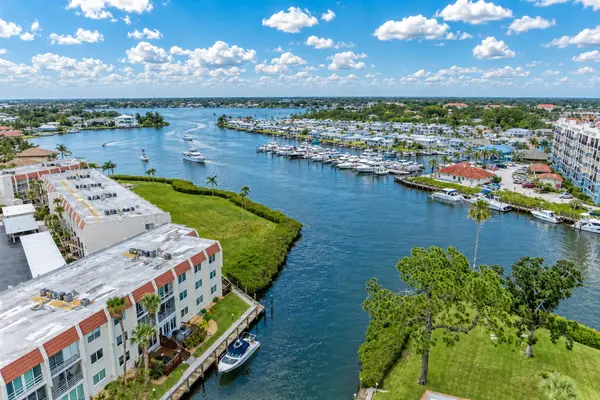
Those are not interchangeable. A buyer interested primarily in boating may prefer protected canal or bay access with a private dock. A buyer who wants dramatic sunsets may place greater importance on Gulf frontage. Another buyer may prefer a high-rise residence with an expansive water view and no personal responsibility for a seawall or dock.
Choose the water first, then determine which homes provide the relationship with it that you actually want.
2. Evaluate the View Like a Long-Term Owner
Luxury waterfront buyers understandably focus on the view, but it helps to evaluate that view from more than one room and at more than one time of day.
Walk through the main living room, kitchen, primary bedroom and covered outdoor space. Determine where the strongest sightlines occur and whether furniture can be arranged without blocking them. Observe whether landscaping, neighboring structures, docks or other features affect privacy.
Orientation matters too. Consider where the sun rises and sets, how direct afternoon sun reaches major windows and outdoor areas, and whether the covered lanai provides useful shade during the hours you expect to spend outside.
Buyers should also avoid assuming that every aspect of a current view is permanently protected. Property rights, neighboring development possibilities and other legal or land-use questions should be investigated through appropriate public records and qualified legal or land-use professionals when material to the purchase.
3. If You Own a Boat, Evaluate the Water Before the Kitchen
For serious boating buyers, the most beautiful home in the world may be the wrong property if the boat cannot comfortably reach it.
Before assigning a premium to private dockage, investigate:
- Water depth at the dock
- Depth along the navigational route
- Tidal effects on usable depth
- Fixed bridges
- Bridge clearance
- Canal width and maneuvering space
- Dock dimensions
- Boat-lift capacity
- Travel time to the bay, Intracoastal Waterway or Gulf
- Applicable boating or association restrictions
If you already own the intended vessel, provide its length, beam, draft, height and weight to the appropriate marine professionals when evaluating the property. Do not rely solely on the size of the boat currently sitting behind the house.
Hunt Brothers Realty's Sarasota waterfront living guide provides additional context on how boating access and waterfront lifestyles differ among Sarasota-area communities.
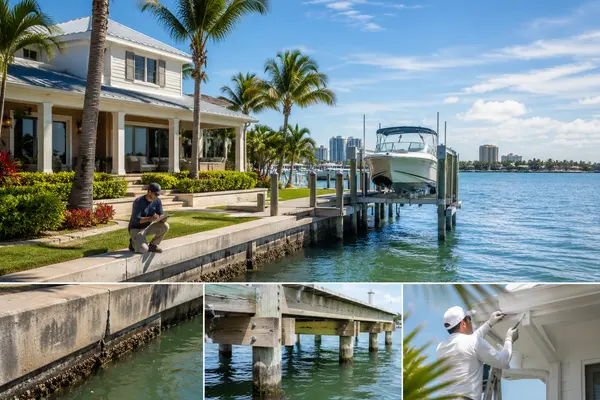
4. Inspect the Seawall or Shoreline, Not Just the House
A seawall can be easy to overlook during a showing because attention naturally moves toward the architecture and water view. That is a mistake.
Investigate the seawall's material, approximate age, condition, previous repairs and available documentation. Visible concerns can include cracking, movement, separation, erosion or soil loss, but a visual walkthrough by a buyer is not a substitute for professional evaluation.
Also determine who is responsible for the shoreline structure. On some properties that may be the individual owner. In other ownership structures, responsibilities can differ.
When seawall condition is material to the purchase, buyers should obtain an evaluation from the appropriate marine contractor, engineer or other qualified waterfront professional and obtain realistic information about any recommended repair or replacement work before making a decision.
5. Inspect the Dock and Boat Lift as Infrastructure
A private dock is not merely an amenity. It is a waterfront structure exposed to weather, water and regular use.
Depending on the installation, a waterfront inspection may examine pilings, decking, framing, fasteners, electrical components, water service and the physical condition of the boat lift. Lift capacity should be verified rather than estimated from appearance.
Ask for available permits, plans, repair records and service documentation. If you intend to expand, replace or substantially modify the dock or lift, investigate whether the desired work is actually permissible before treating that future improvement as part of the property's value to you.
Florida's waterfront permitting framework can involve state and local requirements, and some projects may qualify for exemptions or other forms of authorization. The appropriate permitting agencies and qualified marine professionals should be consulted for the specific property and proposed work.
6. Verify Waterfront Improvements and Permits
High-end does not automatically mean fully documented. A luxury property may have undergone years of renovations, dock work, shoreline repairs, pool changes, additions and outdoor improvements under different owners.
Depending on the property, buyers may want to investigate documentation involving:
- Dock construction or replacement
- Boat lifts
- Seawall or shoreline work
- Dredging where applicable
- Pools and spas
- Outdoor kitchens
- Structural additions
- Major electrical or plumbing work
- Roof replacement
- Window and door replacements
Permit requirements and the significance of available records depend on the individual improvement and jurisdiction. Material questions should be verified with the appropriate local or state permitting authority and qualified contractors or other professionals.
7. Understand Flood Exposure Beyond the Map
Flood-zone information is an important part of waterfront due diligence, but it should not be the only question a buyer asks.
Depending on the property, investigate:
- Current flood-zone information
- Available elevation documentation
- Elevation of living areas and equipment
- Drainage around the property
- Prior flooding information when available
- Location of mechanical and electrical systems
- Property-specific flood insurance options
- Construction characteristics relevant to the site
Flood maps and classifications can change, and two properties near each other can have different physical characteristics. Buyers should use current information and obtain property-specific guidance rather than assuming that neighboring homes have identical exposure or insurance requirements.
8. Investigate Insurance Before You Become Emotionally Committed
Insurance deserves attention early in the buying process, especially for high-value coastal property. Waiting until the final stages of a transaction can leave too little time to understand coverage options and ownership costs.
Insurance availability, coverage, exclusions, deductibles and premiums can vary substantially by property. Relevant factors can include location, construction, roof characteristics, elevation, flood exposure, wind protection and other property-specific details.
Do not assume that the seller's current premium predicts what you will pay. Buyers should obtain property-specific quotes and review homeowners, wind and flood coverage needs with qualified insurance professionals before making a purchasing decision that depends on those costs.
9. Evaluate the Home's Storm-Related Features
Luxury finishes should not distract from the building envelope and major systems. Buyers should understand the roof, windows, exterior doors, garage doors, drainage and other relevant components.
If a property is marketed with impact-rated windows or doors, verify the available product and permit documentation rather than relying only on appearance. If shutters or another opening-protection system are used, understand what is protected and how the system operates.
A standby generator can also be a useful feature, but buyers should verify its capacity, fuel source, transfer equipment, service history and what electrical loads it actually serves.
For additional context, see luxury home features that make sense in Florida.
10. Look Closely at Covered Outdoor Living
A waterfront home often derives much of its lifestyle value from the space between the interior and the water. That makes the design of the lanai, pool and outdoor entertaining areas particularly important.
Evaluate whether the covered area is deep enough for real seating and dining, whether it provides useful shade, how it connects to the kitchen and living room, and whether the pool enhances or interrupts the view.
Also consider exposure. Waterfront exterior materials, hardware, screens, fixtures and equipment may require ongoing maintenance depending on their location and environmental conditions.
Read why covered outdoor space is valuable in Florida for a closer look at evaluating lanais and outdoor living areas.
11. Do Not Treat a Renovation as Proof of Condition
A recently renovated waterfront property can be highly appealing, but new finishes do not eliminate the need for inspection.
A buyer should distinguish between cosmetic renovation and work affecting the building's major systems. New flooring and cabinetry tell you little about the roof, plumbing, electrical system, HVAC equipment, drainage, seawall or dock.
Ask what was changed, when the work occurred, who performed it and what permits, invoices, plans, warranties or other documentation are available. Inspection findings and questions about construction quality should be evaluated with the appropriate licensed inspectors, contractors, engineers or other qualified professionals.
12. Review the Survey Carefully
The survey can be especially important for a high-end waterfront purchase because valuable improvements may sit close to property lines, easements, shoreline boundaries or other regulated areas.
Depending on the property, a survey may help identify boundaries, easements, encroachments and the location of structures or improvements. Waterfront boundaries and rights can involve issues that are not apparent from walking the property.
Questions involving boundaries, easements, ownership rights, title or the legal effect of survey information should be reviewed with an appropriately qualified surveyor, title professional or Florida real estate attorney.
13. For Beachfront Property, Investigate Coastal Construction Considerations
Direct beachfront property can involve additional coastal considerations beyond those associated with an inland or canal-front residence.
Florida's Department of Environmental Protection maintains the Coastal Construction Control Line program and provides mapping tools that can help identify whether a property is seaward of the applicable control line. Florida DEP specifically provides guidance for real estate professionals and purchasers of beachfront property on locating this information.
If future additions, redevelopment, shoreline work or other construction are important to your plans, do not assume they will be permitted merely because the lot is large enough. Verify applicable coastal, environmental, building and local requirements with the appropriate government agencies and qualified professionals before the intended future use becomes part of your purchasing decision.
14. Understand Environmental Features and Restrictions
Waterfront ownership can intersect with environmental regulation in ways that are not immediately obvious during a showing. Mangroves, wetlands, dunes, submerged lands and other coastal resources can affect what an owner may alter or construct.
That can be relevant if your plans include changing the shoreline, modifying vegetation, expanding a dock or substantially redeveloping the site.
Environmental and permitting requirements are property specific. Buyers should verify proposed work with the applicable local, state or federal agencies and appropriate environmental, engineering, marine or legal professionals rather than assuming that existing conditions can be freely modified.
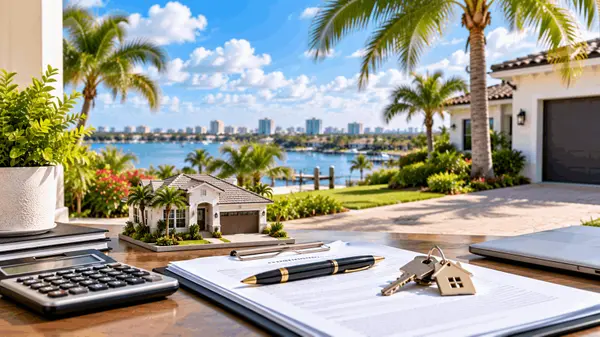
15. Calculate the Real Cost of Waterfront Ownership
At the high end of the market, purchase price is only one part of the financial picture. Waterfront infrastructure and coastal exposure can create expenses that buyers of comparable inland homes may not encounter in the same way.
Depending on the property, consider:
- Homeowners insurance
- Flood insurance
- Property taxes
- Seawall or shoreline maintenance
- Dock maintenance
- Boat-lift maintenance
- Pool and spa maintenance
- Landscaping
- Exterior maintenance
- Generator maintenance
- HOA or condominium assessments when applicable
- Future capital improvements
Future maintenance costs cannot be predicted precisely from a showing. Buyers should obtain property-specific estimates from qualified insurance, inspection, marine, contracting and other professionals when those costs are material to affordability.
16. High-End Waterfront Condos Require a Different Analysis
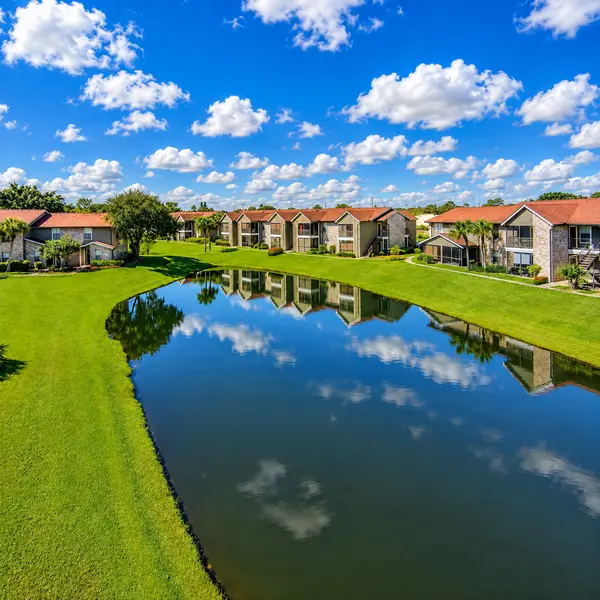
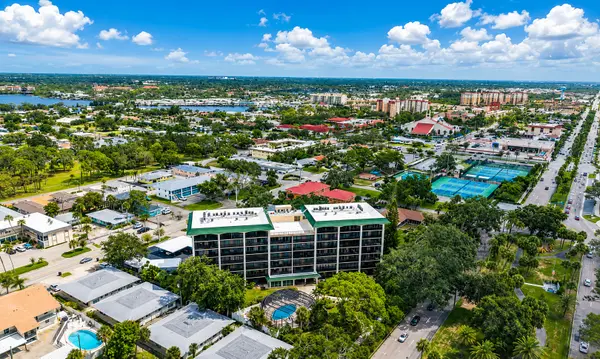
Not every luxury waterfront purchase involves a private seawall and dock. Sarasota's waterfront market also includes high-end condominiums where the association handles significant portions of the exterior property and common elements.
For these properties, buyers should evaluate the residence and the association. Depending on the building, important issues can include current fees, budgets, reserves, insurance, special assessments, applicable structural information, completed projects and anticipated capital work.
Also investigate parking, storage, pet policies, rental restrictions, storm-protection responsibilities and any marina or boat-slip rights when applicable.
Buyers comparing luxury condominium ownership should read what Florida condo fees actually pay for and what maintenance-free living really means.
17. Compare the Property With the Right Waterfront Competition
Luxury waterfront properties should not be compared only by price per square foot. The land and waterfront characteristics can create meaningful differences between homes with otherwise similar interiors.
Relevant comparisons may include:
- Type and quality of water view
- Lot orientation
- Amount of waterfront frontage
- Boating access
- Water depth and bridge restrictions
- Seawall and dock condition
- Elevation and flood considerations
- Home age and renovation quality
- Privacy
- Proximity to beaches, dining and downtown
A licensed real estate professional familiar with the local waterfront market can help identify more relevant comparable properties and explain how current buyers are responding to different waterfront characteristics. A formal appraisal or other specialized valuation should be obtained when appropriate to the buyer's circumstances.
18. Evaluate the Property Based on How You Will Actually Use It
A high-end waterfront home can be exceptional and still be wrong for a particular buyer.
Ask yourself what you are really buying the waterfront for.
Is your priority keeping a large boat behind the house? Walking directly onto the beach? Watching sunsets from a terrace? Living close to downtown while seeing Sarasota Bay? Having privacy and acreage? Entertaining around a pool?
Those priorities can point toward very different properties, even at the same price level.
How Sarasota's Luxury Waterfront Areas Differ
Sarasota provides a useful example of why waterfront property should be evaluated by lifestyle rather than by a single definition of luxury.
Bird Key real estate can appeal to buyers who value private-dock boating and proximity to downtown Sarasota. Longboat Key offers both Gulf-oriented and bay-oriented possibilities in an island environment. Siesta Key combines beach access with canal and bayfront boating options. Lido Key can appeal to buyers seeking beach proximity near St. Armands Circle and downtown.
Harbor Acres provides waterfront living with mainland convenience, while Casey Key can appeal to buyers prioritizing privacy and estate-style coastal property. Downtown Sarasota offers luxury condominium living with bay views and walkability, but a very different ownership experience from maintaining a private waterfront estate.
Explore Sarasota and Florida Gulf Coast communities and read the 2026 guide to Sarasota's best areas for waterfront living to compare these different lifestyles.
A High-End Waterfront Buyer Due-Diligence Checklist
Before making a final purchasing decision, consider whether you have adequately investigated the following items that apply to the property:
- Type of waterfront and intended use
- View and orientation
- Privacy
- Water depth and tides
- Bridge clearance
- Route to open water
- Dock condition and permits
- Boat-lift capacity and condition
- Seawall or shoreline condition
- Current flood information
- Available elevation documentation
- Property-specific insurance quotes
- Roof and opening protection
- Drainage
- Pool and outdoor-living condition
- Major mechanical systems
- Survey and title matters
- Environmental or coastal restrictions
- Association documents when applicable
- Realistic annual and long-term ownership costs
Not every property requires every specialist. The appropriate due-diligence team depends on the home's construction, waterfront characteristics and intended use. Significant inspection findings should be evaluated by the relevant licensed inspector, contractor, engineer, marine professional or other qualified specialist before the buyer makes a decision.
The Best Waterfront Property Is the One That Works After the Showing Ends
Luxury waterfront real estate is designed to create an emotional reaction. Expansive glass, water views, pools, boats and sunsets can make a property memorable within minutes.
A disciplined buyer keeps evaluating after that first reaction.
Does the water accommodate your boat? Is the seawall in appropriate condition? Are the dock and lift documented and suitable? Does the elevation and insurance profile fit your ownership expectations? Will you actually use the outdoor spaces? Are there restrictions that conflict with future plans?
The strongest waterfront purchase is not necessarily the home with the most dramatic first impression. It is the property whose residence, waterfront infrastructure, location, ownership costs and lifestyle fit remain compelling after careful due diligence.
Explore Luxury Waterfront Real Estate With Hunt Brothers Realty
Hunt Brothers Realty helps buyers compare Sarasota and Florida Gulf Coast waterfront properties based on more than finishes and views. That includes understanding the type of waterfront, boating priorities, community location and the property-specific issues that should be investigated during the purchase process.
Explore Florida Gulf Coast communities, read A Buyer's Guide to Waterfront Homes on Florida's Gulf Coast, or contact Hunt Brothers Realty to discuss the waterfront lifestyle and property characteristics you are looking for.
Informational notice: This article provides general real estate and property information and is not individualized legal, financial, tax, insurance, lending, inspection, engineering, environmental, marine, construction, title, surveying, association or permitting advice. Waterfront conditions, flood exposure, insurance, seawalls, docks, lifts, navigability, permits, environmental restrictions, boundaries, construction rights and ownership costs are property specific. Buyers should verify material information with the appropriate government agencies and qualified licensed real estate, insurance, legal, inspection, engineering, marine, contracting, surveying, title, environmental or other professionals before making a purchasing decision.
Sources
- Hunt Brothers Realty, Buying Waterfront Property in Florida: 10 Things to Know Before You Buy
- Hunt Brothers Realty, A Buyer's Guide to Waterfront Homes on Florida's Gulf Coast
- Hunt Brothers Realty, Best Sarasota Areas for Waterfront Living: 2026 Buyer's Guide
- Hunt Brothers Realty, Waterfront Home Maintenance in Sarasota: Owner's Guide
- Florida Department of Environmental Protection, Dock Permitting in Florida
- Florida Department of Environmental Protection, Environmental Resource Permitting
- Florida Department of Environmental Protection, Coastal Construction Control Line Property Guidance
- FEMA, Flood Maps and Flood Risk Information
Contact Hunt Brothers Realty
46 N. Washington Blvd, Ste 3, Sarasota, FL 34236
Phone: (941) 388-7017
Email: info@huntbrothersrealty.com
Website: HuntBrothersRealty.com
Categories
- All Blogs 1950
- Anna Maria Island 83
- Bird Key 4
- Bradenton 234
- Buying a Home 1020
- Casey Key 2
- Clearwater 9
- Condos & HOA Living 931
- Ellenton 5
- Englewood 9
- First Time Homebuyers 1124
- Foreclosures 3
- Home Selling 1
- Homeownership 1144
- Lakewood Ranch 20
- Lido Key 27
- Longboat Key 78
- Luxury/Waterfront Properties 1085
- Market Updates & Trends 614
- Mortgages & Financing 42
- Move-Up Buyers 20
- Neighborhood Guides 737
- New Construction 32
- Palmetto 3
- Parrish 6
- Port Charlotte 10
- Punta Gorda 15
- Real Estate Investing 1002
- Relocation to Florida 1046
- Safety Harbor 2
- Sarasota 71
- Sarasota - Downtown 157
- Selling a Home 143
- Siesta Key 89
- St. Petersburg 6
- Tierra Verde 5
- Vacation & Second Homes 1193
- Venice 96
- Wellen Park 10
Recent Posts