How Do I Find a Home With Gulf Access?
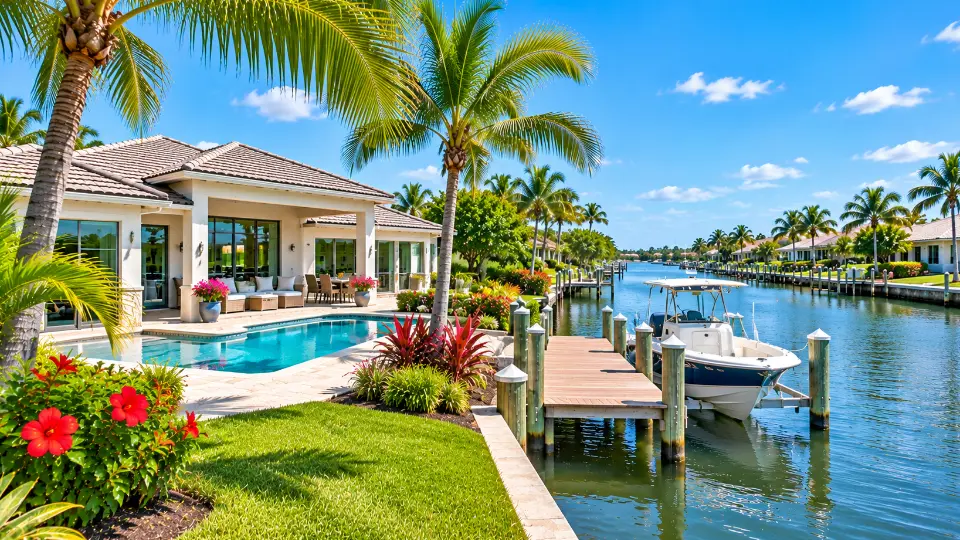
To find a home with Gulf access in Florida, start with your boat and the complete route from the property to the water you want to reach, not simply the word “waterfront” in a listing. On Florida’s Gulf Coast, a canal-front or bayfront home may provide excellent boating access, while another waterfront property may have shallow water, fixed bridges or other restrictions. Before buying, verify water depth, tides, bridge clearance, canal width, dock rights, boat-lift capacity, seawall condition, permits, flood exposure and insurance. Sarasota-area buyers can find boating-oriented properties from Bird Key and Harbor Acres to Siesta Key, Nokomis and other coastal communities.
Quick Answers About Finding a Home With Gulf Access
What does Gulf access mean in a real estate listing?
Gulf access generally means there is a navigable water route from the property or associated boating facility toward the Gulf of Mexico. It does not tell you whether that route works for your particular boat. Depth, bridges, locks, tides, canal dimensions and other restrictions still need to be verified.
Does waterfront automatically mean Gulf access?
No. A waterfront property can face a lake, pond, lagoon, canal, river, bay or the Gulf itself. Some waterfront properties provide practical boating access toward the Gulf, while others do not provide navigable access at all.
How do I know whether Gulf access will work for my boat?
Compare your vessel’s draft, beam, overall length, height above the waterline and operating weight with the entire boating route. Verify depth under relevant tidal conditions, bridge clearance, canal width, lift capacity and dock configuration rather than relying on a general “Gulf access” description.
Where can I find Gulf-access homes near Sarasota?
Boating-oriented waterfront opportunities can be found in areas including Bird Key, Harbor Acres, portions of Siesta Key and Longboat Key, along with selected mainland and barrier-island neighborhoods. Farther south, Nokomis communities such as The Inlets and Sorrento South provide canal and bay access toward the Intracoastal Waterway and Gulf through Venice Inlet. Access varies by property.
What does no fixed bridges mean?
It generally means the intended route does not pass beneath a fixed bridge that imposes an overhead-clearance restriction. That can be important for sailboats and larger vessels, but no fixed bridges does not guarantee adequate water depth, sufficient canal width or suitability for every boat.
Should I buy a home that already has a dock and boat lift?
An existing dock and lift can be useful, but verify their condition, permit history, dimensions and suitability for your vessel. A lift that is undersized for your boat or a dock that needs substantial work may change the economics of the property.
Can I just dredge a canal if the water is too shallow?
Do not assume you can. Dredging and other waterfront work can require local, state or federal approvals. Sarasota County specifically regulates maintenance dredging through its waterfront permitting process, so feasibility should be verified with the appropriate permitting authorities and qualified marine professionals before buying based on a future dredging plan.
Does Gulf access mean the home is in a flood zone?
Not necessarily, and flood exposure should be researched separately. Waterfront location, elevation, FEMA flood-zone designation and surrounding conditions all matter. Obtain current property-specific flood information and insurance quotes rather than making assumptions based only on boating access.
What Does “Gulf Access” Actually Mean?
Gulf access means there is a water route toward the Gulf of Mexico, but the phrase alone does not establish the quality or usability of that route. Two homes marketed as Gulf-access properties can provide completely different boating experiences.
One property might sit on relatively open navigable water with a short route to a bay or inlet. Another might require traveling through narrow canals, beneath bridges and across shallow sections before reaching larger water.
That is why Hunt Brothers Realty’s guide to deep-water access in Sarasota distinguishes among waterfront, navigable access, deep-water access, no-fixed-bridge access and direct bay access. These terms can describe very different property characteristics.
Should You Start With the House or the Boat?
If boating is a major reason for buying the property, start with the boat. A beautiful waterfront house is not useful as a boating property if the vessel cannot reach it, fit at the dock or safely navigate the route to open water.
Before searching, document the vessel you own or realistically expect to own:
- Overall length
- Beam
- Draft
- Height above the waterline
- Operating or loaded weight
- Lift requirements
Those specifications turn a vague waterfront search into a much more useful property search. Hunt Brothers Realty’s guide to keeping a boat at a Florida home explains how the dock, lift, canal and route all need to work as one boating system.
What Type of Waterfront Should You Search For?
For boating, canal-front and bayfront properties are often logical places to search, but the correct waterfront type depends on how you plan to use the property.
Hunt Brothers Realty’s comparison of Gulf-front, bayfront and canal-front Sarasota property explains the basic distinctions.
| Waterfront Type | Common Priority | Important Boating Questions |
|---|---|---|
| Gulf-front | Beach access, Gulf views and coastal setting | Does the property actually have a usable dock or boating facility, and where can the vessel be kept? |
| Bayfront | Broad water views and potential boating access | Dock rights, depth, exposure, lift capacity and route to the Gulf |
| Canal-front | Keeping a boat behind the home | Depth, tides, bridges, canal width, turns, dock and distance to open water |
| River or creek frontage | Boating and natural-waterway access | Navigability, depth, bridges, current, route and environmental restrictions |
| Shared marina or condo dock | Boat access without maintaining a private residential dock | Slip rights, availability, vessel limits, fees, rules and transferability |
These are general categories. The individual property and complete boating route determine whether the home actually works for the intended vessel.
How Important Is Water Depth?
Water depth is one of the most important variables when determining whether a Gulf-access home works for your boat. The relevant question is not simply how deep the water appears behind the house during a showing.
Investigate depth at the dock and throughout the intended route. Tidal conditions can change the amount of water beneath a vessel, so a route that works comfortably under one condition may provide less clearance at another.
Terms such as “deep water” should not substitute for vessel-specific verification. If draft is important, confirm appropriate depth information with qualified marine professionals and other reliable sources before purchasing.
How Do Fixed Bridges Affect Gulf Access?
A fixed bridge can determine whether a vessel can use a waterfront property at all. This is especially important for sailboats, vessels with towers and larger boats with significant height above the waterline.
Do not stop at asking whether there is a bridge. Determine the relevant clearance and compare it with the vessel under appropriate operating conditions. Also identify every bridge along the complete route, not just the first one near the property.
A listing advertised as having “no fixed bridges” can be particularly relevant to some boaters, but that phrase still does not establish adequate depth or unrestricted navigation.
Does Canal Width Matter?
Yes. Canal width, turning space and dock configuration can affect whether you can comfortably maneuver the boat even when water depth and bridge clearance are adequate.
Look at the width of the waterway, docks extending from neighboring properties, moored vessels, turning areas and bends along the route. A wide open bayfront property and a narrow residential canal can provide very different boating experiences.
Buyers with larger vessels should have the practical maneuvering requirements evaluated rather than assuming a boat fits because another vessel is visible nearby.
How Far Is the Home From Open Water?
Travel time to the water you actually want to use can be as important as whether Gulf access technically exists. A property can have a navigable Gulf route while still requiring a substantial canal, bay or Intracoastal trip before reaching the intended destination.
If you plan to boat frequently, trace the complete route from the dock to Sarasota Bay, the Intracoastal Waterway, Venice Inlet, Big Sarasota Pass, New Pass, Charlotte Harbor or another destination relevant to the property.
Do not rely solely on a listing’s estimated number of minutes to open water. Boat speed restrictions, local conditions, route configuration and your vessel can change actual travel time.
Where Should Boaters Look Near Sarasota?
Sarasota-area buyers can find boating-oriented waterfront homes on the mainland, barrier islands and nearby coastal communities. Bird Key, Harbor Acres, portions of Siesta Key and Longboat Key are useful Sarasota starting points, but access conditions remain property-specific.
Hunt Brothers Realty’s guide to Sarasota waterfront areas compares several locations for different waterfront priorities.
Bird Key
Bird Key sits in Sarasota Bay between Downtown Sarasota and St. Armands Circle. Waterfront properties can include private docks and access toward Sarasota Bay, making it an important location for buyers seeking a detached waterfront home close to downtown. Bayfront and canal-front properties should still be evaluated individually for depth, dock configuration and vessel suitability.
Harbor Acres
Harbor Acres provides a mainland Sarasota waterfront option close to downtown and Southside Sarasota. Boating buyers should investigate canal or bay position, depth, tides, bridge clearance when applicable, dock facilities, seawall condition and the specific route toward Sarasota Bay.
Siesta Key
Siesta Key includes more than Gulf-front beach property. Buyers can also find bayfront and canal-oriented homes in selected areas. The boating route varies substantially across the island, making vessel-specific research particularly important.
Longboat Key
Longboat Key provides both Gulf-oriented and bay-oriented waterfront choices. A Gulf-front condominium and a canal or bayfront home may both be called waterfront, but only the latter may provide the private-dock boating arrangement a particular buyer wants.
Where Can You Find Gulf Access South of Sarasota?
Nokomis, Venice, Englewood and the Charlotte Harbor region provide additional waterfront environments worth comparing when Gulf boating is a major priority. The right location depends on the vessel, desired route, housing type and budget.
The Inlets in Nokomis
The Inlets is a gated waterfront community west of U.S. 41 along Dona Bay in Nokomis. Hunt Brothers Realty identifies canal and bayfront properties with boating access toward the Intracoastal Waterway and Gulf through Venice Inlet. Individual dock and boating conditions should be verified.
Sorrento South in Nokomis
Sorrento South is an established Nokomis neighborhood with canal-front properties and boating routes toward Dona Bay and the Gulf through Venice Inlet. Many homes have private docks, but depth, dock condition and vessel suitability vary by address.
Charlotte Harbor and Punta Gorda
The Charlotte Harbor region provides another major Gulf Coast boating environment, with canal, harbor and river-oriented properties in and around Punta Gorda and nearby communities. Buyers should evaluate the exact canal system, bridges, water depth and route from the individual property toward Charlotte Harbor and the Gulf.
Should the Home Already Have a Dock?
An existing dock can simplify a waterfront purchase, but only if the structure is permitted, serviceable and suitable for your boat. The presence of a dock should be the beginning of the investigation, not the end.
Investigate:
- Available dock permits
- Dock dimensions and configuration
- Pilings and structural condition
- Electrical service
- Water service
- Boat-lift condition
- Lift capacity
- Maintenance history
- Whether alterations or additions were properly approved
Dock and lift condition should be evaluated by an appropriate qualified marine contractor or other professional when it could materially affect the purchase.
Can You Add or Enlarge a Dock After Buying?
Possibly, but never buy a property assuming a future dock, lift or expansion will automatically be approved. Waterfront improvements can be regulated by local, state and federal authorities depending on the property and project.
Sarasota County Environmental Protection reviews permits for docks, boat lifts, personal-watercraft lifts, bulkheads and maintenance dredging under its Water and Navigation Control Authority program. The level of review depends on the type and scope of work.
Other jurisdictions have their own requirements. For example, Charlotte County requires permitting for residential dock construction and additions, with applicable building, zoning, natural-resource and other reviews.
Before purchasing based on a proposed waterfront improvement, verify feasibility with the applicable permitting authority and appropriate marine contractor, engineer, surveyor or other qualified professional.
Why Does the Seawall Matter?
The seawall can be one of the most important pieces of infrastructure attached to a waterfront home, and its condition can materially affect future ownership costs.
Determine whether the property has a seawall or other shoreline stabilization, who owns and maintains it, its material, available age or repair history, and whether signs of movement, cracking, erosion or other deterioration warrant further evaluation.
Hunt Brothers Realty’s Florida Gulf Coast waterfront home guide provides additional context on seawalls, docks and flood considerations.
Seawall condition, remaining service life and repair requirements should be evaluated by the appropriate qualified marine contractor, engineer or other professional rather than estimated from appearance alone.
Can a Waterfront Condo Provide Gulf Access?
Yes, selected waterfront condominium communities can provide docks or marina facilities, but boat-slip rights and availability must be verified separately from ownership of the unit.
For example, Hunt Brothers Realty identifies Sarasota Harbor East as a waterfront condominium community along Little Sarasota Bay with marina access and boat docks subject to availability.
For any condominium or shared marina, determine whether a slip is deeded, assigned, leased, licensed or available through another arrangement. Also verify vessel-size restrictions, waitlists, fees, lift rules, dock maintenance responsibilities and whether the boating right transfers with the unit.
Association documents, title questions and legal rights associated with a slip should be reviewed through the appropriate association, title professional and qualified Florida real estate attorney when those rights are material to the purchase.
How Does Flood Risk Affect a Gulf-Access Home?
Flood exposure should be investigated carefully for every waterfront property, but boating access and flood risk are separate questions. A home can provide excellent boating access while presenting property-specific flood and insurance considerations that materially affect ownership costs.
The City of Sarasota flood information resource states that current FEMA Flood Insurance Rate Maps for the City of Sarasota and Sarasota County became effective March 27, 2024. Buyers can research the current flood designation for an individual address and review available elevation information.
Standard homeowners insurance generally does not cover flooding. Buyers should obtain property-specific homeowners and flood insurance information from qualified insurance professionals before making a purchasing decision. Lender requirements should also be confirmed with the buyer’s mortgage professional.
What Are the Real Costs of Owning a Gulf-Access Home?
A Gulf-access home can involve ownership costs that do not apply to a typical inland property. The purchase price alone is therefore not enough to compare waterfront homes.
Depending on the property, budget for:
- Homeowners insurance
- Flood insurance when applicable or appropriate
- Dock maintenance
- Boat-lift maintenance and eventual replacement
- Seawall inspection, repair or replacement planning
- Marine electrical and water systems
- Exterior maintenance in a coastal environment
- Storm preparation
- HOA or condominium fees when applicable
- Marina or slip expenses when applicable
A property with a higher purchase price but recently improved waterfront infrastructure can present a different long-term cost profile from a less expensive home with an aging seawall, dock and lift. Obtain appropriate inspections and estimates rather than relying on broad assumptions.
What Should You Verify Before Making an Offer?
Before making an offer on a Gulf-access home, verify both the residence and the entire waterfront system that supports your intended boating use.
- The exact type of waterfront
- The complete route to the Gulf or intended boating destination
- Water depth at the dock and along the route
- Tidal effects on usable depth
- Fixed bridges and applicable clearances
- Canal width and maneuvering space
- Dock ownership, rights, permits and condition
- Boat-lift capacity and condition
- Seawall ownership and condition
- Flood-zone and elevation information
- Property-specific homeowners and flood insurance
- Available waterfront-improvement permits
- Association or marina restrictions when applicable
- Realistic annual and long-term waterfront maintenance costs
Hunt Brothers Realty’s 12 questions to ask before buying a Florida waterfront home provides a more detailed due-diligence checklist.
Should You Take the Boat Route Before Buying?
If boating access is central to the purchase, understanding the actual route can reveal information that is difficult to appreciate from a road-based property showing.
Where practical and appropriate, investigate how the route functions under relevant conditions. Look at canal width, turns, neighboring docks, bridges, markers, open-water transitions and the practical distance to the destinations you expect to use.
This should complement, not replace, reliable depth information, permitting research and professional evaluation. Conditions observed on one trip do not guarantee safe navigation under different tides, weather or vessel configurations.
What Search Terms Help You Find Gulf-Access Homes?
Use multiple waterfront and boating terms because listings do not always describe access in exactly the same way. Useful search concepts can include Gulf access, navigable water, canal-front, bayfront, saltwater canal, private dock, boat lift, no fixed bridges, sailboat access and deep-water access.
Treat these terms as search filters rather than verified conclusions. A listing that uses one of them still requires property-specific investigation.
This is also where working with a real estate professional familiar with waterfront searches can help narrow inventory based on the boating characteristics that matter to you instead of simply returning every property touching water.
What Is the Best Way to Find the Right Gulf-Access Home?
The best approach is to define your vessel and boating priorities first, identify waterways that can realistically support them, and only then compare individual homes. This reverses the common mistake of falling in love with a house and investigating the boating limitations afterward.
A useful Gulf-access home search should answer four questions:
- Can my boat physically reach and use this property?
- Does the route take me where I actually want to boat?
- Are the dock, lift and seawall suitable and properly documented?
- Do the flood, insurance and long-term waterfront costs fit my budget?
If the answer to all four is yes after appropriate verification, the property is much closer to being a true boating fit rather than simply a home with a water view.
Find a Florida Gulf Coast Boating Home With Hunt Brothers Realty
Hunt Brothers Realty can help buyers narrow Florida Gulf Coast waterfront properties based on the type of boating access they actually need, including canal-front homes, bayfront properties, private docks and communities with marina facilities.
Start with Hunt Brothers Realty’s guide to buying waterfront property in Florida, compare Sarasota waterfront areas, or review the Sarasota deep-water access guide. When you are ready to search based on your boat, preferred waterway and property requirements, contact Hunt Brothers Realty.
Informational notice: This article provides general real estate and educational information only and is not individualized legal, financial, insurance, lending, inspection, engineering, construction, title, survey, permitting, marine-navigation or other professional advice. Waterfront access, depth, tides, bridge clearances, dock and lift suitability, seawall condition, flood exposure, insurance, permits and navigation conditions vary by property and vessel. Buyers should independently verify information important to their intended boating use and consult the appropriate licensed real estate professional, insurance agent, lender, Florida real estate attorney, surveyor, marine contractor, engineer, inspector, title professional and local, state or federal permitting authority when individualized guidance is required.
Sources
- Sarasota County, Environmental Permitting and Water and Navigation Control Authority
- City of Sarasota, Flood Map Information
- Charlotte County, Residential Dock Permitting
- Hunt Brothers Realty, Deep-Water Access in Sarasota: A Guide for Boat Owners
- Hunt Brothers Realty, Buying Waterfront Property in Florida
- Hunt Brothers Realty, Gulf-Front vs. Bayfront vs. Canal-Front Sarasota Homes
- Hunt Brothers Realty, Best Sarasota Areas for Waterfront Living
Hunt Brothers Realty
46 N. Washington Blvd, Ste 3, Sarasota, FL 34236
Phone: (941) 388-7017
Email: info@huntbrothersrealty.com
Website: HuntBrothersRealty.com
Categories
- All Blogs 2694
- Anna Maria Island 93
- Bird Key 6
- Bradenton 242
- Buying a Home 1708
- Casey Key 3
- Clearwater 16
- Condos & HOA Living 1643
- Ellenton 9
- Englewood 16
- First Time Homebuyers 1832
- Foreclosures 4
- Home Selling 12
- Homeownership 1878
- Lakewood Ranch 37
- Lido Key 29
- Longboat Key 81
- Luxury/Waterfront Properties 1821
- Market Updates & Trends 1321
- Mortgages & Financing 88
- Move-Up Buyers 24
- Neighborhood Guides 1449
- New Construction 47
- Palmetto 4
- Parrish 39
- Port Charlotte 36
- Punta Gorda 165
- Real Estate Investing 1734
- Relocation to Florida 1762
- Safety Harbor 4
- Sarasota 163
- Sarasota - Downtown 175
- Selling a Home 149
- Siesta Key 95
- St. Petersburg 11
- Taxes and Homestead 5
- Tierra Verde 7
- Vacation & Second Homes 1927
- Venice 225
- Wellen Park 24
Recent Posts