Signs a Florida Home May Need a New Roof Soon
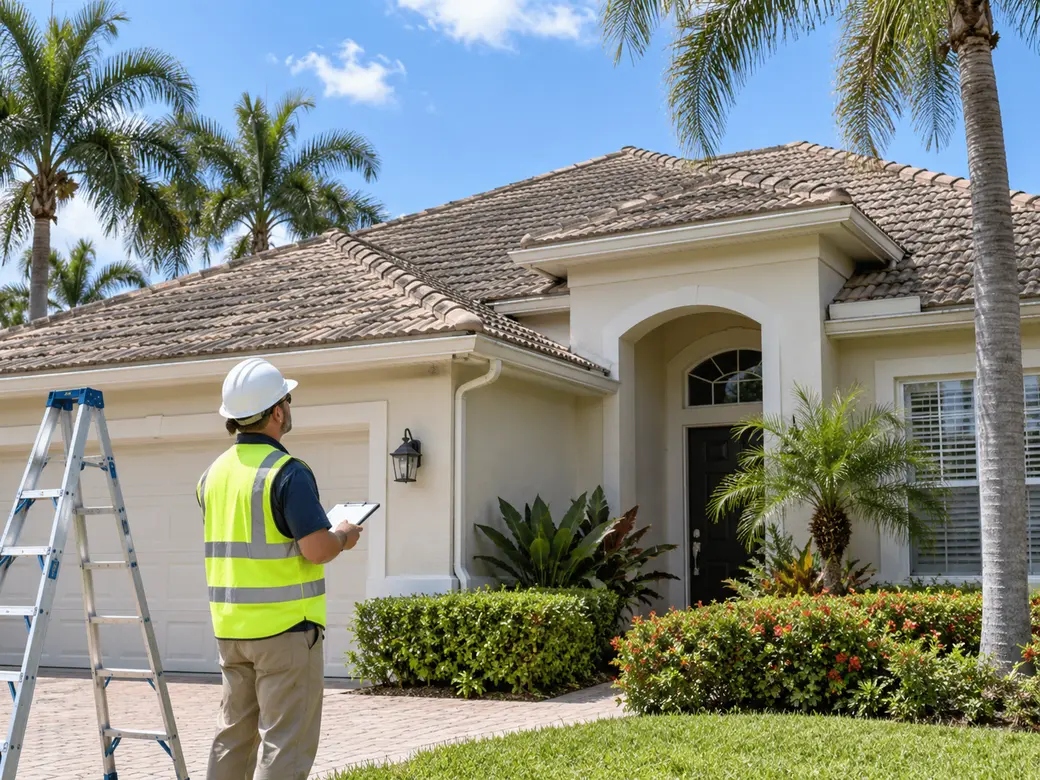
Signs that a Florida home may need a new roof soon can include missing or damaged roofing materials, repeated repairs, deteriorated flashing, sagging areas, ceiling or attic stains, moisture damage and an inspection showing limited remaining useful life. Roof age matters, but age alone does not determine whether replacement is necessary. Installation quality, roofing material, maintenance, storm exposure and current physical condition also matter. For Florida buyers, the roof deserves particular attention because its condition can affect not only future repair expenses but also homeowners insurance underwriting. A qualified inspector or roofing professional should evaluate significant concerns before a buyer makes a property-specific decision.
A roof can also look acceptable from the driveway while having conditions that are difficult to see during a home showing. That is why buyers should combine visible observations with documentation, permit history, a professional home inspection and, when warranted, a specialized roof evaluation. Hunt Brothers Realty's guide to evaluating a roof before buying a home explains the broader due-diligence process.
Quick Answers About Signs a Florida Home May Need a New Roof Soon
What are common warning signs that a roof may need replacement?
Potential warning signs include missing or damaged shingles or tiles, deteriorated flashing, sagging areas, repeated patches, ceiling stains, attic moisture and evidence of recurring leaks. These conditions do not prove that complete replacement is necessary, but they justify further evaluation.
Does an old roof automatically need to be replaced?
No. Chronological age and remaining useful life are not the same thing. Roofing material, installation, maintenance, weather exposure, prior repairs and current condition all affect the evaluation of a particular roof.
Does Florida require every roof to be replaced at 15 years old?
No. Current Florida insurance law does not establish a universal rule requiring homeowners to replace every roof at age 15. Florida Statute 627.7011 contains specific protections involving insurance decisions based solely on roof age, including an inspection process for roofs that are at least 15 years old.
Can a roof that is not leaking still need attention?
Yes. Lack of an obvious active leak does not establish that the entire roofing system is in good condition. Deteriorated materials, flashing problems, prior repairs or limited remaining useful life may deserve attention before water becomes visible inside the house.
Can an older roof affect homeowners insurance in Florida?
Potentially. The Florida Department of Financial Services states that insurers may consider roof age, type and construction when evaluating homeowners insurance, and an insurer may request a roof or four-point inspection depending on the property and underwriting requirements.
Should a buyer rely on the seller's estimate of roof age?
Documentation is more useful than an approximate recollection. Buyers can investigate permits, contractor invoices, warranties, inspection reports and other available records to determine what roofing work was completed and when.
Who should determine whether a roof actually needs replacement?
A qualified home inspector can identify observable concerns, while a licensed roofing contractor, engineer or other appropriate professional may be needed for a more specialized evaluation. Insurance eligibility should be confirmed separately with a qualified insurance professional.
1. The Roof Has Missing or Visibly Damaged Materials
One of the more obvious reasons to investigate a roof is visible deterioration of its covering.
Depending on the roofing material, observable concerns may include:
- Missing shingles
- Lifted or visibly damaged shingles
- Cracked or broken tiles
- Displaced roofing materials
- Visible deterioration around roof edges
- Areas that appear substantially different from the surrounding roof
A small damaged area does not automatically mean the entire roof requires replacement. The extent of the condition, underlying components, age of the roof and feasibility of an appropriate repair all matter.
Buyers should also avoid climbing onto a roof during a showing. Technical roof evaluation should be left to qualified professionals using appropriate safety procedures.
2. The Roof Shows Evidence of Repeated Repairs
One roof repair is not necessarily concerning. Roofing systems occasionally need legitimate maintenance and repair during their service life.
Multiple patches or repeated repairs deserve more investigation because buyers need to understand whether they represent isolated corrected problems or an aging roofing system experiencing recurring issues.
Useful questions include:
- What caused the original problem?
- When was the repair completed?
- Who performed the work?
- Are invoices or permits available?
- Was the repair localized or part of larger roofing work?
- Has leakage occurred again since the repair?
Documentation can help a qualified professional distinguish routine maintenance from a pattern that may indicate more extensive work is approaching.
3. There Are Water Stains on Ceilings or Walls
Roof problems do not always announce themselves on the exterior. Sometimes the first visible clue appears inside the home.
Potential moisture clues can include:
- Ceiling stains
- Discolored drywall
- Paint bubbling or deterioration
- Staining near exterior walls
- Areas that appear recently repaired or repainted
These signs should not be automatically diagnosed as roof leaks. Moisture can originate from plumbing, HVAC equipment, condensation, windows, exterior walls or other sources. A stain can also remain long after an old leak has been repaired.
The correct response is investigation, not assumption. Hunt Brothers Realty's Florida home-showing guide explains why visible moisture should become a question for the inspection rather than a buyer diagnosis during a showing.
4. The Attic Shows Signs of Moisture or Previous Leakage
An inspector may find roofing clues in the attic that are not visible from the living space or ground.
Potential findings can include staining on roof decking or framing, evidence of moisture, damaged materials or signs of previous repair.
Again, the presence of staining does not establish that the roof requires complete replacement. A professional needs to determine whether the evidence is associated with an active condition, a repaired historical leak or another source of moisture.
5. Sections of the Roof Appear Uneven or Sagging
A visibly uneven or sagging roof area deserves prompt professional evaluation.
There can be different causes, and a buyer should not attempt to determine the cause simply by looking from outside. The issue could involve roofing materials, decking, framing, prior moisture or another construction condition.
Because structural questions can materially affect a purchasing decision, significant sagging or movement should be evaluated by the appropriate licensed roofing contractor, structural engineer or other qualified professional rather than relying solely on a visual impression.
6. Flashing or Roof Penetrations Are Deteriorating
The roofing material covering the broad surface is only one part of a complete roofing system.
A professional evaluation may also consider components around:
- Roof valleys
- Vents
- Plumbing penetrations
- Chimneys when present
- Roof-to-wall intersections
- Flashing
- Drip edges
Deterioration in these areas may contribute to water intrusion even when much of the visible roof covering appears intact.
7. A Shingle Roof Shows Significant Surface Deterioration
Asphalt and architectural shingles can change as they age and weather. A roofing professional may evaluate conditions such as damaged edges, missing materials, loss of surface granules, exposed areas or other deterioration.
A few granules in a gutter or one damaged shingle should not be used by a buyer to diagnose the remaining life of an entire roof. The extent and significance of deterioration need to be evaluated in the context of the specific roofing system.
8. Tile Roofing Has Numerous Cracked, Broken or Displaced Tiles
Tile roofs are common throughout Sarasota and Florida's Gulf Coast, but buyers should not evaluate them only by the appearance of the visible tiles.
Broken or displaced tiles deserve investigation, but the roof covering is part of a larger system. Underlayment, flashing, roof deck conditions, penetrations and previous repairs can also be relevant.
That is one reason a tile roof should not be declared "good for decades" simply because the tiles themselves appear durable. Remaining useful life is a property-specific professional determination.
9. The Seller Cannot Document When the Roof Was Replaced
Uncertainty about roof age is not proof that the roof is defective. It does, however, create an important due-diligence question.
Buyers can look for available documentation such as:
- Roofing permits
- Contractor invoices
- Product or workmanship warranties
- Prior inspection reports
- Seller disclosures
- Insurance or wind mitigation documentation
Permit history can be particularly useful because it may help establish when permitted roofing work occurred. Buyers should remember that a permit entry and a complete roof replacement are not necessarily synonymous. Verify what work was actually completed.
10. The Roof Is Older and an Inspection Shows Limited Remaining Useful Life
Age becomes considerably more meaningful when it is combined with a professional evaluation of condition and remaining useful life.
A roof can be chronologically older while remaining serviceable. Another roof can experience significant deterioration earlier because of installation, storm exposure, maintenance problems, material performance or other property-specific circumstances.
This is why buyers should be cautious with internet charts claiming that every shingle, tile or metal roof lasts an exact number of years. General lifespan ranges cannot determine how long a particular roof will continue performing adequately.
What Does Florida's 15-Year Roof Insurance Rule Actually Mean in 2026?
Florida's roof insurance law is frequently reduced to an inaccurate statement such as, "A roof has to be replaced when it reaches 15 years."
That is not what the current statute says.
Under Florida Statute 627.7011, an insurer may not refuse to issue or renew a homeowners policy on a residential structure with a roof less than 15 years old solely because of the roof's age.
For a roof that is at least 15 years old, the insurer must allow the homeowner to obtain an inspection by an authorized inspector, at the homeowner's expense, before requiring replacement as a condition of issuing or renewing coverage based solely on age. If that inspection indicates at least five years of useful life remaining, the insurer may not refuse issuance or renewal solely because of roof age.
The statute does not guarantee that every older roof or property will qualify for every homeowners policy. Other lawful underwriting criteria can still apply.
A 2026 Florida insurance change also expanded the statutory list of authorized inspectors to include roofing contractors for remaining-useful-life roof inspections. Buyers should confirm the documentation and inspector requirements of the specific insurer rather than assuming one inspection will satisfy every company.
Can a Roof Look Fine but Still Create an Insurance Issue?
Potentially. A buyer's visual impression and an insurance company's underwriting review are not the same evaluation.
The Florida Department of Financial Services explains that insurers can inspect properties as part of underwriting and may consider characteristics including the age and condition of the roof. An older home may also be subject to a four-point inspection, depending on the insurer and property.
That is why Florida buyers should investigate homeowners insurance early. A buyer who is comfortable replacing a roof several years after closing may discover that the intended insurer requires additional documentation or has different underwriting requirements for the property.
Insurance availability, underwriting requirements, coverage, deductibles and premiums can vary substantially by property and insurer. Buyers should obtain property-specific quotes and discuss the roof with a qualified insurance professional before making a purchasing decision that depends on anticipated coverage or cost.
Does a Roof Leak Mean the Whole Roof Needs Replacement?
Not necessarily.
A leak may be associated with a localized defect that can be appropriately repaired, or it may be one symptom of more widespread deterioration. The answer depends on the source of the leak, roof condition, underlying materials, prior repairs, applicable building requirements and professional evaluation.
Likewise, the absence of a known leak does not prove that replacement is many years away.
Buyers should avoid turning either condition into a simple rule. Have the actual roof evaluated.
Should You Be Concerned About a Roof That Has Survived Several Florida Storms?
Storm history is worth investigating, but the fact that a roof was exposed to severe weather does not establish that it is damaged or needs replacement.
Ask whether known storm-related roofing work was performed and whether documentation is available. A qualified professional can evaluate observable conditions rather than relying on assumptions based on the storm history of the area.
For coastal properties, roof construction and documented wind-mitigation characteristics can also become relevant to insurance. Hunt Brothers Realty's questions to ask before buying near the Florida coast includes roof age, roofing material, permits and storm-related repairs among the items buyers should investigate.
What Is the Difference Between a Home Inspection and a Roof Inspection?
A general home inspection is an important starting point because the inspector evaluates observable components throughout the property, including the roof within the scope and limitations of the inspection.
A general inspection may identify conditions that justify a more specialized roofing evaluation. For example, the inspector may observe deterioration, evidence of leakage, prior repairs or a condition whose cause and repair scope require a roofing professional.
Hunt Brothers Realty's guide to what happens when a Florida inspection finds problems explains why a specialist can become important when a general inspection identifies a significant concern.
Before relying on any inspection, understand its scope and whether the professional is qualified to answer the particular question you need resolved.
What Is a Four-Point Inspection?
A four-point inspection is commonly associated with insurance underwriting on older Florida homes. According to the Florida Department of Financial Services, it can evaluate four major areas:
- Roof
- Plumbing
- Electrical system
- Heating and air conditioning
A four-point inspection serves an insurance-related purpose and should not be treated as a substitute for a comprehensive buyer's home inspection. Individual insurers can have different requirements.
What Is a Wind Mitigation Inspection?
A wind mitigation inspection documents certain construction characteristics related to a home's resistance to wind damage. Depending on the property and available documentation, the inspection can address features such as roof shape, roof-deck attachment, roof-to-wall connections and opening protection.
Qualifying characteristics can affect available insurance premium credits, but a wind mitigation inspection is not a determination that the roof is free of defects or has a particular remaining service life.
In other words, a home can have useful wind-mitigation features while still having a roof condition that requires separate evaluation.
Should a Buyer Walk Away From a Florida Home With an Older Roof?
An older roof does not automatically make a home a poor purchase.
The more useful questions are:
- What is the documented roof age?
- What roofing material is installed?
- What does the professional inspection show?
- Is there evidence of leakage or deterioration?
- What repairs have previously been completed?
- What remaining useful life does an appropriate professional identify?
- What would repair or replacement realistically cost?
- How does the roof affect insurance options for this particular buyer and property?
Once those questions are answered, the buyer can evaluate the roof as one part of the property's overall price and condition instead of rejecting or accepting a home based only on a year.
How Should Buyers Budget for a Roof That May Need Replacement Soon?
Avoid estimating replacement cost from a generic cost-per-square-foot figure alone. Roof pricing can vary based on size, geometry, material, access, decking condition, underlayment, flashing, permits, disposal, code requirements and other property-specific conditions.
If roof replacement could materially affect whether you purchase the home, obtain current written estimates from appropriately licensed roofing contractors before relying on a renovation budget.
Buyers should also coordinate the physical evaluation with insurance and financing questions. A plan to replace the roof after closing may be financially reasonable to the buyer but may not align with an insurer's or lender's requirements for the transaction.
Can a Roof Problem Affect the Purchase Negotiation?
Potentially, but the buyer's rights and options depend on the signed purchase contract, inspection provisions, deadlines, financing and the particular circumstances.
Depending on the contract and seller's willingness, a transaction involving a material roof concern could lead to discussions about repairs, price, credits, other concessions or whether the buyer proceeds. None of those outcomes is automatic.
Before negotiating based on a suspected roof problem, establish the condition and realistic cost as accurately as practical. A professional report and contractor estimate provide more useful information than assuming every old roof requires immediate replacement.
Questions about contractual rights, inspection deadlines or legal obligations should be reviewed with the appropriate licensed real estate professional and, when individualized legal guidance is needed, a qualified Florida real estate attorney.
A Florida Roof Due-Diligence Checklist for Buyers
- Identify the roof material. Determine whether the home has shingles, tile, metal or another roofing system.
- Document the installation date. Look for permits, invoices, warranties and other reliable records.
- Clarify what was replaced. Distinguish complete replacement from partial replacement or repair.
- Ask about leaks and prior repairs. Review available seller information and documentation.
- Obtain a general home inspection. Use the inspection to identify observable roofing and moisture concerns within its scope.
- Order specialist evaluation when appropriate. Significant concerns may justify review by a qualified roofing contractor, engineer or other professional.
- Investigate insurance early. Obtain property-specific quotes and ask exactly what roof documentation the proposed insurer requires.
- Review wind mitigation information. Determine what documentation exists for roof and opening-protection characteristics.
- Obtain realistic replacement estimates. If replacement may be approaching, budget using the actual property rather than generic online averages.
- Coordinate with the lender. Verify whether roof condition or proposed work affects the intended financing.
The Most Important Sign Is the Complete Roof Picture
There is rarely one observation that tells a Florida buyer exactly when a roof must be replaced.
A more reliable conclusion comes from combining the roof's documented age, roofing material, physical condition, leak and repair history, inspection findings, remaining useful life, replacement cost and insurance requirements.
A few broken materials may turn out to be a repair issue. A roof that looks acceptable from the street may reveal more substantial concerns during inspection. An older roof may still have useful life, while a younger roof can have property-specific problems that deserve attention.
For a Florida homebuyer, the objective is not to predict roof life from appearance or age alone. It is to obtain enough reliable information from the appropriate professionals to understand the roof you are actually buying.
Evaluate Florida Homes With Hunt Brothers Realty
Hunt Brothers Realty helps buyers evaluate homes throughout Sarasota and Florida's Gulf Coast, including property condition, inspection findings, insurance considerations and other factors that can affect the purchasing decision. Buyers can also review what to look for in a roof before buying, learn about Florida home inspection red flags, understand when to start shopping for Florida homeowners insurance, or explore Florida Gulf Coast communities.
Informational notice: This article provides general real estate and educational information and is not individualized inspection, roofing, construction, engineering, insurance, lending or legal advice. Roof condition, remaining useful life, repair needs, replacement costs, insurance eligibility and financing requirements are property-specific. Buyers should have significant findings evaluated by the appropriate licensed home inspector, roofing contractor, structural engineer or other qualified professional, obtain property-specific insurance guidance from a qualified insurance professional, confirm financing requirements with their lender and seek qualified legal guidance when contract rights or other individualized legal questions are involved.
Sources
- Florida Legislature, 2026 Florida Statute 627.7011, Homeowners' Policies and Roof Age
- Florida Department of Financial Services, 2026 Property Insurance Changes
- Florida Department of Financial Services, Homeowners Insurance Overview
- Florida Department of Financial Services, Purchasing Homeowners Insurance
- Hunt Brothers Realty, What to Look for in a Roof Before Buying a Home
- Hunt Brothers Realty, Florida Home Inspection Red Flags
- Hunt Brothers Realty, What Happens If a Home Inspection Finds Problems in Florida?
- Hunt Brothers Realty, When Should Florida Home Buyers Shop for Homeowners Insurance?
Contact Hunt Brothers Realty
Hunt Brothers Realty
46 N. Washington Blvd, Ste 3
Sarasota, FL 34236
Phone: (941) 388-7017
Email: info@huntbrothersrealty.com
Website: HuntBrothersRealty.com
Categories
- All Blogs 1406
- Anna Maria Island 66
- Bird Key 3
- Bradenton 44
- Buying a Home 562
- Casey Key 2
- Clearwater 5
- Condos & HOA Living 472
- Ellenton 4
- Englewood 5
- First Time Homebuyers 634
- Foreclosures 3
- Homeownership 610
- Lakewood Ranch 15
- Lido Key 24
- Longboat Key 65
- Luxury/Waterfront Properties 548
- Market Updates & Trends 276
- Mortgages & Financing 27
- Move-Up Buyers 20
- Neighborhood Guides 416
- New Construction 21
- Palmetto 2
- Parrish 4
- Port Charlotte 7
- Punta Gorda 11
- Real Estate Investing 481
- Relocation to Florida 532
- Safety Harbor 2
- Sarasota - Downtown 110
- Selling a Home 134
- Siesta Key 87
- St. Petersburg 3
- Tierra Verde 3
- Vacation & Second Homes 665
- Venice 20
- Wellen Park 7
Recent Posts