What Is a 4-Point Inspection in Florida?
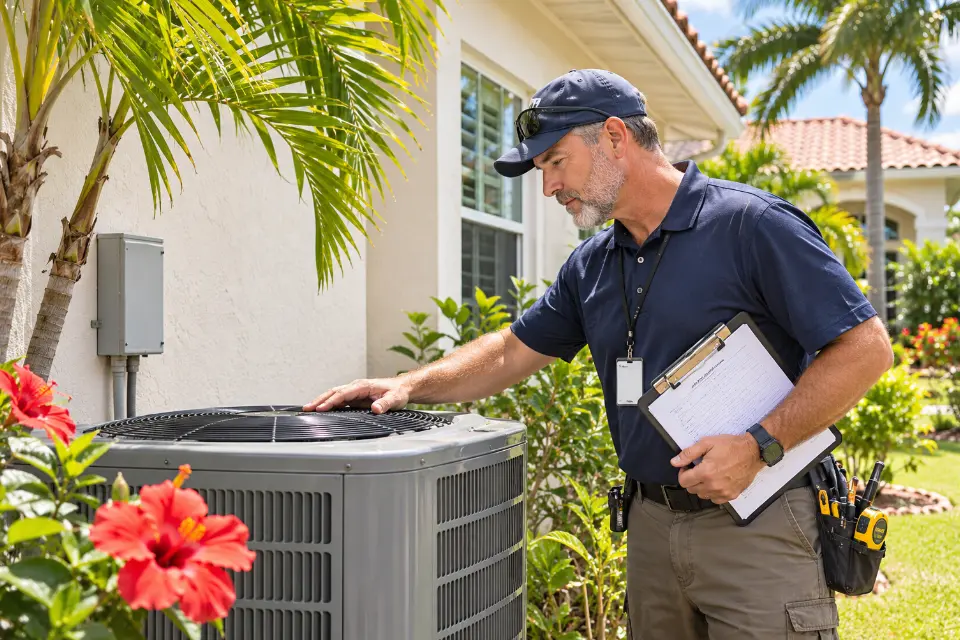
A 4-point inspection in Florida is a specialized property inspection commonly requested by homeowners insurance companies when evaluating a home for coverage. It focuses on four major areas: the roof, electrical system, plumbing system, and heating and air-conditioning system, commonly called HVAC. The inspection helps an insurer evaluate the condition and potential risk associated with these systems. Florida buyers often encounter 4-point inspections with older homes, but requirements vary by insurance company and property. A 4-point inspection is not a substitute for a comprehensive buyer's home inspection.
Quick Answers About 4-Point Inspections in Florida
What does a Florida 4-point inspection cover?
A 4-point inspection focuses on four areas of the property: the roof, electrical system, plumbing system, and HVAC system. The report provides information an insurance company can use when evaluating the property for coverage.
Is a 4-point inspection required to buy a home in Florida?
There is not one universal 4-point inspection requirement for every Florida home purchase. The requirement commonly comes from the insurance company's underwriting guidelines, so buyers should ask the insurance professional quoting the specific property whether one is required.
How old does a Florida home have to be before it needs a 4-point inspection?
There is no single property-age threshold used by every Florida insurer. For example, Citizens Property Insurance Corporation currently requires a 4-point inspection for applicable applications involving properties more than 20 years old, but private insurers can have different requirements.
Is a 4-point inspection the same as a regular home inspection?
No. A 4-point inspection has a narrow insurance-related purpose and concentrates on four systems. A comprehensive home inspection generally examines a much broader range of accessible structures, systems, components and property conditions for the buyer's due diligence.
Is a 4-point inspection the same as a wind mitigation inspection?
No. A 4-point inspection provides information about the roof, electrical, plumbing and HVAC systems for underwriting purposes. A wind mitigation inspection documents qualifying wind-resistant construction features that may affect available windstorm insurance credits.
Can a home fail a 4-point inspection?
It is more accurate to think of the report as documenting conditions for an insurer's underwriting review rather than as a universal pass-or-fail test. Depending on its guidelines, an insurer may accept the property, request documentation or repairs, impose other requirements, or decline to provide coverage.
Who should I ask about 4-point inspection requirements?
Ask the qualified insurance professional providing the property-specific quote. Confirm whether an inspection is required, which form the insurer accepts, who can complete it, how recent the report must be, and whether any documented conditions could affect coverage.
Why Do Florida Insurance Companies Request 4-Point Inspections?
Insurance companies use 4-point inspections to obtain information about several major systems that can affect underwriting risk. The Florida Department of Financial Services homeowners insurance guidance explains that when insuring an older home, an insurer may request an inspection addressing the roof, plumbing, electrical wiring, and heating and air-conditioning systems.
The purpose is different from a buyer asking, "What condition is this entire house in?" The insurance company is evaluating whether the property fits its underwriting requirements and whether particular conditions need additional information or attention.
Florida DFS also warns that if an insurer requests a 4-point or specialized inspection and the applicant does not provide it, the insurer may refuse certain coverage or refuse to insure the property. That makes insurance requirements worth investigating early in a Florida home purchase.
What Does the Roof Portion of a 4-Point Inspection Examine?
The roof section provides information about the roof covering, age or installation information when available, condition, visible deficiencies, and other information required by the applicable inspection form or insurer. Roof condition and remaining useful life can be particularly important underwriting considerations.
Buyers should not assume that roof age alone determines whether a property can be insured. Current Florida Department of Financial Services information about property insurance changes explains that an insurer cannot refuse to issue or renew a homeowners policy solely because a roof is less than 15 years old. For a roof 15 years old or older, Florida law provides an inspection-related process concerning useful life before an insurer can require replacement solely because of roof age.
Those rules do not mean that roof condition is irrelevant. Damage, deterioration, leaks, installation concerns and other property-specific conditions can still matter. Material roof findings should be evaluated by an appropriately qualified inspector, roofing contractor, engineer or other professional, while insurance eligibility should be confirmed with the proposed insurer.
What Does the Electrical Portion Examine?
The electrical portion documents characteristics and observable conditions of the home's electrical system for underwriting review. Depending on the form and property, the report can identify electrical panel information, wiring characteristics, system updates, and observed hazards or deficiencies.
Florida DFS explains that insurers may consider electrical wiring and panel boxes when evaluating risk. An insurer's concern about a particular component does not by itself establish the technical scope of work required to repair or replace it.
If an inspection identifies an electrical concern, buyers should have the condition evaluated by an appropriately licensed electrician or other qualified professional. The insurance professional can separately explain what documentation or corrective work the proposed carrier requires for underwriting.
What Does the Plumbing Portion Examine?
The plumbing portion provides information about the home's plumbing system, including observable materials, system characteristics, updates and deficiencies relevant to the inspection form and insurance underwriting. The exact information requested can vary by insurer.
This is particularly useful when evaluating an older property that may have experienced partial updates over time. A home described as having "updated plumbing" does not necessarily mean every supply line, drain line, fixture connection or other component was replaced at the same time.
If plumbing material or condition could materially affect the purchase, buyers should have the issue evaluated by an appropriately licensed plumber or other qualified professional. Insurance acceptability and coverage questions should be addressed separately with the insurer or insurance agent.
What Does the HVAC Portion Examine?
The fourth point is the home's heating, ventilation and air-conditioning system. The inspection can document equipment type, age or installation information when available, general condition, and observable deficiencies required by the applicable inspection form.
A 4-point report should not be treated as a comprehensive HVAC diagnostic evaluation. If equipment performance, condition, installation or expected service life could materially affect a purchasing decision, a qualified HVAC professional can perform a more specialized evaluation.
Is a 4-Point Inspection the Same as a Full Home Inspection?
No. This is one of the most important distinctions for Florida homebuyers. A 4-point inspection has a limited insurance-related scope, while a comprehensive home inspection provides a broader examination of accessible structures, systems and components for buyer due diligence.
The Florida Department of Financial Services' homeowners insurance consumer resources separately identify its Four-Point Inspection guide and Home Inspection 101 guide. A general home inspection can address areas beyond the four insurance points, including accessible structural components, exterior conditions, interior components, windows, doors, attic areas, insulation, ventilation and other systems within the inspector's scope.
A property can have a 4-point report acceptable to an insurer and still contain defects, deferred maintenance or future expenses that matter to a buyer. Hunt Brothers Realty's guide to how Florida home inspections work explains why buyers may also need specialized evaluations depending on the property and initial inspection findings.
How Is a 4-Point Inspection Different From a Wind Mitigation Inspection?
A 4-point inspection and a wind mitigation inspection serve different insurance purposes. A 4-point inspection focuses on the condition and characteristics of four major systems, while a wind mitigation inspection documents qualifying construction features associated with resistance to wind damage.
- 4-point inspection: Roof, electrical, plumbing and HVAC information commonly used for insurance underwriting.
- Wind mitigation inspection: Documents qualifying wind-resistant construction characteristics that may support applicable insurance premium credits.
- General home inspection: Provides a broader property-condition evaluation for buyer due diligence.
A Florida buyer may encounter all three during the same transaction. One does not automatically replace another. Hunt Brothers Realty's Florida wind mitigation inspection guide explains the wind-related inspection in greater detail.
How Old Does a Home Have to Be to Need a 4-Point Inspection?
There is no universal age at which every Florida property automatically requires a 4-point inspection. Insurance companies establish underwriting guidelines, and requirements can differ by carrier, property type and policy.
Citizens Property Insurance Corporation provides a useful current example. Its inspection requirements state that Citizens requires a four-point inspection for applicable property owner, dwelling and mobile-home applications for properties more than 20 years old.
That is a Citizens eligibility rule, not a universal Florida threshold. A private insurer may use a different age requirement or request additional documentation. Buyers should ask the insurance professional quoting the actual property rather than assuming that a rule from one company applies to another.
Who Can Perform a Florida 4-Point Inspection?
The proposed insurer should confirm which professionals and inspection forms it will accept. Buyers should verify those requirements before paying for an inspection rather than assuming that every report will satisfy every insurance company.
Citizens, for example, requires its inspection documentation to be completed by an appropriate verifiable Florida-licensed professional. Requirements can differ among insurers, so the insurance agent or carrier should confirm acceptable inspector qualifications and forms for the specific application.
What Happens if the 4-Point Inspection Finds a Problem?
A finding does not create one automatic outcome. The next step depends on the condition, the insurer's underwriting guidelines, the requested policy, and the property. The insurer may request additional documentation, a specialized evaluation, evidence of repairs or other information before making an underwriting decision.
For a buyer, a significant finding can raise two separate questions. The first is whether and under what terms an insurer will cover the property. The second is what the condition means for the property's physical condition, potential repair expense and the buyer's purchasing decision.
Those questions should go to different qualified professionals. Insurance eligibility and coverage should be discussed with a licensed insurance professional. Technical concerns should be evaluated by the appropriate inspector, electrician, plumber, HVAC professional, roofer, contractor, engineer or other qualified specialist.
Does the Seller Have to Repair Everything on a 4-Point Inspection?
Not automatically. A 4-point inspection finding does not by itself establish that a seller is contractually required to make a particular repair. The parties' rights and obligations depend on the purchase contract and the specific circumstances of the transaction.
If a repair is completed, the insurance company may require particular documentation before accepting the corrected condition. Buyers should ask the insurance professional what proof the carrier needs rather than assuming that an invoice or verbal statement will be sufficient.
Questions about repair rights, inspection provisions, contract deadlines or legal obligations should be reviewed with the appropriate licensed real estate professional and, when legal interpretation is required, a qualified Florida real estate attorney.
Should Buyers Investigate Insurance Before Making an Offer?
Florida buyers can benefit from investigating property-specific insurance early, particularly when considering an older home, a coastal property or a house with older major systems. Early investigation can reveal whether an insurer expects a 4-point inspection, wind mitigation report, roof documentation or other information.
Hunt Brothers Realty's guide to home insurance questions to ask before making an offer in Florida provides a broader checklist for evaluating coverage, deductibles, roof considerations and inspection requirements.
A preliminary insurance quote can still change after inspections, underwriting and additional documentation. Insurance availability, coverage, deductibles and premiums can vary substantially by property, so buyers should obtain property-specific information from a qualified insurance professional before making a purchasing decision when insurance is material to affordability or eligibility.
What Should Buyers Ask About an Older Florida Home?
Older homes are not automatically problematic, but they can require more investigation because major systems may have been replaced or modified at different times. Documentation can help buyers, inspectors and insurance professionals understand what is actually present.
- How old is the roof, and is replacement or permit documentation available?
- Has the electrical panel or wiring been updated?
- What plumbing materials are present?
- Were plumbing updates partial or comprehensive?
- How old is the HVAC equipment?
- Are permits, invoices or warranties available for major improvements?
- Does the proposed insurer require a 4-point inspection?
- Is an existing 4-point report available, and will the insurer accept it?
- Is a current wind mitigation report available?
Seller-provided information can help identify useful questions, but buyers should independently verify conditions that are material to their purchase through the appropriate inspections, records and qualified professionals.
What Should Sarasota Buyers Know About 4-Point Inspections?
Sarasota buyers can encounter homes from many different construction periods, which means the age and update history of major systems can vary substantially from property to property. Two similarly priced homes may present very different roof, electrical, plumbing, HVAC and insurance considerations.
An older home can also have substantial updates, so year built should not be treated as a complete description of its current systems. Roof permits, electrical work, plumbing records, HVAC replacement information, invoices and inspection reports can provide useful documentation when available.
Coastal properties can raise additional insurance considerations that a 4-point inspection does not answer. Flood coverage, wind mitigation characteristics, elevation, property-specific underwriting and other coverage questions should be investigated separately with the appropriate qualified professionals.
What if You Are Buying a Florida Condominium?
Condominium buyers should not assume their insurance and inspection requirements will be identical to those for a detached single-family home. The association and unit owner can have different insurance responsibilities, and the applicable policy type can affect what information an insurer requires.
A condominium purchase can also involve separate due-diligence questions concerning association insurance, reserves, assessments, governing documents and applicable building inspections. Those issues are distinct from a unit owner's individual insurance underwriting requirements.
Condo buyers should verify insurance responsibilities and inspection requirements with the association, qualified insurance professionals and other appropriate professionals rather than applying single-family-home assumptions to a condominium transaction.
When Should a Florida Buyer Order a 4-Point Inspection?
A buyer should first ask the insurance professional whether the proposed carrier requires a 4-point inspection and what documentation it will accept. If one is needed, completing it early enough to evaluate the results can reduce last-minute insurance uncertainty.
The timing can be particularly important when inspection findings might lead to specialized evaluations, repairs, additional insurance quotes or other decisions before a contractual deadline. Hunt Brothers Realty's guide to when Florida buyers should start shopping for homeowners insurance explains why insurance research should not be left until immediately before closing.
What Is a Useful 4-Point Inspection Checklist for Florida Buyers?
The most useful approach is to connect the inspection process directly to the insurance company evaluating the property and to investigate material physical findings separately.
- Contact a qualified insurance professional early in the purchase process.
- Ask whether the specific property requires a 4-point inspection.
- Confirm which inspection form the proposed insurer accepts.
- Confirm who is qualified to complete and sign the report.
- Ask how recent the inspection must be.
- Determine whether an existing seller-provided report will be accepted.
- Review roof information and documentation.
- Review electrical findings and panel information.
- Review plumbing materials and observable deficiencies.
- Review HVAC information and observable condition.
- Have significant deficiencies evaluated by the appropriate qualified professional.
- Ask whether a wind mitigation inspection is also appropriate.
- Obtain property-specific insurance quotes.
- Do not substitute the 4-point inspection for a comprehensive buyer's home inspection.
What Should Buyers Remember About Florida 4-Point Inspections?
The most important point is that a Florida 4-point inspection is primarily an insurance underwriting tool. It provides information about the roof, electrical system, plumbing system and HVAC system, but it does not establish that the entire home is free from defects or that the property is appropriate for a particular buyer.
For buyers, the report can also identify questions worth investigating. A roof concern, electrical deficiency, plumbing issue or HVAC condition may affect insurance, repair expectations or the ownership budget. Each issue should be evaluated by the professional qualified to address that particular question.
Use the 4-point inspection for its intended insurance purpose, combine it with appropriate buyer due diligence, and verify insurance requirements directly with the company or insurance professional evaluating the specific property.
Plan Your Florida Home Purchase With Hunt Brothers Realty
Buying a Florida home can involve property-specific questions about inspections, insurance, older building systems and coastal conditions. Hunt Brothers Realty can help buyers keep those real estate considerations visible while moving through the purchase process. Read the Hunt Brothers Realty Florida 4-point inspection homebuyer guide, review insurance questions to ask before making an offer, explore Florida Gulf Coast communities, or contact Hunt Brothers Realty to discuss your home search.
Informational notice: This article provides general educational real estate information and is not individualized insurance, inspection, engineering, construction, electrical, plumbing, HVAC, roofing, legal, financial, lending or other professional advice. Insurance underwriting requirements, inspection forms, eligibility standards, coverage, deductibles and premiums vary by insurer and property and can change. Buyers and homeowners should verify current property-specific insurance requirements with a qualified insurance professional and have inspection findings evaluated by the appropriate Florida-licensed inspector, contractor, electrician, plumber, HVAC professional, roofer, engineer or other qualified specialist. Questions involving purchase-contract rights or legal obligations should be reviewed with a qualified Florida real estate attorney when individualized legal guidance is required.
Sources
- Florida Department of Financial Services, Homeowners Insurance Overview
- Florida Department of Financial Services, Homeowners Insurance Consumer Resources
- Florida Department of Financial Services, Four-Point Inspection Guide
- Florida Department of Financial Services, Property Insurance Changes
- Citizens Property Insurance Corporation, Inspections
- Hunt Brothers Realty, 4-Point Inspections in Florida: Homebuyer Guide
Hunt Brothers Realty
46 N. Washington Blvd, Ste 3, Sarasota, FL 34236
Phone: (941) 388-7017
Email: info@huntbrothersrealty.com
Website: HuntBrothersRealty.com
Categories
- All Blogs 2654
- Anna Maria Island 92
- Bird Key 5
- Bradenton 242
- Buying a Home 1675
- Casey Key 3
- Clearwater 16
- Condos & HOA Living 1603
- Ellenton 8
- Englewood 15
- First Time Homebuyers 1795
- Foreclosures 4
- Home Selling 10
- Homeownership 1840
- Lakewood Ranch 36
- Lido Key 29
- Longboat Key 81
- Luxury/Waterfront Properties 1781
- Market Updates & Trends 1283
- Mortgages & Financing 85
- Move-Up Buyers 24
- Neighborhood Guides 1410
- New Construction 46
- Palmetto 4
- Parrish 38
- Port Charlotte 36
- Punta Gorda 165
- Real Estate Investing 1694
- Relocation to Florida 1722
- Safety Harbor 4
- Sarasota 157
- Sarasota - Downtown 175
- Selling a Home 149
- Siesta Key 94
- St. Petersburg 11
- Taxes and Homestead 3
- Tierra Verde 7
- Vacation & Second Homes 1888
- Venice 225
- Wellen Park 24
Recent Posts