What Are the Biggest Mistakes Florida Homebuyers Make?
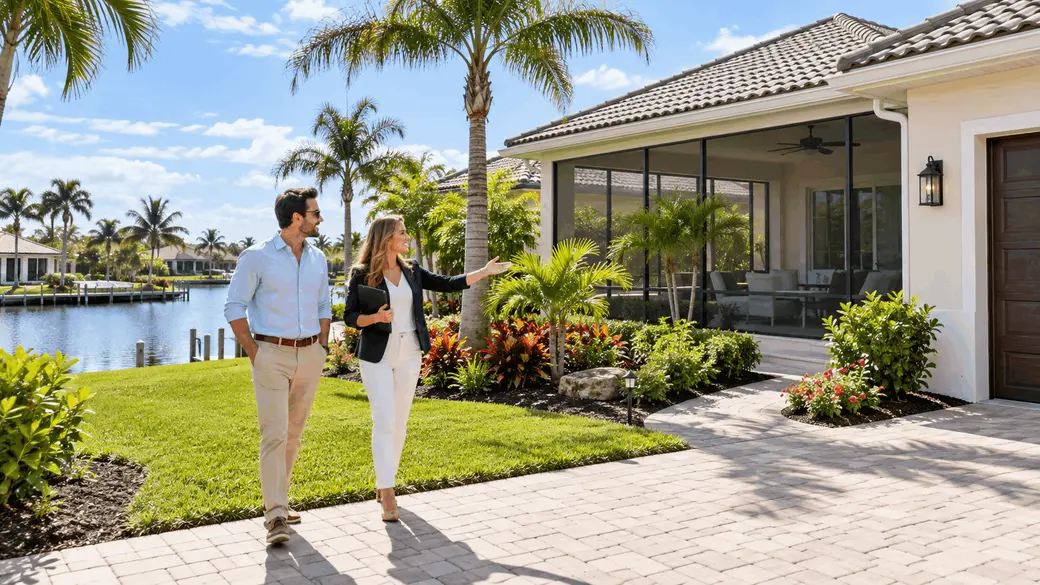
The biggest mistakes Florida homebuyers make often happen when they evaluate the house but not the complete ownership picture. A beautiful kitchen or waterfront view can distract from insurance costs, flood exposure, an aging roof, association finances, CDD assessments, inspection findings, or a mortgage that costs more than expected. Florida buyers should investigate the property, financing, insurance, taxes, association obligations, and long-term ownership costs before making a final decision. The goal is not to find a property with zero risk. It is to understand the property well enough to make an informed decision with the appropriate professional guidance.
Quick Answers About Florida Homebuyer Mistakes
What is one of the biggest mistakes when buying a home in Florida?
Focusing on the purchase price while underestimating the total cost of ownership is a major mistake. Insurance, property taxes, HOA or condo assessments, CDD assessments, flood insurance, maintenance, utilities, and repairs can materially change the monthly and annual cost of a Florida home.
Should I get an insurance quote before making an offer in Florida?
Buyers should investigate insurance as early as practical and understand any contractual deadlines affecting their decision. Availability, premiums, deductibles, roof-related underwriting, wind coverage, flood coverage, and other requirements can be property-specific, so obtain actual quotes from a licensed Florida insurance professional rather than estimating from another property.
Does being outside a high-risk flood zone mean a Florida home cannot flood?
No. FEMA flood zones describe mapped flood hazards, but a lower-risk designation does not mean zero flood risk. Buyers should investigate current mapping, available flood history, drainage, elevation information where relevant, prior water intrusion, and property-specific flood insurance options.
Should Florida buyers skip an inspection on an as-is home?
An as-is sale does not make property condition irrelevant. Inspection rights and deadlines depend on the signed contract, but buyers should understand the home's condition and obtain appropriate professional evaluations while they still have whatever rights their agreement provides.
Is a low Florida condo fee automatically better?
No. A low condominium assessment may reflect fewer amenities or lower expenses, but it can also provide an incomplete picture if major repairs, reserve obligations, insurance costs, association debt, or special assessments are approaching. Buyers should evaluate the association's finances and physical obligations together.
Do new Florida homes still need inspections?
Independent inspections are worth considering even with new construction. A new home can still have incomplete work, installation problems, or construction defects, and inspection access and timing should be confirmed under the builder contract.
Should I compare mortgage lenders?
Yes. The Consumer Financial Protection Bureau recommends requesting and comparing Loan Estimates from multiple lenders. Compare the loan type, interest rate, points, lender-controlled costs, estimated cash to close, rate-lock terms, and other material loan features rather than choosing from an advertised rate alone.
1. Shopping Before Understanding the Real Budget
A buyer can qualify for a mortgage and still discover that the complete cost of a particular Florida property is uncomfortable.
The mortgage principal and interest payment is only part of the equation. Depending on the property, the ownership budget may also include:
- Property taxes
- Homeowners or condominium insurance
- Flood insurance
- HOA assessments
- Condominium assessments
- CDD assessments
- Special assessments
- Utilities
- Pool and lawn care
- Routine maintenance
- Future repairs
- Insurance deductibles and other emergency expenses
Hunt Brothers Realty's guide to the true cost of buying a home in Florida explains why the mortgage payment should not be treated as the complete housing budget.
Buyers should discuss an appropriate property-specific budget and cash reserve with their lender, financial professional, insurance agent, tax professional, and other qualified professionals as applicable.
2. Waiting Too Long to Investigate Insurance
Insurance should not be an afterthought in a Florida purchase.
The price and availability of coverage can depend on the individual property, construction characteristics, roof, location, coverage selections, insurer underwriting requirements, claims information, and other factors.
Do not assume the seller's current premium will become your premium. Do not assume a neighboring home will cost the same to insure. And do not assume a recently built or recently renovated property automatically has inexpensive coverage.
Insurance availability, coverage, deductibles, and premiums can vary substantially by property and buyer circumstances. Obtain property-specific quotes and review coverage with a licensed Florida insurance professional early enough to make an informed purchasing and financing decision.
3. Confusing Homeowners Insurance With Flood Insurance
Florida's Department of Financial Services states that flood damage is not covered by a standard homeowners insurance policy. Flood coverage is separate.
This distinction matters whether a buyer is considering a waterfront property, inland home, condominium, or new construction.
Before buying, investigate:
- Current FEMA flood-zone designation
- Available elevation information
- Known prior flooding or water intrusion
- Drainage characteristics
- Flood insurance options and pricing
- Lender flood-insurance requirements
- Association flood coverage where applicable
Florida Statute 689.302 also requires a residential seller to provide the statutory flood disclosure at or before execution of the sales contract. The current disclosure addresses specified matters including the seller's knowledge of flooding that damaged the property during the seller's ownership, flood-related insurance claims, and flood assistance.
That disclosure is useful, but it should not replace independent flood due diligence.
4. Treating a Flood Zone Like an Evacuation Zone
A FEMA flood zone and a hurricane evacuation zone answer different questions.
Flood zones describe mapped flood hazards and are used for purposes that include floodplain management and insurance. Evacuation zones are established by emergency-management authorities for evacuation planning, particularly for hazards such as storm surge.
A property can therefore have one flood-zone designation and a different evacuation designation. Hunt Brothers Realty explains the distinction in its guide to Florida flood zones versus evacuation zones.
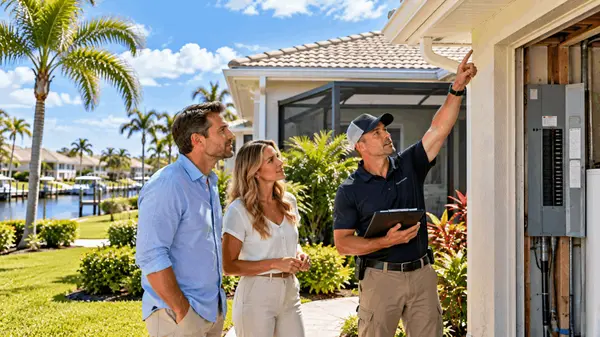
5. Skipping or Rushing the Home Inspection
A renovated kitchen can be impressive. It tells you very little about the roof, plumbing, electrical system, HVAC equipment, drainage, attic, moisture conditions, or structural components.
Florida properties can present condition questions involving roofs, plumbing materials, older electrical equipment, moisture intrusion, storm damage, pools, seawalls, docks, HVAC systems, and other components.
Hunt Brothers Realty's guide to Florida home inspection red flags discusses several property systems that can warrant closer investigation.
Inspection findings should be evaluated with the appropriate licensed inspector, contractor, roofer, electrician, plumber, structural engineer, pool professional, marine contractor, or other qualified specialist before the buyer makes a property-specific decision.
6. Thinking "As-Is" Means "Do Not Inspect"
This is a costly misunderstanding.
An as-is contract structure does not make defects irrelevant. Buyers still need to understand property condition, contractual inspection rights and deadlines, insurance implications, financing requirements, repair costs, and applicable seller disclosures.
The exact legal rights of a buyer depend on the signed contract and transaction circumstances. Read Hunt Brothers Realty's explanation of what sold as-is means in Florida real estate, and have contract questions reviewed by a qualified Florida real estate attorney.
7. Looking at the HOA Fee but Not the HOA
A buyer sees "$175 per month" and decides the HOA is affordable. That number alone says very little about whether the community fits the buyer.
Florida Statute 720.401 requires prospective purchasers in communities with mandatory association membership to receive a disclosure summary before executing the sales contract. The statutory disclosure addresses mandatory membership, restrictive covenants, assessments, and other specified information.
Buyers should go further and investigate the actual community documents and finances. Depending on the property, questions may include:
- What does the regular assessment cover?
- Are special assessments pending or approved?
- What do recent budgets and financial records show?
- What are the architectural restrictions?
- What are the rental rules?
- What are the pet, parking, boat, and RV rules?
- Who maintains roads, drainage, landscaping, and other shared facilities?
- Does the property also have a CDD?
For a deeper review, see what to know before buying a home in a Florida HOA.
8. Assuming an HOA and a CDD Are the Same Thing
They are not.
A Community Development District is a governmental district established under Florida law. An HOA is generally a private association. A property can be subject to both HOA dues and CDD assessments.
CDD assessments may include debt-service and operating or maintenance components, and they are often collected on the property tax bill as non-ad valorem assessments. The amount is property-specific, and debt repayment does not necessarily mean every district assessment disappears.
Before buying in a master-planned community, review Hunt Brothers Realty's guide to CDD fees in Florida and verify the exact parcel's assessments with the district, county records, lender, title or closing professional, and other appropriate professionals.
9. Buying the Condo but Ignoring the Condominium Association
A beautifully renovated condominium unit can still be part of a building facing major financial or physical obligations.
Condominium buyers should evaluate the residence and the association together. Depending on the building, that can mean reviewing:
- Current budget
- Reserve information
- Special assessments
- Recent financial statements
- Association debt
- Master insurance coverage and deductibles
- Recent board meeting minutes
- Major completed and proposed projects
- Applicable Structural Integrity Reserve Study information
- Applicable milestone inspection information
- Rental, pet, parking, and renovation restrictions
A low monthly assessment is not automatically an advantage, and a special assessment is not automatically proof of a poorly managed association. Context matters.
Start with Hunt Brothers Realty's Florida condo buyer guide and its explanation of Florida condominium reserves.
Association financial, structural, insurance, legal, and engineering questions should be reviewed with the association and the appropriate CPA, lender, insurance professional, attorney, inspector, engineer, or other qualified professional before the buyer makes a decision.
10. Assuming Mortgage Preapproval Means Every Property Will Work
Mortgage preapproval is important, but it is not approval of every property a buyer might select.
The property itself can affect financing. Appraisal results, insurance availability, condition, condominium project eligibility, association information, and other loan-program requirements may matter.
Condominium buyers should be particularly careful about assuming personal preapproval means every condominium project qualifies for the intended mortgage. Have the specific property and project reviewed by the lender as early as practical.
11. Choosing a Mortgage Based Only on the Advertised Rate
A low advertised rate can be appealing, but buyers need to understand what it costs to obtain that rate and the complete terms of the loan.
The Consumer Financial Protection Bureau recommends obtaining Loan Estimates from multiple lenders. When comparing offers, buyers should look at factors including:
- Loan amount
- Interest rate
- Annual percentage rate
- Points
- Origination charges
- Mortgage insurance where applicable
- Rate-lock status and expiration
- Estimated monthly payment
- Estimated cash to close
- Adjustable-rate or other material loan features
Mortgage suitability is individual financial guidance. Buyers should review available financing alternatives with qualified mortgage professionals rather than relying on a general real estate article to choose a loan.
12. Assuming Today's Property Tax Bill Will Be Your Tax Bill
The seller's current tax bill is useful information, but buyers should not automatically use it as a prediction of their future property taxes.
The seller may have a different taxable value, exemptions, ownership history, or other circumstances. New construction can create an additional budgeting problem when the available tax record reflects vacant land or an incomplete home rather than the finished residence.
Buyers should consult the applicable county property appraiser and a qualified tax professional regarding property-specific estimates and tax consequences.
13. Falling in Love With the Waterfront View Before Investigating the Waterfront
Florida waterfront property deserves a separate layer of due diligence.
The view is only one part of the purchase. Depending on the property, buyers may need to investigate:
- Flood exposure and elevation
- Seawall condition
- Dock and boat-lift condition
- Permits
- Shoreline maintenance responsibilities
- Water depth
- Bridge clearances
- Actual boating route
- Vessel restrictions
- Insurance costs
- Coastal or environmental permitting requirements
Read 12 questions to ask before buying a waterfront home in Florida.
Waterfront infrastructure and boating suitability should be evaluated with qualified inspectors, marine contractors, engineers, surveyors, insurance professionals, permitting authorities, and other specialists as appropriate.
14. Assuming New Construction Eliminates Due Diligence
New does not mean risk-free.
One common mistake is focusing on the model home and advertised starting price while overlooking the complete cost and contractual details.
A new-construction buyer may need to evaluate:
- Base price versus completed-home price
- Lot premiums
- Design and structural upgrades
- Deposit provisions
- Construction deadlines and delay provisions
- Builder incentives
- Preferred-lender financing
- HOA fees
- CDD assessments
- Future property taxes
- Insurance
- Flood exposure
- Independent inspection opportunities
- Builder warranties
- Future phases and development around the homesite
Review Hunt Brothers Realty's guide to buying new construction in Florida before relying on the model-home experience alone.
Builder contracts can differ substantially from resale contracts. Questions about deposits, cancellation rights, warranties, delays, dispute provisions, and other legal terms should be reviewed with a qualified Florida real estate attorney before signing.
15. Assuming the Builder's Sales Representative Is Your Representative
A builder's sales representative can be an excellent source of information about that builder's homes, available lots, upgrades, incentives, and construction process. Buyers should not automatically assume that representative independently represents the buyer's interests.
Florida recognizes different brokerage relationships, and buyers should understand the relationship and services being provided. If you want to use your own real estate professional for new construction, consider making that decision before the first builder visit because builder registration procedures can affect outside-agent involvement and compensation.
Hunt Brothers Realty explains these issues in Should I Use a Realtor When Buying New Construction in Florida?
16. Spending Every Available Dollar at Closing
Closing is not the end of homeownership expenses. It is the beginning.
Moving expenses, furnishings, immediate repairs, insurance deductibles, appliance failures, landscaping, pool equipment, utility deposits, and other costs can appear shortly after purchase.
There is no universal amount every buyer should retain after closing. The appropriate cash reserve depends on the buyer's finances and the property. A qualified financial or lending professional can help buyers evaluate their individual circumstances.
17. Ignoring Permits and the History Behind Renovations
A recently renovated property can look impressive, but buyers should investigate significant work rather than assuming every improvement was completed correctly.
Depending on the property and project, useful questions can include:
- What work was completed?
- When was it completed?
- Were permits required?
- Were required permits obtained and closed?
- Who performed the work?
- Are invoices or warranties available?
- Was the work related to prior storm, flood, or water damage?
Permit requirements and construction quality should be verified with the appropriate local government, inspector, contractor, engineer, or other qualified professional.
18. Assuming a Big Price Reduction Automatically Means a Bargain
A home originally listed at $700,000 and reduced to $625,000 is not automatically a better value than a comparable property listed correctly at $610,000 from the beginning.
The relevant comparison is not simply the current price versus the old asking price. Buyers should evaluate comparable sales, current competition, property condition, location, lot characteristics, improvements, association expenses, insurance, and other material factors.
Hunt Brothers Realty's guide to buying in a Florida buyer's market explains why a large reduction from an unrealistic original price does not by itself establish value.
19. Letting Cosmetics Distract From Expensive Systems
Fresh paint, quartz countertops, new flooring, and attractive furniture photograph well. Buyers still need to ask about the components that are expensive to repair or replace.
Depending on the home, investigate the roof, HVAC, plumbing, electrical equipment, windows and doors, pool systems, drainage, foundation or structure, seawall, dock, and other major components.
A dated but well-maintained home and a cosmetically renovated home with unresolved underlying problems can present very different ownership experiences. Qualified inspections provide more useful information than appearances alone.
20. Failing to Think About Resale Until It Is Time to Sell
You do not need to buy a home solely for the next owner, but future marketability deserves consideration.
Think about characteristics that could affect the future buyer pool, such as:
- Location
- Floor plan
- Lot characteristics
- Parking
- Association expenses
- Rental restrictions
- Insurance considerations
- Flood exposure
- Property condition
- Competition from future new construction
No agent can guarantee future appreciation or resale timing. The goal is simply to understand how the property compares with alternatives today and what characteristics may influence its future marketability.
Florida Homebuyer Mistakes at a Glance
| Mistake | Better Question to Ask |
|---|---|
| Budgeting only for the mortgage | What will this property actually cost me to own? |
| Waiting on insurance | What property-specific coverage is available, and at what cost? |
| Ignoring flood exposure | What do the map, history, elevation, drainage, and insurance quote tell me? |
| Skipping inspections | What is the actual condition of the home and its major systems? |
| Looking only at the HOA fee | What am I agreeing to as a member of this community? |
| Ignoring condo finances | What obligations does this association have, and how will they be funded? |
| Forgetting CDD assessments | What district charges apply to this exact parcel? |
| Choosing a loan by rate alone | How do the complete Loan Estimates compare? |
| Assuming seller taxes will continue | What could my property-specific tax obligation look like? |
| Assuming new means problem-free | What does the contract include, and what still needs independent verification? |
| Buying waterfront for the view alone | What will the waterfront infrastructure and risk cost to own? |
| Spending everything at closing | What reserves are appropriate for my finances and this property? |
The Better Approach: Investigate the Property Before You Fall in Love With It
Florida homebuying becomes easier to evaluate when buyers separate emotion from due diligence.
Before committing to a property, understand:
- What you are buying.
- What it costs to own.
- What condition it is in.
- What insurance is available.
- What flood and storm considerations apply.
- What association or district obligations apply.
- What your financing actually costs.
- What documents and deadlines govern the transaction.
- Which questions require specialized professional review.
A property does not need to be perfect to be the right purchase. It needs to be understood.
Buying a Florida Home? Build Your Team Early
The most effective due diligence often involves several professionals rather than expecting one person to answer every question.
Depending on the transaction, that team may include a licensed real estate professional, mortgage lender, insurance agent, home inspector, Florida real estate attorney, title or closing professional, surveyor, contractor, structural engineer, CPA or tax professional, condominium or homeowners association, CDD representatives, and local permitting authorities.
Hunt Brothers Realty can help buyers research Florida Gulf Coast properties, compare communities and homes, evaluate market information, identify transaction questions, and coordinate the real estate side of the purchase while appropriate specialists address financing, legal, insurance, inspection, engineering, tax, and other professional matters.
Explore more Florida real estate buyer guides from Hunt Brothers Realty, or contact Hunt Brothers Realty to discuss your home search.
This article is provided for general informational and educational purposes only and is not individualized legal, financial, tax, insurance, lending, appraisal, inspection, engineering, construction, title, association, flood, or other professional advice. Contract rights, financing, insurance, property taxes, flood conditions, association obligations, inspections, construction issues, and ownership costs depend on the buyer, property, transaction, and applicable requirements. Buyers should verify material information and obtain property-specific guidance from the appropriate qualified professionals before making a purchasing decision.
Sources
- Florida Legislature, Florida Statute 689.302, Disclosure of Flood Risks to Prospective Purchaser
- Florida Legislature, Florida Statute 720.401, HOA Prospective Purchaser Disclosure
- Florida Department of Financial Services, Homeowners Insurance Overview
- Consumer Financial Protection Bureau, Request and Review Multiple Loan Estimates
- Consumer Financial Protection Bureau, Compare and Negotiate Loan Offers
- Hunt Brothers Realty, The True Cost of Buying a Home in Florida
- Hunt Brothers Realty, Buying a Home in a Florida HOA
- Hunt Brothers Realty, What Is a CDD Fee in Florida?
- Hunt Brothers Realty, Buying a Condo in Florida in 2026
- Hunt Brothers Realty, Florida Condo Reserves Explained
- Hunt Brothers Realty, Florida Home Inspection Red Flags
- Hunt Brothers Realty, Buying New Construction in Florida
- Hunt Brothers Realty, Buying a Waterfront Home in Florida
Contact Hunt Brothers Realty
46 N. Washington Blvd, Ste 3, Sarasota, FL 34236
Phone: (941) 388-7017
Email: info@huntbrothersrealty.com
Website: HuntBrothersRealty.com
Categories
- All Blogs 2212
- Anna Maria Island 86
- Bird Key 4
- Bradenton 237
- Buying a Home 1266
- Casey Key 2
- Clearwater 11
- Condos & HOA Living 1183
- Ellenton 6
- Englewood 12
- First Time Homebuyers 1375
- Foreclosures 5
- Home Selling 7
- Homeownership 1402
- Lakewood Ranch 25
- Lido Key 28
- Longboat Key 80
- Luxury/Waterfront Properties 1343
- Market Updates & Trends 862
- Mortgages & Financing 60
- Move-Up Buyers 25
- Neighborhood Guides 978
- New Construction 37
- Palmetto 3
- Parrish 6
- Port Charlotte 10
- Punta Gorda 41
- Real Estate Investing 1258
- Relocation to Florida 1296
- Safety Harbor 3
- Sarasota 91
- Sarasota - Downtown 164
- Selling a Home 146
- Siesta Key 92
- St. Petersburg 8
- Tierra Verde 5
- Vacation & Second Homes 1452
- Venice 209
- Wellen Park 20
Recent Posts