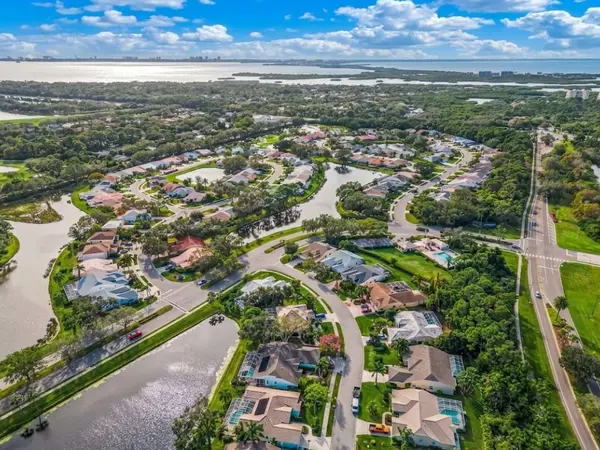
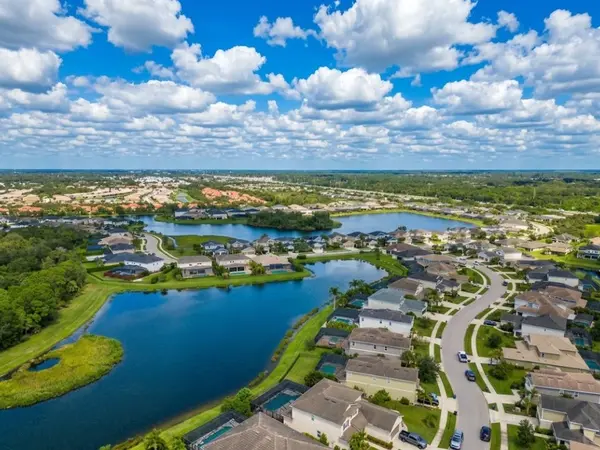
Canal Home vs. Bayfront Home: Which Is Better?
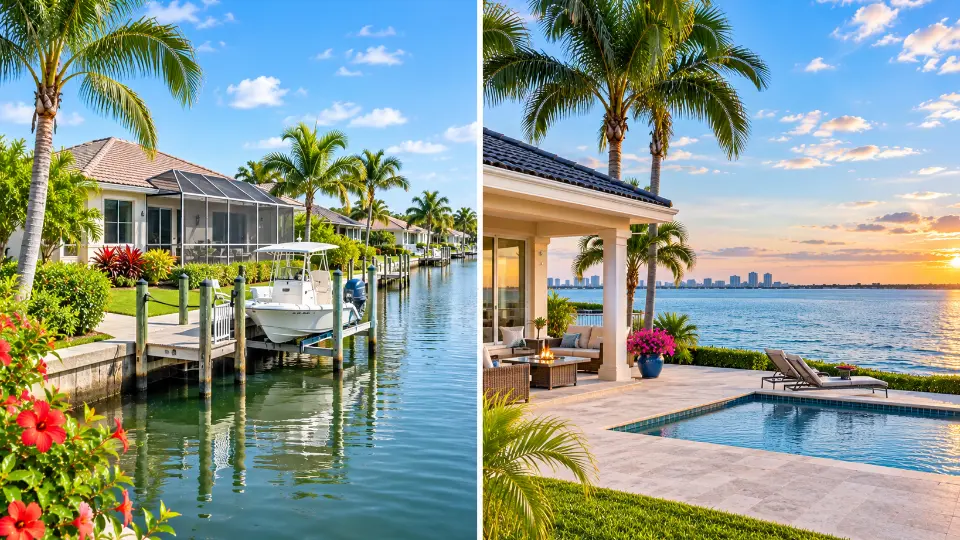
A canal home can be better for a Florida buyer who prioritizes protected dockage and keeping a boat directly behind the house, while a bayfront home can be better for someone who prioritizes broad water views and more immediate access to a larger body of water. Neither is automatically better for boating, flood exposure, insurance or long-term ownership costs. A canal may have depth, bridge or maneuvering limitations, while bay frontage may bring greater wind and wave exposure. The right choice depends on the specific property, vessel, dock, seawall, navigation route, elevation and how you actually want to use the waterfront.
Quick Answers About Canal Homes vs. Bayfront Homes
What is the main difference between a canal home and a bayfront home?
A canal home fronts a narrower waterway that may connect to a bay, river, Intracoastal Waterway or other navigable water. A bayfront home directly faces a broader bay or related open-water setting. That difference can affect views, dock exposure, boating routes and everyday waterfront use.
Which is better for keeping a boat at home?
A suitable canal home can be especially practical because the dock may sit in more protected water, but the entire canal route must work for the boat. Bayfront dockage can provide more direct access to larger water but may have different wind, wave, depth and shoreline considerations.
Does bayfront automatically mean deep water?
No. Bay frontage does not establish sufficient depth for a particular vessel. Buyers should verify depth at the dock and along the complete navigation route under relevant tidal conditions.
Does a canal home always have Gulf access?
No. Some canals connect to navigable waterways leading toward the Gulf, while others have bridges, shallow areas, locks, restricted routes or no practical boating connection at all. The route must be verified for the exact property.
Which usually has the better water view?
Bayfront homes often provide broader, more expansive water views. Canal homes usually have a narrower waterfront outlook that can include neighboring homes, docks and boats, although individual properties vary considerably.
Is a canal home safer from storms than a bayfront home?
Do not assume so. A canal may provide a more protected everyday dockage setting, but storm surge and coastal flooding can affect canals, bays and other connected waterways. Property elevation, construction, flood information and location need to be evaluated individually.
Which costs more, a canal home or a bayfront home?
There is no reliable Florida-wide rule. Value depends on location, frontage, view, boating access, water depth, home condition, lot, dock and seawall infrastructure, elevation and current comparable sales rather than the waterfront label alone.
What Does Canal-Front Living Actually Offer?
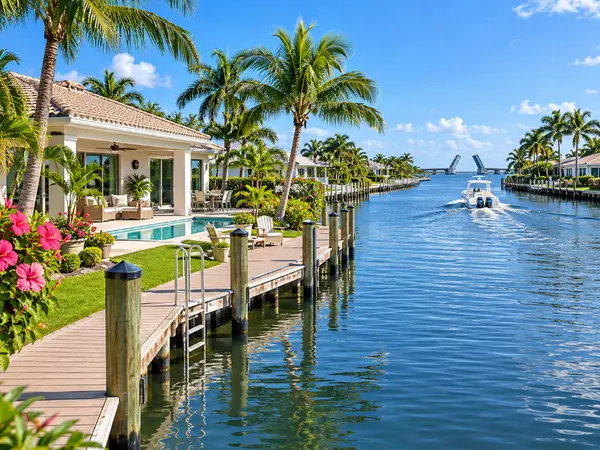
Canal-front living can be particularly attractive to boat owners because a properly configured property may provide a private dock and boat lift directly behind the home. In many Florida boating neighborhoods, that convenience is the primary reason buyers choose canal frontage.
The key word is "may." As Hunt Brothers Realty explains in its comparison of Gulf-front, bayfront and canal-front Sarasota homes, canals can differ significantly in depth, width, tidal conditions, bridges, turns and distance to larger waterways.
The view is usually different from open bay frontage as well. Instead of looking across a broad body of water, a canal owner may see neighboring docks, boats and waterfront homes. For someone who uses a boat frequently, that tradeoff can be worthwhile if the canal provides the right access.
What Does Bayfront Living Actually Offer?
Bayfront living generally places broad water views at the center of the property experience. Depending on the location, buyers may overlook Sarasota Bay, Little Sarasota Bay, Charlotte Harbor or another broad protected-water environment rather than a narrow residential canal.
Bayfront can also be excellent for boating when the individual property has a suitable dock, adequate depth and a practical navigation route. However, bay frontage does not automatically mean deep water, unrestricted boating access or permission to build the dock configuration a buyer wants.
Sarasota illustrates the distinction particularly well. A bayfront estate on Bird Key and a canal-front home elsewhere on the island can both be waterfront properties, but their views, dock exposure and relationship to Sarasota Bay can be very different. Hunt Brothers Realty's Bird Key waterfront due-diligence guide explains why buyers should evaluate those properties individually.
Which Is Better for a Serious Boater?
The better boating property is whichever one works for your specific vessel and intended route. A protected canal with adequate depth and no limiting bridges can be more useful than a beautiful bayfront lot with shallow dockage. A bayfront property with suitable depth and a direct route can be more convenient than a canal home located deep inside a slow residential waterway.
Hunt Brothers Realty's Sarasota deep-water access guide recommends beginning with the boat rather than the house. Draft, beam, length, height and weight can all affect whether a particular property works.
A sailboat adds another important variable because underwater draft and overhead mast clearance both matter. Even a powerboat with relatively shallow draft can encounter bridge, width, lift or maneuvering limitations.
What should boat owners verify before buying either property?
- Water depth at the dock under relevant tidal conditions
- Limiting depth along the complete route
- Fixed or movable bridges and applicable clearances
- Canal or channel width
- Turning and maneuvering room
- Dock dimensions and configuration
- Boat-lift capacity and dimensions
- No-wake or speed-restricted portions of the route
- Available permits and documentation for waterfront structures
- The practical route to the buyer's intended boating destinations
If boating suitability materially affects the purchase, verify the route and infrastructure with the appropriate marine contractor, surveyor, dock professional, engineer, permitting authority or other qualified professional rather than relying solely on listing language.
Is Canal Water Usually More Protected Than Bayfront Water?
A canal can provide a more sheltered everyday dockage environment than open bay frontage because the waterway is narrower and may have less open-water fetch. That can be useful for keeping a boat behind the home, but it should not be interpreted as a guarantee of storm protection.
Bayfront docks can experience different wind, wave and wake conditions depending on orientation and location. A buyer should inspect the waterfront during more than one set of conditions when practical and ask appropriate marine professionals to evaluate whether the existing dock and lift suit the intended use.
Neither setting should be described as storm-safe based simply on the waterfront category. FEMA notes that storm surge can produce destructive coastal flooding, and connected canals and bays can both be affected by coastal water levels.
Which Has Better Views, Canal-Front or Bayfront?
Bayfront usually provides the stronger opportunity for a broad, expansive water view, while canal frontage typically creates a more intimate waterfront setting. For buyers whose first priority is the visual experience of living on the water, this distinction can be significant.
Do not compare frontage from the backyard alone. During a showing, evaluate the water view from the living room, kitchen, primary bedroom, pool, lanai and other spaces where you will spend time.
Orientation matters too. The same bay can look very different from properties facing different directions, while a wider canal or turning basin can create a more open visual setting than the word "canal" might suggest.
Does Bayfront Mean Faster Boating Access?
It can, but not always. A bayfront home may put the boat directly onto a larger waterway, while a canal home may require traveling through residential canals before reaching the bay or Intracoastal Waterway.
That difference can matter for someone who boats several times each week. A long canal route with no-wake restrictions may be perfectly acceptable to one buyer and frustrating to another.
Conversely, direct bay frontage is not useful to a particular boat if the dock area is too shallow or the existing dock cannot accommodate the vessel. Compare the complete boating system rather than simply measuring distance to open water.
How Do Tides Affect Canal and Bayfront Homes?
Tidal water levels can affect both canal and bayfront boating access. A route that provides adequate depth under one set of conditions may provide less clearance beneath the hull at a lower water level.
Higher water can create the opposite issue for boats passing beneath bridges because the distance between the water surface and the bridge can decrease. This is one reason Hunt Brothers Realty recommends evaluating docks, lifts, canals and bridge restrictions as one complete boating route.
For vessel-specific navigation questions, boat owners should use appropriate current navigation information and qualified marine resources rather than assuming conditions observed during a property showing will remain constant.
Are Fixed Bridges More Important With a Canal Home?
They can be. A canal home may have excellent dockage but still be unsuitable for a tall vessel if the route includes a limiting fixed bridge. Bridge clearance is especially important for sailboats and larger boats with substantial air draft.
"No fixed bridges" can therefore be an important waterfront characteristic, but it does not mean unrestricted boating access. The route can still have shallow water, movable bridges, narrow channels, turns or other limitations.
A bayfront property may avoid a residential canal bridge entirely, but the complete route to the buyer's ultimate destination still needs to be checked. Never infer vessel suitability from the waterfront label alone.
Which Waterfront Type Has Lower Flood Risk?
Neither canal-front nor bayfront property can reliably be labeled lower risk based solely on waterfront type. Flood exposure depends on the exact address, elevation, mapped flood information, construction, drainage, coastal conditions and other property-specific factors.
FEMA advises coastal property owners to investigate flood information and Base Flood Elevation where applicable. Hunt Brothers Realty's Florida flood-zone guide also explains why a flood-zone designation should not be treated as the complete measure of waterfront exposure.
Buyers should investigate the current FEMA flood-zone information, available elevation documentation, finished-floor elevation where relevant, known flooding or water-intrusion history and other property-specific information. A qualified surveyor, floodplain professional, insurance professional or other appropriate expert can help evaluate information requiring individualized interpretation.
Is Insurance Cheaper on a Canal Home Than a Bayfront Home?
Do not assume that a canal home will have lower insurance costs than a bayfront home. Insurance pricing and availability depend on the individual property and proposed coverage rather than simply whether the home faces a canal or bay.
Factors can include construction characteristics, roof information, elevation and flood considerations, wind mitigation features, claims history and other underwriting criteria. Flood insurance is another property-specific consideration where applicable.
Insurance availability, coverage, exclusions, deductibles and premiums can vary substantially by property. Buyers should obtain quotes for the exact home and review proposed coverage with a qualified insurance professional before making a purchasing decision.
Do Both Canal and Bayfront Homes Need Seawall Due Diligence?
Yes, whenever a seawall or other shoreline structure is part of the property. The condition of that infrastructure can materially affect a waterfront purchase regardless of whether the home faces a canal or bay.
Hunt Brothers Realty's Florida seawall buyer guide recommends investigating age, material, cracking, leaning or movement, separation, soil loss, previous repairs, available permits and responsibility for future maintenance.
A standard home inspection may not provide the specialized evaluation needed for a seawall or waterfront structure. Material concerns should be evaluated by an appropriately qualified marine contractor, structural engineer or other waterfront professional before the buyer relies on the structure's condition.
Can You Assume an Existing Dock or Boat Lift Is Permitted?
No. Buyers should investigate available permits and documentation for docks, lifts, seawalls and other waterfront improvements rather than assuming an existing structure is properly authorized simply because it is already present.
The Florida Department of Environmental Protection's Environmental Resource Permitting program regulates many alterations affecting Florida surface waters. DEP provides permitting and exemption pathways for qualifying single-family dock projects, including certain docks, repairs and boat-lift additions.
Additional state, federal, local, association or submerged-land requirements can apply depending on the property and proposed work. Buyers who expect to modify a dock, add a lift, replace a seawall or perform dredging should investigate feasibility with the applicable permitting authorities and qualified professionals before purchasing based on that assumption.
Can You Dredge a Canal or Bayfront Dock Area if It Is Too Shallow?
Do not assume dredging is available as a simple solution. The Florida Department of Environmental Protection regulates dredging and filling in wetlands and other surface waters, including bays and artificial or natural waterways.
If a home only works for your boat after dredging, investigate whether the proposed work is legally and practically feasible before treating that future depth as part of the property's boating value. Environmental conditions, ownership, submerged lands and additional approvals may affect what can be done.
Permitting and marine-construction questions should be reviewed with the appropriate government agencies, marine contractor, engineer or other qualified professional for the specific property.
Which Requires More Waterfront Maintenance?
Either can require substantial waterfront maintenance. The better comparison is between the actual infrastructure attached to each property rather than between the words "canal" and "bayfront."
A canal home may include a seawall, dock, lift, pilings, waterfront electrical service and other components. A bayfront home can have many of the same features, sometimes with different exposure to waves, wakes and wind.
Saltwater and coastal conditions can also affect exterior materials and mechanical equipment. Buyers should evaluate the age and condition of the home's waterfront infrastructure together with the roof, HVAC, windows, doors, pool equipment and other major systems.
Which Offers More Privacy?
Privacy depends more on the individual lot and surrounding properties than on the waterfront category. Canal homes can have neighboring residences directly across a relatively narrow waterway, while broad bay frontage may create greater visual separation across the water.
Bayfront does not guarantee privacy, however. Boat traffic, neighboring docks, shoreline configuration and adjacent development can all affect the experience.
Visit the property at different times when practical. Look beyond the view itself and consider neighboring outdoor spaces, dock placement, boating activity and how the pool or lanai relates to nearby homes.
Is Bayfront Property Always More Valuable?
No. Broad bay frontage can be highly desirable, but a well-located canal home with excellent boating access, substantial dock infrastructure and a desirable residence can occupy a very different market segment from another bayfront property.
Waterfront properties should be compared using relevant recent sales with similar location, property type, frontage, view, lot characteristics and boating access. A canal home should not automatically be discounted simply because another property faces a bay.
Likewise, buyers should not assume that money spent on a dock, lift, seawall or other waterfront improvement will be recovered dollar for dollar on resale. Property value is market-specific, and an appropriate real estate professional or appraiser should evaluate property-specific valuation questions.
Where Can Sarasota Buyers Find Canal and Bayfront Homes?
Sarasota-area buyers can find both canal and bayfront settings across barrier islands and mainland waterfront neighborhoods. Bird Key, Harbor Acres, portions of Siesta Key, Longboat Key and other coastal locations can present very different versions of boating-oriented waterfront ownership.
Harbor Acres is a useful Sarasota example because buyers can encounter both broad bay-oriented and more protected-water properties within the same general neighborhood. Even there, the correct boating comparison depends on water depth, turning room, bridge clearance, dock configuration and the route to Sarasota Bay.
Farther south, canal-oriented communities can provide another form of waterfront ownership. Hunt Brothers Realty's Sorrento Shores guide, for example, discusses canal properties with routes toward Little Sarasota Bay and the Intracoastal Waterway while emphasizing that depth, tides and vessel suitability still require property-specific verification.
What Should You Compare During a Waterfront Showing?
Spend as much time evaluating the waterfront as the kitchen and interior finishes. For a boating buyer, the water, shoreline infrastructure and navigation route can be harder to change than the house itself.
- Actual waterfront type and frontage
- View from major interior and outdoor spaces
- Dock location, dimensions and condition
- Boat-lift specifications and condition
- Seawall or shoreline condition
- Water depth and tidal considerations
- Bridge and navigation restrictions
- Boat traffic, wakes and water exposure
- Permits for waterfront improvements
- Flood and elevation information
- Property-specific insurance quotes
- Survey, boundaries and applicable easements
Hunt Brothers Realty's broader Florida waterfront home buyer guide explains why these items should be investigated together rather than treating the water view as the only important waterfront feature.
What Questions Should You Ask Before Making an Offer?
The best questions focus on how the property actually functions. A listing can accurately say "waterfront" while leaving unanswered the issues that determine whether the property works for your intended use.
- Can my specific boat use this dock and the complete navigation route?
- What is the limiting water depth?
- Are there fixed bridges or other overhead restrictions?
- What documentation exists for the dock, lift and seawall?
- Who is responsible for shoreline maintenance?
- What is the current flood-zone information?
- What elevation information is available?
- Is there known prior flooding or water intrusion?
- What will homeowners and flood insurance cost for this exact property?
- Can the dock, lift or seawall be modified if needed?
- Are there title, easement or boundary issues affecting the waterfront?
- Does this waterfront configuration match how I expect to use the home?
When Is a Canal Home the Better Choice?
A canal home may be the better choice when convenient private dockage is a primary goal and the specific canal works well for your boat. The protected-water setting can be particularly useful for an owner who expects to keep a vessel on a lift and use it regularly.
Canal-front may fit especially well when you value:
- Keeping a boat directly behind the home
- A more protected everyday dockage setting
- A private dock or lift where properly permitted and suitable
- A boating-oriented neighborhood
- Practical access to larger waterways when the route supports it
The tradeoff can be a narrower view and a longer or more restricted route to open water. Those limitations are property-specific, so the canal should be evaluated before the home becomes the focus.
When Is a Bayfront Home the Better Choice?
A bayfront home may be the better choice when expansive water views and a direct relationship with a larger body of water matter more than having the most sheltered dockage. Depending on the property, it can also provide a more direct boating route.
Bayfront may fit especially well when you value:
- Broad water views
- Watching boating activity
- A more open visual waterfront setting
- Potentially more direct access to larger waterways when the property supports it
- Kayaking, fishing or boating from the property where practical and permitted
The tradeoff can include greater exposure at the dock and different shoreline considerations. Bayfront buyers still need to verify depth, dock suitability, flood information, insurance and seawall or shoreline condition.
Canal Home vs. Bayfront Home: What Is the Bottom Line?
Choose a canal home when protected private dockage and practical boating convenience are the priorities, provided the canal works for your specific boat. Choose a bayfront home when broad views and a more immediate relationship with open bay water matter most, provided the dock and water depth meet your needs.
Neither waterfront type is automatically better, safer, less expensive to insure or more valuable. A strong canal property can outperform a poor bayfront fit for a serious boater, while a panoramic bayfront property may be far more satisfying for a buyer who cares more about the view than keeping a particular vessel behind the house.
Start by deciding what you want the water to do for you. Then evaluate the actual property, waterfront infrastructure and boating route with the same care you give the house.
Compare Florida Waterfront Homes With Hunt Brothers Realty
Hunt Brothers Realty helps Florida Gulf Coast buyers compare waterfront properties based on how the water actually functions, not simply how the listing is labeled. Review HBR's Gulf-front, bayfront and canal-front Sarasota comparison, learn what deep-water access means for Sarasota boat owners, review the Florida waterfront property buyer guide, or contact Hunt Brothers Realty to compare canal, bayfront and other waterfront homes.
Informational notice: This article provides general real estate and educational information only and is not individualized legal, financial, tax, insurance, lending, inspection, engineering, marine, construction, title, association, survey or permitting advice. Waterfront conditions can vary substantially by property and over time. Buyers should verify boating access, water depth, bridge restrictions, docks, lifts, seawalls, permits, boundaries, elevation, flood information, insurance and property condition with the appropriate qualified marine professionals, inspectors, engineers, surveyors, insurance professionals, permitting authorities, title professionals and Florida real estate attorneys before making decisions that depend on those conditions.
Sources
- Hunt Brothers Realty, Gulf-Front vs. Bayfront vs. Canal-Front Sarasota Homes
- Hunt Brothers Realty, Deep-Water Access in Sarasota
- Hunt Brothers Realty, Seawalls in Florida
- Hunt Brothers Realty, Buying a Waterfront Home in Florida
- Florida Department of Environmental Protection, Environmental Resource Permitting
- Florida Department of Environmental Protection, Dredging and Filling
- FEMA, Protect Your Property From Storm Surge
Hunt Brothers Realty
46 N. Washington Blvd, Ste 3, Sarasota, FL 34236
Phone: (941) 388-7017
Email: info@huntbrothersrealty.com
Website: HuntBrothersRealty.com
Categories
- All Blogs 2674
- Anna Maria Island 92
- Bird Key 6
- Bradenton 242
- Buying a Home 1692
- Casey Key 3
- Clearwater 16
- Condos & HOA Living 1623
- Ellenton 9
- Englewood 15
- First Time Homebuyers 1813
- Foreclosures 4
- Home Selling 10
- Homeownership 1860
- Lakewood Ranch 36
- Lido Key 29
- Longboat Key 81
- Luxury/Waterfront Properties 1801
- Market Updates & Trends 1302
- Mortgages & Financing 85
- Move-Up Buyers 24
- Neighborhood Guides 1429
- New Construction 47
- Palmetto 4
- Parrish 38
- Port Charlotte 36
- Punta Gorda 165
- Real Estate Investing 1714
- Relocation to Florida 1742
- Safety Harbor 4
- Sarasota 160
- Sarasota - Downtown 175
- Selling a Home 149
- Siesta Key 94
- St. Petersburg 11
- Taxes and Homestead 3
- Tierra Verde 7
- Vacation & Second Homes 1908
- Venice 225
- Wellen Park 24
Recent Posts