What Questions Should You Ask a Builder Before Buying?
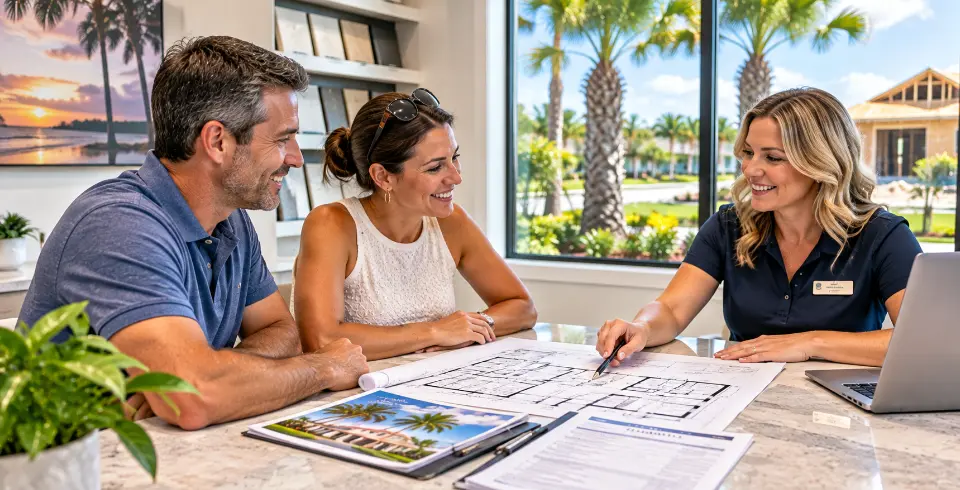
Before buying a new construction home in Florida, ask the builder about the complete price, homesite, included features, deposits, contract terms, construction timeline, inspections, warranty, financing incentives, HOA fees, CDD assessments, insurance considerations and future development. The goal is to understand the exact home you are purchasing, not simply the model home or advertised starting price. Builder contracts can also differ substantially from typical resale contracts, so important legal provisions involving deposits, delays, substitutions, default and cancellation should be reviewed carefully before you sign.
For a broader overview of the process, read Hunt Brothers Realty's guide to buying new construction in Florida. If you are still preparing to tour communities, also review what to know before visiting a new construction model home.
Quick Answers About Questions to Ask a Builder Before Buying
What is the most important question to ask a home builder?
Ask what the complete price will be for the exact home, homesite and options you are considering. The advertised base price may exclude a homesite premium, structural changes, design selections, appliances, outdoor improvements and other upgrades.
Should you ask which model-home features are upgrades?
Yes. A model home can contain upgraded flooring, cabinetry, countertops, lighting, structural options, appliances and outdoor features. Request a written list showing what is standard and what costs extra.
Should you ask whether your deposit is refundable?
Absolutely. Ask how much you must deposit, who holds the funds, when additional deposits are due and under what contractual circumstances money may be refundable or nonrefundable. Deposit rights and consequences are legal and contract-specific, so have a qualified Florida real estate attorney review them when appropriate.
Can you have a new construction home independently inspected?
Ask before signing the contract. Independent inspection access, timing and procedures can depend on the builder and purchase agreement. A municipal building inspection and an independent inspection performed for the buyer serve different purposes.
Should you use the builder's preferred lender?
Not automatically. A preferred lender may offer useful incentives, but compare the interest rate, APR, discount points, lender fees, closing costs, loan terms and cash required to close with other available financing. Have a qualified mortgage professional evaluate the actual options for your circumstances.
Should you ask about HOA and CDD fees?
Yes, because they can materially change the annual cost of ownership. A Florida new construction property may have HOA assessments, Community Development District assessments, both, or neither. Obtain the current amounts for the specific property rather than relying on a general community estimate.
Should you ask what happens if construction is delayed?
Yes. Ask for the estimated completion timeframe and then determine what the contract actually says about delays, extensions and closing. Do not assume an estimated completion date automatically creates a contractual right to cancel if the home is not finished by that date.
1. What Is the Complete Price of This Home?
Ask the builder to show you the complete price for the exact home you intend to purchase. An advertised starting price is useful for marketing a floor plan, but it may not represent what you will ultimately spend.
Ask for a written breakdown covering:
- Base price
- Homesite or lot premium
- Elevation premium
- Structural options
- Design-center selections
- Cabinetry and countertops
- Flooring
- Appliances
- Electrical and lighting options
- Pool or outdoor-living additions
- Garage modifications
- Builder credits or incentives
- Other known charges
Compare the completed price with competing new homes and relevant resale properties, not simply another builder's advertised base price.
2. Which Features in the Model Home Are Actually Included?
Ask for a written standard-features sheet and identify every significant upgrade displayed in the model. A professionally decorated model is intended to demonstrate possibilities and may look substantially different from the standard home offered at the starting price.
Pay particular attention to:
- Ceiling heights
- Windows and doors
- Cabinet configurations
- Countertops
- Flooring
- Appliances
- Bathroom finishes
- Lighting
- Built-ins
- Lanai extensions
- Pools and outdoor kitchens
- Landscaping
For more preparation before touring, see what buyers should know before visiting a Florida model home.
3. What Should You Ask About the Homesite?
Ask what surrounds the homesite today and what could surround it in the future. A floor plan can often be built on multiple lots, but those lots may provide very different ownership experiences.
Questions can include:
- What is the homesite premium?
- What is planned behind and beside the property?
- Could additional homes be built nearby?
- Are there utility or drainage easements?
- What are the property's boundaries?
- How is the lot graded and drained?
- What direction does the rear of the home face?
- Can a pool, fence or other improvement be added?
- What is the flood-zone designation?
- Could nearby roads, amenities or future phases affect the property?
Do not rely solely on a sales map when a homesite characteristic is important to your decision. Property boundaries and easements can require review by a surveyor or title professional, while drainage, grading and construction concerns may require an engineer, contractor or other qualified professional. Future land-use and permitting questions should be verified with the appropriate local government authority.
4. How Much Money Do I Have to Deposit?
Ask about every deposit before you sign, including when it is due, where it is held and when it may become nonrefundable. New construction purchases can involve an initial deposit plus additional funds for design selections or other contractual milestones.
Florida Statutes Section 501.1375 currently provides qualifying buyers of certain new one-family and two-family residential dwellings a right to have deposit funds up to 10 percent of the purchase price placed in escrow unless that right is waived in writing, subject to the statute's definitions, requirements and exceptions.
That does not mean every builder deposit is automatically refundable. Escrow protection and contractual refund rights are separate issues.
Ask:
- How much is due when I sign?
- Are additional deposits required?
- Who holds the funds?
- Will the funds be placed in escrow?
- Am I being asked to waive an escrow right?
- When does any deposit become nonrefundable?
- What happens to the deposit if financing fails?
- What happens if the appraisal is low?
- What happens if the buyer defaults?
Deposit rights and contract remedies can have significant legal and financial consequences. A qualified Florida real estate attorney should review the actual agreement when legal interpretation is needed.
5. What Does the Builder Contract Say About Delays?
Ask for the estimated completion timeframe, but pay closer attention to what the contract says happens when construction takes longer. An estimated closing month and a legally enforceable completion deadline are not necessarily the same thing.
The agreement may address circumstances such as material availability, weather, permitting, labor conditions, utility connections or other delays. The language and consequences vary by contract.
Ask:
- What is the current estimated completion timeframe?
- What events permit an extension?
- How will I receive construction updates?
- How much notice will I receive before closing?
- What happens if construction is significantly delayed?
- Does a delay give me any cancellation or refund rights?
The last two questions require careful review of the actual contract. See Hunt Brothers Realty's guide to Florida builder contracts, and consult a qualified Florida real estate attorney regarding your contractual rights and obligations.
6. Can the Builder Change Materials or Specifications?
Ask what rights the contract gives the builder to substitute materials, products, finishes or construction specifications. Do not assume every item initially discussed will remain unchanged if the written agreement permits substitutions.
If a particular window, appliance, flooring product, countertop, roofing material or other feature matters to you, determine how it is described in the contract and specifications.
Questions about whether a substitution is contractually permitted, or what remedies may apply, are legal questions for a qualified attorney.
7. Can I Hire My Own Home Inspector?
Ask what independent inspections the builder contract permits and when they can occur. New construction should not automatically be treated as defect-free simply because nobody has lived in the home.
Depending on the project and contract, buyers may want to discuss opportunities for:
- Pre-drywall inspection
- Final independent home inspection
- Pool or specialty inspections when applicable
- Follow-up inspection when appropriate
- Insurance-related documentation when relevant
A building department inspection and an independent buyer inspection have different purposes. Passing required governmental inspections does not eliminate the value of a property-specific evaluation performed for the buyer.
Inspection findings should be evaluated with the appropriate licensed home inspector, contractor, engineer or other qualified professional before the buyer makes a decision.
8. What Happens to Unfinished Items at Closing?
Ask how incomplete, damaged or deficient items identified before closing will be documented and corrected. Buyers should understand the builder's orientation, walkthrough and punch-list procedures before the closing date arrives.
Ask whether identified items must be completed before closing, whether some can remain outstanding afterward and what written process tracks unfinished work.
If the contract determines the buyer's right to delay closing or require completion of particular work, have a qualified Florida real estate attorney explain those provisions.
9. What Exactly Does the Builder Warranty Cover?
Request the actual warranty documents instead of relying on a statement that the home “has a warranty.” Coverage, exclusions, procedures and time periods can vary by builder and warranty program.
Ask:
- What components are covered?
- When does coverage begin?
- How long does each type of coverage last?
- What is excluded?
- What homeowner maintenance is required?
- How is a warranty claim submitted?
- Who handles warranty service?
- Are appliance and manufacturer warranties separate?
- What dispute-resolution procedure applies?
Warranty documents can create legal rights and obligations. Questions about their legal meaning, exclusions, deadlines or enforceability should be reviewed with a qualified Florida real estate or construction attorney.
10. What Builder Incentives Are Available?
Ask about incentives, but evaluate them as part of the entire transaction. Builders may offer price reductions, closing-cost contributions, mortgage-rate programs, discount points, design credits, appliance packages or upgrades.
Then ask:
- Which homes qualify?
- When does the offer expire?
- Can incentives be combined?
- Does the incentive require a preferred lender?
- Does it require an affiliated title or closing provider?
- Can I choose a price reduction instead?
- Can I actually use the full closing-cost credit?
- Is an advertised mortgage rate temporary or permanent?
- How many discount points are associated with the rate?
A large advertised incentive is not automatically the best financial deal. Read Hunt Brothers Realty's comparison of builder credits and price cuts, then have a qualified mortgage professional compare the actual loan terms for your circumstances.
11. Do I Have to Use the Builder's Preferred Lender?
Ask whether using a particular lender is required to receive an incentive and what changes if you finance elsewhere. Do not compare lenders using the interest rate alone.
Compare:
- Interest rate
- APR
- Discount points
- Origination charges
- Mortgage insurance when applicable
- Closing-cost credits
- Cash required to close
- Loan terms
- Payment after any temporary buydown expires
Financing decisions are individual. A qualified mortgage professional should compare the actual Loan Estimates and explain how the alternatives affect your borrowing costs.
12. What Happens If the Home Does Not Appraise at the Contract Price?
Ask before signing, because the answer depends on the contract and financing terms. Buyers should not assume a low appraisal automatically requires the builder to reduce the price or allows the buyer to cancel without financial consequences.
Discuss appraisal and financing scenarios with your lender, and have a qualified Florida real estate attorney explain the contract provisions governing a financing failure, appraisal shortage, default or cancellation.
13. What Are the HOA Fees and What Do They Cover?
Ask for the current HOA assessment and a clear explanation of what the association maintains. A low fee is not automatically better if the homeowner must separately pay for services included elsewhere.
Ask about:
- Current assessments
- Services included
- Amenity expenses
- Lawn and landscaping responsibilities
- Exterior maintenance responsibilities
- Architectural restrictions
- Rental restrictions
- Parking rules
- Pet rules
- Potential assessments
- Developer control and anticipated transition to homeowners
Review the current governing documents for the actual community. Questions involving the legal effect of restrictions, association rights or owner obligations should be directed to a qualified Florida real estate attorney.
14. Does the Property Have a CDD Assessment?
Ask specifically whether the homesite is within a Community Development District and what the current assessment is for that parcel. A CDD assessment is separate from an HOA fee, and a Florida property can have both.
Useful questions include:
- What is the current annual assessment?
- Does it include debt service?
- Is there an operations-and-maintenance component?
- Is a debt component scheduled to end?
- Will operating assessments continue afterward?
- Where does the assessment appear on the tax bill?
Verify the current obligation using the district's records and the specific parcel rather than relying on a general sales estimate.
15. Which Amenities Are Finished and Which Are Only Planned?
Ask which amenities exist today, which are under construction and which remain proposed. A rendering of a future clubhouse, pool, restaurant, golf facility or recreation center is not the same as an operating amenity.
If a future amenity materially affects your decision, ask what documents address its development and whether an estimated schedule exists. Also determine whether separate membership or user fees will apply.
Do not assume that a proposed amenity, completion date or future configuration is guaranteed unless the applicable documents support that conclusion.
16. How Much More Development Is Planned?
Ask how many additional homes or phases are planned and what is expected around your homesite. Buying early in a developing community can mean living with construction activity for a period of time.
Future builder inventory can also matter when an owner eventually decides to sell, because resale properties may compete with newly built homes and builder incentives. That does not predict future property value, but it is a relevant market consideration.
Verify significant future land-use or development questions through available planning documents and the appropriate local government or permitting authority.
17. What Will Property Taxes Look Like After the Home Is Completed?
Ask for an estimate based on the completed home, not merely the tax bill for a vacant or partially improved homesite. A tax record from before construction may significantly understate the eventual ownership expense.
Property taxes depend on the completed property's assessed and taxable value, exemptions, assessment limitations, taxing authorities and applicable non-ad valorem assessments. Buyers should verify property-specific information with the county property appraiser and consult a qualified tax professional or CPA regarding individual tax circumstances.
18. What Will Homeowners and Flood Insurance Cost?
Obtain property-specific insurance quotes before the transaction reaches its final stages. Do not assume that new construction automatically produces a particular premium or eliminates flood considerations.
Ask for information needed by the insurance professional, which may include construction characteristics, roof information, wind-mitigation features and other property details. Determine the property's current flood-zone designation and any lender insurance requirements.
Insurance availability, coverage and premiums can vary substantially by property. Buyers should obtain property-specific quotes and review coverage with a qualified Florida insurance professional before making a purchasing decision.
19. How Can You Research the Builder?
Research the builder's licensing, experience, completed projects, construction procedures and warranty-service process rather than judging the company only by its model home.
Questions can include:
- How long has the builder operated in Florida?
- What other communities has the builder completed?
- Who supervises construction?
- How often will buyers receive construction updates?
- How are inspection findings handled?
- How are punch-list items handled?
- How does the warranty-service process work?
The Florida Department of Business and Professional Regulation provides resources for checking professional and contractor licensing. Licensing verification is one part of due diligence and is not a guarantee of future workmanship or service.
20. Who Does the Builder's Sales Representative Represent?
Do not assume the builder's on-site sales representative is your separate real estate representative. Buyers should understand the applicable brokerage relationships and decide whether they want their own real estate professional involved before beginning the builder-registration process.
Some builders have procedures governing outside-agent registration, including procedures that may matter on the buyer's first visit. Buyers who want separate real estate representation should investigate those procedures before visiting or registering at a sales center.
Read Hunt Brothers Realty's guide to using a real estate agent for new construction in Florida for a closer look at the buyer-side role.
21. What Should You Ask Before Signing the Builder Contract?
Before signing, make sure the answers that matter to your purchase are reflected in the actual contract, specifications or applicable written documents. A verbal discussion at the sales center should not be treated as a substitute for reviewing the agreement you will sign.
The contract may address:
- Deposits
- Financing requirements
- Construction timing
- Permitted delays
- Material substitutions
- Design-selection deadlines
- Inspection access
- Closing procedures
- Warranty provisions
- Buyer default
- Builder default
- Dispute-resolution procedures
A real estate professional can assist with the brokerage transaction and help identify issues to investigate, but legal interpretation of a builder contract belongs with a qualified Florida real estate attorney.
The Essential Builder Question Checklist
Bring this condensed checklist when comparing Florida builders:
- What is the complete price of this exact home?
- What is standard and what is upgraded?
- What homesite premium applies?
- What will be built around this homesite?
- What deposits are required?
- When can deposits become nonrefundable?
- What is the estimated completion timeframe?
- What does the contract say about delays?
- Can the builder substitute materials?
- What independent inspections are permitted?
- What happens to unfinished items at closing?
- What warranty applies?
- What incentives are currently available?
- Do incentives require an affiliated lender or provider?
- What happens if financing falls through?
- What happens if the appraisal is low?
- What are the HOA assessments?
- Does the property have CDD or other district assessments?
- Which amenities are completed and which are planned?
- How much additional development is planned?
- What are the estimated property taxes after completion?
- What insurance information is available?
- What is the flood-zone designation?
- What is the builder's current outside-agent registration procedure?
Should You Buy a Quick Move-In Home or Build From a Floor Plan?
A quick move-in home can offer greater certainty about the finished property and timeline, while a to-be-built home can provide more customization but introduces additional construction decisions and timing uncertainty.
For an inventory home, ask what remains unfinished, which selections can still change and when closing is expected. For a to-be-built home, focus more heavily on design deadlines, deposits, upgrade costs, construction timing and permitted substitutions.
Hunt Brothers Realty's quick move-in versus to-be-built home guide explains the differences in more detail.
What Is the Biggest Mistake New Construction Buyers Make?
One of the biggest mistakes is falling in love with the model home before understanding the transaction. The home you own will be a specific floor plan on a specific lot, with a specific package of options, governed by a specific contract and carrying specific recurring expenses.
Before buying, compare the completed purchase price, financing, taxes, insurance, HOA or CDD expenses, inspection opportunities, warranty, homesite and future development.
For another perspective on the overall decision, read Is New Construction Worth It in Florida?
The Bottom Line: Ask About the Home, the Contract and the Community
The best builder questions reveal what you will actually own, what you will actually pay and what obligations you are accepting. Start with the complete home price, then investigate the homesite, deposits, construction schedule, contract, inspections, warranty, financing, association expenses, district assessments, taxes, insurance and future development.
Get important answers in writing. Verify property-specific information rather than relying on assumptions from a model home or marketing brochure. Most importantly, use the right professional for questions outside the scope of real estate brokerage.
A licensed real estate professional can help compare properties and transaction considerations. A Florida real estate attorney should address legal contract rights, a mortgage professional should evaluate financing, an insurance professional should evaluate coverage, an inspector or engineer should evaluate property conditions, and tax, title, survey or permitting questions should be directed to the appropriate qualified professional or government authority.
Buying New Construction in Florida?
Hunt Brothers Realty can help buyers compare Florida Gulf Coast new construction communities, builders, homesites, completed inventory and resale alternatives while identifying the property and transaction questions that deserve further investigation.
Buyers researching the Sarasota area can also explore Hunt Brothers Realty's guide to new construction communities near Sarasota.
Contact Hunt Brothers Realty before your first builder visit if you want help comparing new construction options and understanding the builder's current buyer-agent registration procedures.
This article is provided for general informational and educational purposes only and is not individualized legal, financial, tax, insurance, lending, inspection, engineering, construction, title, association, survey or permitting advice. Builder contracts, deposits, incentives, warranties, financing requirements, inspection access, association obligations, district assessments, insurance and property conditions vary. Buyers should verify the information for the specific property and transaction and consult the appropriate qualified Florida real estate attorney, mortgage professional, insurance agent, home inspector, engineer, contractor, tax professional or CPA, title professional, surveyor, association or local government authority before making decisions requiring individualized guidance.
Sources
- Florida Legislature, Florida Statutes Section 501.1375, Residential Dwelling Deposits
- Florida Department of Business and Professional Regulation
- Hunt Brothers Realty, Buying New Construction in Florida: What to Know
- Hunt Brothers Realty, What to Know Before Signing a Builder Contract in Florida
- Hunt Brothers Realty, What to Know Before Visiting a New Construction Model Home in Florida
- Hunt Brothers Realty, Builder Credits vs. Price Cuts
Hunt Brothers Realty
46 N. Washington Blvd, Ste 3, Sarasota, FL 34236
Phone: (941) 388-7017
Email: info@huntbrothersrealty.com
Website: HuntBrothersRealty.com
Categories
- All Blogs 2634
- Anna Maria Island 92
- Bird Key 5
- Bradenton 242
- Buying a Home 1656
- Casey Key 3
- Clearwater 16
- Condos & HOA Living 1584
- Ellenton 8
- Englewood 15
- First Time Homebuyers 1777
- Foreclosures 4
- Home Selling 9
- Homeownership 1820
- Lakewood Ranch 36
- Lido Key 29
- Longboat Key 81
- Luxury/Waterfront Properties 1761
- Market Updates & Trends 1263
- Mortgages & Financing 85
- Move-Up Buyers 24
- Neighborhood Guides 1391
- New Construction 46
- Palmetto 4
- Parrish 38
- Port Charlotte 36
- Punta Gorda 165
- Real Estate Investing 1674
- Relocation to Florida 1702
- Safety Harbor 4
- Sarasota 147
- Sarasota - Downtown 175
- Selling a Home 148
- Siesta Key 94
- St. Petersburg 11
- Taxes and Homestead 3
- Tierra Verde 7
- Vacation & Second Homes 1868
- Venice 224
- Wellen Park 24
Recent Posts