What Does a Home Inspector Actually Check?
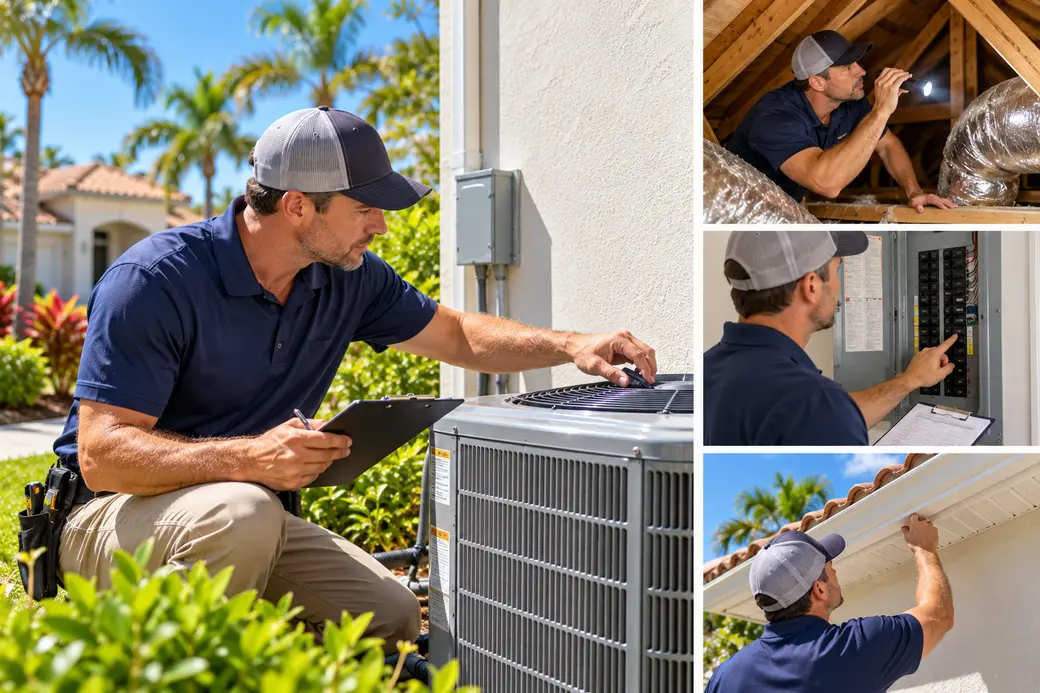
A Florida home inspector generally performs a limited visual examination of the home's readily accessible structure, roof covering, electrical system, plumbing, heating and air conditioning, interior components, exterior components and site conditions that affect the structure. An inspector may identify defects, deterioration, safety concerns, signs of moisture, aging equipment and conditions that deserve additional evaluation. A standard inspection is not destructive testing, a guarantee against future problems or a substitute for specialized roof, plumbing, electrical, structural, pest, pool, septic, seawall or other professional evaluations when those are needed.
The purpose of the inspection is to help the buyer understand the property's observable condition before making decisions allowed by the purchase contract. Hunt Brothers Realty's guide to what happens when a Florida home inspection finds problems explains why the report should be treated as information for further evaluation rather than a simple pass-or-fail test.
Quick Answers About What a Home Inspector Checks
What Does a Standard Florida Home Inspection Cover?
Florida law describes home inspection services as a limited visual examination of readily accessible installed systems and components, including the structure, electrical system, HVAC system, roof covering, plumbing, interior, exterior and site conditions affecting the structure.
Does a Home Inspector Check the Roof?
Yes, the roof covering is part of the statutory Florida home inspection scope. The inspector may observe visible roofing materials, deterioration, apparent damage, evidence of leakage, flashing and other accessible conditions. How the roof is accessed and evaluated can depend on safety, weather, roof design and the inspector's scope.
Does the Inspector Check Plumbing and Electrical Systems?
Yes. Readily accessible plumbing and electrical components are part of a Florida home inspection. The inspector may identify visible leakage, drainage concerns, electrical panel conditions, accessible wiring issues, fixture problems and other observable deficiencies. Significant findings may require evaluation by a licensed plumber or electrician.
Does a Home Inspector Check the Air Conditioner?
Yes. HVAC is part of the standard Florida inspection scope. The inspector may observe operation, accessible equipment, installation conditions and visible deficiencies. A general inspection is not the same as a complete HVAC diagnostic by a licensed air-conditioning contractor.
Will the Inspector Find Every Problem With the House?
No. A home inspection is limited and primarily visual. Concealed conditions, inaccessible areas and defects that are not observable at the time of the inspection may not be discovered. Buyers should arrange specialist evaluations when the property or inspection findings justify them.
Is a 4-Point Inspection the Same as a Full Home Inspection?
No. A Florida 4-point inspection focuses primarily on the roof, electrical, plumbing and HVAC systems for insurance underwriting purposes. A comprehensive buyer's inspection covers a broader range of accessible property components.
Does the Inspector Decide Whether I Should Buy the House?
No. The inspector reports observations and professional opinions concerning the condition of accessible components. The buyer decides what the findings mean for the purchase, often after obtaining additional information from contractors, engineers, insurance professionals or other specialists.
What Does Florida Law Mean by a Home Inspection?
Florida provides a useful starting point for understanding the inspection. Under Florida Statute 468.8311, home inspection services are a limited visual examination of readily accessible installed systems and components for the purpose of providing a written professional opinion about the home's condition.
The statute specifically identifies:
- Structure
- Electrical system
- Heating and air-conditioning system
- Roof covering
- Plumbing system
- Interior components
- Exterior components
- Site conditions affecting the structure
The words "limited," "visual" and "readily accessible" are important. A standard inspection does not mean the inspector takes apart every wall, excavates underground utilities or guarantees that hidden components are defect-free.
What Does the Inspector Check on the Roof?
The roof is one of the major systems a Florida buyer should understand because roof condition can affect maintenance costs and, separately, insurance underwriting. The inspector may examine accessible roof-covering conditions and look for visible evidence of deterioration or leakage.
Depending on the roof and inspection conditions, observations may involve:
- Roof-covering material
- Visible deterioration or damage
- Missing, loose or damaged materials
- Flashing around penetrations and transitions when accessible
- Visible evidence of previous repairs
- Signs of leakage or moisture when observable
- Roof drainage components where accessible
- Related attic conditions when the attic is accessible
A general home inspector may recommend further evaluation by a qualified roofer when a condition is significant or when the complete cause, repair scope or remaining serviceability cannot be determined visually. Hunt Brothers Realty's guide to what to look for in a roof before buying a home explains why roof age, permits, condition and insurance questions should be considered separately.
What Does the Inspector Check in the Attic?
When an attic is safely and readily accessible, it can provide useful information about roof conditions, insulation, ventilation, visible framing and signs of moisture. The exact scope depends on accessibility and the inspector's procedures.
Potential observations can include:
- Visible roof sheathing and framing conditions
- Evidence of moisture staining or leakage
- Insulation where visible
- Ventilation conditions
- Accessible electrical wiring
- Accessible HVAC ducts or equipment
- Observable alterations or damage
An inspector may not be able to traverse every attic. Low clearance, stored belongings, insulation, fragile surfaces, heat, unsafe access or other conditions can limit the inspection.
What Does a Home Inspector Check in the Electrical System?
The electrical inspection focuses on readily accessible installed electrical components. Depending on the property, this can include the service equipment, panels, visible wiring, outlets, switches and other accessible components within the inspection scope.
An inspector may report conditions involving:
- Electrical panel condition
- Visible wiring defects
- Improper or unusual modifications
- Accessible receptacles and switches
- Ground-fault protection where applicable
- Visible safety concerns
- Electrical components associated with major equipment
Older Florida homes can contain electrical equipment that deserves additional evaluation. Hunt Brothers Realty's Florida home inspection red flags guide discusses older electrical panels among the conditions buyers may encounter. An inspector's observation should lead to evaluation by a licensed electrician when specialized expertise is necessary, rather than an automatic conclusion about the house.
What Does the Inspector Check in the Plumbing System?
A standard inspection typically evaluates accessible plumbing components and fixtures. The inspector may operate faucets, observe drainage, check visible supply and waste piping and look for leakage or deterioration where components can be accessed.
Potential observations can include:
- Visible leaks
- Water pressure or flow concerns that are observable during the inspection
- Sink, toilet and fixture operation
- Visible supply piping
- Visible drain and waste piping
- Water heater installation and observable condition
- Drainage concerns
- Evidence of moisture near plumbing fixtures
Does a Standard Inspection Include a Sewer Camera?
Not necessarily. Much of a drain line can be concealed under a slab or underground. A sewer-camera inspection is a separate or additional service in many transactions. It can be particularly useful when the age, material, symptoms or history of the drain system creates a reason for further investigation.
Hunt Brothers Realty's inspection guidance notes that older cast iron drain lines can deserve additional attention in Florida homes. A licensed plumber can evaluate the actual system and determine whether further testing or repair is appropriate.
What Does the Inspector Check in the HVAC System?
Heating and air conditioning are included in Florida's statutory home-inspection categories. Because Florida homes rely heavily on air conditioning, HVAC condition can be especially relevant to comfort, energy use and moisture control.
Depending on the equipment and inspection conditions, the inspector may observe:
- Accessible indoor and outdoor equipment
- General operation
- Visible installation deficiencies
- Condensate drainage
- Accessible ductwork
- Visible corrosion or deterioration
- Thermostat operation where included in the scope
A general home inspection should not be treated as a complete mechanical diagnosis or prediction of how long the equipment will operate. If the system is old, performs poorly or raises a material concern, a licensed HVAC contractor can perform a more specialized evaluation.
What Structural Components Does the Inspector Examine?
The inspector evaluates readily accessible structural components and observable conditions that could indicate movement, deterioration or another concern. The exact visible components vary substantially between slab-on-grade, crawlspace, elevated and other construction types.
Possible observations include:
- Visible foundation or slab conditions
- Cracks or movement indicators
- Accessible framing
- Uneven or visibly distressed components
- Deterioration of structural materials
- Signs that warrant further engineering evaluation
A home inspector is not automatically acting as a structural engineer. When an observable condition raises a material structural question, a qualified structural engineer may be the appropriate professional to investigate its cause and significance. Hunt Brothers Realty's guide to possible foundation concerns when touring a house explains why visible symptoms should lead to professional evaluation rather than a buyer attempting to diagnose the structure.
What Does the Inspector Look for Inside the House?
Interior components are part of a Florida home inspection. Depending on the property's design, the inspector may examine accessible walls, ceilings, floors, doors, windows, stairs, installed fixtures and other interior components included within the inspection scope.
The inspection may identify conditions such as:
- Damaged or deteriorated finishes
- Visible moisture staining
- Windows or doors that do not appear to operate normally
- Flooring conditions
- Visible ceiling or wall damage
- Safety-related conditions involving stairs or railings
- Conditions near bathrooms, kitchens and other wet areas
Cosmetic imperfections and material defects are not necessarily the same thing. Buyers should focus first on findings that affect safety, building performance, moisture, major systems, repair costs, insurance or future maintenance.
What Does a Home Inspector Check Outside?
Exterior components and site conditions affecting the structure are also part of Florida's statutory inspection definition. The inspector may walk accessible exterior areas and observe the relationship between the home and surrounding lot.
Depending on the property, the inspector may evaluate visible conditions involving:
- Exterior wall materials
- Stucco or siding
- Windows and exterior doors
- Visible trim deterioration
- Decks, porches or lanais within the inspection scope
- Garage components
- Grading and drainage near the structure
- Visible signs of water collecting near the home
- Vegetation or exterior conditions affecting the building
Florida's heavy rainfall makes drainage particularly relevant. Water collecting against the house, improper grading or deteriorated exterior materials can deserve additional investigation even when the interior appears recently renovated.
Does a Home Inspector Look for Water Intrusion?
Inspectors commonly report observable evidence of moisture or water intrusion, but a standard inspection cannot guarantee that all hidden moisture will be detected. Water can enter through roofs, walls, windows, plumbing, air-conditioning systems or exterior drainage problems.
Visible clues may include staining, damaged drywall, peeling finishes, deteriorated trim, active leakage or other conditions that deserve additional investigation. Hunt Brothers Realty's guide to signs of water intrusion in a Florida home explains why a stain or musty area should create a question, not an amateur diagnosis.
If suspected moisture could materially affect the purchase, buyers should use the appropriate qualified inspector, roofer, plumber, contractor, engineer, mold professional or other specialist to determine the cause and scope.
Does a Standard Home Inspection Check for Termites?
A standard home inspection should not automatically be treated as a wood-destroying organism inspection. An inspector may observe visible deterioration or conditions that deserve attention, but termite and other wood-destroying organism evaluations can involve a separate inspection by an appropriately qualified or licensed provider.
Ask what is included when scheduling inspections instead of assuming one inspection covers every potential property issue.
Does a Standard Inspection Include the Swimming Pool?
Pool inspection practices vary. Some home inspectors include certain accessible pool and pool-equipment observations in their service, while others offer pool inspections separately or recommend a pool specialist.
For a Florida property with a pool, buyers may want information concerning:
- Pool surface condition
- Visible cracking or deterioration
- Pump and filtration equipment
- Heater when present
- Visible plumbing leakage
- Deck condition
- Screen enclosure condition when applicable
- Safety-related features within the agreed inspection scope
Ask the inspector before the appointment whether the pool is included and whether a separate pool professional would be useful for the property.
What About Septic Systems and Wells?
Do not assume a general home inspection includes a comprehensive septic inspection, septic pumping, well evaluation or water-quality testing. Rural and acreage properties can require specialized due diligence beyond the standard house inspection.
If a property uses a private well or septic system, ask what separate evaluations are appropriate and which qualified professionals perform them. Buyers should also verify permits, maintenance history and other property-specific information when those systems could materially affect the purchase.
What If the Property Has a Dock, Seawall or Boat Lift?
Waterfront property can require additional specialized inspections. A standard house inspection should not automatically be assumed to provide a complete engineering, marine or permitting assessment of a dock, seawall, boat lift or waterfront structure.
Depending on the property, waterfront buyers may need to investigate:
- Seawall condition
- Dock structure
- Pilings
- Boat-lift condition and rated capacity
- Electrical service at the dock
- Permits
- Property boundaries and riparian questions
- Water depth and navigation
Hunt Brothers Realty's Anna Maria Island real estate resources and Bradenton waterfront property search provide additional context for Gulf Coast buyers evaluating waterfront homes. Technical waterfront issues should be reviewed by appropriate marine, engineering, surveying, inspection and permitting professionals.
What Does a Home Inspector Usually Not Check?
The exact exclusions depend on the inspector's agreement and the property, so buyers should read the inspection agreement before the appointment. In general, a standard inspection should not be assumed to include every specialized or concealed condition.
Items that may require separate services or specialists can include:
- Components concealed inside walls or beneath slabs
- Sewer-camera inspection
- Septic-system testing
- Well-water testing
- Wood-destroying organism inspection
- Detailed mold assessment
- Structural engineering analysis
- Complete roofing contractor evaluation
- Complete electrical contractor evaluation
- Complete HVAC diagnostic testing
- Pool specialty inspection
- Dock, seawall or boat-lift engineering
- Boundary or survey verification
- Permit or code-compliance research
- Insurance eligibility determination
The inspection can identify conditions that suggest one of these services is warranted, but buyers should not assume the general inspector has completed every possible specialty evaluation.
Is a Home Inspection the Same as a 4-Point Inspection?
No. This distinction is particularly important for Florida buyers.
A comprehensive home inspection is intended to help the buyer understand a broad range of accessible property conditions. A 4-point inspection is primarily an insurance underwriting tool focused on four systems:
- Roof
- Electrical
- Plumbing
- HVAC
A house can have a 4-point report that satisfies an insurer's requirements and still contain defects or maintenance issues that matter to the buyer. Review Hunt Brothers Realty's 4-point inspection guide before treating the two inspections as interchangeable.
Is a Wind Mitigation Inspection Part of the Home Inspection?
Not automatically. A wind mitigation inspection is generally performed to document qualifying construction and wind-resistance features that may be relevant to insurance. It can involve roof geometry, roof-to-wall connections, roof-deck attachment, opening protection and other qualifying features depending on the applicable form and property.
Insurance requirements and credits vary by property and insurer. Buyers should ask their insurance professional whether a wind mitigation inspection, 4-point inspection or other documentation is needed for the actual home.
Should You Inspect a Brand-New House?
New construction can still have observable installation defects, incomplete work, drainage concerns or equipment issues. A municipal building inspection and certificate of occupancy serve different purposes from an independent inspection hired by the buyer.
Hunt Brothers Realty's guide to home inspections on brand-new houses explains that inspectors can still identify issues involving roofing, attic conditions, exterior finishes, windows, plumbing, electrical components, HVAC, drainage, garage components and interior finishes.
Builder contracts, warranty rights and repair obligations vary. Buyers should understand what their contract allows and direct legal questions about builder obligations or warranty rights to a qualified Florida real estate attorney when individualized legal guidance is necessary.
Should You Attend the Home Inspection?
When permitted by the inspector and transaction circumstances, attending at least part of the inspection or an inspector's summary can help buyers understand the report. The written report can contain photographs and technical observations that become easier to interpret after seeing the component in person.
Useful questions for the inspector can include:
- Which findings deserve immediate follow-up?
- Which findings appear to be ordinary maintenance?
- Which components could not be inspected?
- Which conditions require a specialist?
- Did you observe signs of active leakage or moisture?
- Are there older systems that deserve additional investigation?
- Is there anything you would want evaluated before the inspection period expires?
How Should Buyers Read the Inspection Report?
A long inspection report does not automatically mean the house is in poor condition. Reports can contain maintenance recommendations, photographs, informational observations and small defects alongside more significant findings.
One practical approach is to sort the report into several categories:
- Potential safety or structural issues: Items that may require prompt professional evaluation.
- Major systems: Roof, electrical, plumbing, HVAC and other high-cost components.
- Moisture or water concerns: Conditions where the cause and extent need to be understood.
- Specialist recommendations: Items requiring a roofer, electrician, plumber, engineer or other professional.
- Deferred maintenance: Work that may not be urgent but can create future ownership costs.
- Minor repairs: Smaller items that do not materially change your understanding of the property.
Hunt Brothers Realty's Florida inspection findings guide explains why buyers should focus on the significance of each condition rather than the number of pages in the report.
What Happens if the Inspector Finds a Major Problem?
First, determine what was actually observed. A general home inspector may identify a symptom without establishing the complete cause, repair scope or cost. A roof concern might need a roofer, an electrical concern might need an electrician and visible movement might require a structural engineer.
After the condition is better understood, the buyer can consider available options under the purchase contract. Depending on the contract and circumstances, possibilities might include accepting the property, asking the seller to address an issue, proposing a credit or other change, obtaining further evaluations or exercising a contractual cancellation right when one exists.
Contract rights and deadlines depend on the actual agreement. Buyers should not assume an inspection finding automatically gives them a particular remedy. Questions requiring legal interpretation should be reviewed with a qualified Florida real estate attorney.
What Inspection Issues Matter Especially in Florida?
Every property is different, but Florida buyers frequently encounter questions involving heat, humidity, heavy rainfall, storm exposure and insurance. Hunt Brothers Realty's inspection resources identify several areas that often deserve careful evaluation.
- Roof: Age, condition, leaks, repairs and available permit documentation.
- Electrical: Panel condition, visible wiring and older equipment.
- Plumbing: Leaks, drain lines, aging materials and water-heater condition.
- HVAC: Operation, age, visible installation issues and condensate drainage.
- Moisture: Water intrusion, staining and deterioration.
- Drainage: How water moves around the exterior of the house.
- Windows and doors: Condition, operation and storm-protection information.
- Pool: Equipment, surface and enclosure where applicable.
- Waterfront structures: Dock, seawall and boat-lift conditions where applicable.
Insurance can be affected by factors that overlap with inspection findings, but a home inspector does not determine whether an insurance company will issue coverage. Buyers should obtain property-specific insurance quotes and review underwriting questions with a qualified insurance professional before making a purchasing decision.
Frequently Asked Questions About Home Inspections
Does a Home Inspection Mean the House Has to Be Perfect?
No. Most homes have maintenance items or defects. The inspection helps the buyer understand what is present so material conditions can be evaluated before the buyer makes a decision.
Can an Inspector Tell Me Exactly How Much Repairs Will Cost?
Not necessarily. Inspectors may identify conditions that require repair, but accurate pricing can require a licensed contractor or qualified tradesperson to determine the cause, scope, materials and work required.
Can the Inspector See Through Walls?
No. Florida defines the standard home inspection as a limited visual examination of readily accessible components. Concealed wiring, plumbing, structural components and moisture conditions may not be observable without specialized testing or destructive investigation.
Does an Inspection Guarantee Nothing Will Break After Closing?
No. An inspection describes observable conditions at a point in time. Mechanical equipment can fail later, concealed defects may exist and components can deteriorate after the inspection.
Do I Still Need an Inspection if the Seller Provides an Older Report?
A prior report can provide useful information, but buyers should determine when it was performed, who ordered it, what was included and whether property conditions have changed. Whether to obtain an independent current inspection is a buyer decision that should account for the property, contract and inspection professional's guidance.
Does the Inspection Replace the Final Walkthrough?
No. The inspection and final walkthrough serve different purposes. Hunt Brothers Realty's guide to the final walkthrough before closing explains that the walkthrough is typically used to observe the property's condition near closing and verify agreed matters, not to repeat a full professional inspection.
A Home Inspection Helps You Understand the Property, Not Predict the Future
A home inspector's job is to examine readily accessible components within the agreed scope and report observable conditions that may matter to the buyer. The inspection can reveal major concerns, routine maintenance, aging systems and areas where additional expertise is needed, but it cannot uncover every concealed defect or guarantee future performance.
The most useful inspection process therefore combines the general home inspection with property-specific follow-up. A roofing concern may need a roofer. Plumbing questions may require a plumber or sewer camera. Structural concerns may require an engineer. Pools, septic systems, wells, docks, seawalls and other specialized property features may justify separate evaluations.
Prepare for Your Florida Home Inspection With Hunt Brothers Realty
Hunt Brothers Realty helps Florida Gulf Coast buyers coordinate the real estate side of the inspection process, including property access, transaction timelines and communication after inspection findings are received. Review Florida home inspection red flags, learn what to look for during a Florida home showing, or contact Hunt Brothers Realty when you are preparing to purchase a home.
Informational notice: This article provides general real estate and educational information only and is not individualized inspection, engineering, construction, electrical, plumbing, roofing, HVAC, pest, mold, insurance, legal or other professional advice. Inspection scope, accessibility, findings and recommended specialty evaluations vary by inspector and property. Buyers should review the inspection agreement with their chosen licensed home inspector and have material findings evaluated by the appropriate qualified inspector, contractor, engineer, electrician, plumber, roofer, HVAC professional, pest professional, insurance agent or other specialist before making a purchasing decision. Contract rights and legal questions should be reviewed with a qualified Florida real estate attorney when individualized legal guidance is required.
Sources
- Florida Legislature, Section 468.8311, Definition of Home Inspection Services
- Florida Legislature, Section 468.8313, Home Inspector Licensing Education Requirements
- Hunt Brothers Realty, What Happens If a Home Inspection Finds Problems in Florida?
- Hunt Brothers Realty, Florida Home Inspection Red Flags
- Hunt Brothers Realty, 4-Point Inspections in Florida
- Hunt Brothers Realty, Should I Get a Home Inspection on a Brand-New House?
- Hunt Brothers Realty, How to Check a Florida Home for Signs of Water Intrusion
- Hunt Brothers Realty, What to Look for During a Home Showing in Florida
Contact Hunt Brothers Realty
Hunt Brothers Realty
46 N. Washington Blvd, Ste 3
Sarasota, FL 34236
Phone: (941) 388-7017
Email: info@huntbrothersrealty.com
Website: HuntBrothersRealty.com
Categories
- All Blogs 1706
- Anna Maria Island 81
- Bird Key 3
- Bradenton 190
- Buying a Home 826
- Casey Key 2
- Clearwater 6
- Condos & HOA Living 726
- Ellenton 4
- Englewood 5
- First Time Homebuyers 912
- Foreclosures 3
- Homeownership 907
- Lakewood Ranch 16
- Lido Key 27
- Longboat Key 76
- Luxury/Waterfront Properties 844
- Market Updates & Trends 440
- Mortgages & Financing 37
- Move-Up Buyers 20
- Neighborhood Guides 585
- New Construction 28
- Palmetto 2
- Parrish 5
- Port Charlotte 9
- Punta Gorda 13
- Real Estate Investing 774
- Relocation to Florida 823
- Safety Harbor 2
- Sarasota 35
- Sarasota - Downtown 146
- Selling a Home 140
- Siesta Key 88
- St. Petersburg 4
- Tierra Verde 4
- Vacation & Second Homes 959
- Venice 22
- Wellen Park 7
Recent Posts