When Should I Get a Structural Engineer to Look at a Home?
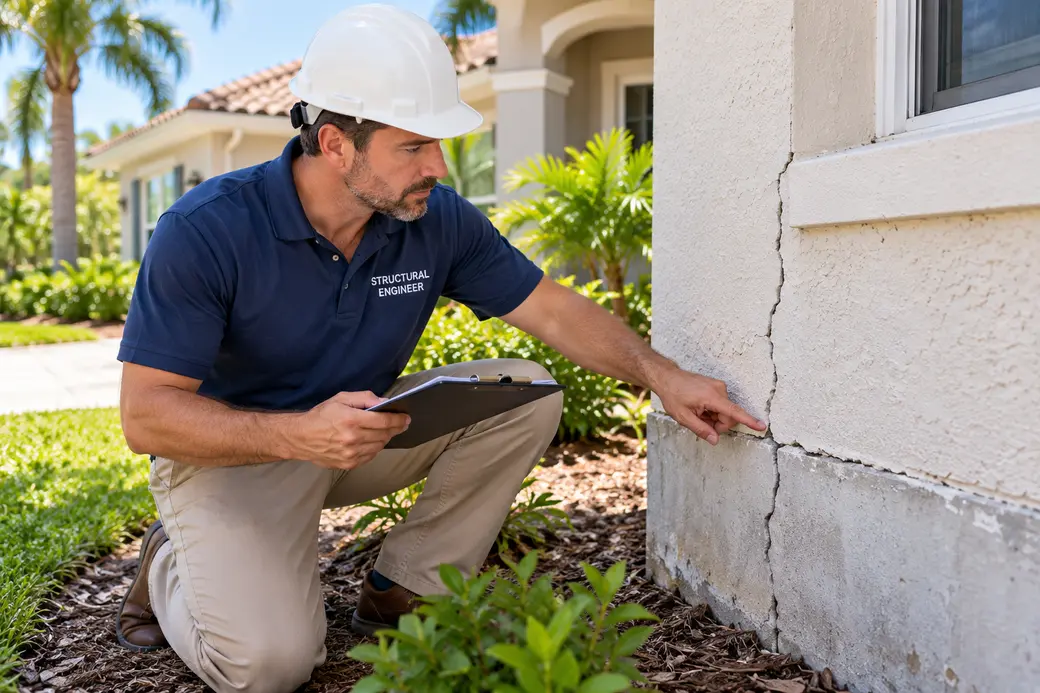
You should consider having a structural engineer evaluate a home when a general inspection, visible condition, property history or planned renovation raises a meaningful question about the building's structural performance. Examples can include significant or unusual cracking, apparent foundation movement, sagging or sloping floors, bowing walls, altered structural components, storm damage or deterioration affecting load-bearing elements. A structural engineer is not automatically necessary for every home purchase. A general home inspection is usually an important starting point, with an engineer brought in when a condition requires specialized structural analysis before you make a purchasing or renovation decision.
The key is not trying to decide from appearance alone whether a crack, slope or other condition is serious. Florida law describes a home inspection as a limited visual examination of readily accessible systems and components, including the structure. When that inspection identifies a structural question requiring additional expertise, Hunt Brothers Realty's guide to what happens when a home inspection finds problems explains why further evaluation by the appropriate specialist can be an important next step.
Quick Answers About When to Get a Structural Engineer
Do I need a structural engineer for every home purchase?
No. Many buyers begin with a qualified general home inspector. An engineer becomes particularly useful when the inspector identifies suspected structural movement, deterioration, unusual cracking or another condition requiring specialized structural evaluation.
Should foundation cracks be evaluated by a structural engineer?
Some cracking can occur without establishing a major structural defect, while other crack patterns or associated movement may justify further investigation. If cracking is significant, unusual, accompanied by displacement or identified as concerning by an inspector, a structural engineer can evaluate the condition rather than having the buyer diagnose it from appearance alone.
What if the floors slope or sag?
Noticeable floor slope or sagging can have several possible explanations, including characteristics of the original construction, alterations, deterioration or movement. If the condition is substantial or unexplained, a qualified structural engineer can help determine whether it reflects a structural concern and what additional investigation may be appropriate.
Should I call an engineer after hurricane or storm damage?
Consider engineering evaluation when a storm may have affected structural components or when visible movement, impact damage, framing concerns or significant deterioration is present. Roof, water, electrical and other storm-related issues may require different specialists in addition to an engineer.
Can a home inspector tell me whether the house is structurally sound?
A Florida home inspector can visually examine readily accessible structural components within the scope of a home inspection and identify conditions that deserve attention. A structural engineer has a different professional role and may be appropriate when the condition requires engineering analysis beyond a general visual inspection.
Should I get an engineer before removing a wall?
If a planned renovation could alter load-bearing walls, beams, columns, roof framing or other structural components, engineering and permitting questions should be resolved before demolition. The appropriate engineer, contractor and local permitting authority can help determine what plans, calculations, approvals and construction methods are required for the specific project.
When should I schedule the engineer during a home purchase?
Schedule specialized evaluation promptly after a concerning condition is identified and early enough to work within the deadlines of your purchase contract. Your rights and deadlines depend on the agreement you signed, so legal questions about inspection rights or contract procedures should be reviewed with a qualified Florida real estate attorney.
A Home Inspector and a Structural Engineer Have Different Roles
Home buyers sometimes assume they must choose between a home inspector and a structural engineer. In many transactions, the two professionals serve different purposes.
Under Florida Statutes Section 468.8311, home inspection services involve a limited visual examination of readily accessible installed systems and components, including the structure, electrical system, HVAC system, roof covering, plumbing, interior and exterior components, and site conditions affecting the structure.
That makes a general home inspection a useful broad evaluation of a property. An inspector may observe cracking, movement, deterioration or another condition and recommend further evaluation because identifying the full cause or engineering significance goes beyond the scope of the general inspection.
A structural engineer can then focus on the structural question. The appropriate scope depends on the condition and the services agreed upon with that professional.
Get an Engineer When the Home Inspector Identifies Suspected Structural Movement
One of the clearest reasons to contact a structural engineer is a recommendation from your home inspector. Hunt Brothers Realty's Florida inspection-problems guide specifically identifies suspected structural movement as a condition that may call for a structural engineer.
An inspector may be able to document the visible symptom without determining its complete cause, extent or structural significance. That distinction is important. The inspection report might identify a crack, uneven surface, framing condition or apparent movement, but the buyer should not turn that observation into a structural diagnosis without the appropriate expertise.
Foundation or Slab Cracking Can Justify Further Evaluation
Cracks are among the most common reasons buyers become concerned about a home's structure. The difficulty is that a crack by itself does not tell you everything you need to know.
Cracking can differ in location, width, direction, displacement, age and relationship to other conditions. A buyer may also notice associated symptoms such as uneven flooring, separation around openings or evidence of prior repairs.
Rather than using an online crack-width rule to diagnose the house, have significant or unexplained conditions evaluated by an appropriate professional. A structural engineer can consider the crack in the context of the building, foundation or slab, surrounding conditions and other evidence available during the evaluation.
Cracks in Walls Can Be Symptoms Rather Than Diagnoses
Interior or exterior wall cracking often attracts attention during a showing because it is easy to see. What it means is another question.
Some visible cracking may involve finishes rather than the structural system. Other cracking may occur with movement, moisture, deterioration or conditions that deserve a more detailed investigation.
Look for patterns rather than reaching a conclusion from one mark on a wall. Multiple cracks, visible displacement, recurring repairs or cracking combined with other movement can justify specialized evaluation.
Sagging or Noticeably Sloping Floors Deserve Investigation
An older home does not necessarily have perfectly level floors, and noticing a slope does not establish that the building has a structural defect. Nevertheless, significant sagging, an abrupt change in floor level or unexplained movement deserves attention.
Possible explanations can involve framing, supports, alterations, deterioration or other building conditions. Because those possibilities require property-specific evaluation, buyers should avoid diagnosing the cause themselves.
If the general inspector considers the condition potentially structural, an engineer can evaluate the relevant components and determine what further investigation or corrective work, if any, should be considered within the engineer's professional scope.
Bowing, Leaning or Displaced Walls Need More Than a Visual Guess
A wall that appears to bow, lean or move out of alignment is another condition that can justify structural evaluation. The same is true when masonry or other building components show visible displacement.
The important question is not simply whether the condition looks unusual. A qualified professional needs to determine what is actually occurring, whether the condition is active or historical, which components are involved and whether corrective work is appropriate.
Doors and Windows That Bind Can Add Context to Other Signs of Movement
A single door that sticks does not establish foundation movement. Doors and windows can operate poorly for many reasons, including hardware, installation, swelling, maintenance or ordinary wear.
The observation becomes more relevant when multiple openings appear out of alignment and the property also has unusual cracking, floor movement or other symptoms. In that situation, the combination of conditions can justify further professional evaluation rather than treating each observation in isolation.
Roof Sagging or Framing Concerns May Require an Engineer
Roof problems are not all structural problems. Worn roofing materials, flashing defects and ordinary leakage may primarily require evaluation by a qualified roofing professional.
When the concern involves roof framing, unusual deflection, damaged structural members, significant alterations or another engineering question, a structural engineer may be appropriate. Hunt Brothers Realty's roof guide for home buyers explains why the appropriate specialist depends on the actual condition found.
Previous Structural Repairs Should Be Understood Before Closing
Evidence that a house has already undergone structural repair is not automatically a reason to reject it. It is, however, a reason to understand what happened.
Ask for available documentation concerning the original condition, engineering plans or reports, permits, contractor records, invoices, inspections and warranties. Determine whether the completed work corresponds with the condition visible today.
If a prior repair materially affects your purchase decision, an independent structural engineer can evaluate the current condition. Permit questions should also be verified with the applicable local permitting authority rather than inferred solely from seller or listing information.
Major Renovations Can Create Structural Questions
A beautifully renovated home can still deserve structural investigation when the renovation materially altered the building.
Pay particular attention when walls have been removed, large openings created, roof framing modified, additions constructed or other substantial changes made to the original structure. Cosmetic finishes alone do not establish how the underlying work was designed or completed.
Hunt Brothers Realty's older home versus newer home guide emphasizes the importance of investigating renovation and permit history when evaluating established properties.
Get Engineering Input Before a Renovation That Changes Structural Components
You may also need a structural engineer even when nothing appears wrong with the house. Your renovation plans themselves can create the need for engineering.
Removing or modifying a load-bearing wall, changing beams or columns, altering roof framing or making other structural modifications can require engineering design and local permits. Do not assume a wall is non-load-bearing based only on its location or appearance.
Before buying a fixer-upper with major renovation plans, buyers should understand whether the desired design is structurally and practically feasible. Engineering, construction and permitting questions should be evaluated with the appropriate engineer, licensed contractor and local permitting authority before relying on a renovation budget or plan.
Water Intrusion Can Become a Structural Issue When Deterioration Is Involved
Water intrusion does not automatically require a structural engineer. A roof leak might need a roofer, a plumbing leak might need a plumber and exterior water intrusion may require another building-envelope specialist.
The situation changes when prolonged moisture appears to have damaged structural framing, supports, masonry or other load-bearing components. At that point, multiple professionals may be necessary because identifying the water source and evaluating structural damage are separate questions.
Hunt Brothers Realty's guide to signs of water intrusion in Florida homes explains why moisture symptoms should lead to professional investigation rather than an assumption about their source or extent.
Drainage and Erosion Can Matter When They Affect the Structure
The house itself is not the only place to look when investigating apparent movement. Site conditions can matter too.
Visible erosion, recurring water accumulation, drainage problems or soil loss near structural components can justify additional investigation. Depending on the circumstances, the appropriate professional could include a structural engineer, geotechnical professional, drainage specialist, contractor or other qualified expert.
The objective is to understand both the visible condition and its cause before selecting a repair approach.
Storm Damage Can Justify Structural Evaluation
Florida properties can experience hurricanes, high winds, falling trees, wind-driven rain and other storm-related conditions. Not every storm-exposed house needs an engineering evaluation, but known or suspected structural damage deserves professional attention.
Examples can include damaged framing, visible movement, impact to structural components or deterioration associated with substantial water exposure. Obtain available repair, permit and insurance-claim documentation when previous storm damage is disclosed or evident.
An engineer can address structural questions within the agreed scope, while roofing, electrical, moisture, mold or other conditions may require separate qualified professionals.
Waterfront Homes Can Have Additional Structural Components to Evaluate
Waterfront properties can introduce structures that may fall outside the practical scope of a typical general home inspection. Seawalls, retaining structures, docks, pilings and related waterfront infrastructure can require separate evaluation.
Visible seawall cracking, displacement, soil loss, leaning components or significant deterioration should not be evaluated solely from listing photographs. Depending on the condition, a qualified marine contractor, structural or coastal engineer, or another specialist may be appropriate.
A buyer should also verify ownership, maintenance responsibility and permits associated with waterfront improvements when those issues materially affect the purchase.
Older Homes Do Not Automatically Need Structural Engineering
Age alone is not a structural diagnosis. Many older Florida homes continue to function well, while newer properties can still have construction or site conditions requiring investigation.
With an older house, however, buyers may encounter decades of alterations, repairs, moisture exposure and renovations. That history can make documentation particularly valuable.
Start with the property's current condition and inspection findings rather than its construction year alone. Hunt Brothers Realty's guide to buying older versus newer Florida homes explains why effective condition often matters more than age by itself.
New Construction Can Need Engineering Evaluation Too
A newly built home should not automatically be treated as structurally problem-free simply because it recently received a certificate of occupancy.
If an independent inspection identifies a significant framing, foundation, drainage or other structural concern, specialized evaluation may still be appropriate. The engineer's role is to evaluate the technical issue, not to assume that new construction is either defective or free of defects.
Structural Engineer vs. Other Home Specialists
Not every serious home problem belongs with a structural engineer. Matching the concern to the right professional can produce more useful information.
| Condition | Professional Who May Be Appropriate |
|---|---|
| Broad evaluation of readily accessible home systems | Qualified home inspector |
| Suspected foundation or structural movement | Structural engineer |
| Load-bearing wall, beam or framing modification | Structural engineer, with appropriate contractor and permitting review |
| Roof covering deterioration or leakage | Qualified roofing professional, with engineering evaluation when structural framing is involved |
| Electrical concern | Licensed electrician |
| Plumbing or drain-line concern | Licensed plumbing professional |
| Water source or building-envelope concern | Appropriate roofing, plumbing, building-envelope or other qualified professional depending on the source |
| Seawall or waterfront infrastructure concern | Appropriately qualified marine contractor, engineer or other waterfront specialist |
Sometimes more than one professional is appropriate. A structural problem caused by long-term water intrusion, for example, may require one professional to evaluate the damaged structural components and another to identify and correct the source of moisture.
What Should You Ask a Structural Engineer to Evaluate?
Be specific about why you are hiring the engineer. Provide the general inspection report, relevant seller disclosures, available repair records, permits and photographs so the engineer understands what prompted the evaluation.
Depending on the issue and agreed scope, useful questions may include:
- Which structural components are affected?
- What conditions were observed?
- Is additional investigation needed?
- Does the engineer recommend monitoring, repair or another response?
- Would repair plans or engineering details be required?
- Should another specialist investigate a related condition?
- Can the findings be provided in writing within the agreed scope?
Confirm the scope, deliverables and limitations directly with the engineer before the evaluation. Different assignments can involve different levels of investigation.
Do Not Wait Until the End of the Inspection Period
Timing can be critical during a purchase. If the home inspector recommends engineering evaluation, begin arranging it promptly.
Specialists may not be available immediately, and the engineer may recommend additional investigation after the first visit. Waiting until the final day of an inspection period can leave too little time to obtain information, understand findings and make a transaction decision.
Inspection rights, notice requirements, repair provisions and termination rights depend on the contract actually signed. Your licensed real estate professional can help coordinate the transaction process, while questions about legal rights, deadlines or contract interpretation should be reviewed with a qualified Florida real estate attorney.
An Engineering Report Should Come Before Repair Pricing When the Scope Is Unclear
Buyers sometimes respond to a suspected structural condition by immediately asking a contractor how much it will cost to fix. That can put the sequence backward when nobody has yet established what the condition is or what repair is appropriate.
When engineering analysis is needed, first understand the condition and recommended response. Then obtain repair proposals from appropriately licensed contractors based on a sufficiently defined scope.
Engineering and construction serve different functions. Buyers should use each professional for the expertise appropriate to the decision they need to make.
Structural Findings Can Affect More Than the Repair Budget
A significant structural condition can affect more than the cost of physical repairs. Depending on the property and transaction, it can also become relevant to insurance, financing, permits, renovation plans and the buyer's willingness to proceed.
If you plan to finance the property, discuss material condition findings with your lender before assuming a proposed repair arrangement will satisfy the loan program. Lending requirements vary by transaction and loan type.
Insurance availability, underwriting requirements, coverage and premiums can also vary substantially by property. Buyers should disclose relevant property information as required and obtain property-specific guidance from a qualified insurance professional rather than assuming an engineering report guarantees insurability.
Can You Still Buy a House With a Structural Problem?
A structural finding does not automatically determine whether a buyer should purchase the property. The more useful question is whether the buyer understands the condition, recommended response, estimated cost, timing and effect on financing, insurance and future plans.
Depending on the contract and circumstances, buyers may have options after inspections identify problems. Hunt Brothers Realty's guide to negotiating repairs on an as-is Florida home explains why negotiation options and contractual rights should not be confused.
A licensed real estate professional can help with market and transaction considerations. Engineering conclusions should come from the engineer, repair scope and pricing from appropriate contractors, financing questions from the lender, insurance questions from the insurance professional, and legal questions from a qualified Florida real estate attorney.
Structural Engineer Buyer Checklist
Consider additional structural evaluation before purchasing when one or more of the following conditions is significant or unexplained:
- The home inspector recommends structural evaluation
- Significant or unusual foundation or slab cracking is visible
- Walls show cracking combined with apparent movement
- Floors noticeably sag or slope
- Walls appear bowed, leaning or displaced
- Multiple doors or windows appear out of alignment along with other movement indicators
- Roof framing appears sagged, damaged or materially altered
- Load-bearing components appear to have been modified
- Previous structural repairs are evident or disclosed
- Renovations removed walls or substantially changed the original structure
- Long-term water intrusion may have affected structural components
- Drainage, erosion or soil loss appears related to structural movement
- Storm or impact damage may involve structural components
- Waterfront structures show significant cracking, movement or deterioration
- Your planned renovation would modify structural components
These conditions do not establish that a home has a structural defect. They identify circumstances in which obtaining qualified professional evaluation can provide better information before making a property-specific decision.
Frequently Asked Questions About Structural Engineers and Home Buying
Can a structural engineer inspect the whole house instead of a home inspector?
The services are not necessarily interchangeable. A general home inspection covers a broad range of readily accessible home systems within its scope, while a structural engineering assignment focuses on engineering issues defined by the engagement. Ask each professional exactly what the inspection or evaluation will include.
Does every crack mean a foundation problem?
No. A crack alone does not establish its cause or structural significance. Location, pattern, displacement, surrounding conditions and other evidence matter, so significant or unexplained cracking should be evaluated rather than diagnosed from photographs or a generic rule.
Can a structural engineer tell me what repairs are needed?
Depending on the engagement, an engineer may evaluate the structural condition and provide recommendations or engineering documents within the agreed scope. Ask in advance whether you will receive a written report, repair recommendations, drawings or another specific deliverable.
Should I use the contractor who says the foundation needs repair?
When a significant structural condition is uncertain, obtaining an independent engineering evaluation can help define the technical issue before you rely on a repair proposal. Once the necessary work is understood, appropriately licensed contractors can provide project-specific estimates and construction services.
What if the seller already has an engineering report?
Review the report's date, scope, observations and any subsequent repair documentation. Depending on the importance of the condition and what has changed since that report, a buyer may still choose to obtain an independent evaluation from a qualified structural engineer.
Should I walk away if an engineer finds a structural problem?
An engineering finding should give you information, not a universal purchasing answer. Evaluate the condition, recommended work, contractor estimates, insurance and financing implications, transaction terms and your own plans before deciding how to proceed.
The Bottom Line on Hiring a Structural Engineer
You do not necessarily need a structural engineer for every home you consider buying. Start with a thorough general home inspection and pay attention to conditions that require expertise beyond that inspection's scope.
Significant cracking, apparent foundation movement, sagging floors, bowed walls, questionable structural alterations, damaged framing, prior structural repairs, storm damage or deterioration affecting load-bearing components can justify engineering evaluation. The same applies when your planned renovation will change the structural system.
Most importantly, avoid turning visible symptoms into your own technical diagnosis. When structural condition could materially affect the purchase, obtain an evaluation from a qualified structural engineer and use the engineer's findings, appropriate contractor estimates and property-specific insurance, financing and legal guidance to make an informed decision.
Evaluate a Home With Hunt Brothers Realty
Hunt Brothers Realty helps buyers navigate the real estate side of Florida property due diligence, including coordinating inspection access and helping buyers identify when inspection findings may require additional information before a transaction decision.
Before buying, review the Florida home inspection red flags guide, learn what happens when an inspection finds problems and understand what to look for during a Florida home showing. To discuss a specific home purchase, contact Hunt Brothers Realty.
Informational notice: This article provides general real estate and property-condition information for educational purposes only. It is not individualized engineering, inspection, construction, legal, insurance, financial or lending advice. Visible cracking, movement, moisture, deterioration and other symptoms can have different causes and significance depending on the property. Structural conditions should be evaluated by an appropriately qualified structural engineer, and related construction, permitting, insurance, financing and legal questions should be reviewed with the appropriate licensed contractor, local permitting authority, insurance professional, lender or qualified Florida real estate attorney before a buyer makes a decision based on those issues.
Sources
- Florida Legislature, 2026 Florida Statutes Section 468.8311, Home Inspection Definitions
- Hunt Brothers Realty, What Happens If a Home Inspection Finds Problems in Florida?
- Hunt Brothers Realty, Florida Home Inspection Red Flags
- Hunt Brothers Realty, What Should You Look for During a Home Showing in Florida?
- Hunt Brothers Realty, How to Check a Florida Home for Signs of Water Intrusion
- Hunt Brothers Realty, What to Look for in a Roof Before Buying a Home
- Hunt Brothers Realty, Older Home vs. Newer Home: Which Should You Buy in Florida?
- Hunt Brothers Realty, Fixer-Upper vs. Move-In-Ready Home
Contact Hunt Brothers Realty
46 N. Washington Blvd, Ste 3
Sarasota, FL 34236
Phone: (941) 388-7017
Email: info@huntbrothersrealty.com
Website: https://www.huntbrothersrealty.com/
Categories
- All Blogs 2212
- Anna Maria Island 86
- Bird Key 4
- Bradenton 237
- Buying a Home 1266
- Casey Key 2
- Clearwater 11
- Condos & HOA Living 1183
- Ellenton 6
- Englewood 12
- First Time Homebuyers 1375
- Foreclosures 5
- Home Selling 7
- Homeownership 1402
- Lakewood Ranch 25
- Lido Key 28
- Longboat Key 80
- Luxury/Waterfront Properties 1343
- Market Updates & Trends 862
- Mortgages & Financing 60
- Move-Up Buyers 25
- Neighborhood Guides 978
- New Construction 37
- Palmetto 3
- Parrish 6
- Port Charlotte 10
- Punta Gorda 41
- Real Estate Investing 1258
- Relocation to Florida 1296
- Safety Harbor 3
- Sarasota 91
- Sarasota - Downtown 164
- Selling a Home 146
- Siesta Key 92
- St. Petersburg 8
- Tierra Verde 5
- Vacation & Second Homes 1452
- Venice 209
- Wellen Park 20
Recent Posts