Is Moving to Florida Still Worth It?
Moving to Florida can still be worth it in 2026, but the decision depends much more on your budget, location and property choice than the old formula of warm weather plus no individual state income tax. Florida still offers year-round outdoor recreation, Gulf and Atlantic beaches, diverse communities and no Florida personal income tax. At the same time, relocating buyers need to account for housing costs, homeowners and flood insurance, property taxes, association fees, storm exposure and maintenance. On Florida's Gulf Coast, the strongest relocation decisions usually come from comparing total ownership costs and everyday lifestyle rather than deciding that Florida as a whole is either affordable or expensive.
Quick Answers About Moving to Florida
Is moving to Florida still worth it in 2026?
It can be. Florida remains appealing for buyers who value warm weather, outdoor recreation, coastal access and the state's lack of an individual personal income tax. The decision makes more sense when the specific home's insurance, taxes, association costs, maintenance and other expenses fit comfortably within the buyer's budget.
Are people still moving to Florida?
Yes, although the pace of domestic migration has slowed. The U.S. Census Bureau estimated Florida's population at approximately 23.46 million on July 1, 2025, an increase of about 196,680 from the previous year. Net domestic migration was 22,517 from July 2024 through June 2025, substantially below the pandemic-era levels recorded in 2022 and 2023.
Does Florida have a state personal income tax?
Florida does not impose an individual personal income tax. That can be financially significant for some households, but it does not mean every person's overall tax burden or cost of living will be lower after relocating. Individual tax consequences should be reviewed with a qualified tax professional.
What costs surprise people after moving to Florida?
Homeowners insurance, flood insurance, property taxes after purchase, hurricane deductibles, HOA or condominium assessments, CDD assessments, air conditioning, pool care, landscaping, pest control and storm preparation can surprise relocating homeowners. These expenses vary significantly by property.
Is Florida still worth considering if homeowners insurance is expensive?
Potentially, but insurance should be part of property selection from the beginning. Location, roof condition, construction, storm-protection features, flood exposure and other characteristics can produce very different insurance situations between similarly priced homes. Obtain property-specific quotes before making a decision that depends on estimated insurance costs.
Where on Florida's Gulf Coast should relocating buyers look?
That depends on lifestyle and property priorities. Sarasota, Siesta Key, Longboat Key, Lakewood Ranch, Bradenton, Venice, Wellen Park, Englewood, Punta Gorda and other Gulf Coast communities provide very different combinations of beaches, boating, downtown access, newer construction, golf, amenities and housing types.
Should I rent before buying after moving to Florida?
Renting first can be useful when you are uncertain about the community, commute, housing type or everyday lifestyle you want, but it is not necessary for every relocating buyer. A thorough scouting trip and property-specific research can also help buyers make an informed decision.
What is the biggest mistake people make when deciding whether to move to Florida?
One of the biggest mistakes is comparing Florida only by home price or taxes. The better comparison includes total housing costs, insurance, flood exposure, transportation, maintenance, climate, access to the activities you value and how the community functions during ordinary daily life.
Are People Still Moving to Florida in 2026?
Yes, Florida is still growing, but domestic migration has slowed significantly from the extraordinary levels seen earlier in the decade. According to the U.S. Census Bureau's Vintage 2025 population estimates, Florida's population increased from approximately 23.27 million in July 2024 to 23.46 million in July 2025.
That was an increase of about 196,680 residents in one year. Florida remained the nation's third-most-populous state and ranked second behind Texas in numeric population growth from 2024 to 2025.
The more revealing number for relocation trends is domestic migration. Florida recorded net domestic migration of 22,517 from July 2024 through June 2025, down sharply from 183,646 in 2023 and 310,892 in 2022, according to the Census Bureau.
That does not mean people have stopped moving to Florida. It means the pandemic-era relocation surge has moderated, making today's decision less about following a migration trend and more about whether Florida fits your individual priorities.
Why Do People Still Want to Move to Florida?
Florida continues to offer a combination of climate, outdoor recreation, coastal access and community choices that is difficult to duplicate in many parts of the country. Those benefits are subjective, but they can materially affect quality of life for someone who intends to use them regularly.
Depending on where you live, Florida can provide convenient access to:
- Gulf of Mexico or Atlantic beaches
- Boating and fishing
- Golf
- Kayaking and paddleboarding
- Cycling and walking trails
- Outdoor dining
- State and local parks
- Year-round community amenities
The key question is whether you will actually use the characteristics you are paying to be near. A household that spends weekends boating or at the beach may value Gulf Coast proximity differently from someone whose daily routine is mostly indoors or requires a long commute.
Does Florida's Lack of a Personal Income Tax Make Moving Worth It?
Florida's lack of an individual personal income tax can be financially meaningful, but it should not be used by itself to determine whether moving makes financial sense. The Florida Department of Revenue confirms that Florida does not impose a personal income tax.
Florida residents still pay other taxes, fees and ownership expenses. Depending on your previous state, income, housing choice and spending patterns, the overall financial effect can be very different from another household's experience.
Someone considering a move primarily for tax reasons should compare the complete tax picture with a qualified tax professional, particularly when residency, businesses, retirement income, investments, estate planning or ownership in multiple states is involved.
Is Florida Still an Affordable Place to Live?
Florida cannot accurately be described as universally affordable or unaffordable because housing and ownership costs vary dramatically by region and property type. A Gulf-front condominium, waterfront home, established Sarasota residence and newer inland home can have very different purchase prices and recurring expenses.
Even homes with identical asking prices can have substantially different total costs. Hunt Brothers Realty's guide to the true cost of buying a Florida home explains why buyers should consider the mortgage together with taxes, insurance, association expenses, maintenance and property-specific costs.
This makes the question "Can I afford Florida?" less useful than "What type of Florida property can I comfortably own after every recurring expense is included?"
What Expenses Surprise People After Moving to Florida?
Insurance, property taxes, association expenses, cooling, storm preparation and exterior maintenance are among the costs relocating homeowners may underestimate. The exact expenses depend heavily on the property.
Potential expenses include:
- Homeowners insurance
- Flood insurance when applicable or appropriate
- Property taxes after a change in ownership
- HOA or condominium assessments
- CDD assessments in applicable communities
- Air-conditioning and electricity
- Pool maintenance
- Lawn and landscaping service
- Pest control
- Storm preparation
- Roof and exterior maintenance
- Waterfront infrastructure when applicable
For a more detailed breakdown, see Hunt Brothers Realty's guide to expenses that can surprise people after moving to Florida.
Is Homeowners Insurance a Reason Not to Move to Florida?
Insurance is a reason to investigate individual properties carefully, not a reliable reason to make one blanket decision about the entire state. Insurance availability, coverage and premiums can vary substantially from one Florida property to another.
An insurer may consider factors including location, roof age and condition, construction, electrical and plumbing systems, storm-protection features, occupancy and other underwriting characteristics. A newer inland property can therefore present a different insurance picture from an older coastal home even when their purchase prices are similar.
Hunt Brothers Realty's Florida Gulf Coast home insurance guide explains why buyers should investigate insurance earlier in the property-selection process.
Insurance availability, coverage, deductibles and premiums can vary substantially by property. Buyers should obtain property-specific quotes and review coverage with a qualified insurance professional before making a purchasing decision that depends on estimated insurance costs.
How Much Should Flood Risk Matter When Moving to Florida?
Flood risk should be evaluated at the individual-property level, especially on Florida's Gulf Coast. Distance from the beach alone does not tell you everything you need to know about a home's flood exposure.
Buyers may need to investigate the current FEMA flood-zone designation, elevation, drainage, available elevation documentation, previous flooding information and property-specific flood insurance costs. Hunt Brothers Realty's Florida flood-zone buyer guide explains why a flood-zone designation should be the beginning of the investigation rather than the entire analysis.
Standard homeowners insurance generally does not cover flooding. Buyers should verify flood risk, lender requirements and appropriate coverage for the specific property with qualified insurance and lending professionals.
What About Hurricanes and Storm Preparation?
Anyone moving to Florida should be prepared to treat hurricane planning as a normal part of property ownership. That does not mean every home has the same exposure or preparation requirements.
A buyer may want to understand the home's roof, windows and doors, available storm-protection systems, generator setup, elevation, trees, drainage and evacuation considerations. Condominium owners should also understand which responsibilities belong to the association and which belong to the individual unit owner.
Inspection findings and questions about structural or storm-protection features should be evaluated with the appropriate licensed inspector, contractor, engineer or other qualified professional.
Will Florida Property Taxes Be Lower Than Where I Live Now?
Maybe, but a buyer should never assume a Florida home's future property-tax bill will equal the seller's current bill. A change in ownership can affect assessed value, and exemptions available to the seller do not simply transfer to the purchaser.
Florida's Homestead Exemption can provide property-tax benefits for qualifying permanent residences. The Save Our Homes assessment limitation can also affect future assessed-value increases after eligibility is established.
Hunt Brothers Realty's Florida Homestead Exemption guide explains the distinction between Homestead Exemption, Save Our Homes and portability.
Eligibility and tax consequences depend on the individual owner and property. Buyers should verify estimated post-purchase taxes and exemption eligibility with the appropriate county property appraiser and consult a qualified tax professional when individual tax consequences are material to the move.
Are HOA and CDD Fees Common in Florida?
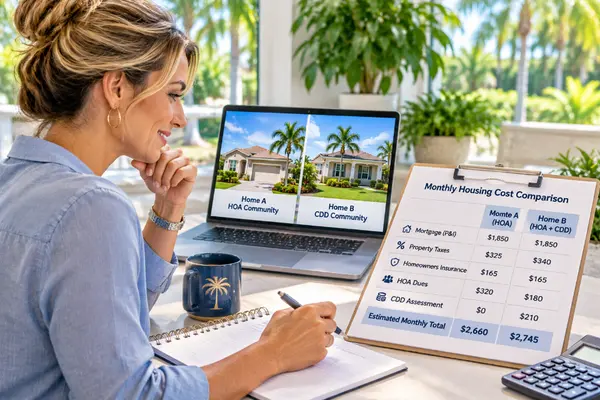
HOAs are common in many Florida communities, and some newer master-planned developments can also have Community Development District assessments. Neither should automatically be considered good or bad without understanding what the payment funds.
An HOA may maintain landscaping, amenities, gates, private infrastructure or other community property. A CDD is a different type of entity that can finance and maintain authorized community infrastructure and facilities.
Relocating buyers should identify every recurring community charge before comparing homes. The monthly mortgage payment alone does not capture the complete cost of ownership.
Is Florida's Weather Really a Lifestyle Advantage?
For people who prefer warm winters and year-round outdoor access, Florida's climate can be a major lifestyle benefit, but summer heat, humidity and storms are part of the tradeoff.
Relocating during winter can give an incomplete impression of everyday Florida living. If climate tolerance is important to your decision, spend time in the area during the warmer and wetter months as well as peak winter season.
Also consider how climate affects the house itself. Air conditioning, exterior finishes, roofs, landscaping, pools, screened lanais and storm-protection systems become normal parts of property ownership.
Is Florida Still Worth It for Beach Lovers?
Florida can provide exceptional access to Gulf and Atlantic beaches, but living near the coast is different from vacationing there. Buyers should balance beach proximity against purchase price, flood exposure, insurance, maintenance, traffic and the amount of time they will actually spend at the beach.
On the Sarasota-area Gulf Coast, buyers can compare barrier islands such as Siesta Key, Lido Key, Longboat Key and Anna Maria Island with mainland communities that remain within driving distance of Gulf beaches.
A mainland home may make more sense for someone who wants frequent beach access without needing to live directly on a barrier island. Someone who wants to walk onto the sand from home may reach a different conclusion.
Is Florida Still Worth It for Boaters?
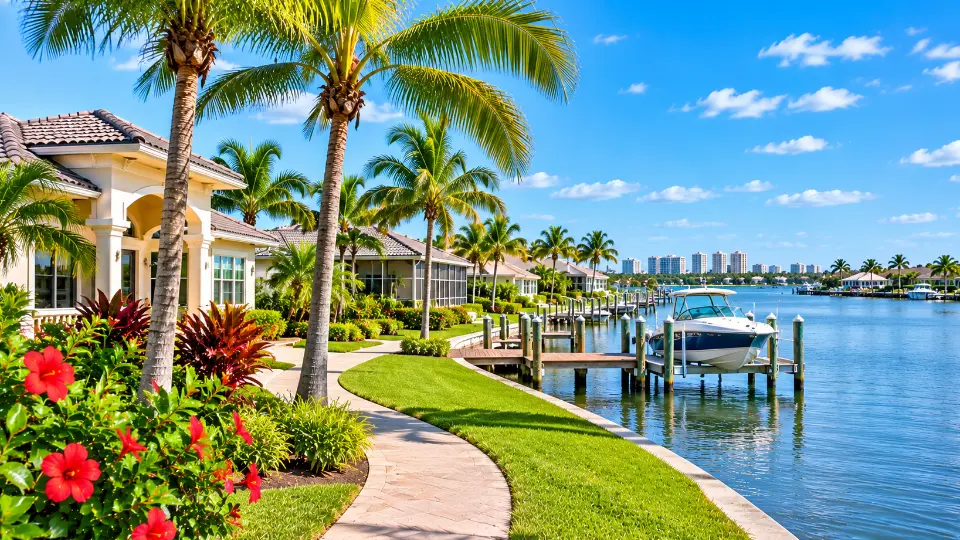
For buyers who boat regularly, Florida's Gulf Coast can provide a compelling lifestyle, but waterfront ownership requires additional property-specific research. Sarasota Bay, the Intracoastal Waterway, Charlotte Harbor and numerous canals and waterways create many boating-oriented real estate options.
Waterfront buyers should evaluate more than whether a listing has a dock. Depending on the property and boat, water depth, bridge clearance, lift capacity, dock condition, seawall condition, tides, navigation route and permitting can all matter.
Survey, dock, seawall, permitting and structural questions should be verified with the appropriate surveyor, marine contractor, engineer, local permitting authority or other qualified professional before a purchasing decision depends on them.
Where Should You Live If You're Moving to Florida's Gulf Coast?
Start with the lifestyle and property type you want, then choose the Gulf Coast community that supports those priorities. Florida's Gulf Coast is not one uniform housing market or lifestyle.
Hunt Brothers Realty's Florida Gulf Coast community guides include Sarasota, Siesta Key, Longboat Key, Lido Key, Anna Maria Island, Bradenton, Lakewood Ranch, Venice, Nokomis, Osprey, Parrish, Englewood, Punta Gorda and other communities.
| If You Prioritize | Areas Worth Comparing | What to Investigate |
|---|---|---|
| Downtown, dining and cultural access | Sarasota and nearby neighborhoods | Housing type, parking, association costs and proximity to everyday destinations |
| Beach proximity | Siesta Key, Lido Key, Longboat Key, Anna Maria Island, Venice and Englewood | Flood exposure, insurance, bridge access, association costs and coastal maintenance |
| Newer master-planned living | Lakewood Ranch, Wellen Park and selected Parrish communities | HOA fees, CDD assessments, amenities and future development |
| Boating | Sarasota-area waterfront communities, Englewood, Port Charlotte and Punta Gorda | Dock rights, seawalls, water depth, bridge clearance, flood exposure and insurance |
| Golf | Sarasota, Lakewood Ranch, Venice, Wellen Park, Englewood and Rotonda West | Membership structure, fees, community assessments and course access |
| A smaller coastal-city setting | Venice, Punta Gorda, Englewood and other Gulf Coast communities | Housing inventory, daily services, insurance, flood characteristics and travel patterns |
These are starting points rather than recommendations for a particular buyer. Property availability, costs and community characteristics change, so current information should be verified during the home search.
Should You Live on a Florida Barrier Island or the Mainland?
Barrier-island living can put beaches, boating and Gulf scenery close to home, while mainland living can provide a different combination of housing choices, access and ownership costs. Neither is automatically better.
A barrier-island buyer should consider bridge traffic, flood exposure, storm evacuation, coastal maintenance and property-specific insurance in addition to the lifestyle advantages. Mainland buyers may still be close to beaches while having different flood, insurance and transportation characteristics.
The useful question is not simply "How close can I get to the Gulf?" It is "How much does Gulf proximity matter in my everyday life compared with the costs and tradeoffs of the specific property?"
Should You Buy New Construction After Moving to Florida?
New construction can appeal to relocating buyers who want newer building systems, modern layouts and community amenities, but it still requires a complete cost and contract review.
Buyers should investigate builder contracts, included features, upgrade costs, HOA fees, CDD assessments when applicable, estimated taxes, insurance, construction timelines and warranty procedures. A model home's appearance should not substitute for understanding the actual contract and final ownership costs.
Contract rights and legal questions should be reviewed with a qualified Florida real estate attorney when individualized legal guidance is needed. Financing and insurance should be evaluated with the appropriate licensed professionals.
Should You Buy a Florida Condo Instead of a House?
A condominium can provide a lower-maintenance ownership format and access to locations where detached homes may be less practical, but buyers must evaluate the association as carefully as the individual unit.
Current assessments, reserves, association insurance, special assessments, maintenance responsibilities, building condition, applicable inspections, rental rules and governing documents can all affect the ownership experience and cost.
This is especially important when comparing older coastal condominiums with newer buildings or detached homes. A lower purchase price does not necessarily mean a lower total cost of ownership.
Should You Rent in Florida Before Buying?
Renting before buying can make sense when you have not yet determined which community or property type fits your daily routine, but it is not a universal requirement for a successful relocation.
Before deciding, consider how certain you are about:
- Which city or community you prefer
- Whether you want a condo or detached home
- How close you want to be to the Gulf
- Your commute or regular driving patterns
- Whether boating or golf access matters
- How much maintenance you want
- Your tolerance for HOA or condominium restrictions
- Your realistic total housing budget
A buyer who already knows the region well may not need an interim rental. Someone choosing between several Florida regions for the first time may benefit from more time before committing to a purchase.
Why Should You Visit Florida Like a Resident Before Moving?
A relocation trip should test ordinary life, not recreate a vacation. Visit grocery stores, drive the routes you expect to use, explore neighborhoods at different times and see how long it takes to reach the places that matter to you.
If possible, experience the area during more than one season. Florida communities can feel different during peak winter months, summer heat, rainy periods and major events.
Hunt Brothers Realty's Florida Gulf Coast relocation guide emphasizes choosing a community based on the lifestyle and property type you actually want rather than judging the area only through a short vacation experience.
Who Is Moving to Florida Most Likely to Work Well For?
Florida is more likely to feel worth the move when its specific lifestyle advantages align with the way you actually intend to live and the complete cost fits your finances.
The move may deserve serious consideration when you prioritize:
- Warm winters
- Year-round outdoor recreation
- Beach access
- Boating or fishing
- Golf
- Florida's lack of an individual personal income tax
- A Gulf Coast lifestyle
- Newer master-planned communities
- A wide range of coastal and inland housing choices
Those characteristics do not make Florida objectively better than another state. They simply identify situations where the state's distinguishing features may provide meaningful value to a particular household.
When Might Moving to Florida Not Be Worth It?
Florida may not be the right move when the complete costs, climate or ownership responsibilities conflict with your priorities. A relocation should solve more problems than it creates.
Think carefully if your plan depends on assumptions such as:
- Every Florida home is inexpensive
- No state personal income tax means every expense will be lower
- The seller's property-tax bill will become your tax bill
- Homeowners insurance automatically covers flooding
- Living near the Gulf has no additional maintenance or insurance considerations
- HOA or condo fees will remain unchanged
- A vacation experience accurately represents year-round daily life
If the move only works when several uncertain costs come in at optimistic estimates, investigate those expenses before committing to a property.
What Should You Calculate Before Deciding to Move to Florida?
Build a Florida budget around total monthly and annual expenses rather than the home's purchase price alone. Use actual property information whenever possible instead of statewide averages.
For a property you are seriously considering, estimate:
- Mortgage principal and interest, if financed
- Estimated post-purchase property taxes
- Property-specific homeowners insurance
- Flood insurance when applicable or appropriate
- HOA or condominium assessments
- CDD assessments when applicable
- Utilities
- Pool, lawn and landscaping costs
- Routine maintenance
- Expected major repairs and replacements
- Transportation and commuting expenses
- Storm preparation and insurance deductibles
Then compare that complete budget with your current housing situation. Financing should be reviewed with a qualified mortgage professional, insurance with a licensed insurance professional and individual tax consequences with a qualified tax professional.
What Questions Should You Ask Before Moving to Florida?
The best relocation questions focus on everyday life and total cost rather than Florida's reputation.
- What do I want Florida to change about my daily life?
- Which Florida region best supports those priorities?
- Do I want to live near the beach, or simply visit it regularly?
- Do I want a condo, established home or newer construction?
- What will property taxes likely be after I purchase?
- What will homeowners and flood insurance cost for the specific property?
- What HOA, condominium, CDD or club charges apply?
- What maintenance responsibilities come with this property?
- What flood and storm characteristics should I investigate?
- How does the area function during peak season and summer?
- How far will I actually drive for groceries, healthcare, recreation, airports and other regular destinations?
- Would I still choose this community if I were not on vacation?
So, Is Moving to Florida Still Worth It?
Yes, moving to Florida can still be worth it in 2026 for people whose lifestyle priorities and finances align with what the state offers, but it is no longer useful to evaluate the move through simple slogans about taxes, sunshine or cheap housing.
Florida continues to grow, although domestic migration has slowed substantially from earlier in the decade. That shift reinforces an important point: moving to Florida should be an individual decision rather than a response to a national relocation trend.
The strongest case for moving is usually not that Florida is cheaper in every category. It is that the combination of climate, recreation, coastal access, community choices and tax structure provides enough value to justify the complete cost of living there.
Before deciding, choose the region carefully, compare actual properties, obtain insurance quotes, estimate post-purchase taxes and understand every recurring community expense. A property-specific analysis provides a much better answer than any statewide cost-of-living headline.
Explore Florida's Gulf Coast With Hunt Brothers Realty
If Florida still makes sense after you consider the tradeoffs, the next question is where to live. Hunt Brothers Realty helps relocating buyers compare communities and properties throughout Florida's Gulf Coast based on the lifestyle, housing type and ownership considerations that matter to them.
Start by browsing Hunt Brothers Realty's Florida Gulf Coast community guides, review the true cost of buying a Florida home, and learn about Florida Gulf Coast home insurance. When you are ready to compare specific areas or homes, contact Hunt Brothers Realty.
Informational notice: This article provides general real estate and educational information only and is not individualized legal, financial, tax, insurance, lending, inspection, engineering, construction, association or other professional advice. The financial effect of moving to Florida depends on the individual household and property. Buyers should verify property-specific taxes, insurance, flood exposure, association obligations, financing, inspections and ownership costs before making a purchasing decision. Tax questions should be reviewed with a qualified tax professional, insurance with a licensed insurance professional, financing with a mortgage professional, legal matters with a qualified Florida attorney, and property-condition questions with the appropriate licensed inspector, contractor, engineer or other qualified professional.
Sources
- U.S. Census Bureau, U.S. Population Growth Slows Due to Historic Decline in Net International Migration
- U.S. Census Bureau QuickFacts, Florida
- Florida Department of Revenue, Florida Personal Income Tax FAQ
- Hunt Brothers Realty, The True Cost of Buying a Home in Florida
- Hunt Brothers Realty, What Expenses Surprise People After Moving to Florida?
- Hunt Brothers Realty, Florida Home Insurance: What Gulf Coast Buyers Should Know
- Hunt Brothers Realty, Can You Buy a Florida Home in a Flood Zone?
- Hunt Brothers Realty, Florida Homestead Exemption Guide
Hunt Brothers Realty
46 N. Washington Blvd, Ste 3, Sarasota, FL 34236
Phone: (941) 388-7017
Email: info@huntbrothersrealty.com
Website: HuntBrothersRealty.com
Categories
- All Blogs 2694
- Anna Maria Island 93
- Bird Key 6
- Bradenton 242
- Buying a Home 1708
- Casey Key 3
- Clearwater 16
- Condos & HOA Living 1643
- Ellenton 9
- Englewood 16
- First Time Homebuyers 1832
- Foreclosures 4
- Home Selling 12
- Homeownership 1878
- Lakewood Ranch 37
- Lido Key 29
- Longboat Key 81
- Luxury/Waterfront Properties 1821
- Market Updates & Trends 1321
- Mortgages & Financing 88
- Move-Up Buyers 24
- Neighborhood Guides 1449
- New Construction 47
- Palmetto 4
- Parrish 39
- Port Charlotte 36
- Punta Gorda 165
- Real Estate Investing 1734
- Relocation to Florida 1762
- Safety Harbor 4
- Sarasota 163
- Sarasota - Downtown 175
- Selling a Home 149
- Siesta Key 95
- St. Petersburg 11
- Taxes and Homestead 5
- Tierra Verde 7
- Vacation & Second Homes 1927
- Venice 225
- Wellen Park 24
Recent Posts